What Is Chronic Obstructive Pulmonary Disease (COPD)? Symptoms, Causes, Stages, and Treatment

Updated: 3 days ago
Medically reviewed by Dr. Baraa Alnahhal, MD · Last reviewed: October 17, 2026
Quick Answer: What is chronic obstructive pulmonary disease?
Chronic obstructive pulmonary disease (COPD) is a group of lung conditions, including emphysema and chronic bronchitis, in which permanent lung and airway damage blocks airflow and makes breathing difficult. [1] Smoking is the most common cause. [1] There is no cure, but quitting smoking, inhaled medicines, oxygen therapy and pulmonary rehabilitation improve symptoms, and many people live for decades after diagnosis. [1]
Key takeaways
COPD is not one disease but a term for lung and airway conditions that include emphysema and chronic bronchitis. [1] If you have either one, you have COPD. [1]
The lung damage is irreversible. Airways lose elasticity, become inflamed and scarred, fill with thick mucus, and the walls between air sacs break down, trapping air inside. [1]
Smoking is the most common cause, but alpha-1 antitrypsin deficiency, secondhand smoke, airborne toxins, and job-related dust and fumes can also cause it. [1]
Flare-ups (exacerbations) get more severe and more frequent over time, usually across years or decades. [1]
There is no cure, but symptoms are manageable. [1] Quitting smoking can slow progression, and pulmonary rehabilitation can improve quality of life. [1] [3]
What the research says
Moderate to severe COPD is linked to years of life lost, but mild COPD was not. In a study of 532 people diagnosed with COPD at one Taiwanese hospital between 2006 and 2016, the estimated loss of life expectancy was about 9.3 years for severe COPD (GOLD grades 3 and 4), 6.2 years for moderate COPD (grade 2), and no reduction for mild COPD (grade 1). In a nationwide group of 44,764 people with a hospitalized severe flare-up in the previous year, the loss was 8.3 years. These are estimates from one center plus a national database, not individual predictions (Chen et al., Respir Med, 2020). [2]
Pulmonary rehabilitation improves breathlessness, quality of life, and walking distance. A Cochrane review of 65 randomized trials with 3,822 people found that rehabilitation improved breathlessness (Chronic Respiratory Questionnaire dyspnea score, mean difference 0.79, 95% CI 0.56 to 1.03) and the St. George's Respiratory Questionnaire total score (mean difference -6.89, 95% CI -9.26 to -4.52), and people walked about 44 meters farther in six minutes (mean difference 43.93 m, 95% CI 32.64 to 55.21). Participants could not be blinded and the quality of evidence ranged from low to moderate (McCarthy et al., Cochrane Database Syst Rev, 2015). [3]
A smoking cessation program lowered long-term death rates in people with early airway obstruction. In the Lung Health Study, 5,887 middle-aged smokers with asymptomatic airway obstruction were randomized to a 10-week cessation program or usual care. At 5 years, 21.7% of the program group had quit versus 5.4% of usual care, and over up to 14.5 years all-cause mortality was lower (8.83 versus 10.38 per 1,000 person-years; hazard ratio for usual care 1.18, 95% CI 1.02 to 1.37). The results apply only to people with airway obstruction (Anthonisen et al., Ann Intern Med, 2005). [4]
What Is Chronic Obstructive Pulmonary Disease (COPD)?
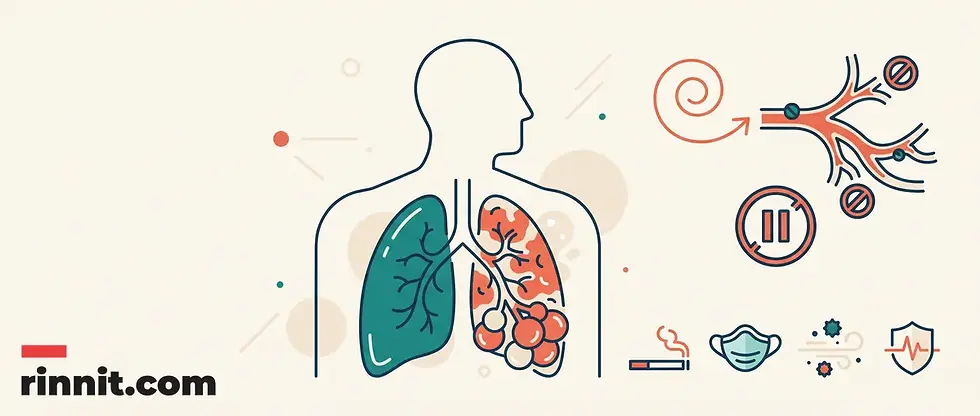
Chronic obstructive pulmonary disease, or COPD, is a term for certain types of irreversible lung and airway damage that block (obstruct) your airways and make it hard to breathe. [1] The obstruction happens through a combination of changes inside your lungs, and it is these changes, rather than a single disease, that define the condition.
When a person has COPD, four main changes develop in the lungs and airways:
Change in the Lungs | What It Means in Plain Language |
Loss of elasticity in airways and air sacs (alveoli) | The lungs lose their ability to stretch and bounce back like a balloon, so air does not move in and out efficiently |
Inflammation, scarring (fibrosis), and narrowing of the airways | The airways become swollen, develop scar tissue, and get narrower, restricting airflow |
Thick mucus in the airways | Extra thick mucus builds up and clogs the passages you breathe through |
Destruction of the walls between alveoli | The tiny air sacs become enlarged and damaged, which traps stale air inside them |
People with COPD often experience exacerbations, which are worsening episodes of symptoms such as severe difficulty breathing, thicker mucus, wheezing, and cough. Severe exacerbations may require a hospital visit. [1]
COPD gets progressively worse over time. [1] Flare-ups tend to get more severe and happen more often, usually taking years or decades to progress, although some people worsen faster. [1]
Emphysema and Chronic Bronchitis: The Two Forms of COPD
COPD includes both emphysema and chronic bronchitis, and people with COPD often have features of both. [1]
Condition | What Happens in the Lungs | Most Common Symptom |
Emphysema | The air sacs (alveoli) become damaged and enlarged | Shortness of breath (dyspnea) |
Chronic bronchitis | Inflammation develops in the large airways, narrowing them and producing lots of mucus | Cough |
Symptoms of COPD
COPD symptoms build gradually, which is why the condition is often not recognized until significant lung damage has occurred. The hallmark signs come from the airway obstruction, mucus buildup, and the way the body compensates for poor oxygen exchange.
Symptom | What It Looks Like |
Long-lasting cough with mucus | A cough with mucus that persists for three months or longer at a time, for at least two years |
Difficulty taking a deep breath | Breaths feel shallow and incomplete |
Shortness of breath | Especially during daily activities or with mild exertion |
Wheezing or other lung sounds | Noisy, whistling, or rattling sounds when breathing |
Barrel-shaped chest | The chest becomes rounded as trapped air enlarges it over time |
Bluish skin (cyanosis) | Skin takes on a bluish tint from low oxygen levels in the blood |

What Causes COPD?
Damage to the lungs from smoking is the most common cause of COPD. [1] However, smoking is not the only pathway. Other causes include:
Cause | Description |
Smoking | The most common cause of COPD overall |
Alpha-1 antitrypsin deficiency | A genetic disorder ("alpha-1") that can lead to lung damage, especially in people who develop COPD at a young age or who have never smoked |
Secondhand smoke | Regular exposure to other people's smoke |
Toxins in the air | Pollutants and chemical irritants breathed in over time |
Job or hobby exposure | Dust and fumes from work or hobbies |
Risk Factors
While smoking is the biggest risk factor for COPD, not everyone who smokes will develop it. [1] Factors that may raise your risk include:
Risk Factor | Why It Matters |
Being female | Women appear to be at higher risk for COPD |
Age over 65 | Risk increases with age |
Exposure to toxins in the air | Pollutants and irritants damage lung tissue over time |
Working with chemicals, dust, or fumes | Occupational exposure harms the airways |
Alpha-1 antitrypsin deficiency | This inherited condition directly damages the lungs |
Many respiratory infections during childhood | Frequent childhood infections may affect long-term lung health |
Complications of COPD
COPD creates conditions inside the lungs that open the door to several serious complications. The damaged airways can trap bacteria, leading to infections, and the impaired airflow can prevent oxygen from getting into the body while keeping carbon dioxide from getting out. [1] Possible complications include:
Complication | What It Is |
Pneumonia | Lung infection, more likely when bacteria become trapped in damaged lungs |
Hypercapnia | Abnormally high levels of carbon dioxide in the blood |
Hypoxemia | Abnormally low levels of oxygen in the blood |
Respiratory failure | The lungs can no longer keep blood oxygen and carbon dioxide at safe levels |
Pulmonary hypertension | High blood pressure in the arteries of the lungs |
Cor pulmonale (right-sided heart failure) | Heart failure on the right side of the heart caused by lung disease |
Pneumothorax | A collapsed lung |
Polycythemia | The body makes too many red blood cells in response to low oxygen |
How Is COPD Diagnosed?
To diagnose COPD, a healthcare provider performs a physical exam and asks about your health history, then tests how well your lungs work and may order images of your lungs. [1] The history questions typically focus on exposures and symptoms:
History Question | What the Provider Is Looking For |
Do you smoke or have you ever smoked? | The most common cause of COPD |
Have you had long-term exposure to dust or air pollutants? | Occupational and environmental lung damage |
Do other family members have COPD, other lung conditions, or liver disease? | Alpha-1 antitrypsin deficiency, which is inherited and can also affect the liver |
Do you get short of breath with exercise? When resting? | How much the condition limits activity |
Have you been coughing or wheezing for a long time? | The chronic symptom pattern of COPD |
Do you cough up phlegm? | Mucus production typical of chronic bronchitis |
Diagnostic Tests
Providers use a range of tests to confirm COPD, measure its severity, and rule out other conditions:
Test | What It Measures |
Pulmonary function tests | Spirometry and other tests that measure how well the lungs work |
Pulse oximetry | A finger device that measures oxygen levels in the blood |
Chest X-rays or CT scans | Images that look for lung changes caused by COPD |
Arterial blood gas test | A blood test that checks oxygen and carbon dioxide levels |
Exercise testing | Determines whether blood oxygen drops during exercise |
Electrocardiogram (ECG or EKG) | Checks heart function and rules out heart disease as a cause of shortness of breath |
Blood tests | Checks levels of the protein AAT to detect alpha-1 antitrypsin deficiency |
Genetic testing | A blood test that checks for genetic changes when a genetic condition is suspected |
COPD Stages: What Your FEV1 Score Means
Providers stage COPD based on your FEV1 (forced expiratory volume in one second) results. [1] FEV1 is the amount of air you can breathe out in one second, and it tells the provider how blocked your airways are. [1] Spirometry is used to measure FEV1, and the stage reflects FEV1 as a percentage of the value predicted for a person of your age, sex, and height. [1] [7]
Stage | FEV1 Result (% of predicted) | Severity |
Stage 1 | FEV1 is 80 or above | Mild |
Stage 2 | FEV1 is between 50 and 79 | Moderate |
Stage 3 | FEV1 is between 30 and 49 | Severe |
Stage 4 | FEV1 is less than 30 | Very severe |
In addition to the numeric stages, providers group patients by symptoms and flare-up risk using the letters A, B, and E. [1] Guidelines have separated the spirometric assessment from symptom evaluation since the 2017 GOLD report, with groups based on symptoms and exacerbation history (GOLD Executive Summary, Am J Respir Crit Care Med, 2017). [5]
Group | What It Means |
A | Mild symptoms and a low risk for exacerbations |
B | More severe symptoms and a low risk for exacerbations |
E | High risk for exacerbations |
Importantly, your stage is not directly related to your symptoms. You could be in stage 3 or 4 and still have mild symptoms. [1] Your provider uses your stage, symptoms, and number of exacerbations together to guide treatment.
How Is COPD Treated?
There is no cure for COPD. [1] Treatment focuses on improving your symptoms and reducing and treating exacerbations. [1] A review of treatment goals emphasizes that COPD management should address both symptoms and exacerbations and should combine pharmacologic and non-pharmacologic approaches (Vogelmeier et al., Respir Med, 2020). [6] Your provider may recommend one or more of the following:
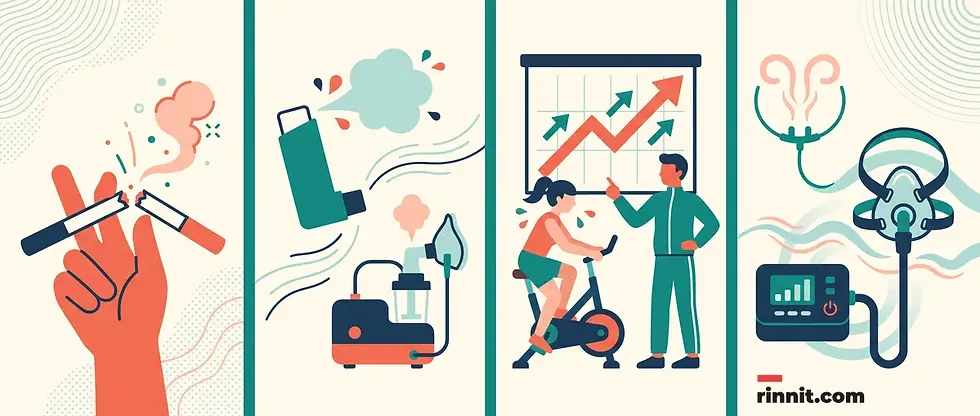
Treatment | How It Helps |
Smoking cessation programs | Quitting smoking can slow down the progression of COPD |
Inhaled medications | Bronchodilators and steroids reduce inflammation and open the airways, delivered through an inhaler or a liquid placed in a nebulizer |
Oxygen therapy | Supplemental oxygen improves your blood oxygen levels |
Pulmonary rehabilitation | An exercise and education program that strengthens your lungs and helps you manage COPD |
Corticosteroids | A course of steroids reduces inflammation during an exacerbation |
Positive airway pressure | A BiPAP machine helps you breathe, especially during an exacerbation |
Antibiotics | Prescribed when you have frequent bacterial infections in your lungs, to prevent infections and exacerbations |
Lung volume reduction (LVR) | Surgery or a valve procedure for people with severe COPD that reduces trapped air in the lungs |
Clinical trials | Tests of new treatments that may be a good fit for some patients |
Outlook and Prognosis
The lung damage from COPD is permanent and does not get better, but symptoms can be managed for a long time, and sometimes even improved. [1] Following your healthcare provider's recommendations and joining a pulmonary rehabilitation program can improve both your symptoms and your quality of life. [1] [3]
How long you live with COPD depends on how severe it is and how quickly it is progressing. Many people can live for decades after diagnosis, especially with early treatment. [1] Life expectancy is shorter with moderate to severe disease: in a study of 532 people diagnosed with COPD at a Taiwanese hospital, the estimated loss of life expectancy was about 6.2 years for stage 2 and about 9.3 years for stages 3 and 4, while mild (stage 1) COPD showed no reduction (Chen et al., Respir Med, 2020). [2]
Is COPD a terminal illness? COPD gets progressively worse over time, but it is not always terminal. [1] Progression speed varies from person to person. Over time, usually years or even decades, many people with COPD will not be able to breathe on their own, but others can live a long time without having severe symptoms. [1]
Prevention
The best way to prevent COPD is to avoid smoking and exposure to secondhand smoke and other pollutants that can damage your lungs. [1]
People with COPD are also more likely to get respiratory infections, which can lead to pneumonia or trigger severe exacerbations. [1] You can reduce your infection risk through several habits: [1]
Prevention Habit | How It Protects You |
Get all recommended vaccinations | Including flu, pneumococcal pneumonia, and COVID-19 vaccines |
Wash your hands frequently | Reduces the spread of respiratory germs |
Disinfect surfaces | Lowers the risk of picking up and passing along infections |
Wear a mask when your provider recommends it | Protects you around people who may be sick |
Avoid crowded places | Especially during cold and flu season and when COVID cases are high |
Living With COPD: Self-Care Tips
If you have COPD, several self-care habits can make a real difference in day-to-day life:
Self-Care Step | Details |
Avoid lung irritants | Steer clear of smoking, secondhand smoke, dust, strong fragrances, and airborne toxins |
Attend pulmonary rehabilitation sessions | These include physical and occupational therapy plus education, and you should keep following the plan even after the sessions end |
Talk to a registered dietitian | They can advise which foods to eat or avoid to stay healthy |
Take all medications as prescribed | Keep daily medications on hand so you never run out |
Make a flare-up plan | Work with your provider on what to do during an exacerbation, including which medications to have ready and when to go to the hospital |
Know how to use your devices | Inhalers, nebulizers, and CPAP machines require correct technique, so ask your provider to demonstrate |
Take care of your mental health | A chronic illness takes a toll; a psychiatrist, psychologist, or counselor can help with social, emotional, and mental health issues |
When to See a Healthcare Provider
If you think you could have COPD, do not wait to see a healthcare provider. Early diagnosis and treatment can reduce the risk of your symptoms progressing. [1]
If you already have COPD, contact your provider if you notice signs of infection or changes in your symptoms, including:
Warning Sign | What to Watch For |
Worsening shortness of breath | Not being able to walk as far as usual, more breathing difficulty at night, or using inhalers more often than normal |
Mucus (sputum) changes | Changes in color, bloody mucus, a foul smell, more mucus, or thicker mucus than usual |
Increased coughing or wheezing | A step up in how often or how hard you cough or wheeze |
New or worsening swelling | Swelling in the ankles, feet, or legs that does not go away after a night's sleep with your feet up |
Unexplained weight changes | Weight loss or gain without an obvious reason |
Frequent morning headaches or dizziness | A recurring pattern, not a one-off |
Extreme fatigue or weakness | Unexplained and lasting more than a day |
Fever or chills | Possible sign of infection |
Other infection signs | Sore throat, unusual sinus drainage, nasal congestion, headaches, or tenderness along the upper cheekbones |
When Should You Go to the ER?
Go to the emergency room if you experience:
Questions to Ask Your Healthcare Provider
It may be helpful to ask your provider:
What are the best ways to take care of myself?
Can I improve my symptoms?
How do I take this medication?
How do I use my inhaler, nebulizer, or other medical devices?
When should I follow up with you?
When should I go to the ER?
Living with chronic lung disease like COPD might feel overwhelming, scary, frustrating, or even lonely at times. But there are ways to keep your lung muscles as strong as possible and even improve your symptoms. Making a plan with your healthcare team, and talking with your loved ones about how they can help and what to do during a flare-up, can make the condition feel more manageable.
Conclusion
Chronic obstructive pulmonary disease (COPD) is a broad term covering irreversible lung damage that makes breathing progressively harder over time, and it includes both emphysema and chronic bronchitis. While the lung damage cannot be reversed and there is no cure, quitting smoking, taking inhaled medications, joining pulmonary rehabilitation, using oxygen therapy when needed, and staying current with vaccinations can meaningfully improve symptoms and reduce flare-ups. Many people live for decades after diagnosis, especially when COPD is caught and treated early. Understanding your FEV1 stage, preparing a flare-up plan, and learning to use your devices correctly puts you in the best position to keep your quality of life high.
If you or a loved one experiences a long-lasting mucus cough, shortness of breath with everyday activities, or frequent wheezing, talk to a healthcare provider before the damage worsens.
Want to explain health topics like this one visually? If you are helping someone manage COPD day to day, visual care summaries can make treatment plans far easier to follow. Rinnit's infographic templates can help you organize breathing exercise routines, medication schedules, and flare-up action plans in one glance.
Frequently Asked Questions
What is chronic obstructive pulmonary disease (COPD)?
Chronic obstructive pulmonary disease (COPD) is a term for certain types of irreversible lung and airway damage that block (obstruct) your airways and make it hard to breathe. It includes both emphysema and chronic bronchitis, and if you are diagnosed with either condition, you have COPD.
What does COPD mean?
COPD stands for chronic obstructive pulmonary disease. "Chronic" means long-lasting, "obstructive" means airflow is blocked, and "pulmonary" refers to the lungs.
What are the two types of COPD?
The two main forms are emphysema, in which the air sacs (alveoli) become damaged and enlarged with shortness of breath as the most common symptom, and chronic bronchitis, in which inflammation in the large airways produces excess mucus with cough as the most common symptom. Most people with COPD have features of both.
Is emphysema a type of COPD?
Yes. Emphysema is one of the two conditions that fall under the COPD umbrella, along with chronic bronchitis.
Is chronic bronchitis a type of COPD?
Yes. Chronic bronchitis is one of the two conditions included in COPD, and it involves inflammation of the large airways that narrows them and produces lots of mucus.
What causes COPD?
Damage to the lungs from smoking is the most common cause. Other causes include alpha-1 antitrypsin deficiency (a genetic disorder), secondhand smoke, toxins in the air, and exposure to dust and fumes from work or hobbies.
Can COPD be caused by secondhand smoke?
Yes. Secondhand smoke is a recognized cause of COPD, along with direct smoking, airborne toxins, and occupational dust and fumes.
What is alpha-1 antitrypsin deficiency and how does it cause COPD?
Alpha-1 antitrypsin deficiency, sometimes called "alpha-1," is a genetic disorder that can lead to lung damage. Providers may check the blood protein AAT or order genetic testing when this inherited condition is suspected, particularly in people who develop COPD young or have family members with COPD, lung conditions, or liver disease.
Who is at risk for COPD?
You may be at higher risk if you smoke or are exposed to secondhand smoke, are female, are over the age of 65, have been exposed to toxins in the air, have worked with chemicals, dust, or fumes, have alpha-1 antitrypsin deficiency, or had many respiratory infections during childhood.
Does everyone who smokes get COPD?
No. While smoking is the biggest risk factor for COPD, not everyone who smokes will develop the condition.
Are women at higher risk of COPD?
Being female is listed as one of the factors that may raise your risk for COPD.
Does age affect COPD risk?
Yes. People over the age of 65 are at higher risk for COPD.
Can job exposure cause COPD?
Yes. Working with chemicals, dust, or fumes, and having long-term exposure to toxins in the air, are recognized causes and risk factors for COPD.
What are the symptoms of COPD?
Symptoms include a long-lasting cough with mucus (for three months or longer at a time, for at least two years), difficulty taking a deep breath, shortness of breath especially during daily activities or mild exertion, wheezing or other lung sounds, a barrel-shaped chest, and bluish skin (cyanosis).
Why does COPD cause a cough with mucus?
In chronic bronchitis, inflammation of the large airways makes lots of mucus. A cough with mucus that lasts three months or longer at a time for at least two years is one of the hallmark signs of COPD.
What is a barrel chest in COPD?
A barrel-shaped chest develops as air becomes trapped in the lungs over time, enlarging the chest and giving it a rounded appearance.
What is cyanosis and why does COPD cause it?
Cyanosis is a bluish tint to the skin that occurs when oxygen levels in the blood are low. COPD can prevent oxygen from getting into the body effectively, leading to this bluish discoloration.
What is an exacerbation in COPD?
An exacerbation is a worsening of COPD symptoms, including severe difficulty breathing, thicker mucus, wheezing, and cough. People with COPD often get exacerbations, and severe ones may require a hospital visit.
Is COPD contagious?
No. COPD results from lung and airway damage caused by smoking, genetics, or long-term exposure to airborne irritants, so you cannot catch it from another person. People with COPD are, however, more likely to get respiratory infections, and those infections can spread.
Is COPD the same as asthma?
No. COPD refers to irreversible lung and airway damage that includes emphysema and chronic bronchitis. Asthma is a separate breathing condition, and a healthcare provider can tell them apart using your history and lung function tests.
How is COPD different from emphysema?
Emphysema is one specific form of COPD. COPD is the broader term that covers emphysema plus chronic bronchitis and mixed cases.
How is COPD diagnosed?
A provider performs a physical exam, takes a health history focused on smoking, exposures, and symptoms, tests lung function, and may order imaging of the lungs.
What is spirometry and why is it used for COPD?
Spirometry is a pulmonary function test used to measure how well your lungs work, including your FEV1, which is the amount of air you can breathe out in one second. FEV1 results are used to stage COPD severity.
What is FEV1 in COPD?
FEV1 (forced expiratory volume in one second) is the amount of air you can breathe out in one second. It tells the provider how blocked your airways are and is measured with spirometry to stage COPD.
What are the stages of COPD?
Stage 1: FEV1 of 80 or above. Stage 2: FEV1 between 50 and 79. Stage 3: FEV1 between 30 and 49. Stage 4: FEV1 less than 30 (all as a percentage of the predicted value).
What does COPD stage 4 mean?
Stage 4 means FEV1 is less than 30% of the predicted value, indicating very severe airflow obstruction.
Is stage 4 COPD always worse than stage 2?
Not necessarily in terms of symptoms. Your stage is not directly related to your symptoms, so you could be in stage 3 or 4 and still have mild symptoms. Providers use stage, symptoms, and exacerbation history together to guide treatment.
What are the A, B, and E groups in COPD?
Group A means mild symptoms and a low risk for exacerbations. Group B means more severe symptoms and a low risk for exacerbations. Group E means a high risk for exacerbations.
What tests are used to diagnose COPD?
Tests include pulmonary function tests (spirometry), pulse oximetry, chest X-rays or CT scans, an arterial blood gas test, exercise testing, an electrocardiogram (ECG or EKG), blood tests for the AAT protein, and genetic testing.
What does pulse oximetry measure?
Pulse oximetry uses a device on your finger to measure oxygen levels in your blood.
What does an arterial blood gas test show?
An arterial blood gas test is a blood test that checks your oxygen and carbon dioxide levels, which COPD can disturb.
Why is an ECG used in COPD evaluation?
An electrocardiogram (ECG or EKG) checks heart function and helps rule out heart disease as a cause of shortness of breath.
What is exercise testing in COPD?
Exercise testing determines whether the oxygen level in your blood drops when you exercise.
Is there a cure for COPD?
No. There is no cure for COPD. Treatment focuses on improving symptoms and reducing and treating exacerbations.
How is COPD treated?
Treatments include smoking cessation programs, inhaled medications (bronchodilators and steroids via inhaler or nebulizer), oxygen therapy, pulmonary rehabilitation, corticosteroids during exacerbations, positive airway pressure (BiPAP), antibiotics for frequent bacterial infections, lung volume reduction surgery or valve procedures for severe cases, and clinical trials.
Does quitting smoking help COPD?
Yes. If you smoke, quitting can slow down the progression of COPD.
What are bronchodilators for COPD?
Bronchodilators are inhaled medications that relax the muscles around your airways to open them, delivered through an inhaler or as a liquid in a nebulizer.
What is a nebulizer for COPD?
A nebulizer is a device that turns liquid medication into a mist you breathe in, offering an alternative to inhalers for delivering bronchodilators and steroids.
What is pulmonary rehabilitation for COPD?
Pulmonary rehabilitation is an exercise and education program that can strengthen your lungs and help you manage COPD. It includes physical and occupational therapy and education sessions.
When is oxygen therapy needed for COPD?
You may need supplemental oxygen therapy to improve your blood oxygen levels, particularly as COPD progresses and oxygen levels drop.
What is BiPAP for COPD?
BiPAP is a positive airway pressure machine that helps you breathe, especially during an exacerbation.
When are antibiotics used for COPD?
If you have frequent bacterial infections in your lungs, a provider may prescribe antibiotics to prevent infections and exacerbations.
What is lung volume reduction surgery for COPD?
For people with severe COPD who are good candidates, lung volume reduction (LVR) surgery or a valve procedure can reduce the trapped air in the lungs.
Can COPD symptoms be improved?
Yes. While the damage is permanent, there are ways to manage your symptoms for a long time and sometimes even improve them. Following your provider's recommendations and a pulmonary rehabilitation program can improve symptoms and quality of life.
Can you live a long life with COPD?
How long you live with COPD depends on how severe it is and how quickly it is progressing. Many people can live for decades after diagnosis, especially with early treatment.
What is the life expectancy for COPD?
It depends on severity. In one hospital-based study, the estimated loss of life expectancy was about 6 years for stage 2 COPD and about 9 years for stages 3 and 4, with no reduction for mild (stage 1) COPD. Many people still live for decades after diagnosis, especially with early treatment.
Is COPD a terminal illness?
COPD gets progressively worse over time, but it is not always a terminal illness. Progression varies from person to person, and some people live a long time without severe symptoms.
Does COPD always get worse?
COPD gets progressively worse over time for most people. Flare-ups get more severe and happen more often, usually over years or decades, though some people worsen faster and others live a long time without severe symptoms.
What are the complications of COPD?
Complications include pneumonia, hypercapnia (high carbon dioxide), hypoxemia (low oxygen), respiratory failure, pulmonary hypertension, cor pulmonale (right-sided heart failure), pneumothorax (collapsed lung), and polycythemia (too many red blood cells).
What is hypercapnia in COPD?
Hypercapnia is a complication in which carbon dioxide builds up to high levels in the blood because damaged lungs cannot get it out effectively.
What is hypoxemia in COPD?
Hypoxemia is a complication in which oxygen levels in the blood drop too low because damaged lungs cannot get enough oxygen in.
What is cor pulmonale in COPD?
Cor pulmonale is right-sided heart failure that can result from lung disease such as COPD.
What is polycythemia in COPD?
Polycythemia is a complication in which the body makes too many red blood cells, often in response to chronic low oxygen.
Can COPD cause a collapsed lung?
Yes. Pneumothorax (collapsed lung) is one of the possible complications of COPD.
Can COPD be prevented?
The best way to prevent COPD is to avoid smoking and exposure to secondhand smoke and other pollutants that can damage your lungs.
What vaccines should people with COPD get?
Getting all recommended vaccinations, including flu, pneumococcal pneumonia, and COVID-19, can reduce the infection risk that triggers severe exacerbations.
How can I reduce infection risk with COPD?
You can reduce infection risk by getting recommended vaccinations, washing your hands frequently, disinfecting surfaces, wearing a mask when your provider recommends it, and avoiding crowded places during cold and flu season or when COVID cases are high.
What should I avoid with COPD?
Avoid lung irritants and anything that makes symptoms worse, including smoking, secondhand smoke, dust, strong fragrances, and toxins in the air.
How do I use an inhaler correctly for COPD?
Ask your healthcare provider to demonstrate the correct usage of your inhaler, nebulizer, CPAP machine, and other medical devices, and keep practicing the technique they show you.
What should I do during a COPD flare-up?
Work with your provider ahead of time to make a flare-up plan, including having certain medications on hand and knowing when to go to the hospital. During an exacerbation, treatment may include a course of corticosteroids or a BiPAP machine.
When should I call my doctor about COPD?
Contact your provider for worsening shortness of breath, changes in mucus color or thickness, bloody or foul-smelling mucus, increased coughing or wheezing, ankle or leg swelling that does not improve overnight, unexplained weight changes, frequent morning headaches or dizziness, fatigue lasting more than a day, or fever and chills.
When should I go to the ER with COPD?
Go to the emergency room for a high fever over 103 degrees Fahrenheit (39.4 degrees Celsius), sudden or severe difficulty breathing, restlessness, confusion, forgetfulness or irritability, or slurred speech.
Does COPD affect mental health?
Yes. Living with chronic lung disease can take a toll on mental health, and a psychiatrist, psychologist, or counselor can help manage social, emotional, and other mental health issues.
What questions should I ask my doctor about COPD?
Helpful questions include: What are the best ways to take care of myself? Can I improve my symptoms? How do I take this medication? How do I use my inhaler or nebulizer? When should I follow up? And when should I go to the ER?
Can a dietitian help with COPD?
Yes. A registered dietitian can tell you if there are specific foods to eat or avoid that can help keep you healthy with COPD.
Will COPD affect my daily activities?
COPD causes shortness of breath especially when performing daily activities or with mild exertion, but pulmonary rehabilitation and treatment can help you maintain activity and quality of life.
How fast does COPD progress?
COPD usually progresses over years or decades, with flare-ups getting more severe and more frequent, though some people get worse faster than others.
What is the outlook for someone with COPD?
The lung damage is permanent, but symptoms are manageable for a long time and sometimes improve. Many people live for decades after diagnosis, especially with early treatment, while life expectancy is shorter with moderate to severe disease.
Related Reading
Beta-Agonists: Types, Uses and Side Effects explains beta-agonist medicines.
Heliox Therapy: Uses, How It Works and Risks explains heliox breathing therapy.
Chest Physiotherapy (Chest PT): Techniques, Uses and Benefits explains chest physiotherapy for clearing mucus.
BiPAP Machine: Uses, How It Works and Side Effects explains BiPAP machines and how they support breathing.
Bronchodilators: Types, How They Work and Side Effects explains bronchodilators for asthma and COPD.
Inhalers: Types, Medicines and How to Use Them explains inhaler types and correct technique.
DLCO Lung Diffusion Test: Purpose, Normal Range and Results explains the breathing test that shows how well oxygen moves into your blood.
FEV1 (Forced Expiratory Volume): What Your Lung Test Numbers Mean explains the key spirometry number and what a low FEV1 means.
Learn more in our guide to Lung Volume Reduction Surgery (LVRS): Who Qualifies, Procedure, Risks and Results.
Learn more in our guide to Bullectomy.
Arterial Blood Gas (ABG) Test: Purpose, Procedure, Normal Values and Results explains the blood test that measures oxygen, carbon dioxide and pH in this condition.
Learn more in our guide to Pulse Oximetry: Normal Oxygen Levels, How It Works and What Affects Accuracy.
Learn more in our guide to Spirometry: What the Lung Function Test Measures, How It's Done and What Results Mean.
Auscultation: How Doctors Listen to Your Heart, Lungs and Belly and What the Sounds Mean explains how a provider listens for heart, lung and bowel sounds linked to this condition.
Chest X-Ray (CXR): What It Shows, How It's Done and What Results Mean explains how a chest X-ray helps diagnose COPD and emphysema.
CO2 Blood Test (Bicarbonate): Purpose, Procedure, Normal Levels and What Results Mean explains how lung diseases like COPD can raise CO2 levels on a CO2 blood test.
Learn more in our guide to Blood Oxygen Level: Normal Range, How It's Tested and When to Worry.
Lung Cancer Screening: Who Should Get It, How Low-Dose CT Works and What Results Mean explains who qualifies for yearly low-dose CT screening, how the scan works and what the results mean.
Body Plethysmography: What It Measures, How It's Done and Results explains the booth-based lung test that measures total lung capacity, residual volume and airway resistance.
Cardiopulmonary Exercise Test (CPET): What It Measures, How to Prepare and What to Expect explains the exercise test that measures heart, lung and muscle performance together.
References
Cleveland Clinic. Chronic Obstructive Pulmonary Disease (COPD). Cleveland Clinic Health Library. Last updated August 19, 2024. https://my.clevelandclinic.org/health/diseases/8709-chronic-obstructive-pulmonary-disease-copd
Chen CZ, Shih CY, Hsiue TR, et al. Life expectancy (LE) and loss-of-LE for patients with chronic obstructive pulmonary disease. Respir Med. 2020;172:106132. PMID: 32905891. https://doi.org/10.1016/j.rmed.2020.106132
McCarthy B, Casey D, Devane D, et al. Pulmonary rehabilitation for chronic obstructive pulmonary disease. Cochrane Database Syst Rev. 2015;2015(2):CD003793. PMID: 25705944. https://doi.org/10.1002/14651858.CD003793.pub3
Anthonisen NR, Skeans MA, Wise RA, et al. The effects of a smoking cessation intervention on 14.5-year mortality: a randomized clinical trial. Ann Intern Med. 2005;142(4):233-239. PMID: 15710956. https://doi.org/10.7326/0003-4819-142-4-200502150-00005
Vogelmeier CF, Criner GJ, Martinez FJ, et al. Global strategy for the diagnosis, management, and prevention of chronic obstructive lung disease 2017 report. GOLD Executive Summary. Am J Respir Crit Care Med. 2017;195(5):557-582. PMID: 28128970. https://doi.org/10.1164/rccm.201701-0218PP
Vogelmeier CF, Román-Rodríguez M, Singh D, et al. Goals of COPD treatment: focus on symptoms and exacerbations. Respir Med. 2020;166:105938. PMID: 32250871. https://doi.org/10.1016/j.rmed.2020.105938
MedlinePlus. Pulmonary function tests. MedlinePlus Medical Encyclopedia. Last reviewed October 14, 2025. https://medlineplus.gov/ency/article/003853.htm
Medical disclaimer
This article is for informational purposes only and is not a substitute for professional medical advice, diagnosis, or treatment. Always seek the advice of a qualified healthcare provider with any questions about a medical condition or before making decisions about treatment. Never disregard professional medical advice or delay seeking it because of something you have read here.



Comments