Chest Physiotherapy (Chest PT): Techniques, Uses and Benefits

Updated: 2 days ago
Written and medically reviewed by Dr. Baraa Alnahhal, MD · Last reviewed: November 2026 · How we review
Quick Answer
Chest physiotherapy (chest PT) is a physical therapy treatment that loosens thick mucus in the chest so you can cough it out. A provider claps or vibrates your chest and back while you lie in different positions. It's used for cystic fibrosis, COPD, bronchiectasis and pneumonia. It shouldn't hurt and may make breathing easier.
What the research says
It cleared more mucus in cystic fibrosis: a Cochrane review found more mucus was cleared during chest physiotherapy than without it in 4 small studies, but 6 studies showed no effect on lung function and long-term benefits couldn't be confirmed (Warnock L et al., Cochrane Database of Systematic Reviews, 2023) [2]
It made little difference in childhood pneumonia: a Cochrane review of 12 trials in 2,863 children hospitalized with pneumonia found chest physiotherapy made little or no difference in death or time to normal breathing, with low-certainty evidence (Santino TA et al., Cochrane Database of Systematic Reviews, 2026) [3]
Key takeaways
Chest PT loosens mucus so you can cough it out.
It uses clapping (percussion) or vibration.
It helps cystic fibrosis, COPD, bronchiectasis and more.
Use your bronchodilator first and wait after eating.
It shouldn't hurt.
What is chest physiotherapy?
Chest PT is often used with postural drainage, where your body is positioned so gravity helps mucus drain. It can be part of a larger pulmonary rehabilitation plan. Sources: [1]
Who it helps
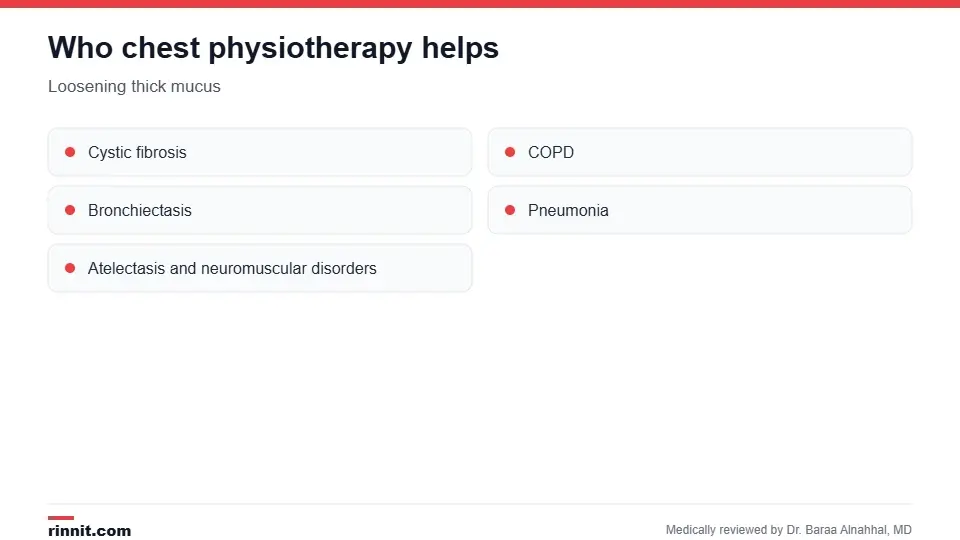
Thick mucus in these conditions is hard to clear.
COPD.
Neuromuscular disorders. Sources: [1]
Types of chest PT
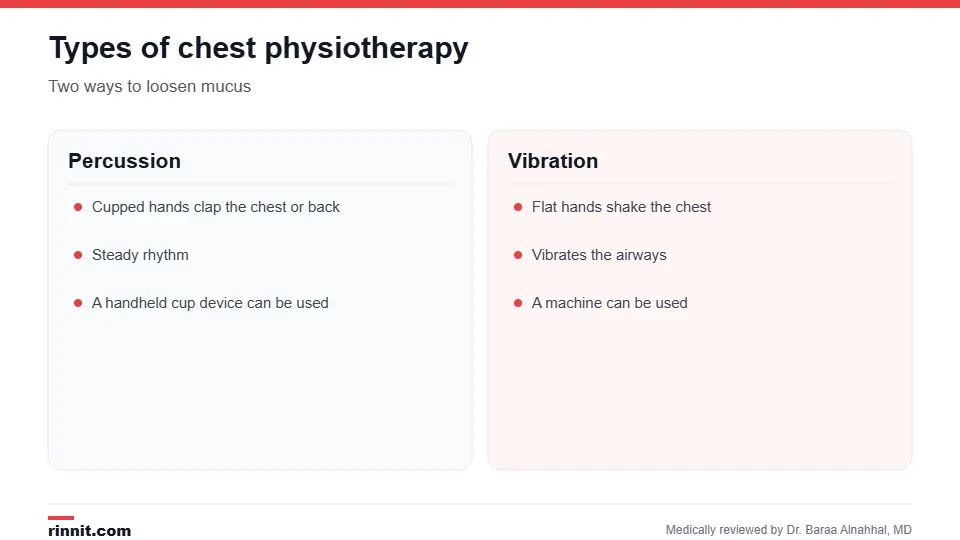
Both rattle mucus loose without hurting.
Type | How it's done |
Percussion | Cupped hands or a cup-shaped device clap the back or chest in a steady rhythm |
Vibration | Flat hands or a machine shake the chest or back to vibrate the airways |
Sources: [1]
How to prepare
Use your inhaled bronchodilator 15 to 30 minutes before.
Wait 90 minutes after eating.
Tell your provider about health conditions, including bleeding or blood pressure problems.
Only do it at home after a provider recommends it and shows you how. Sources: [1]
What happens during chest PT
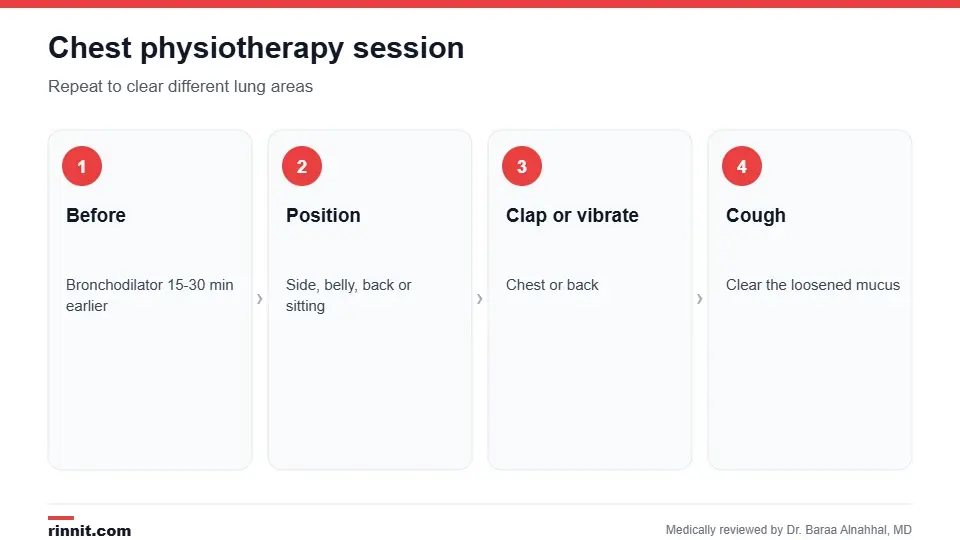
Some people do it daily or several times a day.
You're positioned on your side, belly or back, or sitting up, sometimes with a pillow or wedge.
The provider claps or vibrates your chest or back and may give breathing instructions.
You cough out the loosened mucus.
Steps and positions repeat to clear different areas of the lungs. Sources: [1]
Some people need it daily or several times a day. Sources: [1]
Risks
Rib, spine or muscle injury.
Shortness of breath or low oxygen.
Vomiting or inhaling stomach contents.
Low blood pressure or irregular heartbeat.
Airway spasm or lung bleeding. Sources: [1]
Using only head-up positions lowers these risks. Never clap or vibrate below the rib cage or on the lower back, which can damage organs. Extra care is needed with recent chest or back injury, osteoporosis or bleeding problems. Sources: [1]
Benefits
Chest PT can make breathing easier, reduce infections, flare-ups and hospital visits, and improve your ability to walk, exercise and do daily tasks. Sources: [1, 2]
When to get help
Trouble breathing.
Coughing up blood.
Chest pain.
Severe headache, weakness or dizziness.
Bluish skin, lips or nails. Sources: [1]
Call 911 or your provider right away for these symptoms. Sources: [1]
Conclusion
Chest physiotherapy is a simple, hands-on way to clear stubborn mucus and breathe more easily. Learning the right technique from your care team makes it safe to do at home.
Keep learning: read about postural drainage and cystic fibrosis.
Frequently asked questions
What is chest physiotherapy?
A treatment that loosens mucus in your chest so you can cough it out.
Who needs chest PT?
People with cystic fibrosis, COPD, bronchiectasis, pneumonia and similar conditions.
What's the difference between percussion and vibration?
Percussion claps the chest; vibration shakes it.
Does chest PT hurt?
No. Tell your provider if it does.
Can I do chest PT at home?
Yes, after a provider teaches you or a caregiver.
When should I use my inhaler?
15 to 30 minutes before chest PT.
Can I do it after eating?
Wait 90 minutes after a meal.
How often is it done?
Some people need it daily or several times a day.
Where should you never clap?
Below the rib cage or on the lower back.
What are the benefits?
Easier breathing and fewer flare-ups and hospital visits.
Related Reading
Postural Drainage: Techniques for Airway Clearance positioning to drain mucus.
Cystic Fibrosis: Symptoms, Causes, Diagnosis, and Treatment (2026 Guide) a common reason for chest PT.
Bronchiectasis: The Widened Airways Condition That Makes Mucus Hard to Clear — Explained damaged airways that trap mucus.
What Is Chronic Obstructive Pulmonary Disease (COPD)? Symptoms, Causes, Stages, and Treatment a lung disease chest PT helps.
Atelectasis: Symptoms, Causes, Diagnosis & Treatment — Complete Guide collapsed lung areas.
References
Cleveland Clinic. Chest Physiotherapy (CPT): Percussion, Technique & Results. Cleveland Clinic. Last updated February 26, 2025. https://my.clevelandclinic.org/health/treatments/chest-physiotherapy
Warnock L, Gates A. Airway clearance techniques compared to no airway clearance techniques for cystic fibrosis. Cochrane Database of Systematic Reviews. 2023;4(4):CD001401. PMID 37042825. https://doi.org/10.1002/14651858.CD001401.pub4
Santino TA, Chaves GS, Penha TH, et al. Chest physiotherapy for pneumonia in children. Cochrane Database of Systematic Reviews. 2026;11(11):CD010277. PMID 42992515. https://doi.org/10.1002/14651858.CD010277.pub4
Medical disclaimer
This article is for general education only and does not replace advice from a qualified healthcare professional. Talk to your doctor about your own diagnosis and treatment, and seek emergency care right away for severe or sudden symptoms.



Comments