Alpha-1-Antitrypsin Deficiency (AATD): Complete Guide to Symptoms, Causes, Genotypes, Diagnosis, and Treatment

Updated: 3 days ago
Medically reviewed by Dr. Baraa Alnahhal, MD · Last reviewed: October 2026
Quick Answer: What Is Alpha-1-Antitrypsin Deficiency (AATD)?
Alpha-1-antitrypsin deficiency (AATD) is an inherited condition caused by changes in the SERPINA1 gene, which normally tells the liver to make a protein that protects the lungs. In AATD, the body makes too little of this protein or a misshapen version, which can damage the lungs, liver, skin and blood vessels. Early diagnosis and care can prevent serious problems. [1]
What the research says
Weekly infusions slowed lung-density loss in a placebo-controlled trial. In the RAPID trial, 180 non-smoking adults with severe AATD received weekly A1PI infusions or placebo for 24 months. CT lung density at total lung capacity fell by 1.45 g/L per year with treatment versus 2.19 g/L with placebo (difference 0.74 g/L per year, p=0.03), although the combined primary measure did not reach significance (p=0.06). (Chapman et al., Lancet, 2015) [3]
Never-smokers found by screening had a normal life expectancy. In a Swedish registry of 1,585 people with severe (PiZZ) AATD compared with 5,999 controls, the adjusted risk of death was 3.2 times higher overall (HR 3.2, 95% CI 2.8–3.6), but it was not increased in never-smoking PiZZ individuals identified by screening (HR 1.2, 95% CI 0.6–2.2). (Tanash et al., Eur Respir J, 2017) [4]
An investigational drug sharply cut the abnormal protein in the liver. In the phase 2 SEQUOIA trial of 40 adults with ZZ AATD liver disease, fazirsiran lowered serum Z-AAT by 61%, 83%, and 94% at 25, 100, and 200 mg versus placebo at week 16 (all P<.0001), and median liver Z-AAT fell 93% compared with a 26% increase on placebo. (Clark et al., Gastroenterology, 2024) [5]
AATD at a Glance
What it is: An inherited condition that can damage the lungs, liver, skin, and blood vessels.
Cause: Gene variants (most often S or Z) in the SERPINA1 gene that controls AAT protein production.
Who gets it: Affects about 100,000 people in the United States and more than 3 million globally; most common in people of Northern European ancestry.
Highest-risk genotype: PI*ZZ — nearly all severe AATD cases.
Main lung complication: COPD (emphysema and chronic bronchitis), usually before age 55.
Main liver complications: Fibrosis, cirrhosis, and liver cancer; AATD is the main cause of liver disease in children.
Main test: Blood test measuring the AAT protein level.
Key treatment: Augmentation therapy (weekly AAT protein infusions), COPD therapy, liver monitoring, and transplant when needed.
Outlook: No cure, but early diagnosis and care can prevent serious problems; some never-smokers live a typical lifespan.
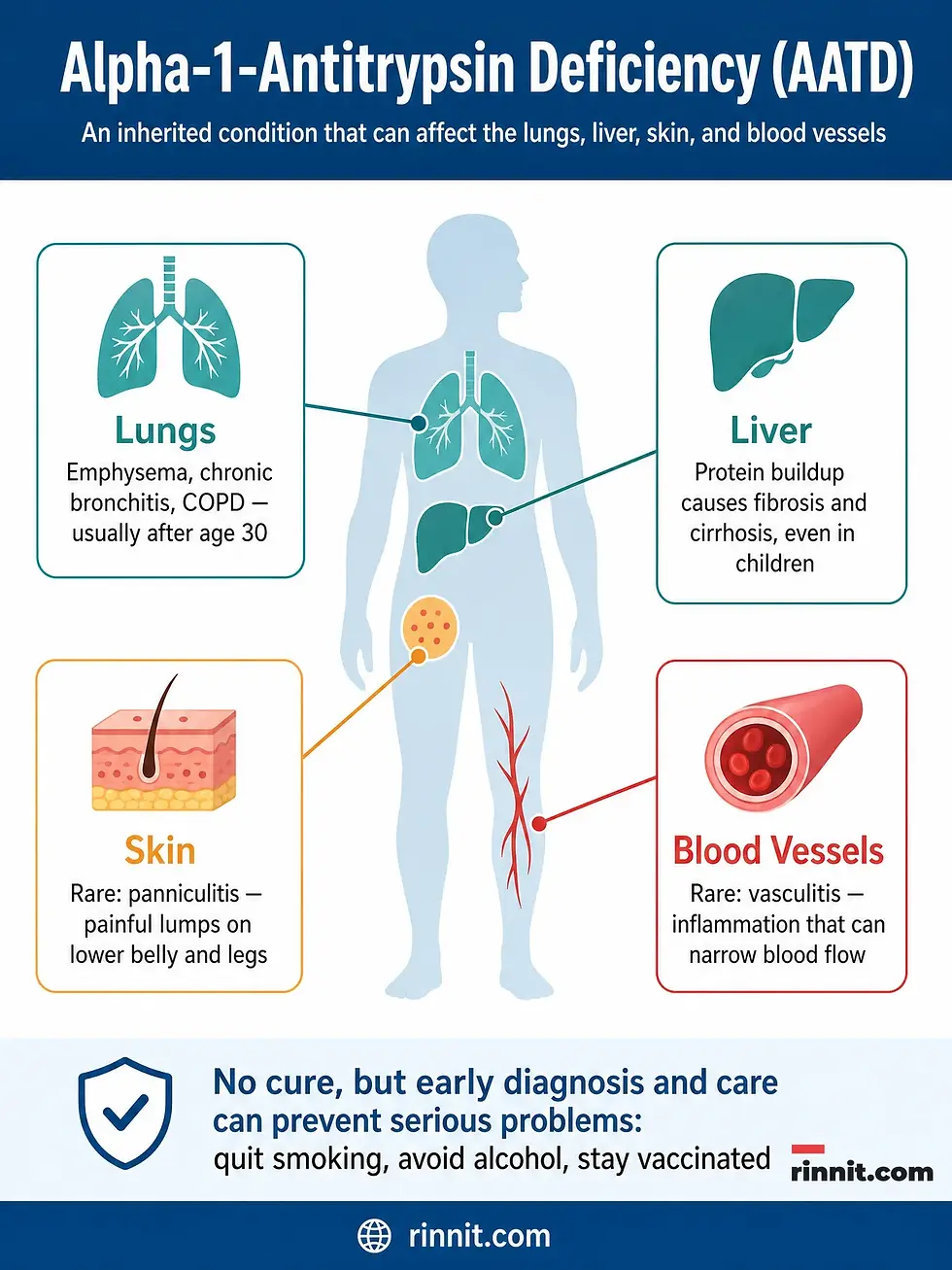
AATD can affect four parts of the body, but early diagnosis and healthy habits can prevent serious problems.
What Is Alpha-1-Antitrypsin Deficiency?
Alpha-1-antitrypsin deficiency (AATD) is a condition that is inherited — passed through families. It can cause damage to the lungs, liver, skin, and blood vessels.
Not everyone who has AATD develops symptoms or health concerns. People in the same family may have different symptoms.
AATD is rare and can be difficult to diagnose. It is often found more than five years after lung disease symptoms start.
AATD has no cure. But with early diagnosis and the right care, many people can prevent serious problems, control symptoms, and improve their quality of life.
What Is the AAT Protein and What Does It Do?
One gene tells the liver to make a protein called alpha-1-antitrypsin (AAT or A1AT). This protein travels through the bloodstream to protect the lungs from smoke, pollution, fumes, or dust that is breathed in.
The AAT protein is a type of protease inhibitor. That means it keeps enzymes called proteases in check. One of these enzymes, neutrophil elastase, can destroy lung tissue if it is not controlled. So keeping protease enzymes in check helps protect the lungs.
In people with AATD, gene changes (called variants) cause the liver to either not make enough AAT protein or make protein that is not formed correctly. Researchers have found more than 120 variants linked to AATD.
In the lungs, a lack of working AAT protein can lead to emphysema or ongoing bronchitis — forms of chronic obstructive pulmonary disease (COPD) — and bronchiectasis.
In the liver, misshapen AAT protein that builds up can cause fibrosis and cirrhosis, and raises the risk of liver cancer.

When the gene variant stops healthy AAT protein from reaching the lungs, lung tissue breaks down and protein builds up in the liver.
What are the symptoms of alpha-1-antitrypsin deficiency (AATD)?
Symptoms depend on which organs are affected and how severe the condition is. They typically start in adults older than 30. But children may have symptoms of liver disease. Not everyone with AATD has symptoms.
AATD most often affects the lungs and liver, but it can affect the skin and blood vessels too.
Lung Symptoms
When the protective AAT protein is missing or not working, the lungs are more easily damaged by smoke, air pollution, fumes, and dust. Cigarette smoke is the most common cause of lung disease in AATD. Lung symptoms may include:
Trouble catching your breath
Wheezing when you breathe
Lack of energy or feeling very tired
Limited ability to exercise or do regular activities
Ongoing cough that may bring up a lot of mucus
Frequent lung infections
Lung disease caused by AATD is rare in children.
Liver Symptoms
If the AAT protein is not formed correctly, it builds up in the liver, potentially causing scarring that can progress to end-stage liver disease or cirrhosis. Liver symptoms may include:
Jaundice — yellowing of the skin and the white part of the eyes (the yellowing might be harder to see on Black or brown skin)
Losing weight without trying to
Not feeling hungry
Swelling in the legs or belly
Lack of energy
Throwing up blood or blood in stools
In infants, liver symptoms may look different: jaundice that doesn't go away, swelling in the belly, dark urine, or pale stools.
Skin Symptoms (Rare)
Painful lumps in the fat below the skin, most often on the lower belly and legs
Painful sores on the skin
Hot patches on the skin over the lumps, affecting the legs, lower belly, thighs, and buttocks
Blood Vessel Symptoms (Rare)
AATD can cause inflammation of the blood vessels:
Aches and pains all over
Feeling tired
Fever
Poor appetite and unintended weight loss
When to See a Doctor
Make an appointment to discuss testing if you or your child has symptoms of lung, liver, skin, or blood vessel disease. Also talk with your healthcare professional if someone in your family has AATD, lung disease, or liver disease.
How does the SERPINA1 gene cause alpha-1-antitrypsin deficiency (AATD)?
AATD is caused by a change in the SERPINA1 gene — the gene that tells the body to make the AAT protein.
AATD is an autosomal dominant condition. Each person inherits two copies of the SERPINA1 gene, one from each parent:
Two variants means you have AATD.
One variant means you are a carrier. You likely won't develop AATD complications, but you could pass the changed gene to your children.
If the liver doesn't make enough AAT protein or the protein doesn't work as it should, the neutrophil elastase enzyme attacks lung tissue, causing it to break down. This increases the risk of lung diseases such as COPD. AAT protein that builds up in the liver may cause liver damage and raises the risk of cirrhosis.
Genotypes: Understanding Your Risk
Variants are grouped by how they affect the protein's quantity or quality. Proteins are assigned a letter based on how they move when stimulated by an electric charge:
Normal, well-formed protein = M
Low quantity or quality = S or Z
The pair of variants you inherit — one from each parent — is called your genotype. The list below shows what the main genotypes mean:
**PI*MM, PI*MS, PI*SS:** No increased risk of emphysema; risk is the same as in people without AATD.
**PI*MZ:** COPD in people who smoke or have long-term exposure to pollutants and fumes; non-smokers typically are not at increased emphysema risk; slightly increased risk of liver cirrhosis.
**PI*SZ:** Emphysema and bronchitis (higher risk if you smoke); liver cirrhosis risk nearly tripled; higher risk of liver cancer.
**PI*ZZ:** Nearly all of the severe AATD cases; high risk of liver fibrosis, cirrhosis, and liver cancer; very high risk of emphysema and COPD, especially among people who smoke; panniculitis and vasculitis.
**PI*null-null (no AAT protein):** Lung disease risk nearly 100%; the liver is not at risk because it doesn't make the protein.
What are the risk factors for alpha-1-antitrypsin deficiency (AATD)?
Risk factors for alpha-1-antitrypsin deficiency (AATD) include a family history of AATD, of COPD or emphysema, or of liver disease.
Family history of AATD — affects about 100,000 people in the United States and more than 3 million globally; most common in people of Northern European ancestry, but occurs in all ancestries. AATD is underdiagnosed, especially among people who are Black, Asian, or of Latin American descent.
Family history of COPD or emphysema — about 1% of people diagnosed with COPD have the inherited form. Long-term cigarette smoking is the biggest risk factor for COPD.
Family history of liver disease.
What are the complications of alpha-1-antitrypsin deficiency (AATD)?
Alpha-1-antitrypsin deficiency (AATD) complications include lung disease such as COPD, emphysema and chronic bronchitis, as well as liver complications like fibrosis, cirrhosis and liver cancer.
Lung Complications: COPD, Emphysema, and Bronchitis
People with AATD can damage their lungs through repeated exposure to smoke, fumes, air pollution, or dust. Those who smoke typically develop lung disease between ages 40 and 50 — about 10 years sooner than people who don't smoke.
AATD raises the risk of COPD, a group of ongoing lung diseases caused by damage that blocks airflow and creates extra mucus. COPD usually develops before age 55 in people with AATD. The two most common types are:
Emphysema — the inner walls of the lungs' air sacs (alveoli) are damaged and rupture, creating one large air space instead of many small ones. This reduces the surface area for exchanging oxygen and carbon dioxide, and trapped air makes it hard for fresh oxygen in. Cigarette smoking speeds this up. About 9 in 10 people with severe AATD who smoke develop emphysema, but non-smokers can develop it too.
Chronic bronchitis — inflammation of the tubes carrying air to and from the lungs (bronchial tubes), causing extra mucus. People who smoke may have symptoms as early as age 35. About 4 in 10 people with AATD have ongoing bronchitis.
Smoking also causes more severe lung disease than in someone who doesn't smoke.
Liver Complications: Fibrosis, Cirrhosis, and Liver Cancer
When gene changes alter the AAT protein's shape, the liver can't move it into the bloodstream. The protein builds up with nowhere to go, and over time this causes damage. Liver disease can start at any age — including at birth. AATD is the main cause of liver disease in children.
AATD raises the risk of:
Fibrosis — scar tissue builds on the liver. Men older than 50 with AATD, diabetes, and obesity are at high risk.
Cirrhosis — advanced scarring that affects how well the liver works; known as end-stage liver disease. It can lead to liver failure and liver cancer.
Liver cancer — hepatocellular cancer is the most common liver cancer in people with AATD, occurring most often in people with cirrhosis.
Skin and Blood Vessel Complications
People with AATD have an increased risk of panniculitis, a rare skin condition where swelling under the skin causes painful lumps on the lower belly, legs, thighs, and buttocks. The lumps may break open and leak an oily liquid. The average age it occurs is about 40.
AATD also raises the risk of vasculitis, a rare group of blood vessel conditions where inflammation narrows or blocks blood flow. Vasculitis can cause blood clots that could cause a heart attack or stroke, and some vessel damage can cause death. It can also cause an aneurysm — a balloonlike bulge in a blood vessel wall.
How is alpha-1-antitrypsin deficiency (AATD) diagnosed?
Because AATD is rare and its symptoms resemble common lung and liver problems, it is hard to diagnose — often more than five years after lung symptoms begin.
The main test is a blood test that measures the AAT protein level in your blood. Your healthcare professional may recommend this test if you have:
Symptoms of AATD
A lung disease such as COPD, especially if it started before age 55
A liver disease such as cirrhosis
Close family members (such as a parent or sibling) who have AATD
Close family members who have lung or liver disease
If your AAT level is low, other tests may check for complications [2]:
Genetic test: A blood test that finds the exact changes in the SERPINA1 gene; a genetic counselor can explain results — talk about the emotional impact before testing.
Lung function tests (spirometry): Tell how well your lungs are working; may be done regularly if you have COPD.
CT scan of the lungs or chest X-ray: Show lung damage from COPD.
Liver blood tests and ultrasound: Tell how well your liver is working.
What are the treatment options for alpha-1-antitrypsin deficiency (AATD)?
Alpha-1-antitrypsin deficiency (AATD) has no cure, but treatment, such as augmentation therapy for lung disease, helps you live a healthier life. Your treatment depends on the lung, liver, skin, or blood vessel complication — not on your genetic makeup. Work with your healthcare professional to create a personalized plan [2].
Lung Disease Treatments
Augmentation therapy (IV infusions of AAT protein). Weekly infusions of donated AAT protein into a vein may slow the emphysema damage. This is typically for people with the lowest AAT levels and has some side effects. Note: these infusions do not help liver disease and are not recommended for it.
Medicines (usually by inhaler). Bronchodilators relax the muscles around the airways and help clear mucus (short-acting before activities, long-acting daily, or both); inhaled corticosteroids (steroids) reduce airway swelling and prevent flare-ups; and antibiotics treat flare-ups caused by respiratory infections like flu or pneumonia.
Oxygen therapy — supplements low blood oxygen through a tube in your nostrils or a face mask; improves quality of life and can extend life.
Pulmonary rehabilitation — supervised exercise training, breathing techniques, and health education.
Surgery — options if medicines no longer control serious symptoms: bullectomy removes large air spaces (bullae) from the lungs; lung volume reduction surgery removes wedges of damaged upper lung tissue so healthier tissue can expand and the diaphragm works better; and lung transplant is for severe or end-stage lung disease — major surgery with risks such as organ rejection and lifelong immune-weakening medicine.
Liver Disease Treatments
Treatment goals are to slow scarring and prevent or treat the symptoms and complications of cirrhosis:
Monitoring — yearly liver function tests, ultrasound, and MRI (more often with cirrhosis or liver cancer).
Liver transplant — an option for end-stage liver disease; major surgery with rejection risks and lifelong medicine.
Experimental medicine (fazirsiran) — targets the changed gene and has shown early promise in reducing misshapen protein in the liver, but more clinical trials are needed.
Skin and Blood Vessel Treatments
For panniculitis (which can lead to death if untreated):
Dapsone, a tablet taken for several weeks, is usually the first medicine; doxycycline may be added.
IV AAT infusions at higher doses may help when dapsone fails (used off-label; insurance may not cover it).
For vasculitis:
Corticosteroids are the most common medicine to control inflammation; other medicines may be added to lower the steroid dose and its side effects.
An aneurysm may need surgery to lower the risk of rupture.
Which lifestyle steps protect the lungs and liver in alpha-1-antitrypsin deficiency (AATD)?
Lifestyle steps that protect the lungs and liver in alpha-1-antitrypsin deficiency (AATD) include quitting smoking, avoiding smoke and poor-quality air and avoiding alcohol.
Quit smoking. Stopping keeps COPD from getting worse. In severe AATD, smoking may shorten life by as much as 10 years. Ask about stop-smoking programs, nicotine replacement, and medicines.
Avoid smoke and poor-quality air. Stay away from secondhand smoke, dust, fumes, and pollution. Check daily air quality and stay indoors on bad days.
Avoid alcohol. Do not drink if you have liver disease — alcohol makes it worse, and people with liver transplants who don't drink live longer.
Eat healthy foods. Nutrient-rich foods — vegetables, fruits, nuts, lean proteins, whole grains, and dairy — build strength and maintain a healthy weight.
Get regular physical activity. Exercise strengthens the muscles you use to breathe; movement-with-breathing practices like tai chi or yoga may help your lungs work better.
Stay up to date with vaccines. Get COVID-19, flu, and pneumonia shots, plus hepatitis A and B vaccines; ask about others like RSV, tetanus, measles, and shingles.
Review your medicines. Ask a healthcare professional or pharmacist to check for medicines that may cause liver damage, including over-the-counter ones.
Coping and Support
Living with AATD can bring depression, anxiety, or fear. Meeting with a mental health professional can help you work through feelings and explore medicines or treatments. Talking openly, joining a support group, and spending time with friends and family can lessen stress and anxiety.
Preparing for Your Appointment
Before your appointment, write a list of your symptoms and when they started, all medicines and supplements with doses, your family health history, past treatments, your smoking history, and your questions. Bring a family member or friend to help remember what the healthcare team says.
Frequently Asked Questions
What is alpha-1-antitrypsin deficiency (AATD)?
AATD is an inherited condition caused by changes in the SERPINA1 gene. It makes the body produce too little or misshapen AAT protein, which normally protects the lungs from smoke, pollution, and dust. The condition can damage the lungs, liver, skin, and blood vessels.
What are the first symptoms of AATD?
Symptoms usually start in adults over age 30 and most often involve the lungs and liver: trouble catching your breath, wheezing, fatigue, an ongoing cough with mucus, jaundice (yellowing of the skin and eyes), and swelling in the legs or belly. Children may show liver symptoms such as jaundice that doesn't go away.
Is alpha-1-antitrypsin deficiency genetic?
Yes. AATD is inherited through a change in the SERPINA1 gene. Everyone inherits two copies of the gene — having two variants causes AATD, while having one variant makes you a carrier who can pass the gene to children.
What is the most serious genotype of AATD?
The PI*ZZ genotype is the most serious — it causes nearly all of the severe AATD cases, with high risks of liver fibrosis, cirrhosis, liver cancer, emphysema, and COPD, especially in people who smoke.
How is AATD diagnosed?
The main test is a blood test that measures the AAT protein level. If the level is low, doctors may follow up with a genetic test, lung function tests (spirometry), CT scans or chest X-rays, and liver blood tests and ultrasound.
Is there a cure for alpha-1-antitrypsin deficiency?
There is no cure for AATD. But treatments such as weekly AAT protein infusions (augmentation therapy), COPD medicines, oxygen therapy, pulmonary rehabilitation, liver monitoring, and transplants when needed can manage symptoms, slow the disease, and improve quality of life.
Conclusion: What to Remember About Alpha-1-Antitrypsin Deficiency
Alpha-1-antitrypsin deficiency is an inherited condition that quietly raises the risk of serious lung, liver, skin, and blood vessel disease — and the single most important takeaway is that smoking dramatically accelerates the damage while quitting can slow it. The three lessons to carry from this guide are:
Know your family history. AATD runs in families, and having a parent or sibling with AATD, lung disease, or liver disease is a reason to ask for testing — especially if lung symptoms start before age 55.
Protect your lungs and liver now. Never smoking, avoiding alcohol if you have liver disease, staying vaccinated, and breathing clean air are the most powerful steps you can take.
Treatment works. Augmentation therapy, COPD medicines, oxygen, rehabilitation, and transplant options can manage symptoms and extend life — early diagnosis makes all the difference.
This guide gives you one clear, plain-language place to understand AATD from the gene level to daily care. If unexplained breathing problems or jaundice run in your family, the best next step is to talk with your healthcare professional about a simple blood test.
This article is for informational purposes only and is not a substitute for professional medical advice. Always consult a qualified healthcare provider for diagnosis and treatment.
References
Mayo Clinic Staff. Alpha-1-antitrypsin deficiency - Symptoms and causes. Mayo Clinic. Dec. 06, 2025. https://www.mayoclinic.org/diseases-conditions/alpha-1-antitrypsin-deficiency/symptoms-causes/syc-20588790
Mayo Clinic Staff. Alpha-1-antitrypsin deficiency - Diagnosis and treatment. Mayo Clinic. Dec. 06, 2025. https://www.mayoclinic.org/diseases-conditions/alpha-1-antitrypsin-deficiency/diagnosis-treatment/drc-20588792
Chapman KR, Burdon JGW, Piitulainen E, et al. Intravenous augmentation treatment and lung density in severe α1 antitrypsin deficiency (RAPID): a randomised, double-blind, placebo-controlled trial. Lancet. 2015;386(9991):360-368. PMID 26026936. https://doi.org/10.1016/S0140-6736(15)60860-1
Tanash HA, Ekström M, Rönmark E, et al. Survival in individuals with severe alpha 1-antitrypsin deficiency (PiZZ) in comparison to a general population with known smoking habits. Eur Respir J. 2017;50(3):1700198. PMID 28889108. https://doi.org/10.1183/13993003.00198-2017
Clark VC, Strange C, Strnad P, et al. Fazirsiran for Adults With Alpha-1 Antitrypsin Deficiency Liver Disease: A Phase 2 Placebo Controlled Trial (SEQUOIA). Gastroenterology. 2024;167(5):1008-1018.e5. PMID 38964420. https://doi.org/10.1053/j.gastro.2024.06.028



Comments