What Is Common Variable Immunodeficiency (CVID)? Symptoms, Causes, Diagnosis, Treatment and Prognosis

Updated: 2 days ago
Medically reviewed by Dr. Baraa Alnahhal, MD · Last reviewed: October 17, 2026
Quick Answer
Common variable immunodeficiency (CVID) is a condition in which the body does not produce normal levels of IgG, IgA and IgM antibodies because B-cells fail to mature. People get sick more often and more severely, and vaccines generally do not work well. The standard treatment is lifelong immunoglobulin replacement [4], often with antibiotics, and early diagnosis lowers the risk of complications [1].

Key takeaways
Area | What you need to know |
What it is | A group of genetic disorders in which immune cells do not make enough antibodies (IgG, IgA, IgM) |
How common | |
Main symptom | Frequent infections: sinusitis, pneumonia, bronchitis, ear infections, shingles |
Other symptoms | Chronic runny or congested nose, enlarged lymph nodes, stomach problems, unintended weight loss, joint pain, finger clubbing |
Cause | DNA changes affecting B-cells; the TNFRSF13B gene is most often involved; inherited in about 10% of cases |
Diagnosis | Blood tests of IgG, IgA and IgM, plus genetic testing and a health history review |
Treatment | Lifelong immunoglobulin replacement (IVIg every 3 to 4 weeks or SCIg every 1 to 4 weeks), often with antibiotics |
Outlook | No cure, but treatment has greatly improved survival; lung disease is the most common cause of death |
Key caution | Live vaccines can be dangerous; avoid them unless your provider recommends them |
Watch for | Depression is more common in people with CVID; mental health is part of care |
What the research says
Delay in diagnosis is a modifiable risk. In a retrospective analysis of European registry data on 2,700 patients from 23 countries, the median diagnostic delay was 4 years, and a longer delay was associated with a higher risk of death (HR 1.04, 95% CI 1.02 to 1.06). Annual rates of bronchiectasis (21.9%), autoimmunity (23.2%), digestive disorders (15.6%), solid cancers (5.5%) and lymphoma (3.8%) exceeded those of the general population. In exploratory analysis, lymphoma (HR 5.48), granulomatous-lymphocytic interstitial lung disease (HR 4.85) and solid tumours (HR 2.69) were associated with increased mortality. Registry data show association, not proof of cause (Odnoletkova et al., Orphanet J Rare Dis, 2018) [1].
Lung disease and severe infections predict worse outcomes. A 30-year single-centre review of 198 people with CVID (91 with pediatric-onset disease) found that lung disease (OR 5) and infection with severe or opportunistic organisms (OR 9) were directly related to increased mortality, and that delayed diagnosis also correlated with mortality. Depression, anemia and GERD were intermediary markers correlating with mortality. Of 18 deaths, 13 were in people whose symptoms began in childhood, and the most common cause of death was infection (Baloh et al., J Clin Immunol, 2019) [2].
A serious lung complication has recognizable warning features. A multicenter Italian study of 73 people with CVID-related interstitial lung disease and 125 without compared those with granulomatous-lymphocytic interstitial lung disease (GLILD) to controls. GLILD was more often accompanied by splenomegaly (84.8% vs 39.2%), autoimmune cytopenia (59.6% vs 6.4%) and bronchiectasis (72.3% vs 28%), and combining four markers gave an AUC of 0.98 for identification. The authors propose this as a tool for earlier identification that limits aggressive diagnostic procedures (Cinetto et al., Front Immunol, 2021) [3].
What Is Common Variable Immunodeficiency (CVID)?
CVID is a group of genetic disorders that affect the immune system. People with CVID have low levels of antibodies in the blood. Antibodies are proteins that fight infections (read more in the body's defense force: a guide to antibodies), and when your body cannot produce them in normal amounts, you become vulnerable.
With too few antibodies, you get sick more often and more severely than other people. Typical problems are frequent respiratory, ear and sinus infections. Vaccines are also generally ineffective, because the immune system cannot respond to them by making antibodies.
CVID is called "common" only among rare diseases. Roughly 1 in 25,000 people have it [1], and it is the most common symptomatic primary immunodeficiency in adults [4]. Most people are diagnosed in adulthood, although symptoms can begin in childhood.
How serious is CVID? Beyond frequent, sometimes hard-to-treat infections, CVID raises the risk of other life-threatening conditions, including severe lung disease and certain cancers [1], which is why ongoing medical care matters.
Is CVID an autoimmune disease? Not exactly. It is an immunodeficiency: the immune system underperforms rather than overattacks. But CVID does increase the risk of autoimmune disorders [1] [5], in which the immune system attacks the body's own tissues. A weak and misdirected immune system at the same time is one of the distinctive features of the condition.
CVID Symptoms
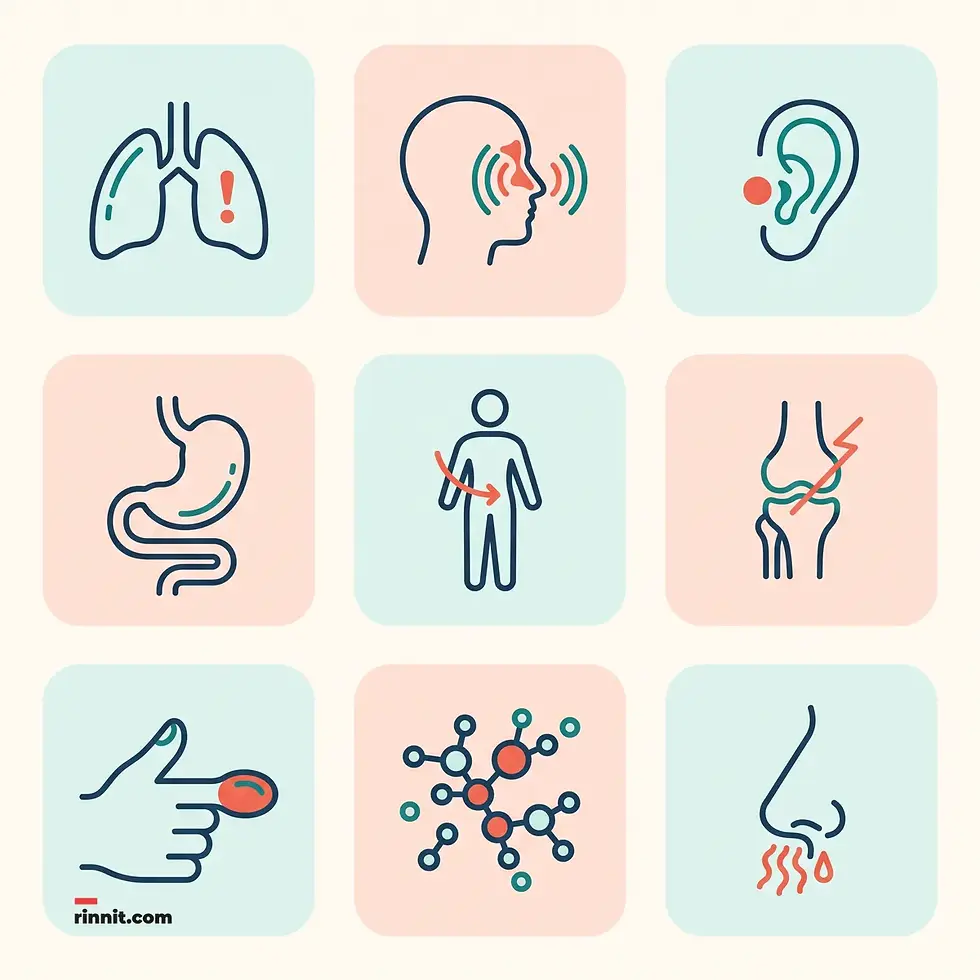
The most common sign is frequent infections, most often sinusitis, pneumonia, bronchitis, ear infections and shingles. If you seem to catch every cold and it consistently turns into a sinus or chest infection, that pattern is a hallmark.
Other symptoms can include:
Chronic rhinitis: an ongoing runny nose or nasal congestion.
Enlarged lymph nodes.
Gastrointestinal symptoms: abdominal pain, nausea, vomiting and diarrhea.
Unintended weight loss.
Joint pain.
Finger clubbing: rounded, bulbous fingertips (see what are clubbed fingers).
Related infections are explained in our guides to acute sinusitis, ear infections, pneumonia and shingles.
What Causes CVID?
Genetic variations cause CVID. No single change causes it: many different gene changes are associated with the condition, and experts believe more than one is needed. The most commonly found mutations are in the *TNFRSF13B* gene.
These changes mean B-cells do not work properly. They fail to develop into plasma cells and memory B-cells, the cells that make antibodies (immunoglobulins). People with CVID have low levels of IgG, IgA and IgM.
The genetic variations are inherited in about 10% of cases. Experts do not know what causes the changes in the other 90%. Researchers suspect epigenetic changes (changes in how the body reads DNA, driven by environment or lifestyle) could contribute [5], but more studies are needed.
Cause factor | Detail |
Core problem | B-cells do not develop into plasma and memory cells, so antibodies are not produced normally |
Antibodies affected | Low IgG, IgA and IgM |
Most common gene mutation | TNFRSF13B |
Inherited cases | About 10% |
Non-inherited cases | About 90%; cause unknown, epigenetic factors suspected |
Effect on vaccines | The immune system cannot respond, so vaccines generally do not create immunity |
Complications and Associated Conditions
Damage from repeated infections, combined with CVID's effects on the immune system, can lead to other diseases. Knowing these risks helps you and your care team screen early.
CVID and autoimmune disorders
Autoimmune condition | What it involves |
Antiphospholipid syndrome | Abnormal blood clotting related to antibodies |
The immune system destroys red blood cells | |
Immune attack on the liver | |
Gut inflammation similar to celiac disease | |
Hashimoto's disease | Immune attack on the thyroid |
Low platelets causing bleeding and bruising | |
Chronic inflammation of the digestive tract | |
Immune attack on the joints | |
Inflammation of the blood vessels |
See also our overview of autoimmune diseases.
CVID and cancer
Cancers of the digestive tract and the lymphatic system are the most common in people with CVID. Lymphoma and gastrointestinal cancers are the most frequent.
CVID and chronic lung disease
Damage from infections and inflammation can lead to chronic lung and airway disease, including:
Bronchiectasis: permanent widening and scarring of the airways.
COPD and emphysema.
GLILD (granulomatous-lymphocytic interstitial lung disease): a condition that damages the lungs and causes nodules of immune cells to form (related: interstitial lung disease).
People with CVID are also at higher risk of an enlarged spleen (splenomegaly), granulomas (small clusters of inflammatory cells in tissues) and depression.
How Is CVID Diagnosed?
Providers diagnose CVID with blood tests that measure IgG, IgA and IgM. If levels are low, genetic testing may be ordered to look for DNA changes. Providers also review your health history, especially any pattern of frequent or severe infections, and may do other tests or imaging to rule out other conditions. There is no single universally accepted definition of CVID, and published criteria continue to be refined to support treatment decisions (Ameratunga et al., Clin Exp Immunol, 2013) [4].
Diagnostic step | What it checks |
Blood test (immunoglobulin panel) | Levels of IgG, IgA and IgM |
Genetic testing | DNA changes, including TNFRSF13B mutations |
Health history review | Pattern of infections and symptom timeline |
Additional tests or imaging | Ruling out other conditions and complications |
CVID Treatment and Management
CVID is managed with replacement immunoglobulin therapy, which supplies the antibodies your body cannot make. Immunoglobulin replacement is the standard of care (Ameratunga et al., 2013) [4]. See also our guide to intravenous immunoglobulin (IVIg).
IVIg (intravenous): antibodies are given directly into a vein, typically every three to four weeks, usually in a clinic or infusion center.
SCIg (subcutaneous): antibodies are injected under the skin, typically every one to four weeks. Many people learn to self-administer at home.
Replacement therapy is not a cure: it is needed for life. Your provider may also prescribe antibiotics to prevent bacterial infections or to treat them at the first sign.

Treatment option | How it works | Typical schedule |
IVIg (intravenous) | Antibodies delivered directly into a vein | Every 3 to 4 weeks |
SCIg (subcutaneous) | Antibodies injected under the skin | Every 1 to 4 weeks |
Antibiotics | Prevent bacterial infections or treat them early | As prescribed |
Lifelong monitoring | Regular screening for complications | Ongoing |
What about vaccines? Avoid vaccinations unless your provider recommends them. Live vaccines can be dangerous for people with CVID, because the body cannot mount a proper antibody response.
Outlook and Life Expectancy
CVID needs treatment for life. You will work with a healthcare provider to treat illnesses as early as possible, and you may have regular screening for cancer, lung disease or other complications.
Does CVID ever get better? There is no cure. But immunoglobulin replacement has increased survival significantly over past decades and reduces the risk of life-threatening infection.
What is CVID life expectancy? Studies suggest that most people with CVID, over 75%, are alive 25 years after diagnosis, and about half live 45 years or more. Outcomes vary with complications: lung disease, severe infections, lymphoma and delayed diagnosis are linked to worse survival in the research above [1] [2]. Early diagnosis and consistent treatment are key to a better long-term outlook.
Living With CVID
Prioritize your care: keep appointments, learn to recognize the signs of infection, and ask your provider for a clear action plan if symptoms start. If lung problems are part of your picture, see our guide to pulmonary rehabilitation.
People with CVID are at higher risk of depression. Talk to a provider if you have symptoms of depression or simply do not feel like yourself. Mental health is as important as any other part of your care.
Contact your healthcare provider if:
You get sick after receiving a live vaccine.
You get sick frequently with bacterial infections.
You develop new or worsening symptoms, such as unexplained weight loss, persistent breathing problems or changes in mood.
For a wider view of weakened immunity, see immunocompromised: understanding a weakened immune system.
Conclusion
CVID is a lifelong genetic condition in which the immune system fails to produce enough antibodies. The result is a predictable pattern: frequent respiratory, sinus and ear infections, stomach problems, and a higher risk of autoimmune disease, lung disease, certain cancers and depression. Diagnosis rests on blood tests showing low IgG, IgA and IgM, and management centers on lifelong immunoglobulin replacement [4], often with antibiotics on standby.
The outlook is far better than in past decades, and replacement therapy has helped turn CVID into a manageable chronic condition for most people. Staying connected with your care team, recognizing infection early and protecting your mental health make the biggest day-to-day difference.
If you find visual explanations helpful for understanding or teaching others about immune conditions, explore Rinnit's infographic templates, designed to turn complex health topics into clear, shareable visuals.
Frequently Asked Questions
What is common variable immunodeficiency (CVID)?
A group of genetic disorders in which immune cells do not produce normal levels of antibodies, causing frequent and sometimes severe infections.
What does CVID stand for?
Common variable immunodeficiency. "Common" refers to it being the most frequent symptomatic primary immunodeficiency in adults, and "variable" to how differently it presents.
Is CVID rare?
Yes. About 1 in 25,000 people have it.
Is CVID the most common primary immunodeficiency?
It is the most common symptomatic primary immunodeficiency diagnosed in adults.
What age is CVID usually diagnosed?
Most people are diagnosed as adults, although symptoms can begin in childhood.
What causes CVID?
Genetic variations. No single change causes it; many are associated, and more than one is thought to be needed.
Is CVID inherited?
The variations are inherited in about 10% of cases. The cause in the other 90% is unknown, though epigenetic factors are suspected.
Which gene is most often linked to CVID?
TNFRSF13B carries the most commonly found mutations.
What do antibodies do?
Antibodies are proteins that fight infections. People with CVID have low levels of them.
Which antibodies are low in CVID?
IgG, IgA and IgM.
What are B-cells?
A type of immune cell. In CVID they fail to develop into plasma cells and memory B-cells, which make antibodies.
What is the most common symptom?
Frequent infections, especially sinusitis, pneumonia, bronchitis, ear infections and shingles.
Does CVID cause sinus infections?
Yes. Recurrent sinusitis is one of the most common infections.
Can CVID cause ear infections?
Yes, frequent ear infections are common.
Can CVID cause pneumonia?
Yes. Recurrent pneumonia is a hallmark and a major reason long-term lung damage can develop.
Why is shingles common in CVID?
Shingles is a painful rash caused by reactivation of the chickenpox virus. The immune system of a person with CVID has trouble keeping the virus in check.
What is chronic rhinitis?
An ongoing runny nose or nasal congestion, one of the possible symptoms of CVID.
Can CVID cause stomach problems?
Yes. Abdominal pain, nausea, vomiting and diarrhea can occur.
Can CVID cause weight loss?
Yes, unintended weight loss is a possible symptom.
Can CVID cause joint pain?
Yes, joint pain is a recognized symptom.
What is finger clubbing?
Rounding and enlargement of the fingertips, which can be associated with chronic lung disease.
Do lymph nodes swell with CVID?
Enlarged lymph nodes are a common finding.
How is CVID diagnosed?
With blood tests measuring IgG, IgA and IgM, plus genetic testing, a health history review and sometimes imaging to rule out other conditions.
What blood tests are used?
An immunoglobulin panel measuring IgG, IgA and IgM. Low levels prompt further evaluation.
Can genetic testing confirm CVID?
It can identify associated DNA changes such as TNFRSF13B mutations, but it is one part of the picture alongside antibody levels and history.
Why does diagnostic delay matter?
In registry data, a longer delay was associated with a higher risk of death and complications (Odnoletkova et al., 2018).
Is there a cure for CVID?
No, but it is manageable with lifelong treatment.
How is CVID treated?
With replacement immunoglobulin therapy, IVIg or SCIg, which supplies the antibodies the body cannot make.
What is IVIg?
Intravenous immunoglobulin: antibodies given into a vein, typically every three to four weeks.
What is SCIg?
Subcutaneous immunoglobulin: antibodies injected under the skin, typically every one to four weeks, and often self-administered at home.
Do I need treatment for life?
Yes. Replacement therapy is not a cure and continues for life.
Are antibiotics used?
Yes, to prevent bacterial infections or to treat them at the first sign.
Can people with CVID be vaccinated?
Avoid vaccinations unless your provider recommends them. Live vaccines can be dangerous.
Why are live vaccines a risk?
The immune system cannot mount a normal antibody response, so the weakened live organism can cause illness instead of immunity.
What complications can CVID cause?
Autoimmune disorders, lymphoma and gastrointestinal cancers, chronic lung disease, an enlarged spleen, granulomas and depression.
Which autoimmune diseases are linked to CVID?
Antiphospholipid syndrome, autoimmune hemolytic anemia, autoimmune hepatitis, celiac-like disease, Hashimoto's disease, ITP, inflammatory bowel disease, rheumatoid arthritis and vasculitis.
Which cancers are more common?
Lymphoma and gastrointestinal cancers are the most common.
What is GLILD?
Granulomatous-lymphocytic interstitial lung disease: a lung condition in which nodules of immune cells form and damage the lungs.
Can CVID cause lung damage?
Yes. Repeated infections and inflammation can lead to bronchiectasis, COPD, emphysema and asthma.
What is CVID life expectancy?
Studies suggest over 75% are alive 25 years after diagnosis and about half live 45 years or more.
What is the most common cause of death?
Reports commonly cite lung disease; one single-centre review found infection to be the leading cause (Baloh et al., 2019).
Does CVID affect mental health?
Yes. The risk of depression is higher, and addressing mental health is part of care.
Can children have CVID?
Yes. Most diagnoses are in adults, but symptoms can start in childhood.
Is CVID serious?
It can be. Beyond hard-to-treat infections it raises the risk of severe lung disease and certain cancers, which is why ongoing care is essential.
Can CVID be prevented?
No. It is genetic and cannot currently be prevented.
When should I call my provider?
If you get sick after a live vaccine, get frequent bacterial infections, or develop new or worsening symptoms.
Can I live a normal life with CVID?
Many people live full, active lives with consistent treatment, early attention to infections and regular screening.
Does CVID run in families?
In about 10% of cases the variations are inherited. Genetic counseling may help families.
How often is IVIg given?
Typically every three to four weeks.
How often is SCIg given?
Typically every one to four weeks.
What is the difference between primary and secondary immunodeficiency?
Primary immunodeficiencies like CVID are genetic. Secondary ones are acquired later, for example from medications or other illnesses.
Does CVID get worse over time?
Without treatment, repeated infections can cause progressive damage, especially to the lungs. Consistent replacement therapy substantially lowers the risk of life-threatening infection.
Who treats CVID?
Clinical immunologists, often alongside pulmonologists, gastroenterologists and other specialists depending on complications.
Related Reading
References
Odnoletkova I, Kindle G, Quinti I, et al. The burden of common variable immunodeficiency disorders: a retrospective analysis of the European Society for Immunodeficiency (ESID) registry data. Orphanet J Rare Dis. 2018;13(1):201. PMID 30419968. https://doi.org/10.1186/s13023-018-0941-0
Baloh C, Reddy A, Henson M, et al. 30-year review of pediatric- and adult-onset CVID: clinical correlates and prognostic indicators. J Clin Immunol. 2019;39(7):678-687. PMID 31377970. https://doi.org/10.1007/s10875-019-00674-9
Cinetto F, Scarpa R, Carrabba M, et al. Granulomatous lymphocytic interstitial lung disease (GLILD) in common variable immunodeficiency (CVID): a multicenter retrospective study of patients from Italian PID referral centers. Front Immunol. 2021;12:627423. PMID 33777011. https://doi.org/10.3389/fimmu.2021.627423
Ameratunga R, Woon ST, Gillis D, et al. New diagnostic criteria for common variable immune deficiency (CVID), which may assist with decisions to treat with intravenous or subcutaneous immunoglobulin. Clin Exp Immunol. 2013;174(2):203-211. PMID 23859429. https://doi.org/10.1111/cei.12178
Amato G, Vita F, Quattrocchi P, et al. Involvement of miR-142 and miR-155 in non-infectious complications of CVID. Molecules. 2020;25(20):4760. PMID 33081305. https://doi.org/10.3390/molecules25204760
Medical disclaimer
This article is for informational purposes only and is not a substitute for professional medical advice, diagnosis, or treatment. Always seek the advice of a qualified healthcare provider with any questions about a medical condition. Never disregard professional medical advice or delay seeking care based on content you have read here.



Comments