Primary Immunodeficiency: Complete Guide to Signs, Causes, Diagnosis, and Treatment

Updated: 2 days ago
Medically reviewed by Dr. Baraa Alnahhal, MD · Last reviewed: September 2026
TL;DR
Primary immunodeficiency disorders are a group of more than 300 conditions that make it hard for the body to fight infections, usually because immune defenses are missing or not working from birth. The most common sign is infections that are more frequent, longer lasting, or harder to treat than usual. They are often inherited through DNA, and family history is the only known risk factor. Treatments range from aggressive antibiotics and immunoglobulin therapy to stem cell transplants and gene therapy. See a doctor for frequent, recurrent, or severe infections that do not respond to treatment.
Quick Answer
Primary immunodeficiency disorders are a group of conditions, usually present from birth, that make it hard for the body to fight infections because some immune defenses are missing or not working properly. Researchers have identified more than 300 forms, classified into six groups based on which part of the immune system is affected. Because many forms are inherited through DNA, family history is the only known risk factor. The hallmark sign is infections that are more frequent, longer lasting, or harder to treat than usual. Treatment focuses on preventing and treating infections, boosting the immune system with immunoglobulin therapy, and in severe cases restoring it with stem cell transplantation or gene therapy.
What Is Primary Immunodeficiency?
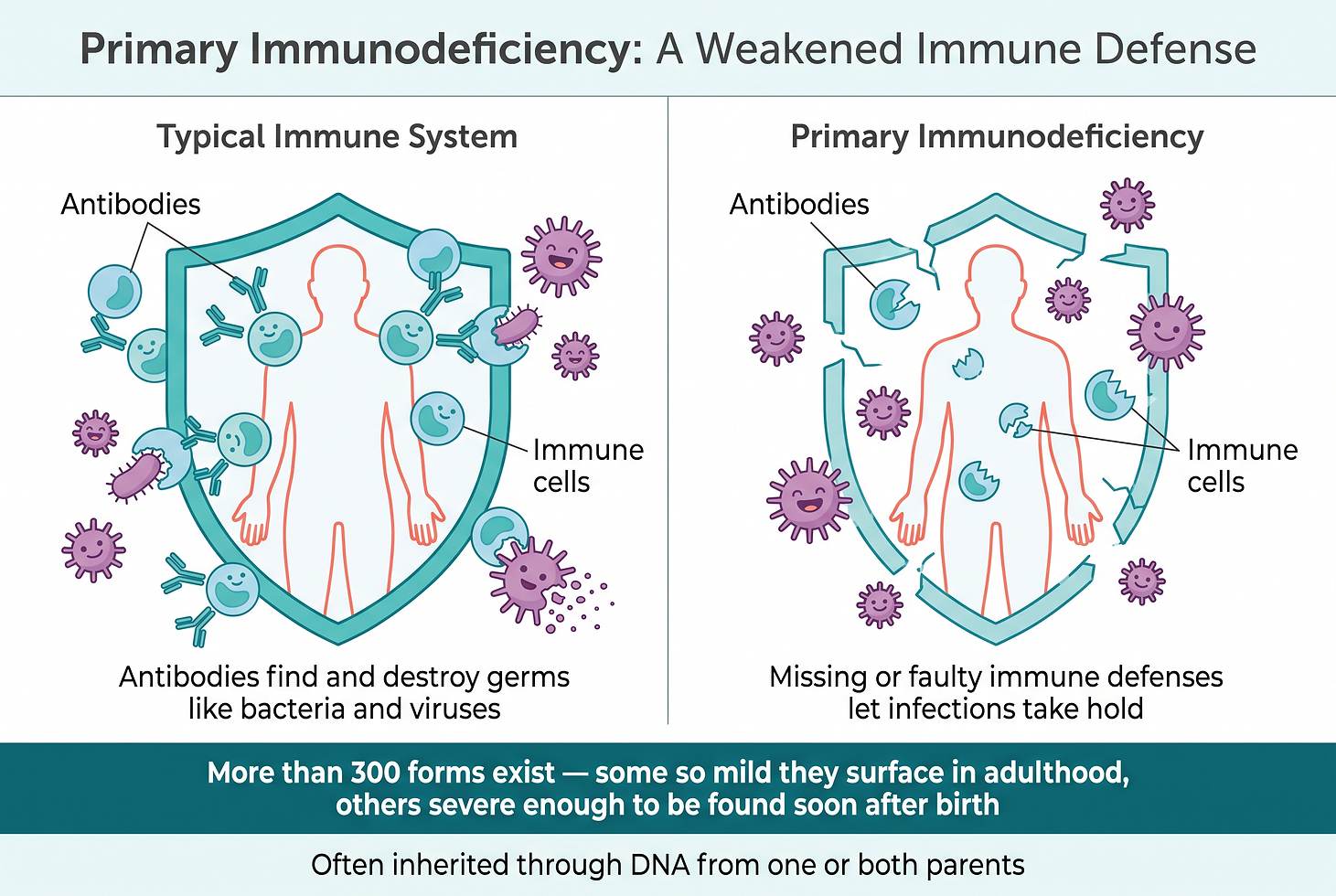
Primary immunodeficiency disorders are a group of conditions that make it hard for the body to fight infections. They are sometimes called primary immune disorders.
Many people with primary immunodeficiency are born missing some of the body's immune defenses or with an immune system that does not work properly. This leaves them more susceptible to the germs that cause infections.
The scope is broad. Researchers have found more than 300 forms of primary immunodeficiency disorders. Some forms are so mild they are not noticed until adulthood. Other types are severe enough that they are discovered soon after an affected baby is born.
The outlook is improving. Treatments can boost the immune system in many types of primary immunodeficiency disorders, and ongoing research is leading to improved treatments and enhanced quality of life.
Symptoms: The Pattern Matters More Than Any Single Infection
One of the most common signs of primary immunodeficiency is having infections that are more frequent, longer lasting, or harder to treat than the infections of someone with a typical immune system. You may also get infections that a person with a healthy immune system likely would not get. These are called opportunistic infections.
Symptoms differ depending on the type of primary immunodeficiency disorder, and they vary from person to person.
Symptom category | What to look for |
|---|---|
Recurrent infections | Frequent pneumonia, bronchitis, sinus infections, ear infections, meningitis, or skin infections |
Internal organs | Inflammation and infection of internal organs |
Blood | Blood disorders such as low platelet count or anemia |
Digestion | Cramping, loss of appetite, nausea, and diarrhea |
Growth | Delayed growth and development |
Autoimmunity | Autoimmune disorders such as lupus, rheumatoid arthritis, or type 1 diabetes |

When to See a Doctor
If you or your child has frequent, recurrent, or severe infections, or infections that do not respond to treatments, talk with a health care professional. Early diagnosis and treatment of primary immune deficiencies can prevent infections that can cause long-term problems.
The key is the pattern, not any single illness. Everyone gets infections — but infections that pile up, linger, resist antibiotics, or strike in unusual forms are the signal to dig deeper.
Causes and the Six Disorder Groups
Many primary immunodeficiency disorders are inherited — passed down from one or both parents. Problems in the genetic code that acts as a blueprint for producing the cells of the body (DNA) cause many of these immune system defects.
There are more than 300 types, and researchers continue to find more. They can be broadly classified into six groups based on the part of the immune system that is affected:
Group | What is affected |
|---|---|
B cell (antibody) deficiencies | Antibodies, the proteins that find and kill invaders |
T cell deficiencies | T cells, which coordinate and carry out immune responses |
Combination B and T cell deficiencies | Both major arms of the immune system |
Defective phagocytes | Cells that engulf and destroy germs |
Complement deficiencies | Complement proteins that help antibodies clear infections |
Unknown (idiopathic) | The affected part has not been identified |
Risk Factors and Prevention
The only known risk factor for a primary immune deficiency disorder is having a family history of the condition. If you have a type of primary immune deficiency disorder, you might want to seek genetic counseling if you plan to have a family.
Because primary immune disorders are caused by genetic changes, there is no way to prevent them. But when you or your child has a weakened immune system, you can take steps to prevent infections.
Prevention step | Detail |
|---|---|
Practice good hygiene | Wash hands with mild soap after using the toilet and before eating |
Take care of your teeth | Brush at least twice a day |
Eat right | A healthy, balanced diet helps prevent infections |
Be physically active | Ask your provider what activities are appropriate for you |
Get enough sleep | Keep a consistent schedule and consistent hours |
Manage stress | Massage, meditation, yoga, biofeedback, or hobbies — find what works |
Avoid exposure | Stay away from people with colds or infections and avoid crowds |
Ask about vaccinations | Find out which vaccines you should have |
Complications
Complications vary depending on the type of primary immunodeficiency disorder. They can include recurrent infections, autoimmune disorders, damage to the heart, lungs, nervous system, or digestive tract, slowed growth, an increased risk of cancer, and death from serious infection.
How Primary Immunodeficiency Is Diagnosed
To diagnose a primary immunodeficiency disorder, a health care professional asks about a history of illnesses and whether any close relatives have an inherited immune system disorder. A physical examination is also done.
Blood tests are the workhorse of diagnosis. They determine whether you have typical levels of infection-fighting proteins, called immunoglobulins, in your blood. They also measure the levels of blood cells and immune system cells — having numbers of certain cells outside the standard range can point to an immune system defect. Blood tests can also show whether your immune system responds properly, since a functioning immune system produces antibodies that find and kill foreign invaders such as bacteria or viruses.
Prenatal testing is available for families already affected. Parents who have a child with a primary immunodeficiency disorder might want to be tested for certain immunodeficiency disorders during future pregnancies. Samples of amniotic fluid, blood, or cells from the tissue that will become the placenta (the chorion) are tested for problems. In some cases, DNA testing is done to check for a genetic issue. Results make it possible to prepare for treatment soon after birth if necessary.
Diagnostic approach | What it checks |
|---|---|
Health and family history | History of illnesses; inherited immune disorders in close relatives |
Physical examination | Signs of infection, growth delays, organ inflammation |
Immunoglobulin blood test | Typical levels of infection-fighting antibody proteins |
Immune cell counts | Numbers outside the standard range suggest an immune defect |
Immune response testing | Whether the immune system produces working antibodies |
Prenatal and DNA testing | For families with an affected child, to prepare for early treatment |
Treatment: Managing Infections
Treatments for primary immunodeficiency involve three goals: preventing and treating infections, boosting the immune system, and treating the underlying cause of the immune problem. In some cases, primary immune disorders are linked to a serious illness, such as an autoimmune disorder or cancer, which also needs treatment.
Infections need fast and aggressive treatment with antibiotics, and treatment might require a longer course than is usually prescribed. Infections that do not respond may require hospitalization and intravenous (IV) antibiotics.
For prevention, some people need long-term antibiotics to prevent respiratory infections and permanent damage to the lungs and ears. An important nuance for children: children with primary immunodeficiency might not be able to have vaccines containing live viruses, such as oral polio and measles-mumps-rubella (MMR).
Immunoglobulin therapy replaces the antibodies the body cannot make enough of. Immunoglobulin consists of antibody proteins needed for the immune system to fight infections. It can be injected into a vein through an IV line — typically every few weeks — or infused underneath the skin, typically once or twice a week.
Treatment: Restoring the Immune System
For severe forms, treatment can aim at rebuilding the immune system itself.
Stem cell transplantation offers a permanent cure for several forms of life-threatening immunodeficiency. Healthy stem cells are transferred to the person with immunodeficiency, resulting in a typically functioning immune system. Stem cells can be harvested through bone marrow or obtained from a placenta at birth — a process known as cord blood banking. The donor, usually a parent or other close relative, must have body tissues that are a close biological match to the recipient. Even with a good match, transplants do not always work. The treatment often requires destroying the recipient's functioning immune cells with chemotherapy or radiation first, leaving the person temporarily even more vulnerable to infection.
Gene therapy uses the person's own cells. Stem cells are taken from the person with primary immunodeficiency and the faulty gene is corrected in the cells. The corrected stem cells are returned via an intravenous infusion. Because the person's own cells are used, there is no need to find a suitable donor. Currently this treatment is used for only a few primary immunodeficiencies, but clinical trials are underway for many other types.
Depending on the type of disorder, other therapies may be used — including enzyme replacement therapy or transplantation of the thymus, the organ located behind the breastbone that produces T cells.

Coping and Support
Most people with primary immunodeficiency can go to school and work like everyone else. Still, you might feel as if no one understands what it is like to live with the constant threat of infections. Talking to someone who faces similar challenges may help. Ask your health care professional about support groups in your area for people with primary immunodeficiency or for parents of children with the disease. National patient organizations offer peer support programs and practical information on living with these conditions.
Preparing for Your Appointment
You will likely start by seeing your family doctor or another health care professional. You might then be referred to an immunologist — a doctor who specializes in disorders of the immune system.
Before the visit, write down symptoms including anything that seems unrelated, and note when they began. Bring copies of records from hospitalizations and medical test results, including X-rays, blood test results, and culture findings. Ask family members about the family medical history — including whether anyone was diagnosed with primary immunodeficiency, or if the family has babies or children who died of unknown causes. Make a list of all medicines, vitamins, and supplements you or your child takes with doses; if possible, list all antibiotic prescriptions and dosages from the past several months. Ask a family member or friend to come along to help remember the information you are given.
What is the most likely cause of these symptoms?
Are there other possible causes?
What tests are needed, and do they require special preparation?
What is the prognosis?
What treatments are available, and which do you recommend?
I have other health problems — how do I manage them together?
Are there alternatives to the primary approach you are suggesting?
Are there activity restrictions?
Are there printed materials or websites you recommend?
Expect your doctor to ask about when symptoms began, whether they are continuous or occasional, how many infections occurred during the past year, how long infections usually last, whether antibiotics usually clear them up, and how many times your child has taken antibiotics during the last year.
Conclusion
Primary immunodeficiency is not one disease but a family of more than 300 inherited disorders that weaken the body's ability to fight infection — some so mild they surface only in adulthood, others severe enough to be found soon after birth. The pattern to watch for is infections that are more frequent, longer lasting, or harder to treat than usual, especially with a family history of immune problems. Diagnosis begins with blood tests measuring immunoglobulins and immune cell counts, and today's treatment toolbox spans aggressive antibiotics, immunoglobulin replacement therapy, stem cell transplantation, and gene therapy. Most people with primary immunodeficiency can go to school and work like everyone else.
If you or your child has frequent, recurrent, or severe infections — or infections that simply will not respond to treatment — talk with a health care professional. Early diagnosis can prevent long-term damage.
Frequently Asked Questions
What is primary immunodeficiency?
Primary immunodeficiency disorders are a group of conditions, usually present from birth, in which the body is missing some immune defenses or the immune system does not work properly, making it hard to fight infections. More than 300 forms have been identified.
What is the most common sign of primary immunodeficiency?
Infections that are more frequent, longer lasting, or harder to treat than the infections of someone with a typical immune system. People may also develop opportunistic infections — infections that a healthy immune system likely would not get.
What causes primary immunodeficiency?
Many forms are inherited from one or both parents, caused by problems in the DNA blueprint that produces the body's cells. The disorders are classified into six groups: B cell (antibody) deficiencies, T cell deficiencies, combined B and T cell deficiencies, defective phagocytes, complement deficiencies, and idiopathic (unknown) types.
Is primary immunodeficiency a risk factor for anything else?
Having a family history of the condition is the only known risk factor. Without prevention and treatment, complications can include recurrent infections, autoimmune disorders, organ damage, slowed growth, increased cancer risk, and death from serious infection.
How is primary immunodeficiency diagnosed?
Through a health and family history, physical exam, and blood tests that measure levels of immunoglobulins and immune cells — counts outside the standard range can indicate an immune defect. Prenatal and DNA testing are available for affected families to prepare for early treatment.
How are infections treated in primary immunodeficiency?
With fast, aggressive antibiotics, often longer courses than usual; infections that do not respond may require hospitalization and IV antibiotics. Some people need long-term antibiotics to protect the lungs and ears. Immunoglobulin therapy replaces missing antibodies, given by IV every few weeks or under the skin once or twice a week.
Can primary immunodeficiency be cured?
Stem cell transplantation offers a permanent cure for several life-threatening forms, using matched donor stem cells from bone marrow or cord blood. Gene therapy — correcting the person's own stem cells with no donor needed — is already used for a few types, with clinical trials underway for many others.
Can children with primary immunodeficiency receive vaccines?
Some children with primary immunodeficiency might not be able to have vaccines containing live viruses, such as oral polio and measles-mumps-rubella (MMR). Parents should discuss which vaccines are appropriate with their child's health care professional.
Further Reading
Medical disclaimer: This article is for general informational purposes only and is not a substitute for professional medical advice, diagnosis, or treatment. Always seek the advice of a qualified health care provider with any questions you may have regarding an immune condition or other health concern. Never disregard professional medical advice or delay seeking it because of content you have read on this site.
Comments