The Body's Defense Force: A Guide to Antibodies

Updated: 3 days ago
Medically reviewed by Dr. Baraa Alnahhal, MD · Last reviewed: October 2026
TL;DR: Antibodies, also called immunoglobulins, are Y-shaped proteins made by B cells that attach to antigens such as viruses, bacteria, and toxins so the immune system can remove them. There are five classes: IgG, IgA, IgM, IgE, and IgD, each with its own job and location. [1] Lab-made monoclonal antibodies treat cancer and autoimmune diseases, while autoantibodies that attack the body's own tissues point to autoimmune disease. Antibody tests help diagnose infections, thyroid problems, and lupus.
Medical emergency: Swelling of the face, lips, or throat, trouble breathing, widespread hives, or fainting soon after exposure to an allergen can be a severe allergic reaction (anaphylaxis), which involves IgE antibodies. Call your local emergency number right away.
Quick Answer: What are antibodies?
Antibodies, also called immunoglobulins, are protective proteins made by the immune system that attach to antigens such as bacteria, viruses, allergens and toxins so the body can neutralize or remove them. They are made by B cells, which clone into plasma cells that release millions of antibodies. [1] The five main classes are IgG, IgA, IgM, IgE and IgD.
What the research says
Vaccination builds long-lived antibody machinery. In a study of people who received two doses of the BNT162b2 mRNA vaccine, spike-specific memory B cells were detected in 42 participants six months later, and spike-specific IgG-secreting plasma cells were found in the bone marrow of 9 of 11 participants. The antibodies also matured over time, with the genetic changes that improve antibody binding rising about 3.5-fold in germinal centers within six months (Kim et al., Nature, 2022) [3].
Antibody levels fall over time, but protection is not all or nothing. In 184 health care workers followed for nine months after two vaccine doses, the mean antibody ratio fell from 8.01 to 3.84, yet neutralizing antibodies were still detectable in 96%. Older age and obesity were linked to weaker persistence (Herzberg et al., Front Immunol, 2022) [4].
Key takeaways
Antibodies are Y-shaped proteins with two heavy chains and two light chains. [1]
The tips of the Y have a unique shape that fits one specific antigen, like a lock and key.
IgG makes up roughly 70% to 75% of all antibodies [1] and gives long-term protection.
Monoclonal antibodies are lab-made and are used as targeted treatment for cancer and many inflammatory diseases.
Autoantibodies attack the body's own tissues and may signal an autoimmune disease, but one positive test does not prove it.
Antibody levels, including after COVID-19 infection or vaccination, change over time.
How are antibodies made, and what is their structure?
Each antibody is made of four protein chains, two heavy chains and two light chains, that join to form a Y shape. [1] The base of the Y (the constant region, called the Fc region) decides the antibody's class and how it interacts with other immune cells. The tips of the Y (the variable region) have a different amino acid sequence in every antibody. [1] This is what lets each one recognize and bind a single, specific antigen.
An antigen has molecules on its surface that differ from your own, so your immune system recognizes it quickly. B cells that match the antigen divide and turn into plasma cells, which release large numbers of antibodies. [1] Antibodies are found in the blood and lymph and in the skin, lungs, tears, saliva, and breast milk. [1] Colostrum, the thick milk produced in the first days after birth, is especially rich in antibodies [1], which is one reason breastfeeding can boost a baby's immune defenses.
Structural component | Description |
Heavy chains | Two larger protein chains that form the core of the Y |
Light chains | Two smaller chains attached to the heavy chains |
Variable region | The tips of the Y, which differ for each antibody and bind a specific antigen |
Constant region (Fc) | The base of the Y, which determines the antibody's class and function |

What are the five classes of antibodies (immunoglobulins)?
Antibodies are grouped into five classes, each named Ig plus a letter. Each class sits in different places and does a different job. IgG is the most abundant and gives long-term protection, while IgM is the first to appear when a new infection starts.
Antibody | Main location | Key function |
IgG | Blood and tissue fluids | Protects against bacterial and viral infections; about 70% to 75% of all immunoglobulins [1] |
IgA | Saliva, tears, mucus, breast milk, and intestinal fluid | Defends against pathogens that are inhaled or swallowed [1] |
IgM | Blood and lymph | First line of defense against infection [1]; also helps regulate the immune response |
IgE | Skin, lungs, and mucous membranes | Makes mast cells release histamine and other chemicals, which causes allergic reactions |
IgD | Surface of B cells | Exact function is unclear; thought to support B cell maturation and activation [1] |
How antibodies fight antigens
Antibodies work in a few ways. They can bind a virus or toxin and block it from entering or harming cells, which is called neutralization. They can coat a bacterium and mark it so that immune cells can find and destroy it, a process called opsonization. They can also call in other parts of the immune system to finish the job.

What are monoclonal antibodies, and how are they used in treatment?
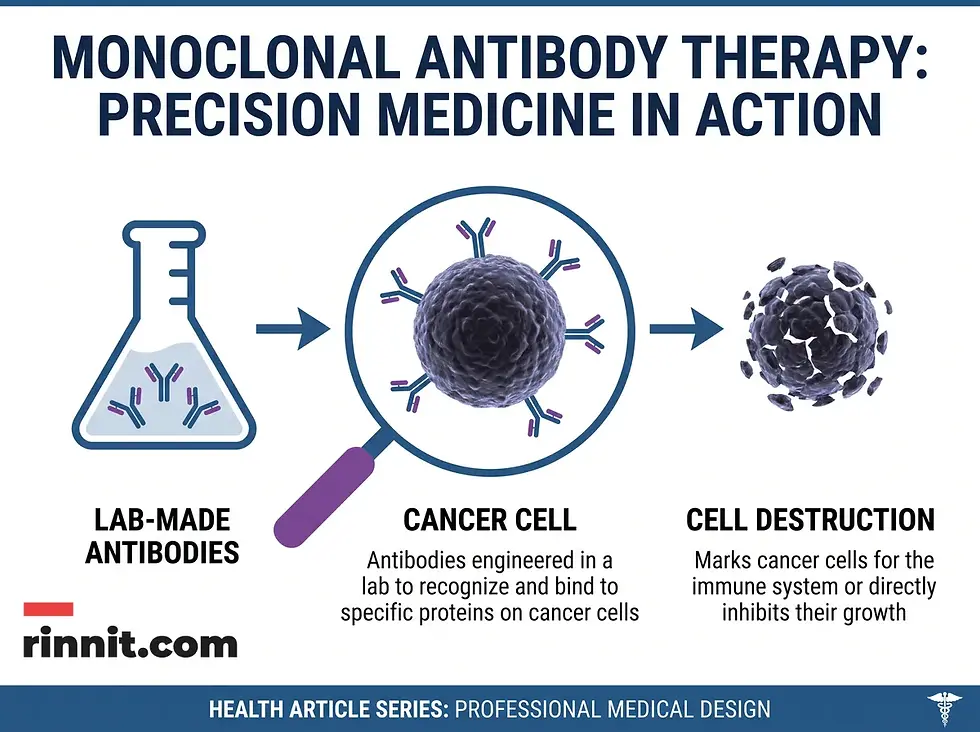
Monoclonal antibodies are lab-made antibodies that copy the immune system's ability to fight pathogens and are used to treat conditions such as cancer and rheumatoid arthritis. Each type is built to target one specific antigen [1], which allows a more precise treatment than many traditional therapies. Using them to fight disease is a form of immunotherapy. Conditions that monoclonal antibodies can treat include:
Cancer
Rheumatoid arthritis
Heart disease
Multiple sclerosis
Ulcerative colitis and Crohn's disease
Lupus
Psoriasis
Organ transplant rejection [1]
Monoclonal antibodies are given by a specialist, and the right one depends on the disease and the antigen involved. To read more about related immune topics, see our guides to neutralizing antibodies and immunotherapy for breast cancer.
What happens when antibodies go wrong in autoimmunity and allergies?
Sometimes the immune system makes antibodies against the body's own tissues. These autoantibodies, which include antinuclear antibodies (ANAs), target normal proteins inside a cell's nucleus. [1] Most people have small amounts of them. Large amounts usually point to an autoimmune disease such as lupus or Hashimoto's disease (see our overview of lupus). Thyroglobulin antibodies are another example: they are often found in people with thyroid problems [1] and can potentially damage the thyroid gland.
IgE antibodies are the key players in allergies. When IgE meets an allergen it triggers mast cells to release histamine, which causes symptoms such as sneezing, itching, hives, and in severe cases anaphylaxis.
What do tests for antibodies show?
Your provider may order antibody tests when an infection or autoimmune disease is suspected.
Fluorescent antinuclear antibody (ANA) test: commonly used to help rule out lupus. A positive result tells your provider to keep looking [1], and does not by itself mean you have an autoimmune disease.
Antithyroglobulin antibody test: used when thyroid problems are suspected, and to monitor people after treatment for thyroid cancer. [1]
COVID-19 antibody test: shows whether you have antibodies from past infection or vaccination.
Immunoglobulin level test: measures the amount of each antibody class in the blood and is used, for example, to check for repeated infections caused by low antibody levels.
COVID-19 antibodies
Antibodies to the virus that causes COVID-19 are found in people who have recovered and in people who have been vaccinated. Cleveland Clinic notes that studies show antibodies lasting at least five to six months after infection, and that memory B cells can stay in the body for years, allowing a quick response if the virus is met again. [1] The studies above show that antibody levels do fall over months after vaccination, while memory cells and plasma cells can persist. Having had COVID-19 and then being vaccinated increases the antibody response [1] and improves protection. For the vaccine side of the story, see our guide to how the COVID-19 vaccine works, and to learn how B cells make antibodies, read B Cells 101.
When should you see a healthcare provider about problems with antibodies?
See a healthcare provider about antibody problems if you have frequent or unusual infections, possible autoimmune symptoms, recurring allergic reactions or a confusing antibody test result.
Frequent, severe, or unusual infections
Symptoms that may point to an autoimmune disease, such as joint pain, rashes, ongoing fatigue, or thyroid symptoms
Allergic reactions that keep happening
A positive antibody test result that you do not understand
Seek emergency care for signs of anaphylaxis, including swelling of the face or throat and trouble breathing.
Conclusion
Antibodies are your immune system's precision tools. Each one is built to recognize a single target, and together they protect you from infections, allergens, and toxins. Understanding the five classes, how monoclonal antibodies are used, and what antibody tests can and cannot tell you helps you make sense of lab results and treatment options, and it is a good reason to talk with your provider about any result you are unsure about.
Related reading
Serological Test (Antibody Test): Uses, Procedure and Results explains the antibody blood test for past infections and immunity.
Frequently Asked Questions
What are antibodies?
Antibodies are protective proteins made by the immune system that bind foreign substances so the body can remove them.
What is another name for an antibody?
Immunoglobulin, abbreviated Ig.
What is an antigen?
An antigen is a foreign substance, such as a virus, bacterium, fungus, allergen, venom, or toxin, that triggers an immune response.
Where are antibodies produced?
Antibodies are made by B cells, which are specialized white blood cells, and by the plasma cells that B cells turn into.
What shape are antibodies?
Antibodies are Y-shaped molecules made of two heavy chains and two light chains.
Which antibody is the most common?
IgG makes up approximately 70% to 75% of all immunoglobulins.
What is the first antibody made during an infection?
IgM typically acts as the first line of defense.
How do antibodies help babies?
Antibodies in breast milk, especially in colostrum, help boost a baby's immune system.
What are monoclonal antibodies?
Monoclonal antibodies are lab-made antibodies that target a specific antigen and are used to treat conditions such as cancer and autoimmune diseases.
What are autoantibodies?
Autoantibodies are antibodies that mistakenly target the body's own healthy cells and proteins.
What does a positive ANA test mean?
A positive ANA test means autoantibodies are present and your provider should look further. It does not by itself prove an autoimmune disease.
Can antibodies treat cancer?
Yes. Certain monoclonal antibodies are designed to bind cancer cells and mark them for the immune system or block their growth.
How long do COVID-19 antibodies last?
Studies show they last at least five to six months after infection, and levels decline over months after vaccination. Memory B cells can last longer, which helps the body respond quickly to a new exposure.
What is an allergen?
An allergen is a type of antigen that triggers an allergic response, often through IgE antibodies.
Why are the tips of the Y important?
The tips of the Y have a unique amino acid sequence that lets the antibody bind one specific antigen.
Sources
Cleveland Clinic. Antibodies. Cleveland Clinic. Last updated May 6, 2022. https://my.clevelandclinic.org/health/body/22971-antibodies
NewYork-Presbyterian. Immunoglobulins. NewYork-Presbyterian Health Library. Accessed October 11, 2026. https://nyp.org/healthlibrary/tests/immunoglobulins
Kim W, Zhou JQ, Horvath SC, et al. Germinal centre-driven maturation of B cell response to mRNA vaccination. Nature. 2022;604(7904):141-145. PMID 35168246. https://doi.org/10.1038/s41586-022-04527-1
Herzberg J, Fischer B, Lindenkamp C, et al. Persistence of immune response in health care workers after two doses BNT162b2 in a longitudinal observational study. Front Immunol. 2022;13:839922. PMID 35309303. https://doi.org/10.3389/fimmu.2022.839922
Medical disclaimer
The information in this article is for educational purposes only and is not a substitute for professional medical advice, diagnosis, or treatment. Always seek the advice of your physician or another qualified health provider with any questions you may have about a medical condition. Never disregard professional medical advice or delay seeking it because of something you have read here. If you think you may have a medical emergency, call your doctor or your local emergency number immediately.



Comments