Understanding Neutralizing Antibodies: Your Body's Ultimate Security Shield

Updated: 2 days ago
Medically reviewed by Dr. Baraa Alnahhal, MD · Last reviewed: September 2026
Editorial note: This article is provided for educational purposes only. It is not medical advice. Always consult a qualified healthcare professional for diagnosis and treatment of any condition.
TL;DR
Neutralizing antibodies are specialized proteins that safeguard the body by physically blocking pathogens and toxins from entering cells. Primarily effective against viruses, they act as a biological "lock" that prevents intruders from replicating and causing disease. Understanding how they function is essential for evaluating vaccine effectiveness and measuring long-term immunity through antibody titer testing.
Quick Answer
Neutralizing antibodies are Y-shaped proteins that provide high-level immune protection by attaching to pathogens — such as viruses and toxins — and preventing them from penetrating healthy cells. By blocking the specific "key" a germ uses to enter a cell's receptor, these antibodies stop the infection cycle at its earliest stage. This is the primary goal of most vaccinations, as high levels of these antibodies significantly reduce the likelihood of becoming symptomatic.
The immune system operates like a sophisticated security network. Among its most critical defenders are neutralizing antibodies. Unlike other immune responses that might simply label an intruder for later destruction, neutralizing antibodies neutralize the threat on contact — the body's most efficient way to stop a pathogen from gaining a foothold and beginning the replication that leads to illness.
The Mechanism of Neutralization
The effectiveness of neutralizing antibodies lies in their specific "lock and key" mechanism. Pathogens, particularly viruses, have surface proteins that act as keys to unlock receptors on human cells. Once a virus enters a cell, it hijacks the cell's machinery to make copies of itself. Neutralizing antibodies intervene by binding to these viral surface proteins, effectively jamming the lock. Because the virus cannot enter the cell, it cannot reproduce, rendering it harmless.
Although most renowned for fighting viruses, they also protect against certain intracellular bacteria and potent bacterial toxins, binding toxins before they can penetrate and damage cells. The most common antibody types with neutralizing capability are IgA, IgG and IgM, distributed strategically throughout the body's fluids and tissues.
Antibody type | Primary function | Neutralizing capability |
Neutralizing | Blocks entry and replication | High (prevents infection) |
Non-neutralizing | Labels germs for destruction | Low (assists destruction) |
IgA, IgG, IgM | Broad immune surveillance | High (commonly neutralizing) |
Clinical Applications and Titer Testing
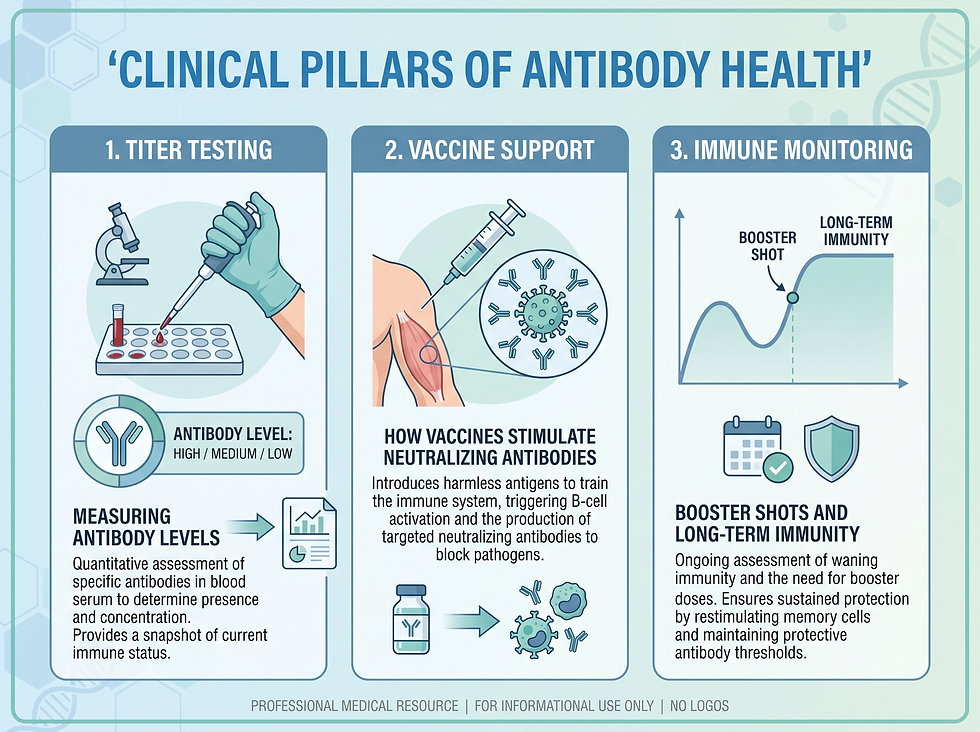
Healthcare providers often measure the presence and concentration of these proteins with a neutralizing antibody titer. The test shows how much protection you have against a specific pathogen, such as the viruses that cause measles or mumps. A higher titer generally correlates with stronger, more durable protection, indicating either a successful past recovery from infection or a robust response to vaccination.
Vaccine development focuses heavily on stimulating these antibodies. If a vaccine mainly generates non-neutralizing antibodies, a person may still become infected, though they will likely recover faster. A vaccine that induces high levels of neutralizing antibodies can prevent the infection from occurring entirely — a cornerstone of modern immunology and public health strategy.

Challenges in Antibody Health
Neutralizing antibodies can sometimes be involved in immunogenicity. This occurs when the body mistakenly identifies a medication — particularly a biologic drug made from proteins — as a foreign threat and develops neutralizing antibodies against it. Over time, this can make the medication less effective, a significant challenge for chronic conditions treated with protein-based therapies.
Effectiveness also varies with the type of pathogen. Many bacteria are extracellular, living and reproducing outside cells, so neutralizing antibodies are less effective because the bacteria don't need to enter a cell to cause harm. Instead, the immune system uses other methods such as opsonization, where non-neutralizing antibodies label the bacteria so other immune cells can find and destroy them.

Proactive Immune Monitoring
Understanding your antibody status can help maintain long-term health. By monitoring titers, healthcare providers can determine whether a patient needs a vaccine booster or has maintained natural immunity from a previous exposure — keeping the body's "security shield" intact and ready for future challenges.
Conclusion
Neutralizing antibodies are one of the most elegant and effective defenses in the human biological arsenal. By physically preventing pathogens from entering cells, they provide protection that is both immediate and highly specific. Whether generated through natural exposure or vaccination, these proteins are essential for safeguarding the body against viral threats.
Take action today: If you have questions about your immunity or are considering a vaccine booster, speak with your healthcare provider about neutralizing antibody titer testing. Understanding your immune profile is a vital step toward a personalized prevention plan.
Related reading: B Cells 101: How Your Body Produces Life-Saving Antibodies | A Guide to IgG | Understanding IgM | What Is an Antigen?
Frequently Asked Questions
1. What are neutralizing antibodies?
They are specialized proteins in the immune system that block pathogens and toxins from entering and infecting your cells.
2. How do they differ from other antibodies?
While some antibodies only label germs for destruction, neutralizing antibodies physically block the germ's ability to enter a cell.
3. Why are they most effective against viruses?
Viruses must enter cells to replicate. By blocking this entry, neutralizing antibodies stop the virus from making more copies of itself.
4. What does "neutralization" actually mean?
It refers to the process of binding to a pathogen's surface proteins to prevent it from interacting with a cell's receptors.
5. Which types of antibodies can neutralize?
The most common types with neutralizing capabilities are IgA, IgG and IgM.
6. What is an antibody titer?
An antibody titer is a laboratory test that measures the concentration of specific antibodies in your blood.
7. What does a high titer indicate?
A high titer generally means you have a strong level of protection against a specific disease or a robust response to a vaccine.
8. Can neutralizing antibodies fight bacteria?
Yes. They are effective against intracellular bacteria and bacterial toxins, though less effective against extracellular bacteria.
9. How do vaccines use these antibodies?
Vaccines aim to trigger the production of neutralizing antibodies so the body can recognize and stop an infection immediately upon exposure.
10. What is immunogenicity in medicine?
It is when the body develops neutralizing antibodies against a medication, potentially making the drug less effective.
11. Where are these antibodies found in the body?
They circulate in the blood and lymph and are also present in various body tissues.
12. What do these antibodies look like?
They are tiny Y-shaped proteins that can only be seen with a microscope.
13. Do neutralizing antibodies last forever?
Not necessarily. Their levels can decrease over time, which is why some vaccines require booster doses to maintain protection.
14. Can I get sick if I have neutralizing antibodies?
If your levels are high, you are much less likely to get sick. If levels are low, you may still get sick but might recover faster.
15. How can I check my antibody levels?
You can request a blood test from your healthcare provider to check your titers for specific diseases like measles or mumps.
Medical Disclaimer: The information provided in this article is for educational purposes only and should not be used as a substitute for professional medical advice, diagnosis, or treatment. Always seek the advice of a qualified healthcare provider with any questions you may have regarding a medical condition.
Comments