A Guide to IgG: Functions, Subclasses, and Immune Support

Updated: 2 days ago
Medically reviewed by Dr. Baraa Alnahhal, MD · Last reviewed: September 2026
TL;DR
Immunoglobulin G (IgG) is the most common antibody in the human body, representing about 75% of all blood antibodies. It plays a critical role in the secondary immune response by recognizing and neutralizing pathogens like bacteria and viruses that the body has encountered before. IgG is unique as the only antibody capable of crossing the placenta to provide newborn protection.
Quick Answer
Immunoglobulin G (IgG) is a specialized protein produced by the immune system to identify and neutralize harmful invaders such as viruses and bacteria. As the most abundant antibody in the bloodstream, it provides long-term protection by "remembering" past infections. IgG works by alerting other immune cells to destroy pathogens or by binding directly to them to prevent cellular entry, ensuring a rapid and effective defense during subsequent exposures.
The Fundamental Role of IgG
Immunoglobulin G is a cornerstone of the human immune system, serving as the primary tool for long-term immunity. Unlike other antibodies that provide immediate but temporary defense, IgG is designed for persistence and precision. It primarily drives the secondary immune response, which occurs when the body encounters a pathogen it has previously fought or been vaccinated against. By maintaining a "memory" of these invaders, IgG allows the immune system to mobilize much faster and more effectively during a second exposure.
Structurally, IgG molecules are shaped like a "Y" and are small enough to move easily between the bloodstream and the fluid surrounding cells. This mobility allows them to patrol almost every tissue in the body. Perhaps most remarkably, IgG is the only class of antibody that can pass through the placenta from a pregnant individual to a fetus. This transfer provides infants with essential immune protection for approximately the first six months of life while their own immune systems continue to develop.

The Four Specialized Subclasses
While all IgG antibodies share a common goal of protecting the body, they are divided into four distinct subclasses, each with unique specialties. These subclasses allow the immune system to tailor its response to specific types of threats, ranging from common viruses to complex bacteria.
IgG1 (general defense): The most common subclass; primarily targets viral infections.
IgG2 (bacterial protection): Highly effective against specific bacterial strains.
IgG3 (rapid response): Specializes in fighting off viral invaders.
IgG4 (parasitic defense): Less common; believed to be vital for parasitic infections.
How IgG Protects the Body
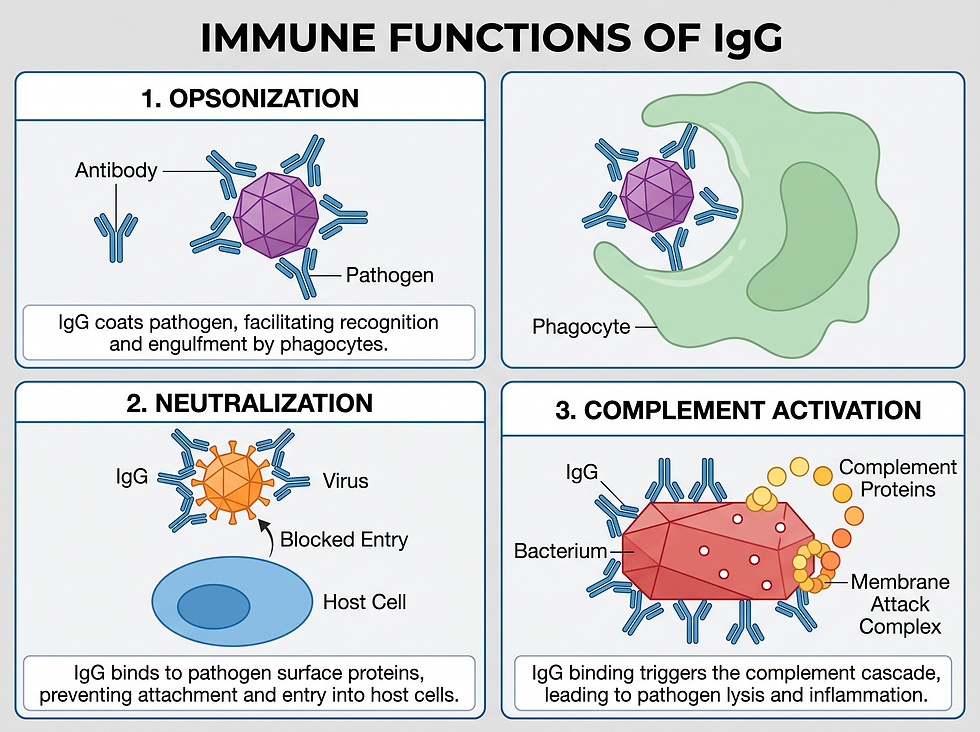
IgG antibodies utilize several sophisticated mechanisms to neutralize threats. One primary method is opsonization, where the antibody coats a pathogen to make it more "visible" and attractive to other immune cells, such as phagocytes, which then consume and destroy the invader. Additionally, IgG can activate the complement system, a series of proteins that work together to directly damage the surface of a bacterium or virus.
Beyond recruitment, IgG can act independently through neutralization. By binding tightly to the surface markers (antigens) of a pathogen, the antibody physically blocks the invader from attaching to or entering healthy body cells. This prevents the infection from spreading and gives the rest of the immune system time to clear the threat.
Clinical Significance and Testing
Healthcare providers often measure IgG levels to assess a person's immune health or to check for immunity to specific diseases like measles, mumps, rubella, or chickenpox. A normal IgG range for adults typically falls between 600 and 1,600 mg/dL. Deviations from this range can indicate various underlying health conditions or immune system responses.
What Different IgG Levels May Indicate
High IgG: Associated with recent infections and autoimmune disease. It may indicate chronic inflammation or specific disorders like cirrhosis.
Low IgG: Associated with primary deficiencies, HIV, and cancer. It increases susceptibility to frequent sinus and lung infections.
Abnormal IgG: Seen in multiple myeloma and MGUS, where high levels of dysfunctional antibodies do not provide protection.
Proactive Immune Maintenance
Supporting the production and function of antibodies like IgG requires a holistic approach to health. While medical treatments like immunoglobulin replacement therapy exist for those with deficiencies, most individuals can support their immune system through consistent lifestyle choices. Maintaining a balanced diet rich in essential nutrients, engaging in regular physical activity, and ensuring adequate restorative sleep are the pillars of a resilient immune system.

Conclusion
Immunoglobulin G is an indispensable component of human health, providing the long-term memory and specialized defense needed to survive in a world full of pathogens. From protecting newborns through placental transfer to managing the body's response to recurring viruses, IgG ensures that the immune system remains a step ahead of potential threats.
What you can do now: Understanding your immune health is a proactive step toward long-term wellness. If you experience frequent infections or have concerns about your immune resilience, consult with a healthcare professional to discuss whether an immunoglobulin test is appropriate for your needs.
Frequently Asked Questions (FAQ)
1. What is the main function of IgG?
The primary function of IgG is to protect the body against bacteria and viruses by recognizing pathogens from previous infections or vaccinations and neutralizing them.
2. Why is IgG the most common antibody?
IgG is the most abundant because it provides long-term immunity and can easily move into tissues, making it the body's primary defense across various systems.
3. Can IgG cross the placenta?
Yes, IgG is the only antibody capable of crossing the placenta, which allows a pregnant person to share their immune protection with their developing baby.
4. What does a high IgG level mean?
High levels can indicate a recent or chronic infection, liver disease, or certain autoimmune conditions like lupus or rheumatoid arthritis.
5. What happens if IgG levels are too low?
Low levels, known as hypogammaglobulinemia, can lead to frequent and recurring infections, particularly in the sinuses, ears, and lungs.
6. How is IgG different from IgM?
IgM is the first antibody produced during a new infection (primary response), while IgG is produced later and provides long-term protection (secondary response).
7. What are the four subclasses of IgG?
The four subclasses are IgG1, IgG2, IgG3, and IgG4, each specializing in different types of pathogens like viruses, bacteria, or parasites.
8. How do doctors test for IgG?
Doctors use a blood test called an immunoglobulin test or antibody titer to measure the concentration of IgG in the bloodstream.
9. Can vaccines increase IgG levels?
Yes, vaccines are designed to trigger the immune system to produce memory cells and IgG antibodies against specific pathogens without the person getting sick.
10. What is opsonization?
Opsonization is a process where IgG antibodies coat a pathogen, essentially "tagging" it so that other immune cells can easily find and destroy it.
11. Is IgG found outside the blood?
Yes, IgG is found in the fluid surrounding cells and can move into various tissues throughout the body due to its small size.
12. What is IVIG therapy?
Intravenous immunoglobulin (IVIG) therapy involves infusing concentrated IgG from healthy donors into patients with weakened immune systems.
13. How long does newborn IgG protection last?
The IgG protection passed from the placenta typically lasts for about six months after the baby is born.
14. Can stress affect IgG levels?
The research summarized here does not detail stress specifically, but overall immune health is supported by lifestyle pillars like sleep and nutrition.
15. Are high IgG levels always good?
Not necessarily. High levels of abnormal IgG, such as those found in multiple myeloma, do not function correctly and can be a sign of a serious disorder.
Medical disclaimer: This content is for informational purposes only and does not constitute medical advice. Always seek the advice of a qualified healthcare provider with any questions regarding a medical condition. Based on information dated June 12, 2025.
Comments