Understanding Lymphoma: Types, Symptoms, and Modern Treatments

Updated: 2 hours ago
Medically reviewed by Dr. Baraa Alnahhal, MD · Last reviewed: September 2026
TL;DR
Lymphoma is a group of blood cancers originating in the lymphatic system, primarily affecting white blood cells called lymphocytes. While it is a serious condition, it is considered one of the most treatable forms of cancer, with high survival rates and many cases reaching full remission. Early detection through recognizing symptoms like painless swelling in the lymph nodes is key to successful management.
Quick Answer
Lymphoma is a cancer of the lymphatic system that starts in white blood cells known as lymphocytes. It is broadly categorized into Hodgkin and non-Hodgkin lymphoma, with over 70 distinct subtypes. Common signs include painless swelling in the neck, armpits, or groin, alongside fatigue and night sweats. Diagnosis involves blood tests, imaging, and biopsies, while treatments range from chemotherapy and radiation to advanced immunotherapies like CAR T-cell therapy.
What is Lymphoma?
Lymphoma is a form of cancer that develops within the lymphatic system, which is the body's network of tissues, vessels, and organs responsible for fighting infection. Specifically, the disease begins in white blood cells called lymphocytes. These cells are essential components of the immune system and are typically found in lymphatic tissues such as lymph nodes, the spleen, and the thymus.
Because it originates in white blood cells, lymphoma is classified as a blood cancer. It is broadly divided into two main categories: Hodgkin lymphoma and non-Hodgkin lymphoma. While Hodgkin lymphoma is less common, non-Hodgkin lymphoma represents the majority of cases and encompasses more than 70 different subtypes. Despite its seriousness, healthcare providers generally view lymphoma as one of the most treatable cancers, with many patients achieving long-term remission or a complete cure.

Recognizing Symptoms and Warning Signs
The most frequent early indicator of lymphoma is the painless swelling of lymph nodes, which often appears as lumps in the neck, underarms, or groin area. However, because the lymphatic system extends throughout the body, symptoms can manifest in various ways depending on the location of the affected tissue.
Primary physical signs: painless swelling in lymph nodes, belly pain, or abdominal swelling.
Systemic symptoms: persistent fatigue, shortness of breath, and chest pain.
"B symptoms" (used in staging): unexplained weight loss, drenching night sweats, and high fever (above 103°F).
It is important to note that many individuals may have lymphoma for years without experiencing any obvious symptoms. In these cases, the condition is often discovered incidentally during routine medical imaging, such as an X-ray or CT scan performed for an unrelated reason.
Causes and Risk Factors
Lymphoma occurs when the genetic material within white blood cells undergoes spontaneous mutations. These mutations cause the cells to multiply uncontrollably and prevent them from dying off as they normally would. While most mutations happen without a clear external cause, researchers have identified several factors that may increase an individual's risk.
Genetic history plays a role, particularly if a first-degree relative—such as a parent, sibling, or child—has had the disease. Additionally, certain chronic infections like HIV, Epstein-Barr virus, and Hepatitis C are linked to higher rates of lymphoma. Individuals with weakened immune systems, such as those taking immunosuppressant medications after an organ transplant, or those with autoimmune diseases like rheumatoid arthritis, also face an elevated risk.
Diagnostic Procedures
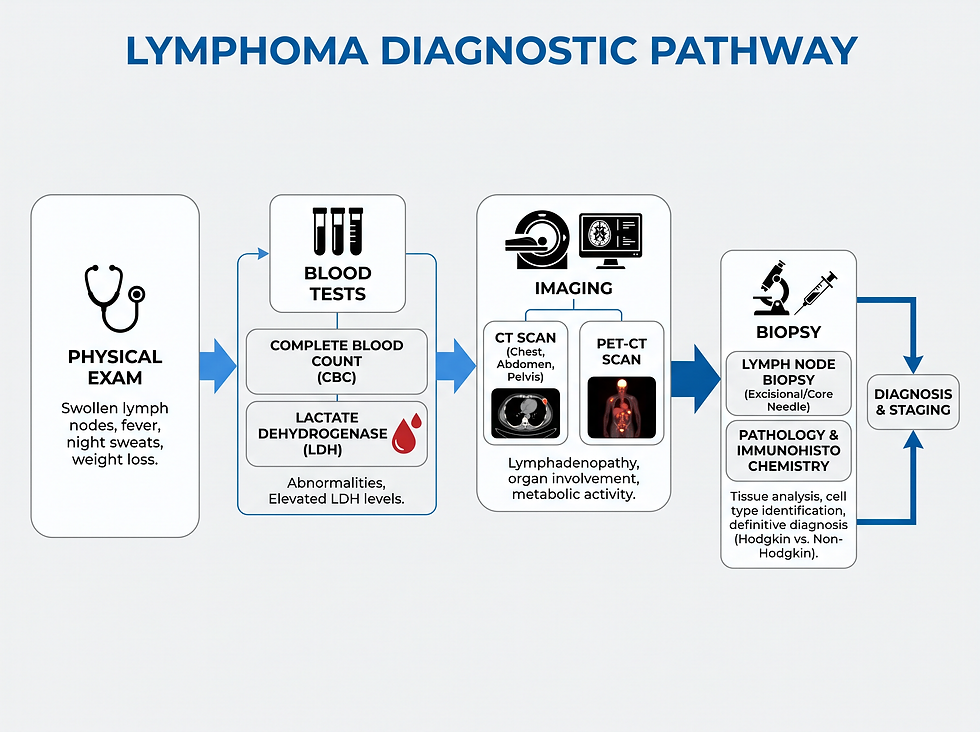
The diagnostic process begins with a thorough physical examination where a healthcare provider checks for signs of swollen lymph nodes or an enlarged spleen. If lymphoma is suspected, several diagnostic tests are utilized to confirm the presence of cancer cells and determine the specific subtype.
Blood tests are essential for identifying abnormal cell counts and measuring levels of lactate dehydrogenase (LDH), which can be elevated in patients with lymphoma. Imaging tests, including CT scans, MRIs, and PET-CT combinations, allow providers to visualize the extent of the cancer throughout the body. The definitive diagnosis, however, usually requires a biopsy, where a small sample of lymph node or bone marrow tissue is removed and examined under a microscope.
Modern Treatment and Management
Treatment strategies for lymphoma are highly personalized and depend on the specific type of cancer, its stage, and how quickly it is growing. For slow-growing or "indolent" lymphomas, providers may recommend active surveillance, also known as watchful waiting, to monitor the condition closely before initiating intensive therapy.
Standard therapies: chemotherapy and radiation therapy to target and destroy cancer cells.
Advanced biologicals: targeted therapies and immunotherapies, including CAR T-cell therapy.
Transplant procedures: stem cell or bone marrow transplants to replace damaged cells.
Supportive care: palliative care focused on managing symptoms and treatment side effects.
Recent advancements in medical science have introduced newer classes of medications, such as bispecific antibodies, which have further improved the outlook for many patients. Clinical trials also remain a vital option for those seeking access to the latest experimental treatments.

Conclusion and Outlook
The prognosis for lymphoma has improved significantly in recent decades. The five-year relative survival rate stands at approximately 89% for Hodgkin lymphoma and 74% for non-Hodgkin lymphoma. While these figures are estimates, they reflect the high success rates of modern medical interventions.
If you are diagnosed with lymphoma, creating a comprehensive support plan is essential. This includes coordinating with loved ones, maintaining nutritional strength, and managing the emotional stress of treatment. By staying informed and working closely with a specialized medical team, patients can navigate the path to remission with confidence.
If you notice persistent swelling in your lymph nodes or experience unexplained "B symptoms" like night sweats and weight loss, schedule a consultation with a healthcare provider immediately for a professional evaluation.
Frequently Asked Questions
1. Is lymphoma curable? Yes, many types of lymphoma are highly treatable and can be put into long-term remission or cured completely.
2. What is the main difference between Hodgkin and non-Hodgkin lymphoma? They differ in the specific type of lymphocytes involved and how the cancer spreads; non-Hodgkin is more common.
3. Are swollen lymph nodes always a sign of cancer? No, lymph nodes often swell in response to common infections like the cold or flu.
4. What are "B symptoms"? These are specific symptoms—fever, night sweats, and weight loss—that help doctors stage the severity of the lymphoma.
5. How long can you have lymphoma without knowing it? Some slow-growing types can be present for years without causing noticeable symptoms.
6. Can children get lymphoma? Yes, lymphoma can affect people of all ages, though normal lymphocyte ranges are higher in children.
7. What does "indolent" mean in lymphoma? It refers to slow-growing forms of the disease that may not require immediate treatment.
8. Is a biopsy painful? Biopsies are typically performed under local or general anesthesia to minimize discomfort.
9. What is CAR T-cell therapy? It is an advanced immunotherapy that uses a patient's own modified immune cells to fight the cancer.
10. Can lymphoma come back after remission? Yes, recurrence is possible, which is why regular follow-up appointments are necessary.
11. Does family history matter? Having a first-degree relative with lymphoma increases your risk, but most cases are not hereditary.
12. Are there lifestyle changes to prevent lymphoma? While there is no guaranteed prevention, maintaining a healthy immune system and avoiding certain infections can help.
13. What is active surveillance? It is a "watchful waiting" approach where doctors monitor the cancer without starting treatment until necessary.
14. How does smoking affect lymphoma? Smoking is not a direct cause, but it can negatively impact overall health and immune function.
15. What is extranodal lymphoma? This is lymphoma that starts in tissues outside of the lymph nodes, such as the skin or stomach.
References
Medical Disclaimer: The information provided in this article is for educational purposes only and should not be considered medical advice. Always seek the counsel of a qualified healthcare professional regarding any concerns about cancer symptoms or diagnosis.
Comments