What Is Autoimmune Hemolytic Anemia? Symptoms, Causes, and Treatment

Updated: 3 days ago
Medically reviewed by Dr. Baraa Alnahhal, MD · Last reviewed: October 2026
Quick Answer: What is autoimmune hemolytic anemia?
Autoimmune hemolytic anemia (AIHA) is a rare blood condition in which the immune system attacks its own red blood cells. In warm AIHA, antibodies act at normal body temperature, while in cold AIHA they attack at cooler temperatures. Diagnosis requires specific blood tests such as the Coombs test. There is no cure, but corticosteroids, immunosuppressants and rituximab manage it.
Key Takeaways
AIHA is a rare condition in which the immune system mistakenly destroys red blood cells faster than they can be replaced.
Primary AIHA happens without a known trigger; secondary AIHA is linked to autoimmune diseases, cancers, infections, or medications. [3]
Warm AIHA (IgG antibodies) attacks at body temperature; cold AIHA (IgM antibodies) attacks in the cooler parts of the body. [3]
Diagnosis depends on specific blood tests, especially the Coombs test. [3]
There is no cure, but treatment with immune-calming medications, transfusions, or spleen removal can manage symptoms.
What the research says
Adding rituximab to prednisone improved response in newly diagnosed warm AIHA. In a double-blind trial of 32 adults, the response rate at 1 year was 75% (95% CI 47.6%–92.7%) with rituximab versus 31% (95% CI 11.0%–58.7%) with placebo (P = 0.032); at 2 years, 10 of 16 patients on rituximab were still in complete response versus 3 of 16 on placebo. (Michel et al., Am J Hematol, 2017) [4]
How severe the anemia is at the start predicts the course. A review of risk factors found that the severity of anemia at onset correlated with recurrent relapses, treatment-resistant disease, and fatal outcome, and that associated conditions — including autoimmune diseases, immunodeficiencies, and cancers — raise the risk of developing AIHA. (Barcellini et al., Expert Rev Hematol, 2020) [2]
Some subtypes run more severe, and severe cases lack proven treatment. A review reported that warm AIHA with a complement-positive Coombs test, mixed, and atypical forms were linked to lower hemoglobin, more transfusions, and higher mortality, and that there is no evidence-based approach for severe AIHA when steroids fail. (Mulder et al., Front Immunol, 2023) [5]
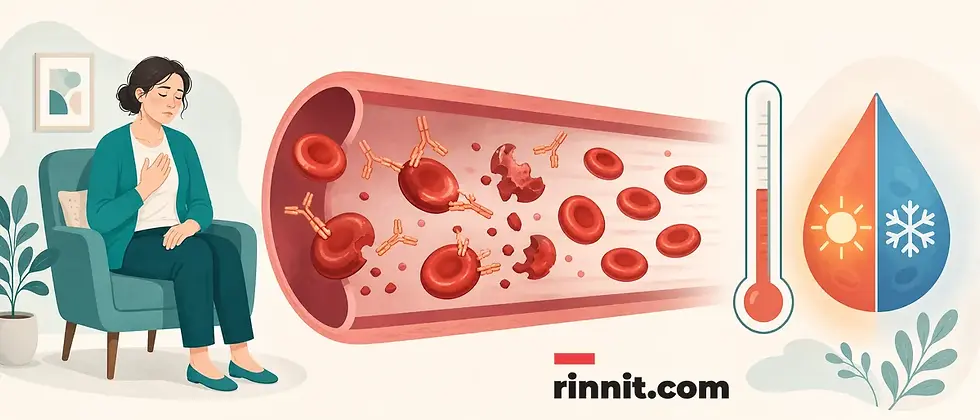
What Is Autoimmune Hemolytic Anemia?
Autoimmune hemolytic anemia (AIHA, pronounced “eye-HA”) is a rare form of anemia — a condition defined by low levels of red blood cells. It happens when the immune system accidentally destroys red blood cells instead of protecting them.
Normally, the body replaces red blood cells as they wear out. In AIHA, the immune system destroys them faster than the body can make new ones. The resulting shortage of red blood cells causes symptoms such as fatigue, shortness of breath, and a rapid heartbeat.
Healthcare providers classify AIHA as either primary or secondary. Primary AIHA occurs when a person has the condition without an underlying issue that can cause it. Secondary AIHA develops when another problem — such as a virus or a blood cancer — leads to the immune attack on red blood cells. [3]
What Are the Types of Autoimmune Hemolytic Anemia?
There are two types of AIHA: warm AIHA and cold AIHA. The difference lies in the type of antibodies the immune system produces to attack red blood cells. Antibodies are proteins designed to fight intruders like viruses and cancer. In AIHA, specific antibodies instead target red blood cells at different body temperatures. [3]
Type | Antibody Involved | When It Attacks |
Warm AIHA | Immunoglobulin G (IgG) | When body temperature is at or above 98.6°F (37°C) |
Cold AIHA | Immunoglobulin M (IgM) | When red blood cells are cooler than the body’s core temperature |
Healthcare providers may also call cold AIHA cold agglutinin disease (CAD). [3]
What Are the Symptoms of Autoimmune Hemolytic Anemia?
Symptoms vary depending on the AIHA type, but both types share several symptoms in common. These overlap with symptoms of many other anemias, which is why blood testing matters.
Symptom | What It May Look Like |
Chills and fever | Sudden shivering and elevated temperature |
Dizziness | Feeling lightheaded or unsteady |
Fatigue and weakness | Unusual tiredness that doesn’t resolve with rest |
Fast heart rate | Heart beating quickly, even at rest |
Shortness of breath | Feeling winded with normal activity |
Pale or yellowish skin | Skin lighter than usual, or with a yellow tint |
Dark urine | Pee that appears darker than normal |
Cold AIHA may cause additional symptoms beyond this shared list, including chest pain, cold hands and feet, and pain in the back of the legs.

What Causes Autoimmune Hemolytic Anemia?
In autoimmune hemolytic anemia, the immune system kills red blood cells faster than the body can replace them. This can happen for no reason, which is primary AIHA. Certain conditions and medications may also cause it, which is secondary AIHA. Learn more about how the immune system can turn on the body in our guide to autoimmune diseases.
Trigger Category | Examples |
Autoimmune diseases | Lupus, Hashimoto’s disease, rheumatoid arthritis |
Cancer | Chronic lymphocytic leukemia (CLL), non-Hodgkin lymphoma |
Medications | Antibiotics, anticancer drugs, nonsteroidal anti-inflammatory drugs (NSAIDs) |
Viruses | Cytomegalovirus, Epstein-Barr virus, hepatitis, HIV |
What Complications Can Occur?
AIHA may lead to serious complications if it goes unmanaged. These include serious infections, such as pneumonia, as well as heart disease.
How Is Autoimmune Hemolytic Anemia Diagnosed?
A healthcare provider starts by asking about symptoms and performing a physical exam. Because many conditions can cause anemia, several blood tests help confirm whether AIHA is responsible.
Diagnostic Test | What It Measures |
Bilirubin test | Breakdown products of destroyed red blood cells |
Complete blood count (CBC) | Overall red blood cell levels |
Coombs test | Whether antibodies are attached to red blood cells |
LDH (lactate dehydrogenase) | Tissue damage from red blood cell destruction |
Peripheral blood smear | Red blood cell shape and structure under a microscope |
Reticulocyte count | How many young red blood cells the body is producing |
Serological test | Additional immune system markers |
The Coombs test is especially important: it detects the antibodies clinging to red blood cells, which is the signature of autoimmune hemolytic anemia. [3]
How Is AIHA Treated?
Treatment depends on the AIHA type — warm or cold — and on whether an underlying issue is responsible.
Warm AIHA is typically treated with immunosuppressants and corticosteroids. Blood transfusions may be given if the anemia is severe. Cold AIHA is commonly treated with rituximab and immunosuppressants, and providers often recommend staying warm in cold weather or chilly places. [3]
If medications are not effective, surgery to remove the spleen may be needed. The spleen filters and stores blood, and in AIHA it is often where antibodies destroy red blood cells. Removing it may help protect red blood cells before antibodies can harm them.
Treatment | Used For | How It Helps |
Corticosteroids | Warm AIHA | Suppresses the immune attack on red blood cells |
Immunosuppressants | Warm and cold AIHA | Calms immune system activity |
Blood transfusions | Severe anemia (warm AIHA) | Replaces red blood cells quickly |
Rituximab | Cold AIHA | Targets the B cells that produce attacking antibodies |
Staying warm | Cold AIHA | Reduces cold-triggered red blood cell destruction |
Spleen removal (surgery) | When medications fail | Removes a key site where antibodies destroy red blood cells |

When Should I Seek Care?
Contact a healthcare provider if you have shortness of breath, fatigue, weakness, or other anemia symptoms. Several different types of anemia exist, and a provider will run tests to see whether AIHA is causing your symptoms.
Is There a Cure for AIHA?
There is no cure for autoimmune hemolytic anemia. Your outlook depends on your AIHA type and whether you have a severe form of the condition. If you have this condition, ask your healthcare provider to explain your situation, how treatment will manage your symptoms, and what you can expect.
Is AIHA Serious?
AIHA symptoms may look and feel like less serious conditions. You know your body best, including how long it takes you to recover from everyday illnesses. Talking to a provider whenever you’re concerned about changes in your body that don’t go away is the safest approach.
What Questions Should I Ask My Healthcare Provider?
Because AIHA is rare and can be frightening to diagnose, it helps to bring clear questions to the appointment.
Question | Why It Matters |
Do I have warm or cold AIHA? | Determines which medications and precautions apply |
Is another condition causing my AIHA? | Guides whether the underlying cause also needs treatment |
What tests confirm the diagnosis? | Ensures AIHA — not another anemia — is being treated |
What should I do if my symptoms worsen? | Establishes a plan before an emergency occurs |
Conclusion
Autoimmune hemolytic anemia is a rare condition in which the immune system mistakenly destroys red blood cells faster than the body can replace them. Whether triggered by an autoimmune disease, a virus, certain medications, or occurring for no known reason, its hallmark is anemia-driven fatigue, shortness of breath, a fast heart rate, pale or yellowish skin, and dark urine. Because symptoms mimic other anemias, diagnosis hinges on specific blood tests — above all the Coombs test. Although there is no cure, treatment with corticosteroids, immunosuppressants, rituximab, transfusions, or spleen removal can manage the condition effectively. If you are experiencing unexplained fatigue, weakness, or shortness of breath that doesn’t go away, contact a healthcare provider. Getting evaluated is the fastest way to find out what’s causing your symptoms — and to get peace of mind.
Frequently Asked Questions
What is autoimmune hemolytic anemia?
Autoimmune hemolytic anemia is a rare form of anemia in which the immune system mistakenly destroys red blood cells faster than the body can replace them, causing fatigue, shortness of breath, and a fast heart rate.
What are the two types of AIHA?
Warm AIHA involves IgG antibodies that attack red blood cells at normal body temperature (98.6°F or above), while cold AIHA involves IgM antibodies that attack cells at cooler temperatures. Cold AIHA is sometimes called cold agglutinin disease.
Is autoimmune hemolytic anemia the same as other types of anemia?
No. Most anemias result from iron deficiency, blood loss, or bone marrow problems. AIHA is caused by the immune system attacking red blood cells, which requires different diagnosis and treatment.
What are the most common symptoms?
Fatigue and weakness, shortness of breath, fast heart rate, dizziness, chills and fever, pale or yellowish skin, and dark urine. Cold AIHA may also cause chest pain, cold hands and feet, and pain in the back of the legs.
What causes autoimmune hemolytic anemia?
Autoimmune hemolytic anemia can happen for no reason (primary AIHA), or be triggered by autoimmune diseases like lupus or rheumatoid arthritis, cancers such as CLL or non-Hodgkin lymphoma, viruses like hepatitis or Epstein-Barr, or certain medications.
How is it diagnosed?
A provider reviews symptoms, performs a physical exam, and orders blood tests — including a CBC, bilirubin test, LDH, reticulocyte count, peripheral blood smear, and especially the Coombs test, which detects antibodies attached to red blood cells. [3]
Is AIHA curable?
There is no cure, but the condition can often be managed with medications that calm the immune system. Outlook depends on the type and severity.
How is warm AIHA treated?
Warm AIHA is typically treated with corticosteroids and immunosuppressants. Blood transfusions may be needed for severe anemia. [3]
How is cold AIHA treated?
Common treatments include rituximab and immunosuppressants. Providers also recommend staying warm in cold weather and chilly places. [3]
Why would someone need their spleen removed?
The spleen filters and stores blood and is often where antibodies destroy red blood cells in AIHA. If medications are not effective, removing it may protect red blood cells before antibodies can harm them.
Can AIHA cause complications?
Yes. Possible complications include serious infections such as pneumonia and heart disease.
When should I see a healthcare provider?
Contact a provider if you have shortness of breath, fatigue, weakness, or other anemia symptoms that do not go away. A provider can run tests to determine whether AIHA or another type of anemia is responsible.
Related Reading
Coombs Test: Direct vs Indirect, Why It's Done and What Results Mean explains the blood test that finds antibodies attacking red blood cells.
References
Genetic and Rare Diseases Information Center (GARD), U.S. Department of Health & Human Services. Autoimmune hemolytic anemia. GARD. Last updated September 2026. https://rarediseases.info.nih.gov/diseases/5870/autoimmune-hemolytic-anemia
Barcellini W, Giannotta J, Fattizzo B. Autoimmune hemolytic anemia in adults: primary risk factors and diagnostic procedures. Expert Rev Hematol. 2020;13(6):585-597. PMID 32274943. https://doi.org/10.1080/17474086.2020.1754791
Michalak SS, Olewicz-Gawlik A, Rupa-Matysek J, et al. Autoimmune hemolytic anemia: current knowledge and perspectives. Immun Ageing. 2020;17(1):38. PMID 33292368. https://doi.org/10.1186/s12979-020-00208-7
Michel M, Terriou L, Roudot-Thoraval F, et al. A randomized and double-blind controlled trial evaluating the safety and efficacy of rituximab for warm auto-immune hemolytic anemia in adults (the RAIHA study). Am J Hematol. 2017;92(1):23-27. PMID 27696475. https://doi.org/10.1002/ajh.24570
Mulder FVM, Evers D, de Haas M, et al. Severe autoimmune hemolytic anemia; epidemiology, clinical management, outcomes and knowledge gaps. Front Immunol. 2023;14:1228142. PMID 37795092. https://doi.org/10.3389/fimmu.2023.1228142
Medical disclaimer
This article is for general informational purposes only and is not a substitute for professional medical advice, diagnosis, or treatment. Always consult a qualified healthcare provider about any medical condition.



Comments