Ulcerative Colitis: Symptoms, Causes, Diagnosis, and Treatment Explained

Updated: 3 days ago
Medically reviewed by Dr. Baraa Alnahhal, MD · Last reviewed: October 2026
Editorial note: This article is provided for educational purposes only. It is not medical advice. Always consult a qualified healthcare professional for diagnosis and treatment of any condition.
Quick Answer: What Is Ulcerative Colitis?
Ulcerative colitis is a chronic inflammatory bowel disease (IBD) that causes inflammation and ulcers in the innermost lining of the colon and rectum, usually starting in the rectum [1]. Symptoms include diarrhea with blood or pus, cramping and fatigue. Medicine can control symptoms and bring long-term remission, while removing the colon and rectum is the only true cure [2].
What the research says
Long-standing colitis raises colorectal cancer risk over time. A meta-analysis of 116 studies found colorectal cancer in 3.7% of people with ulcerative colitis overall. Estimated cumulative risk was 2% by 10 years, 8% by 20 years and 18% by 30 years of disease, which is why surveillance colonoscopy is recommended for long-standing disease (Eaden et al., Gut, 2001) [3].
Biologic therapy can induce and maintain remission. In two integrated randomized trials of the biologic vedolizumab (895 patients in the induction trial), 47.1% responded at week 6 versus 25.5% on placebo. At week 52, 41.8% of those continuing vedolizumab every 8 weeks were in clinical remission, compared with 15.9% of those switched to placebo (Feagan et al., The New England Journal of Medicine, 2013) [4].
What Is Ulcerative Colitis?
Ulcerative colitis (pronounced ul-sur-uh-tiv koe-LIE-tis) is a type of inflammatory bowel disease that causes inflammation and sores in the colon. It affects the innermost lining of the colon and rectum, and it typically begins in the rectum [1]. From there, the inflammation may extend upward through part or all of the colon. The colon is also called the large intestine, and the rectum makes up its last several inches.
Ulcerative colitis symptoms usually develop over time rather than starting suddenly [1]. It is a chronic condition, which means it is long lasting. If it is not properly treated, it can sometimes lead to life-threatening complications [1].
There is no current cure with medicine. However, treatment can greatly reduce symptoms and heal the lining of the colon. Healing the lining can lead to long-term remission — long periods without any symptoms at all [1].
The Three Types of Ulcerative Colitis
Healthcare professionals often classify ulcerative colitis by where the inflammation is located. The type affects which symptoms appear and how the disease is treated.
Type | Where the inflammation is | Common symptoms |
Ulcerative proctitis | Limited to the rectum, the area closest to the anus | Rectal bleeding or urgency may be the only signs; constipation can also occur [1] |
Left-sided colitis | From the rectum up through the sigmoid and descending colon | Bloody diarrhea, belly cramps and pain, tenesmus (urging to pass stool but being unable to) [1] |
Widespread colitis (pancolitis) | Often the entire colon | Bouts of bloody diarrhea that may be severe, belly cramps and pain, fatigue, weight loss [1] |
Tenesmus is the medical term for the uncomfortable feeling that you need to pass stool despite the inability to do so. It is a hallmark symptom of left-sided colitis.
Ulcerative Colitis vs. Crohn's Disease vs. Microscopic Colitis
People often confuse ulcerative colitis with other digestive conditions. These three inflammatory conditions are different in important ways. For a full comparison, see our guide to Crohn's Disease: Symptoms, Causes, Flares vs. Remission and Treatment.
Condition | Area affected | How deep the inflammation goes |
Ulcerative colitis | Only the colon and rectum | The innermost lining of the colon [1] |
Crohn's disease | Any part of the gastrointestinal system, often including the small intestine | Deeper layers of the bowel wall [1] |
Microscopic colitis | The colon | The colon looks normal during colonoscopy; inflammation is visible only under a microscope |
Microscopic colitis includes two subtypes — lymphocytic colitis and collagenous colitis — and can cause ongoing watery diarrhea. It is treated differently from ulcerative colitis, which is why an accurate diagnosis matters.
What does ulcerative colitis feel like?
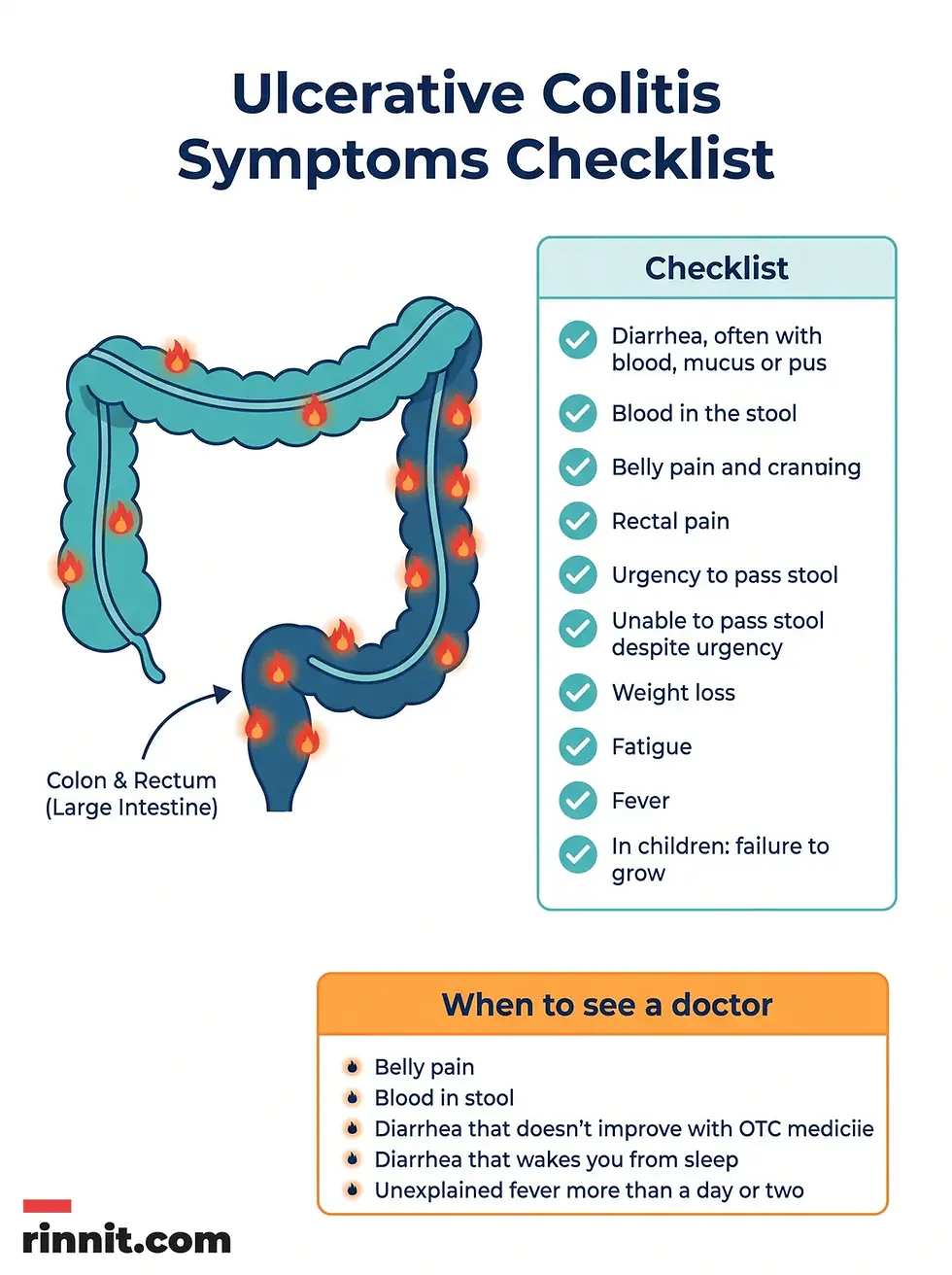
Ulcerative colitis symptoms can vary depending on how serious the inflammation is and where it is located in the colon. The symptoms may include:
About half of people with ulcerative colitis have mild to moderate symptoms [1]. How the condition affects a person over time may vary. Some people experience long periods without symptoms, called remission [1].
When to See a Doctor
Ulcerative colitis usually is not fatal, but it is a serious disease that can cause life-threatening complications. See a healthcare professional if you notice a change in your bowel habits that lasts for a while [1], or if you have any of the following:
The only way to definitively diagnose ulcerative colitis is with a biopsy after taking a tissue sample through an endoscopic procedure. Symptoms that wake you from sleep or involve blood are important warning signs that deserve medical attention rather than self-treatment.
What Causes Ulcerative Colitis?
The exact cause of ulcerative colitis is not known [1]. In the past, diet and stress were thought to be causes. Today, healthcare professionals understand that these factors may make symptoms worse rather than cause the disease itself [1]. Stress in particular can affect the immune system and gut function, which may increase urgency, diarrhea, or belly pain during a flare.
Researchers believe several factors may contribute to the disease:
Possible cause | How it may contribute |
Immune system issue | An irregular immune response attacks the cells of the digestive tract while trying to fight off an invading virus or bacterium [1] |
Genetic traits | Several genetic markers are associated with the condition, and heredity plays a role; however, genetic testing is not helpful for diagnosing or screening [1] |
Gut bacteria | An imbalance in the gut microbiome — the natural bacteria living in the gut — may contribute to the immune response |
Environmental factors | Where a person lives, diet, and antibiotic use may increase risk, though the exact role is still unclear |
To learn more about the gut's bacterial ecosystem, see The Gut Microbiome: A Guide to Your Internal Ecosystem.
Risk Factors
Ulcerative colitis can happen to anyone, but certain factors raise the risk.
Risk factor | Detail |
Age | The condition usually begins before age 30, but it can occur at any age; some people develop it after age 60 [1] |
Race or ethnicity | White people have the highest risk, and the risk is even higher for people of Ashkenazi Jewish descent [1]; the disease can occur in any race |
Family history | Risk is higher if a close relative — a parent, sibling, or child — has the disease [1] |
What Complications Can Ulcerative Colitis Cause?
Ulcerative colitis can cause life-threatening complications when it is not properly treated, and people whose disease involves more than the rectum need more frequent colon cancer screening. Possible complications include:
Complication | What it involves |
Severe bleeding | Significant blood loss from the inflamed colon [1] |
Severe dehydration | Fluid loss from prolonged diarrhea [1] |
Anemia | Loss of red blood cells [1] from ongoing intestinal bleeding |
Osteoporosis | Bone loss [1], which can be worsened by long-term corticosteroid use |
Inflammation of skin, joints, and eyes | The immune response can affect organs outside the gut [1] |
Increased colon cancer risk | Long-standing inflammation raises the risk of colon cancer [1] |
Toxic megacolon | A rapidly swelling, enlarged colon [1] that can rupture |
Blood clots | Increased risk of clots [1] in veins and arteries |
Delayed growth in children | Failure to grow and develop on schedule [1] |
If your disease involves more than the rectum, you will need more-frequent colon cancer screening: a colonoscopy every one to two years, beginning as soon as eight years after diagnosis [2]. People with proctitis (inflammation limited to the rectum) are not at increased risk of colon cancer [2]. Read more in our guide to Colon Cancer: Symptoms, Causes, Diagnosis, Staging and Treatment.
How Is Ulcerative Colitis Diagnosed?

To diagnose ulcerative colitis, healthcare professionals perform a colonoscopy and collect tissue samples, called biopsies, from the lining of the colon. A tissue sample is necessary to make the diagnosis [2]. Other tests, such as stool tests, MRI, and CT scans, help rule out complications or other forms of IBD such as Crohn's disease.
Test type | What it checks |
Blood tests | Anemia, signs of infection [2], and sometimes markers of inflammation |
Stool studies | White blood cells or specific proteins that suggest ulcerative colitis; also rules out infections from bacteria, viruses, or parasites [2] |
Colonoscopy | Views the entire colon with a thin, flexible, lighted tube and camera; tissue samples (biopsies) are taken at the same time — required for diagnosis [2] |
Flexible sigmoidoscopy | Uses a shorter tube to view the rectum and sigmoid colon (the lower end of the colon); performed instead of a full colonoscopy if the colon is severely inflamed [2] |
X-ray | Rules out colon dilation [2], which can lead to toxic megacolon and perforation |
CT scan | Checks for inflammation in the abdomen or pelvis and rules out an abscess or other sources of pain [2] |
CT or MR enterography | Noninvasive tests that exclude inflammation in the small intestine; more sensitive than conventional imaging; MR enterography is a radiation-free alternative [2] |
Because symptoms can first appear at a routine visit, your primary healthcare professional may refer you to a gastroenterologist — a specialist who treats digestive diseases [2].
How Is Ulcerative Colitis Treated?
Ulcerative colitis treatment involves medicines or, when medicines fail to control inflammation, surgery. Medicines cannot cure the disease, but they can control symptoms, reduce inflammation, and help people stay in remission for long periods. Surgery to remove the colon and rectum is the only true cure [2].
Treatment choices depend on how severe the disease is and where it occurs in the colon. Medicines that work well for one person may not work for another, so finding the right medicine can take time [2]. Some medicines also have serious side effects, so the benefits and risks of every treatment should be weighed with your healthcare team.

Treatment by Severity
The location of inflammation also matters. Rectal disease often responds well to topical treatments [2], while extensive colitis usually needs oral or intravenous medicines.
Medicines for Ulcerative Colitis
Anti-inflammatory medicines are often the first step. They calm inflammation in the colon and control symptoms. Oral 5-aminosalicylates — such as sulfasalazine (Azulfidine), mesalamine (Apriso, Lialda, and others), and balsalazide (Colazal) [2] — are taken by mouth, often long term to prevent flare-ups. The one recommended depends on the area of the colon affected, and some are also available as an enema or suppository. Corticosteroids, such as prednisone and budesonide, are generally reserved for moderate to severe ulcerative colitis that does not respond to other treatments [2]. They quickly control severe flares but are not safe for long-term use [2].
Immunomodulators reduce inflammation by suppressing the immune system response that starts the inflammatory process. Azathioprine (Azasan, Imuran) and mercaptopurine (Purinethol, Purixan) are the most widely used immunomodulators for inflammatory bowel disease [2]. They require close follow-up and regular blood checks for side effects, including effects on the liver and pancreas [2].
Biologic medicines target proteins made by the immune system [2].
Biologic medicine | Brand name | How it works |
Infliximab, adalimumab, golimumab | Remicade, Humira, Simponi | TNF inhibitors; neutralize a protein produced by the immune system [2] |
Vedolizumab | Entyvio | Blocks inflammatory cells from reaching the site of inflammation [2] |
Ustekinumab | Stelara | Blocks a protein that causes inflammation [2] |
Mirikizumab | Omvoh | Recently approved biologic for ulcerative colitis [2] |
Risankizumab | Skyrizi | Recently approved biologic for ulcerative colitis [2] |
Guselkumab | Tremfya | The latest approved therapy in the same class as risankizumab and mirikizumab [2] |
Small molecule medicines are newer, orally delivered agents. Tofacitinib (Xeljanz) and upadacitinib (Rinvoq) are JAK inhibitors [2] that target parts of the immune system causing intestinal inflammation. Ozanimod (Zeposia) and etrasimod (Velsipity) are S1P receptor modulators [2].
Other Medicines for Specific Symptoms
Medicine type | Notes and cautions |
Antidiarrheals (loperamide/Imodium A-D) | May help severe diarrhea but must be used with great caution — they can increase the risk of toxic megacolon [2] (an enlarged colon) |
Pain relievers | Acetaminophen (Tylenol) may be recommended for mild pain; ibuprofen (Advil, Motrin IB), naproxen sodium (Aleve), and diclofenac sodium should be avoided because they can worsen symptoms and increase disease severity [2] |
Antispasmodics | Sometimes prescribed to help with cramps [2] |
Iron supplements | Given if ongoing intestinal bleeding causes iron deficiency anemia [2] |
Surgery: The Only True Cure
Surgery is usually needed when medicines no longer control the disease or cause serious side effects [2]. It may also be recommended for complications such as bleeding, colon rupture, or cancer [2]. Our guide to Surgery for Ulcerative Colitis: Types, Procedures, and Recovery explains these operations in more depth.
Procedure | What it involves |
Proctocolectomy | Removes the entire colon and rectum; this surgery cures ulcerative colitis [2] |
J-pouch surgery (ileoanal anastomosis) | In most cases, follows proctocolectomy; a pouch is constructed from the end of the small intestine and attached directly to the anus, eliminating the need for a stool collection bag and allowing a relatively typical way to expel waste [2] |
Ileal stoma | A permanent opening in the belly for stool to pass into an attached bag; used when a pouch is not possible [2] |
Continent ileostomy (Kock pouch) | An ileal stoma with a one-way valve; no bag is needed — a tube is placed into the valve to empty the pouch [2], giving control over the timing of bowel elimination |
How can diet, flare care and stress management help ulcerative colitis at home?
Changes in diet and daily habits cannot cure ulcerative colitis, but they can help manage symptoms and reduce the number of flare-ups.
Diet and Nutrition
No single diet prevents ulcerative colitis, and some foods and drinks can make symptoms worse, especially during a flare. Keeping a food diary may help you spot patterns [2], and foods that trigger symptoms are best avoided.
Diet suggestion | Why it helps |
Limit dairy products | Many people with UC are sensitive to lactose, which can cause gas, cramps, and diarrhea; lactose-free products or enzyme supplements may help |
Increase protein | Focus on protein-containing foods throughout the day: chicken, tofu, fish, turkey, eggs, yogurt, beans, chia seeds, and nut butters [2] |
Eat smaller meals | Five or six small meals each day [2] may be easier on the digestive system than a few large ones |
Choose easy-to-digest foods | Soft, bland foods may reduce discomfort when symptoms are active [2]; avoid greasy, spicy, or high-fiber foods if they worsen symptoms |
Stay hydrated | Drink plenty of water; limit caffeine, alcohol, and carbonated drinks, which can worsen diarrhea and gas [2] |
See a dietitian | A registered dietitian can help you maintain balanced nutrition if you are losing weight or have limited food choices [2] |
Managing Flares
Flares are times when symptoms return or worsen after a period of remission. While they cannot always be prevented, you can take steps to reduce their impact and support recovery. Stay in touch with your healthcare team and contact them if symptoms change or worsen. Keep up with recommended tests [2] such as colonoscopies and blood work to monitor disease activity and treatment effects. Track your symptoms — writing down bowel habits, pain levels, and other changes helps you and your team adjust treatment if needed. Ask about a multivitamin or mineral supplement, since ulcerative colitis can make it harder to absorb nutrients [2].
Handling Stress
Stress does not cause ulcerative colitis, but it can make symptoms worse and possibly trigger flares [2]. To reduce stress, exercise regularly — gentle activity such as walking can improve mood, strengthen bones, and support bowel function [2]. Practice relaxation techniques such as deep breathing, meditation, and yoga. And seek support: talking with a counselor or joining a support group can ease the emotional load of living with ulcerative colitis [2].
A note on alternative medicine: many people with digestive diseases have used some form of complementary and alternative medicine, but few well-designed studies show the safety and effectiveness of these approaches [2].
How should you prepare for an ulcerative colitis appointment?
Symptoms of ulcerative colitis may first prompt a visit to your primary healthcare professional, who may refer you to a gastroenterologist. When you make the appointment, ask whether you need to prepare in advance, such as fasting before a specific test [2].
What to bring: a list of your symptoms (including any that may not seem related), key personal information such as major stresses or recent life changes, all medicines, vitamins, and supplements you take with their doses (including herbal preparations), and your questions. If possible, take a family member or friend along to help remember the information you are given.
Questions to ask your doctor include: What is the most likely cause of my symptoms? What kinds of tests do I need, and do they require special preparation? Is this condition temporary or long lasting? What treatments are available, and which do you recommend? What side effects can I expect? Are there prescription or over-the-counter medicines I need to avoid? How often do I need a colonoscopy? Can I keep working? Can I have children?
Questions your doctor will ask you include: When did your symptoms start? Have they been continuous or occasional? Do you have abdominal pain? How often do you have diarrhea, and does it wake you from sleep? Have you lost weight without trying? Have you had liver problems, jaundice, joint or eye problems, skin rashes, or sores in your mouth? Have you recently traveled? Is anyone else in your home sick with diarrhea? Have you taken antibiotics recently? Do you regularly take NSAIDs such as ibuprofen or naproxen?
Conclusion: What to Do Next
Ulcerative colitis is a chronic, sometimes life-altering condition — but it is highly manageable with modern treatment. If you have had a change in bowel habits that lasts for a while, blood in your stool, diarrhea that does not improve with over-the-counter medicines, diarrhea that wakes you from sleep, or an unexplained fever, see a healthcare professional. Only a colonoscopy with biopsy can confirm the diagnosis, and early treatment helps control inflammation and protect the colon.
If you have already been diagnosed, work closely with your healthcare team: take medicines as prescribed, keep up with recommended tests, track your symptoms, and follow the cancer screening schedule that fits your disease. Small, consistent habits — a food diary, smaller meals, gentle exercise, stress management, and staying hydrated — can meaningfully reduce flare-ups.
Talk to your doctor about your symptoms today. If you notice blood in your stool or persistent diarrhea, do not wait to get evaluated.
Frequently Asked Questions
1. Is ulcerative colitis the same as Crohn's disease?
No. Ulcerative colitis is limited to the innermost lining of the colon and rectum and typically begins in the rectum. Crohn's disease can affect any part of the gastrointestinal system, often including the small intestine, and it may involve deeper layers of the bowel wall.
2. Is there a cure for ulcerative colitis?
Medicines cannot cure ulcerative colitis, though they can control symptoms and heal the colon lining, sometimes producing long-term remission. Surgery to remove the colon and rectum (proctocolectomy) is the only true cure.
3. What does ulcerative colitis pain feel like?
It typically causes belly pain and cramping along with rectal pain, diarrhea (often with blood, mucus, or pus), and an urgent need to pass stool. Symptoms develop over time rather than suddenly.
4. Can you have ulcerative colitis without blood in your stool?
Yes. People with ulcerative proctitis — inflammation limited to the rectum — may have rectal bleeding or urgency as the only signs, and constipation can also be a symptom of proctitis.
5. Why does diarrhea wake me up at night?
Diarrhea that awakens you from sleep is listed as a specific warning sign to see a healthcare professional. Night-time diarrhea deserves medical evaluation.
6. What is tenesmus?
Tenesmus is the feeling of urgency to pass stool despite being unable to do so. It is a common symptom of left-sided colitis, where inflammation extends from the rectum up through the sigmoid and descending colon.
7. What causes ulcerative colitis — is it my fault?
The cause is unknown. Diet and stress do not cause the disease, though they can make symptoms worse. Researchers believe an irregular immune response, genetic factors, gut bacteria imbalance, and environmental influences may all play a role.
8. Is ulcerative colitis genetic?
Heredity seems to play a role — you are at higher risk if a close relative (parent, sibling, or child) has the disease, and several genetic markers have been associated with it. However, genetic testing is not helpful for diagnosing or screening for the condition.
9. At what age does ulcerative colitis start?
It usually begins before age 30, but it can occur at any age, and some people do not develop the disease until after age 60.
10. What is the difference between mild, moderate, and severe ulcerative colitis?
About half of people have mild to moderate symptoms. In general, mild disease is often treated with aminosalicylates, moderate disease may require corticosteroids, immunomodulators, biologics, or small molecule medicines, and severe disease may need hospitalization for intravenous medicines and possibly surgery.
11. Does J-pouch surgery mean wearing a bag?
No. In most cases, proctocolectomy involves ileoanal anastomosis (J-pouch) surgery, which eliminates the need for a bag. The surgeon constructs a pouch from the end of the small intestine and attaches it directly to the anus, allowing a relatively typical way to expel waste. A bag (ileal stoma) is only needed when a pouch is not possible.
12. Can I take ibuprofen with ulcerative colitis?
No. Ibuprofen (Advil, Motrin IB), naproxen sodium (Aleve), and diclofenac sodium can worsen symptoms and increase the severity of the disease. For mild pain, acetaminophen (Tylenol) may be recommended instead.
13. Are antidiarrheal medicines safe with ulcerative colitis?
Only with caution and after talking with your healthcare team. Loperamide (Imodium A-D) may help severe diarrhea, but antidiarrheal medicines may increase the risk of toxic megacolon, a dangerous enlargement of the colon.
14. Do I need colon cancer screening with ulcerative colitis?
Likely yes, and more often than average. If your disease involves more than the rectum, you will need a colonoscopy every one to two years, beginning as soon as eight years after diagnosis. People with proctitis alone are not at increased risk of colon cancer.
15. Can diet cure or prevent ulcerative colitis?
No single diet can prevent ulcerative colitis. However, limiting dairy if you are lactose sensitive, eating smaller meals, choosing easy-to-digest foods, staying hydrated, and keeping a food diary can help manage symptoms and reduce flare-ups.
16. Does stress cause ulcerative colitis flares?
Stress does not cause ulcerative colitis, but it can make symptoms worse and possibly trigger flares, because stress can affect the immune system and gut function. Exercise, relaxation techniques, and support groups can help.
Related Reading
Specific Carbohydrate Diet (SCD): Foods, Benefits and Risks explains the Specific Carbohydrate Diet.
Ileal Pouch (J-Pouch): Types, Surgery and Life After explains ileal pouch surgery.
Learn more in our guide to Hemicolectomy: Right vs. Left Colon Surgery, Procedure, Risks and Recovery.
Ileostomy: Types, Surgery, Recovery, Stoma Care and Reversal explains when an ileostomy is needed, the loop and end types, what happens during surgery, recovery and reversal.
Lower Endoscopy: Colonoscopy vs. Sigmoidoscopy, Prep, Procedure and Recovery explains the scope exams used to diagnose ulcerative colitis and check whether it is getting worse.
Barium Enema (Lower GI Series): Purpose, Preparation, Procedure and Results explains the colon X-ray test that can help find this condition.
Learn more in our guide to Flexible Sigmoidoscopy: Prep, Procedure, Results and Risks.
Learn more in our guide to Colorectal Cancer Screening: When to Start, Test Options and What Results Mean.
Stool Test: Types, How to Collect a Sample and What Results Mean explains the stool tests used to find infections, bleeding and other gut problems.
Fecal Calprotectin Test: IBD vs IBS, How to Collect a Sample and Results explains the stool test that checks for gut inflammation.
References
Mayo Clinic Staff. Ulcerative colitis - Symptoms and causes. Mayo Clinic. Accessed October 7, 2026. https://www.mayoclinic.org/diseases-conditions/ulcerative-colitis/symptoms-causes/syc-20353326
Mayo Clinic Staff. Ulcerative colitis - Diagnosis and treatment. Mayo Clinic. Accessed October 7, 2026. https://www.mayoclinic.org/diseases-conditions/ulcerative-colitis/diagnosis-treatment/drc-20353331
Eaden JA, Abrams KR, Mayberry JF. The risk of colorectal cancer in ulcerative colitis: a meta-analysis. Gut. 2001;48(4):526-535. PMID 11247898. https://doi.org/10.1136/gut.48.4.526
Feagan BG, Rutgeerts P, Sands BE, et al. Vedolizumab as induction and maintenance therapy for ulcerative colitis. The New England Journal of Medicine. 2013;369(8):699-710. PMID 23964932. https://doi.org/10.1056/NEJMoa1215734



Comments