Duodenal Switch Surgery: How It Works, Weight Loss Results, and Risks

Updated: 6 days ago
Written and medically reviewed by Dr. Baraa Alnahhal, MD · Last reviewed: October 2026 · How we review
Quick Answer: What is duodenal switch surgery?
Duodenal switch surgery is a weight-loss operation for severe obesity that removes up to 80% of the stomach and reroutes food past most of the small intestine. You eat less and absorb fewer calories. It typically suits a BMI of 40 or higher, or 35 or higher with an obesity-related condition, and requires lifelong supplements. [1]
What the research says
Greater weight loss than gastric bypass, 15 years on. In a randomized trial of 47 people with super obesity (34 followed for 13 to 17 years), duodenal switch produced 37.5% total body weight loss versus 22.8% after gastric bypass, with lower blood sugar and LDL cholesterol — but adverse events were higher (2.7 vs 0.9 per patient). (Möller et al., Obesity Surgery, 2023)
Lasting diabetes remission, even in people on insulin. Among 132 insulin-treated patients with type 2 diabetes followed for 10 years, 68.1% were in complete remission and 97% had stopped insulin; 11.4% relapsed after an initial remission. (Kapeluto et al., Surgery for Obesity and Related Diseases, 2020)
Nutrient deficiencies are common in the long term. A meta-analysis of 8 studies (3,443 patients) found that 5 or more years after surgery, 57.3% had vitamin D deficiency, 25.4% vitamin A deficiency, 22.2% calcium deficiency, and 69.7% an abnormal parathyroid hormone level. (Nakanishi et al., The American Surgeon, 2024)
Key takeaways
Duodenal switch combines two operations: a sleeve gastrectomy and an intestinal bypass. [1]
It usually produces the greatest total weight loss of the bariatric surgeries, and it is the most effective option for people with type 2 diabetes. [1]
Weight loss is fastest in the first 3 months and usually peaks 12 to 18 months after surgery. [1]
The main trade-off is malnutrition risk, so lifelong supplements and regular blood tests are required. [1]
What are the two types of duodenal switch surgery?
There are two types of duodenal switch surgery: the traditional biliopancreatic diversion with duodenal switch (BPD/DS) and a newer version called SADI-S. [1] Both start the same way. They differ in how much of the small intestine is bypassed.
Type | Full name | How much small intestine is bypassed |
BPD/DS (traditional) | Biliopancreatic diversion with duodenal switch | Most of the small intestine |
SADI-S (newer) | Single anastomosis duodeno-ileal bypass with sleeve gastrectomy | A little more than half |
You can read more about the newer version in our guide to SADI-S surgery.
How does duodenal switch surgery work?
Duodenal switch surgery works in two steps: it makes the stomach much smaller, then creates a shortcut that sends food past most of the small intestine. [1]
Step 1 — Sleeve gastrectomy. The surgeon removes up to 80% of the stomach. What remains is a narrow, tube-shaped stomach that holds far less food. [1]
Step 2 — Intestinal bypass. The surgeon divides the small intestine near the top, in the section called the duodenum. They then connect the last section of the small intestine to the new stomach. Food skips most of the small intestine, so less of it is digested. [1]

The result is threefold. You eat less food, digest it faster, and absorb fewer calories. [1] The surgery also changes your metabolism and the hormones that control appetite and fullness. [1]
Who is a candidate for duodenal switch surgery?
Duodenal switch surgery is typically reserved for people with class III obesity, or class II obesity plus a major obesity-related health condition. [1] It is not a weight-loss surgery for everyone, and your healthcare provider weighs your overall health before recommending it.
Who may qualify | Body mass index (BMI) |
Class III obesity | 40 or higher |
Class II obesity plus a major obesity-related condition | 35 or higher |
Obesity-related conditions that count include: [1]
Type 2 diabetes
High blood pressure
High cholesterol
Heart disease
Metabolic dysfunction-associated steatotic liver disease (fatty liver disease)
Not sure where your BMI falls? Our guide to class III obesity explains the BMI scale and treatment options.
What happens before duodenal switch surgery?
Before duodenal switch surgery, you go through a screening process to confirm you are healthy enough and ready for major life changes. [1] This usually includes:
Standard medical tests
Screening for alcohol, tobacco, and drug use, with support to quit if needed
Psychological counseling to prepare for life with a new digestive system
A seminar so you understand the surgery
Once surgery is scheduled, you follow a pre-surgery eating plan for a couple of weeks. It is usually low in fat and carbohydrates and high in protein. [1]
How is duodenal switch surgery performed?
Duodenal switch surgery is performed laparoscopically, through several small incisions instead of one large cut in the abdomen. [1] You are under general anesthesia, so you sleep through the whole procedure. The operation typically takes 2 to 4 hours. [1]
What is recovery like after duodenal switch surgery?
Recovery after duodenal switch surgery usually means 1 to 2 days in the hospital and 2 to 4 weeks before a full recovery. [1] Your body changes quickly during this time, and rapid weight loss can cause temporary symptoms such as: [1]
Fatigue
Nausea
Mood shifts
Hair loss
Body aches
Feeling cold
Expect frequent follow-up visits in the first 2 years, which is your most dramatic weight-loss period, then periodic check-ups for life. [1]
What can you eat after duodenal switch surgery?
After duodenal switch surgery, you move through four diet stages that let your digestive system heal and adjust. [1] Each stage can take 1 to 2 weeks.
Stage | What it includes | Typical length |
1. Clear liquids | Clear fluids only | 1–2 weeks |
2. Full liquids | Thicker liquids | 1–2 weeks |
3. Puréed foods | Smooth, blended foods | 1–2 weeks |
4. Soft diet | Soft, easy-to-digest foods | 1–2 weeks |
Your surgical team will give you the exact steps. Following the long-term eating plan also helps prevent loose stools, a common effect of this surgery. [1]
How much weight do you lose after duodenal switch surgery?
Most people lose about 30% of their excess weight in the first 3 months after duodenal switch surgery, and 50% to 75% by the one-year mark. [1] Results vary from person to person.

Time after surgery | What usually happens |
First 3 months | Fastest weight loss — about 30% of excess weight [1] |
Months 3 to 6 | Weight loss slows a little [1] |
1 year | 50% to 75% of excess weight lost [1] |
12 to 18 months | Weight loss usually peaks [1] |
Over the long term, one randomized trial found 37.5% total body weight loss 13 to 17 years after duodenal switch, compared with 22.8% after gastric bypass. [2]
What are the benefits of duodenal switch surgery?
The main benefit of duodenal switch surgery is the greatest overall weight loss of any bariatric operation, along with a lower risk of serious obesity-related disease. [1] Other advantages include: [1]
The most effective weight-loss procedure for people with type 2 diabetes
Slightly larger meals allowed compared with other bypass procedures
Dumping syndrome is rare
The diabetes benefit can last. In people who used insulin before surgery, 68.1% were in complete remission 10 years later, and 97% had stopped insulin. [3]
What are the risks and complications of duodenal switch surgery?
The biggest risk of duodenal switch surgery is malnutrition, because the shortened small intestine absorbs fewer nutrients. [1] Like any major operation, it also carries surgical risks.
Surgical risks | Long-term complications |
Infection | Malnutrition and vitamin deficiencies |
Excessive bleeding | Diarrhea (loose, frequent stools) |
Reactions to anesthesia | |
Blood clots | Gallstones (from rapid weight loss) |
Hernias | |
Small bowel obstruction | |
Anastomotic leaks (leaks where the intestine is joined) |
Sources for this table: [1]
Deficiencies are common years later. One large review found vitamin D deficiency in 57.3% of patients and an abnormal parathyroid hormone level in 69.7% at 5 or more years. [4]
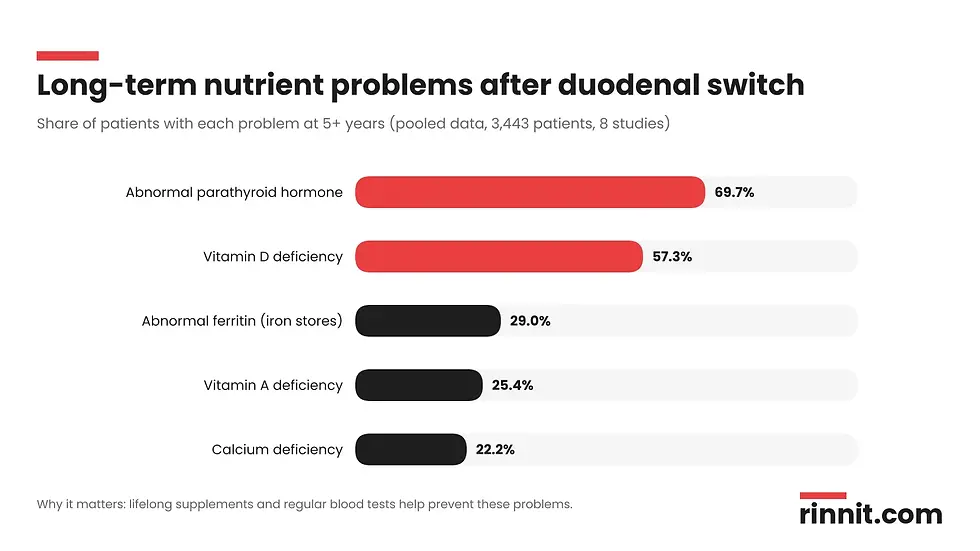
That is why lifelong daily supplements and regular blood tests are part of the plan, not an option. [1]
Is duodenal switch better than gastric bypass or gastric sleeve?
Duodenal switch is not simply "better" than gastric bypass or gastric sleeve; each suits different people, and your provider recommends the best fit for your situation. [1]
Feature | Duodenal switch | Gastric bypass | Gastric sleeve |
Main way it works | Relies more on reduced absorption | Relies more on eating less | Smaller stomach only |
Intestinal bypass | Yes — most of the small intestine | Yes | No |
Weight loss | Greatest overall | Less than duodenal switch | Less than duodenal switch |
Side effects | More potential side effects | — | Fewer than duodenal switch |
Sources for this table: [1] [2]
In a 15-year randomized trial, duodenal switch gave more weight loss and better blood sugar control than gastric bypass, but with more adverse events. [2] Compare the details in our gastric bypass surgery guide and our overview of the mini gastric bypass.
Conclusion
Duodenal switch surgery is a serious treatment for a serious condition. It changes how your digestive system works, and it delivers some of the strongest weight-loss and diabetes results in bariatric surgery. [1] [2] [3] The price of those results is a lifelong commitment to supplements, blood tests, and follow-up visits. [1] If you are ready for that commitment, you and your care team can plan to prevent deficiencies and protect your long-term health.
Next step: If you are weighing your options, start with our complete obesity guide, then bring your questions to a bariatric surgery team. Explore more trusted, research-backed health guides across Rinnit's health library.
FAQ
What is a duodenal switch?
A duodenal switch is a weight-loss surgery that removes part of the stomach and shortens the path food takes through the small intestine. It reduces how much food you hold, digest, and absorb. [1]
Who qualifies for duodenal switch surgery?
People with a BMI of 40 or higher usually qualify. People with a BMI of 35 or higher may qualify if they also have a major obesity-related condition, such as type 2 diabetes, high blood pressure, or sleep apnea. [1]
How long does duodenal switch surgery take?
The surgery typically takes 2 to 4 hours under general anesthesia. Most people stay in the hospital for 1 to 2 days. [1]
How long is recovery after a duodenal switch?
Full recovery usually takes 2 to 4 weeks. You will have frequent follow-up visits for the first 2 years and periodic check-ups for life. [1]
How much weight can you lose with a duodenal switch?
Most people lose about 30% of their excess weight in the first 3 months and 50% to 75% by one year. Weight loss usually peaks 12 to 18 months after surgery. [1]
Do you need vitamins for life after a duodenal switch?
Yes. Because the surgery limits how many nutrients you absorb, you need nutritional supplements and regular blood tests for the rest of your life. [1]
What is the difference between a duodenal switch and a gastric sleeve?
A gastric sleeve only makes the stomach smaller. A duodenal switch starts with a sleeve and then bypasses most of the small intestine, which leads to greater weight loss but more potential side effects. [1]
Does a duodenal switch cause dumping syndrome?
Dumping syndrome is rare after a duodenal switch. Loose stools are more common, and following your eating plan helps prevent them in most cases. [1]
Can a duodenal switch be reversed?
Not fully. The part of the stomach that is removed cannot be put back, though the intestinal rerouting can sometimes be revised in another operation.
Can a duodenal switch help type 2 diabetes?
Yes. Many people see major improvement in type 2 diabetes after a duodenal switch, and some go into remission. It is not a guaranteed cure, so regular follow-up is still needed.
Related Reading
Bariatric Surgery: Types, Requirements, Risks, and Recovery compares weight-loss surgery types, requirements and risks.
Gastric Sleeve Surgery: Requirements, Procedure and Results explains how a gastric sleeve shrinks the stomach and what to expect.
Gastric Bypass Surgery: A Comprehensive Guide to Weight Loss and Recovery explains how gastric bypass works and what recovery involves.
Class III Obesity: What It Is, Why It Happens, and How It Gets Treated explains severe obesity, its health risks and treatment options.
References
Cleveland Clinic. Duodenal Switch Surgery: What It Is, Results & Complications. Cleveland Clinic. Last updated April 1, 2025. https://my.clevelandclinic.org/health/treatments/22725-duodenal-switch
Möller F, Hedberg J, Skogar M, et al. Long-term Follow-up 15 Years After Duodenal Switch or Gastric Bypass for Super Obesity: a Randomized Controlled Trial. Obes Surg. 2023;33(10):2981-2990. PMID: 37584851. https://doi.org/10.1007/s11695-023-06767-0
Kapeluto JE, Tchernof A, Masckauchan D, et al. Ten-year remission rates in insulin-treated type 2 diabetes after biliopancreatic diversion with duodenal switch. Surg Obes Relat Dis. 2020;16(11):1701-1712. PMID: 32800734. https://doi.org/10.1016/j.soard.2020.06.052
Nakanishi H, Abi Mosleh K, Al-Kordi M, et al. Evaluation of Long-Term Nutrition Outcomes After Duodenal Switch: A Systematic Review and Meta-Analysis. Am Surg. 2024;90(3):399-410. PMID: 37694730. https://doi.org/10.1177/00031348231201886
Medical disclaimer
This article is for general education only and does not replace professional medical advice, diagnosis, or treatment. Always talk with a qualified healthcare provider or bariatric surgery team about your own situation before making decisions about weight-loss surgery.



Comments