Sickle Cell Anemia: Symptoms, Causes, Treatment & Complete Guide

Updated: 2 days ago
Medically reviewed by Dr. Baraa Alnahhal, MD · Last reviewed: October 17, 2026
Quick Answer
Sickle cell anemia is an inherited disorder in which some red blood cells become rigid, sickle-shaped and sticky, slowing or blocking blood flow. Symptoms usually begin around 6 months of age and include extreme tiredness, pain crises, swollen hands and feet and frequent infections. Treatment focuses on preventing pain episodes and complications, and newer gene therapies may offer a cure.
What the research says
Regular blood transfusions sharply cut stroke risk in high-risk children. A Cochrane overview of 5 reviews (9 trials, 1,502 participants) found that in children and adolescents at high risk of stroke, long-term red blood cell transfusions probably decrease the risk of stroke (RR 0.12, 95% CI 0.03 to 0.49; 2 trials, 326 participants), and may also lower acute chest syndrome and painful crises; the authors note the certainty of evidence was often low. (Katumba et al., Cochrane Database Syst Rev, 2026) [3]
Two newer medicines reduced pain-crisis measures in clinical trials. A systematic review of 8 studies found l-glutamine reduced vaso-occlusive crisis burden in its pivotal trial (rate ratio 0.75, 95% CI 0.62 to 0.90) and crizanlizumab prolonged time to first crisis (hazard ratio 0.50, 95% CI 0.33 to 0.75), though the crizanlizumab evidence depended on one core randomized trial. (Wang & Lu, Am J Med Sci, 2026) [4]
Some supplements may help children already on hydroxyurea. A meta-analysis of 20 randomized trials (2,058 children and adolescents, all on hydroxyurea) found that fatty acid and l-arginine supplements significantly improved pain intensity, vaso-occlusive crises and inflammation compared with usual care or placebo, while evidence for vitamin A, magnesium sulfate and zinc was limited and of poor quality. (Orsi et al., Clin Nutr, 2025) [5]
Sickle Cell Anemia at a Glance
Aspect | Summary |
Definition | An inherited disorder in which red blood cells become sickle-shaped, rigid, and sticky, slowing or blocking blood flow through the body |
Main symptoms | Anemia and fatigue, pain crises, swelling of hands and feet, frequent infections, delayed growth or puberty, vision problems |
Main cause | A change in the gene that makes hemoglobin; a child needs two sickle cell genes (one from each parent) to have the disease |
Who is at risk | Children of two carrier parents; most common in the U.S. among people of African, Mediterranean, and Middle Eastern descent |
Key tests | Blood test for sickle hemoglobin (routine newborn screening), tests for complications, stroke-risk ultrasound from age 2 |
Primary treatment | Medicines (hydroxyurea, L-glutamine, crizanlizumab), pain relief, blood transfusions; stem cell and gene therapies may cure |
Outlook | Management relieves symptoms and prevents complications; some children and teenagers may be cured by stem cell transplant or gene therapy |

What Is Sickle Cell Anemia?
Sickle cell anemia is one of a group of inherited disorders known as sickle cell disease. It affects the shape of red blood cells, which carry oxygen to all parts of the body.
Normal red blood cells are round and flexible, so they move easily through blood vessels. In sickle cell anemia, some red blood cells are shaped like sickles or crescent moons. These sickle cells also become rigid and sticky, which can slow or block blood flow.
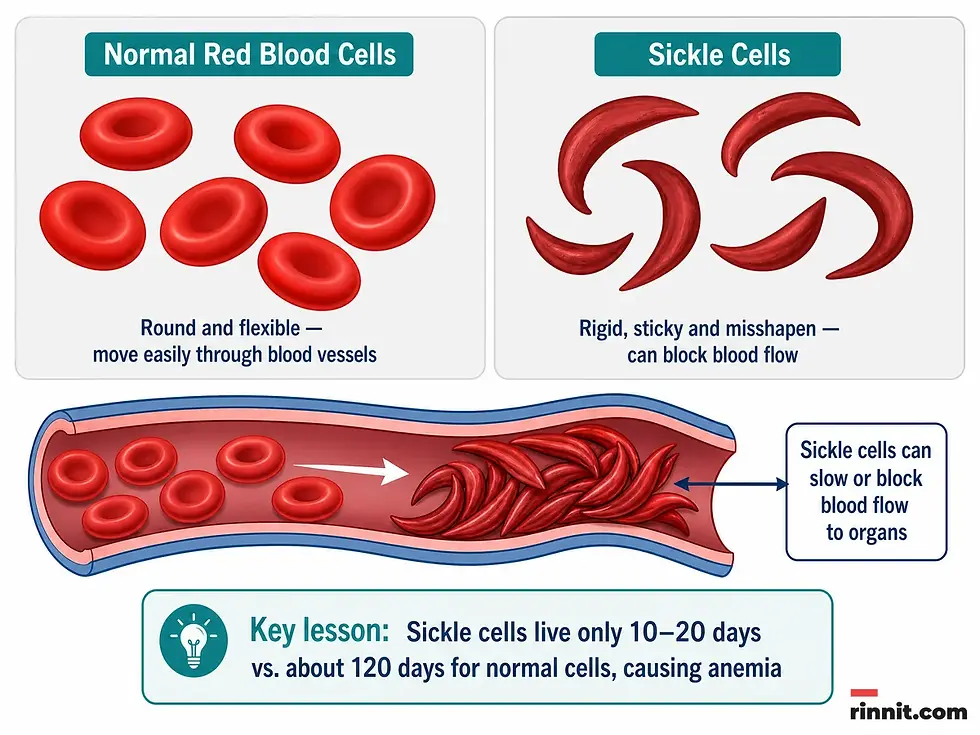
The current approach to treatment is to relieve pain and help prevent complications of the disease. However, newer treatments may cure people of the disease.
What are the symptoms of sickle cell anemia?
Symptoms usually appear around 6 months of age. They vary from person to person and may change over time.
Symptom | What Happens |
Anemia and fatigue | Sickle cells die in 10–20 days (normal cells live about 120 days), leaving a shortage of red blood cells and not enough oxygen |
Episodes of pain (pain crises) | Sickle cells block blood flow through tiny vessels to the chest, abdomen, and joints; pain can last hours to days |
Swelling of hands and feet | Blocked circulation causes swelling |
Frequent infections | Sickle cells damage the spleen, raising infection risk |
Delayed growth or puberty | A shortage of healthy red blood cells slows growth and delays puberty |
Vision problems | Sickle cells plug tiny blood vessels that supply the eyes, damaging the retina |
Pain Crises Explained
Periodic episodes of extreme pain, called pain crises, are a major symptom. The pain varies in intensity and can last for a few hours to a few days. Some people have only a few pain crises a year, while others have a dozen or more — and a severe pain crisis requires a hospital stay.
Some people with sickle cell anemia also have chronic pain from bone and joint damage, ulcers, and other causes.
When should you see a doctor for sickle cell anemia?
See a healthcare professional right away if you or your child develops symptoms of sickle cell anemia, including fever or stroke.
Infections often start with a fever and can be life-threatening. Because children with sickle cell anemia are prone to infections, seek prompt medical attention for a fever greater than 101.5°F (38.5°C).
Seek emergency care for symptoms of stroke, which include:
One-sided paralysis or weakness in the face, arms, or legs
Confusion
Difficulty walking or talking
Sudden vision changes
Unexplained numbness
Severe headache
What Causes Sickle Cell Anemia?
Sickle cell anemia is caused by a change in the gene that tells the body to make hemoglobin — the iron-rich compound in red blood cells that carries oxygen from the lungs to the rest of the body. The hemoglobin associated with sickle cell anemia makes red blood cells rigid, sticky, and misshapen.
The inheritance pattern is straightforward but strict:
For a child to have sickle cell anemia, both parents must carry one copy of the sickle cell gene and pass both copies to the child.
If only one parent passes the gene, the child will have the sickle cell trait instead.
People with the sickle cell trait have one typical hemoglobin gene and one sickle cell gene, so they make both typical and sickle cell hemoglobin. Their blood might contain some sickle cells, but they generally do not have symptoms. They are carriers of the disease — meaning they can pass the gene to their children.
What are the risk factors for sickle cell anemia?
For a baby to have sickle cell anemia, both parents must carry a sickle cell gene. In the United States, the condition most commonly affects people of African, Mediterranean, and Middle Eastern descent.
What complications can sickle cell anemia cause?
Sickle cell anemia can lead to a wide range of serious complications, because blocked blood flow and low oxygen can affect almost any organ.
Complication | What Happens |
Stroke | Sickle cells block blood flow to the brain; can cause seizures, weakness or numbness, speech difficulties, and loss of consciousness; can be fatal |
Acute chest syndrome | A lung infection or blocked lung blood vessels; causes chest pain, fever, and difficulty breathing; may need emergency treatment |
Avascular necrosis | Blocked blood supply to bones causes joints to narrow and bones to die — most often in the hip |
Pulmonary hypertension | High blood pressure in the lungs; usually affects adults; causes shortness of breath and fatigue; can be fatal |
Organ damage | Blocked flow and low oxygen damage nerves and organs, including the kidneys, liver, and spleen; can be fatal |
Splenic sequestration | Sickle cells get trapped in the spleen, enlarging it and causing left-sided abdominal pain; can be life-threatening |
Blindness | Blocked vessels supplying the eyes can lead to blindness over time |
Leg ulcers | Painful open sores on the legs |
Gallstones | Breakdown of red blood cells produces bilirubin; high levels lead to gallstones |
Priapism | Painful, long-lasting erections from blocked penile blood vessels; can lead to impotence over time |
Deep vein thrombosis | Blood clots in a deep vein, or a clot lodging in a lung (pulmonary embolism); either can cause serious illness or death |
Pregnancy complications | Increased risk of high blood pressure, blood clots, miscarriage, premature birth, and low birth weight |
Can sickle cell anemia be prevented?
If you carry the sickle cell trait, it can help to see a genetic counselor before you get pregnant. A counselor can help you understand your risk of having a child with sickle cell anemia, and you can learn about possible treatments, preventive measures, and reproductive options.
How Is Sickle Cell Anemia Diagnosed?
A blood test can check for the form of hemoglobin that underlies sickle cell anemia. In the United States, this blood test is part of routine newborn screening, but older children and adults can get the test too.
In adults, a blood sample is taken from a vein in the arm. In young children and babies, the sample is usually collected from a finger or heel, then screened in a laboratory for the sickle cell form of hemoglobin.
If you or your child has sickle cell anemia, your healthcare professional might suggest other tests to check for possible complications of the disease. If you carry the sickle cell gene, you will likely be referred to a genetic counselor.
Assessing Stroke Risk
A special ultrasound machine can reveal stroke risk in children. The test uses sound waves to measure blood flow to the brain. It is painless and can be used in children as young as 2 years old. Regular blood transfusions can decrease stroke risk.
Testing Before Birth
Sickle cell disease can be diagnosed in an unborn baby by sampling some of the amniotic fluid surrounding the baby in the womb. If you or your partner has sickle cell anemia or the sickle cell trait, ask your healthcare team about this screening.
How is sickle cell anemia treated?
Management of sickle cell anemia aims at avoiding pain episodes, relieving symptoms, and preventing complications. Treatments might include medicines and blood transfusions. For some children and teenagers, a stem cell transplant might cure the disease, and gene therapies may offer cures for more people.
Medicines
Medicine | How It Helps |
Hydroxyurea (Droxia, Hydrea) | Taken daily; reduces the frequency of pain crises and might reduce the need for blood transfusions and hospital stays; can increase infection risk; do not take if pregnant |
L-glutamine oral powder (Endari) | Helps reduce the frequency of pain crises |
Crizanlizumab (Adakveo) | Given by injection; reduces pain crises in adults and children older than 16; side effects can include nausea, joint pain, back pain, and fever |
Pain-relieving medicines | Prescribed (sometimes narcotics) to relieve pain during sickle cell pain crises |
Preventing Infections
Infection prevention is a cornerstone of care:
Penicillin — Children might receive penicillin from about 2 months old to 5 years old, or longer, to prevent life-threatening infections such as pneumonia. Adults might need penicillin throughout their lives if they have had pneumonia or surgery to remove the spleen.
Vaccinations — Childhood vaccinations matter even more for children with sickle cell anemia. These include vaccines against pneumonia, meningitis, hepatitis B, and a yearly flu shot. Vaccines are also important for adults.
Extra precautions during global health threats — such as staying home as much as possible and getting vaccinated if eligible.
Surgical and Other Procedures
Blood transfusions treat and prevent complications such as stroke. Red blood cells are removed from donated blood and given through a vein, increasing the number of red blood cells not affected by sickle cell anemia. Risks include an immune response to donor blood (making it hard to find future donors), infection, and excess iron buildup — because iron can damage the heart, liver, and other organs, people with regular transfusions may need treatment to reduce iron levels.
Stem cell transplant (also called bone marrow transplant) replaces bone marrow affected by sickle cell anemia with marrow from a donor — usually a matched sibling without the disease. It can cure sickle cell anemia, but it is recommended only for people — usually children — with significant symptoms and complications, and the risks are high, including death.
Stem cell gene addition therapy removes the person's own stem cells, injects a gene to produce typical hemoglobin, and returns the cells through an autologous transplant. This may be a cure for people who do not have a well-matched donor.
Gene editing therapy is an FDA-approved treatment that changes the DNA in a person's stem cells — the sickle gene is edited to restore the cells' ability to make healthy red blood cells, and the treated cells are returned through an infusion. People successfully treated no longer have symptoms. It is approved for people 12 years old and older, though long-term effects are not yet known and will continue to be studied.
Clinical trials are ongoing for stem cell transplantation in adults and gene therapies.
What daily self-care steps help prevent sickle cell anemia crises?
Daily self-care with sickle cell anemia, including good hydration, a healthy diet and avoiding temperature extremes, may help prevent pain crises and other complications.
Take folic acid supplements daily and choose a healthy diet. Bone marrow needs folic acid and other vitamins to make new red blood cells. Eat a variety of colorful fruits and vegetables, as well as whole grains.
Drink plenty of water. Dehydration increases pain crisis risk. Aim for about eight glasses a day, more if you exercise or spend time in a hot, dry climate.
Avoid temperature extremes. Exposure to extreme heat or cold increases crisis risk.
Exercise regularly, but don't overdo it. Ask your healthcare professional how much exercise is right for you.
Use medicine with caution. Use pain medicines such as ibuprofen (Advil, Motrin) or naproxen sodium (Aleve) sparingly, if at all, because of possible effects on the kidneys. Ask before taking any over-the-counter medicine.
Don't smoke. Smoking increases your risk of pain crises.
How can people with sickle cell anemia cope and find support?
Coping with sickle cell anemia can include talking with a mental health professional, joining a support group, exploring ways to ease pain and learning about the condition.
Find someone to talk with. Consider consulting a mental health professional, such as a psychologist, counselor, or social worker.
Join a support group. Ask your healthcare team about groups for families in your area — talking with others facing similar challenges helps.
Explore ways to cope with pain. Pain medicine cannot always take away all the pain; heating pads, hot baths, massages, or physical therapy may help.
Learn about sickle cell anemia to make informed decisions about care. Ask questions at appointments and ask your healthcare team to recommend good information sources.
How should you prepare for a sickle cell anemia appointment?
Sickle cell anemia is usually diagnosed through genetic screening done when a baby is born. Those results will likely go to your primary healthcare professional, who may refer you to a hematologist (a doctor who specializes in blood disorders) or a pediatric hematologist.
Before you go, make a list of:
Your symptoms, including any that seem unrelated, and when they began
Key personal information, including family medical history and whether anyone in your family has sickle cell anemia or the trait
Questions to ask your healthcare team
Bringing a family member or friend along can help you remember the information you are given.
Questions to Ask
What's the most likely cause of the symptoms?
Are there other possible causes?
What tests are needed?
What treatments are available, and which do you recommend?
What side effects are common with these treatments?
Are there other treatment options?
How likely is the treatment to work?
Are there food or activity limitations?
Do you have brochures or other printed material, and what websites do you recommend?
What Your Doctor Will Ask
When did you notice symptoms?
Have they been continuous or occasional?
What, if anything, seems to improve symptoms?
What, if anything, seems to worsen them?
Frequently Asked Questions
What is sickle cell anemia?
Sickle cell anemia is an inherited blood disorder in which some red blood cells become shaped like sickles or crescent moons. These cells are rigid and sticky, which can slow or block blood flow through the body's vessels.
What are the first signs of sickle cell anemia?
Symptoms usually appear around 6 months of age and include anemia with fatigue, episodes of extreme pain called pain crises, swelling of the hands and feet, frequent infections, delayed growth or puberty, and vision problems.
What causes sickle cell anemia?
Sickle cell anemia is caused by a change in the gene that makes hemoglobin, the iron-rich compound that carries oxygen. A child must inherit one sickle cell gene from each parent — people who inherit only one gene have the sickle cell trait and generally have no symptoms.
What triggers a sickle cell pain crisis?
Pain crises happen when sickle-shaped red blood cells block blood flow through tiny vessels to the chest, abdomen, and joints. The pain can last for a few hours to a few days, and dehydration, temperature extremes, and smoking can increase the risk.
How is sickle cell anemia diagnosed?
A blood test that checks for the sickle cell form of hemoglobin can diagnose the condition, and in the United States this test is part of routine newborn screening. A special ultrasound can also measure blood flow to the brain in children as young as 2 to assess stroke risk.
Can sickle cell anemia be cured?
Yes, in some cases. A stem cell (bone marrow) transplant can cure the disease in some children and teenagers, and gene editing therapy — FDA-approved for people 12 and older — has allowed successfully treated people to live without symptoms.
How do you live with sickle cell anemia day to day?
Daily self-care includes taking folic acid supplements, drinking about eight glasses of water a day, avoiding temperature extremes, exercising without overdoing it, using over-the-counter pain medicines sparingly, and not smoking — all of which help prevent pain crises.
Conclusion
The three lessons to carry away from this guide:
Sickle cell anemia is inherited and shows up early — symptoms usually begin around 6 months of age, which is why routine newborn screening matters so much.
Pain crises are the hallmark symptom, but the complications range far wider — stroke, organ damage, vision loss, and more — so prevention is a daily practice.
Treatment has advanced dramatically: medicines reduce pain crises, transfusions prevent complications, and stem cell transplants plus FDA-approved gene editing therapies may cure the disease.
This guide has walked you through the signs to recognize in infants and children, the inheritance pattern behind the condition, the blood tests that confirm it, and the full treatment toolkit — from hydroxyurea to gene therapy — plus the self-care habits that help prevent crises. Understanding sickle cell anemia turns a frightening diagnosis into a condition that can be managed, and in some cases cured.
If you want to read about another common cause of anemia, see our iron deficiency anemia guide, and explore more health topics at the rinnit.com homepage.
Disclaimer: This article is for informational purposes only and is not a substitute for professional medical advice, diagnosis, or treatment. Always seek the advice of your physician or other qualified health provider with any questions you may have regarding a medical condition.
Related Reading
Cord Blood Banking: Benefits, Public vs. Private and How It Works explains cord blood banking.
Genetic Testing (DNA Tests): Types, Uses, Risks and What Results Mean explains the DNA tests that can confirm this condition or show carrier status.
Prenatal Genetic Testing: Screening vs Diagnostic Tests, Timing and Accuracy explains the screening and diagnostic tests that can detect this condition during pregnancy.
Learn more in our guide to RDW Blood Test: What It Measures, Normal Range and High RDW Results.
Learn more in our guide to Hemoglobin Test: Normal Ranges, Results and What They Mean.
Chorionic Villus Sampling (CVS): What It Is, Why It's Done, Risks and Results explains how chorionic villus sampling checks a pregnancy for genetic conditions in the first trimester.
Hemoglobin Electrophoresis: What It Shows, Hemoglobin Types and What Results Mean explains the blood test that identifies sickle cell, thalassemia and other hemoglobin types.
Transcranial Doppler (TCD): Ultrasound of Blood Flow in the Brain explains the ultrasound test that measures blood flow in the brain.
References
Mayo Clinic Staff. Sickle cell anemia - Symptoms & causes. Mayo Clinic. December 23, 2025. https://www.mayoclinic.org/diseases-conditions/sickle-cell-anemia/symptoms-causes/syc-20355876
Mayo Clinic Staff. Sickle cell anemia - Diagnosis & treatment. Mayo Clinic. December 23, 2025. https://www.mayoclinic.org/diseases-conditions/sickle-cell-anemia/diagnosis-treatment/drc-20355882
Katumba AM, et al. Red blood cell transfusion to treat or prevent complications in sickle cell disease: an overview of Cochrane reviews. Cochrane Database Syst Rev. 2026;9(9):CD012082. PMID 42781846. https://doi.org/10.1002/14651858.CD012082.pub3
Wang J, Lu H. Benefit-risk of voxelotor, crizanlizumab, and l-glutamine in sickle cell disease: A systematic review. Am J Med Sci. 2026. PMID 42628795. https://doi.org/10.1016/j.amjms.2026.08.010
Orsi BC, et al. The effects of nutritional supplementation for children and adolescents with sickle cell disease: A systematic review and meta-analyses. Clin Nutr. 2025;47:157-168. PMID 40022955. https://doi.org/10.1016/j.clnu.2025.02.016



Comments