Peripheral Neuropathy: Symptoms, Causes, and Treatment Options Explained

Updated: 3 days ago
Medically reviewed by Dr. Baraa Alnahhal, MD · Last reviewed: October 2026
Peripheral neuropathy is damage to the nerves outside the brain and spinal cord, and it most often causes weakness, numbness, and stabbing or burning pain in the hands and feet [1]. Diabetes is one of the most common causes: more than half of people with diabetes develop some type of neuropathy. Diagnosis involves a detailed history, a neurological exam, and tests such as blood work, EMG, and sometimes nerve or skin biopsies. Treatment focuses on managing the underlying condition plus symptom relief through medications, therapies like scrambler therapy or spinal cord stimulation, and lifestyle changes including daily foot care and quitting smoking.
Quick Answer
Peripheral neuropathy is damage to the peripheral nerves, those outside the brain and spinal cord. It most often causes numbness, tingling and stabbing or burning pain in the hands and feet. Diabetes is the most common cause, along with infections, autoimmune disease and vitamin deficiencies. Treatment manages the underlying condition and relieves symptoms with medications and self-care.
What the research says
Nerve pain medicines help, but the benefit is modest. A meta-analysis of 229 randomized trials found that about 6.4 people needed treatment with an SNRI such as duloxetine, 7.7 with pregabalin and 7.2 with gabapentin for one person to get at least 50% pain relief; these drugs and tricyclic antidepressants were recommended as first-line treatment (Finnerup et al., Lancet Neurol, 2015).
Nerve damage is often already present when type 2 diabetes is diagnosed. A review of 33 studies with 13,283 adults in low- and middle-income countries found a median of 16% already had neuropathy within six months of their type 2 diabetes diagnosis (Aikaeli et al., PLOS Glob Public Health, 2022).
Research summaries are based on article abstracts retrieved from PubMed.
What Is Peripheral Neuropathy?
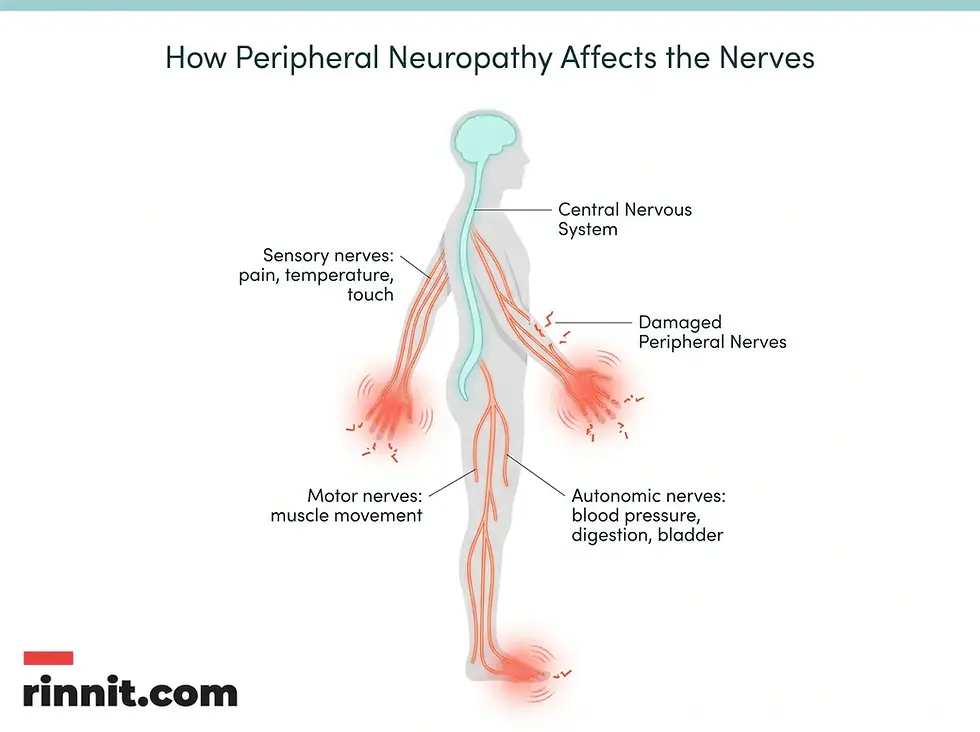
Peripheral neuropathy happens when the peripheral nerves, which are located outside of the brain and spinal cord, are damaged. The condition often causes weakness, numbness, and pain, usually in the hands and feet. It can also affect other areas and body functions, including digestion and urination.
The peripheral nervous system works in two directions. It sends information from the brain and spinal cord (the central nervous system) to the rest of the body through motor nerves. The peripheral nerves also send sensory information from the skin, tendons, joints, and organs back to the central nervous system through sensory nerves.
System | Role |
|---|---|
Central nervous system | The brain and spinal cord |
Peripheral nerves | Carry messages between the central nervous system and the rest of the body |
Motor nerves | Carry commands from the brain and spinal cord to muscles |
Sensory nerves | Carry sensation from skin, tendons, joints, and organs back to the central nervous system |
Peripheral neuropathy can result from traumatic injuries, infections, metabolic conditions, autoimmune diseases, inherited causes, and exposure to toxins. One of the most common causes is diabetes. People with peripheral neuropathy usually describe the pain as stabbing, burning, or tingling. Sometimes symptoms get better, especially if the condition is caused by something that can be treated, and medicines can reduce the pain.
What are the symptoms of peripheral neuropathy?
Every nerve in the peripheral nervous system has a specific job, and symptoms depend on which types of nerves are affected.
Nerve type | Job |
|---|---|
Sensory nerves | Receive sensation such as temperature, pain, vibration, or touch from the skin |
Motor nerves | Control muscle movement |
Autonomic nerves | Control blood pressure, sweating, heart rate, digestion, and bladder function |
Sensory and Motor Symptoms
Symptoms of peripheral neuropathy might include a gradual onset of numbness, prickling, or tingling in the feet or hands, with sensations that can spread upward into the legs and arms. Other symptoms include sharp, jabbing, throbbing, or burning pain; extreme sensitivity to touch; pain during activities that should not cause pain, such as pain in the feet when putting weight on them or when they are under a blanket; lack of coordination and falling; muscle weakness; and a feeling as if you are wearing gloves or socks when you are not. If motor nerves are affected, you may lose the ability to move.
Autonomic Symptoms
If autonomic nerves are affected, symptoms might include heat intolerance; sweating a lot or being unable to sweat; trouble with the bowel, bladder, or digestive system; and drops in blood pressure that cause dizziness or lightheadedness.
Nerve group affected | Typical symptoms |
|---|---|
Sensory | Numbness, prickling, tingling spreading from feet or hands upward; burning or jabbing pain; extreme touch sensitivity |
Motor | Muscle weakness; loss of ability to move; lack of coordination and falling |
Autonomic | Heat intolerance; abnormal sweating; bowel, bladder, or digestive trouble; dizziness from blood pressure drops |
Types of Peripheral Neuropathy
The name changes depending on how many nerves are involved. If it affects one nerve, it is called mononeuropathy. If it affects two or more nerves in different areas, it is called multiple mononeuropathies. If it affects many nerves all over the body, it is called polyneuropathy. Carpal tunnel syndrome is an example of mononeuropathy. Most people with peripheral neuropathy have polyneuropathy.
When should you see a doctor about peripheral neuropathy?
Seek medical care right away if you notice tingling, weakness, or pain in your hands or feet. Early diagnosis and treatment give you the best chance of managing your symptoms and preventing further damage to your peripheral nerves.
Warning sign | Recommended action |
|---|---|
Tingling, weakness, or pain in hands or feet | Seek medical care right away |
Numbness spreading up legs or arms | Early evaluation helps prevent further nerve damage |
New balance problems or falls | Mention at a visit, as it may signal motor nerve involvement |
Unexplained dizziness or bowel/bladder changes | These can signal autonomic nerve damage and deserve evaluation |
What causes peripheral neuropathy?
Peripheral neuropathy is nerve damage caused by several different conditions. Health conditions that can cause it span many categories [1].
Cause category | Examples |
|---|---|
Autoimmune diseases | Sjogren syndrome, lupus, rheumatoid arthritis, Guillain-Barré syndrome, chronic inflammatory demyelinating polyneuropathy, vasculitis; some immune-related cancers cause paraneoplastic syndrome |
Diabetes and metabolic syndrome | The most common causes; more than half of people with diabetes develop some type of neuropathy |
Infections | Lyme disease, shingles, hepatitis B and C, leprosy, diphtheria, HIV |
Inherited conditions | Charcot-Marie-Tooth disease and other hereditary neuropathies that run in families |
Tumors | Cancerous (malignant) or noncancerous (benign) growths on or pressing on nerves |
Bone marrow conditions | Monoclonal gammopathies, lymphoma, amyloidosis, a rare form of myeloma |
Other health concerns | Kidney disease, liver disease, underactive thyroid (hypothyroidism) |
Other causes outside disease categories include alcohol use disorder, in which poor dietary choices and poor vitamin absorption lead to low levels of essential vitamins. Toxic substances such as industrial chemicals and heavy metals like lead and mercury are another cause. Certain medicines, especially chemotherapy used to treat cancer, can cause peripheral neuropathy. Injuries from motor vehicle accidents, falls, or sports injuries can sever or damage peripheral nerves, and nerve pressure can result from a cast, crutches, or repeating a motion such as typing many times. Finally, low vitamin levels matter: B vitamins (B-1, B-6, and B-12), copper, and vitamin E are crucial to nerve health.
Sometimes, no cause can be identified. This is called idiopathic peripheral neuropathy.
What are the risk factors for peripheral neuropathy?
Peripheral neuropathy is more likely to develop when certain risk factors are present. Managing them is the foundation of prevention.
Risk factor | Note |
|---|---|
Diabetes | Especially when sugar levels are not well managed |
Obesity | Contributes to metabolic strain on nerves |
Metabolic syndrome | A cluster of conditions that damage nerves |
Alcohol misuse | Poor diet and vitamin absorption compound the risk |
Low vitamin levels | Especially vitamin B-12 |
Infections | Lyme disease, shingles, hepatitis B and C, HIV |
Autoimmune diseases | Rheumatoid arthritis and lupus, where the immune system attacks body tissue |
Organ disorders | Kidney, liver, or thyroid disorders |
Toxin exposure | Industrial chemicals and heavy metals |
Repetitive motion | Motions performed in certain jobs |
Family history | A family history of neuropathy |
What complications can peripheral neuropathy cause?
Complications of peripheral neuropathy can include burns, skin injuries, and wounds on the feet, because you might not feel temperature changes or pain on numb parts of your body. Feet and other areas that lack sensation can become injured without your knowing, and injuries can become infected. Falls are another complication, as weakness and loss of sensation may be associated with a lack of balance.
Complication | How to lower the risk |
|---|---|
Burns and wounds on numb feet | Check feet regularly for blisters, cuts, and calluses |
Infection of injured areas | Wear close-toed, well-fitting shoes; treat minor injuries before they become infected, especially with diabetes |
Falls from poor balance | Install bathroom handrails, use canes or walkers when needed, walk only in well-lit rooms |
How can peripheral neuropathy be prevented?
The best way to prevent peripheral neuropathy is to manage the medical conditions that put you at risk. Healthy lifestyle choices also support nerve health.
Prevention step | Detail |
|---|---|
Manage underlying conditions | Control diabetes, thyroid, kidney, and other conditions that put you at risk |
Nerve-healthy diet | Fruits, vegetables, whole grains, lean protein; meats, fish, eggs, low-fat dairy, and fortified cereals protect against low vitamin B-12 |
B-12 for vegetarians and vegans | Fortified cereals help, but talk with your healthcare professional about B-12 supplements |
Regular exercise | With your healthcare professional's OK, 30 minutes to one hour at least three times a week |
Avoid nerve-damaging factors | Repetitive motions, toxic chemicals, smoking, and drinking too much alcohol |
How Is Peripheral Neuropathy Diagnosed?
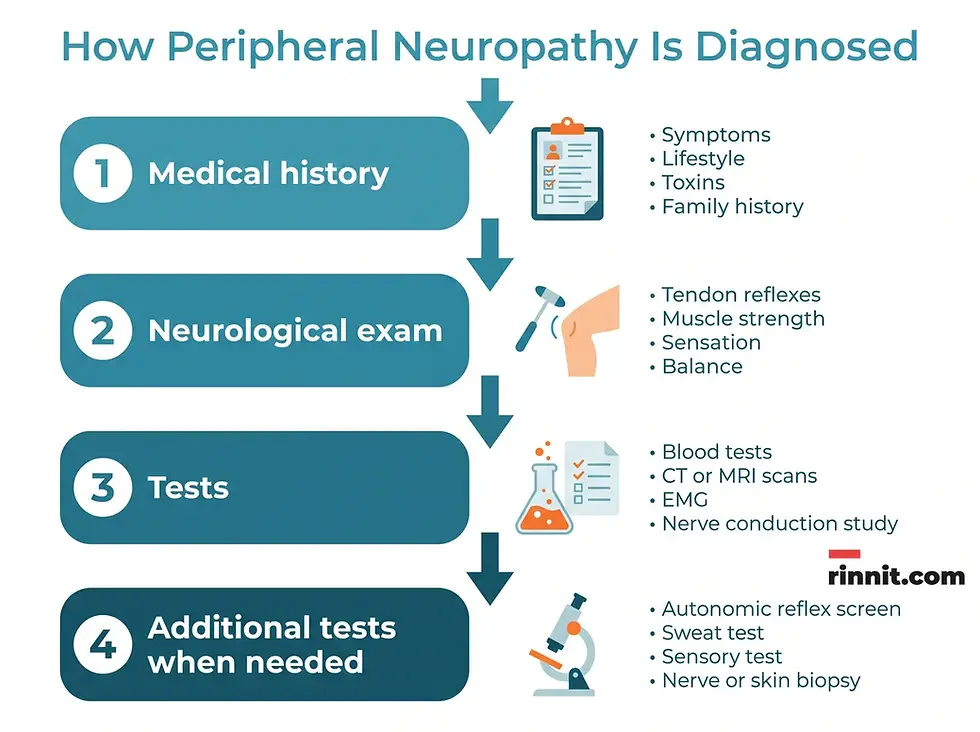
Peripheral neuropathy has many possible causes. Besides a physical exam, which may include blood tests, diagnosis usually requires a detailed medical history and a neurological exam [2]. Your healthcare professional reviews your medical history, including symptoms, lifestyle, exposure to toxins, drinking habits, and any family history of nervous system or neurological diseases. The neurological exam may check tendon reflexes, muscle strength and tone, ability to feel certain sensations, and balance and coordination.
Tests
Test | What it does |
|---|---|
Blood tests | Detect low vitamin levels, diabetes, signs of inflammation, or metabolic issues |
CT or MRI scans | Look for herniated disks, pinched (compressed) nerves, growths, or conditions affecting blood vessels and bones |
Electromyography (EMG) | A thin needle electrode records electrical activity in muscles as you contract them, finding nerve damage |
Nerve conduction study | Flat electrodes on the skin deliver a low electric current; the response shows how nerves transmit signals |
Autonomic reflex screen | Records how the autonomic nerve fibers work |
Sweat test | Measures your body's ability to sweat |
Sensory test | Records how you feel touch, vibration, cooling, and heat |
Nerve biopsy | Removes a small portion of a sensory nerve to try to find the cause |
Skin biopsy | Removes a small portion of skin to check the number of nerve endings |
How Is Peripheral Neuropathy Treated?
Treatment goals are to manage the condition causing your neuropathy and to improve symptoms. If your lab tests do not find a condition causing the neuropathy, your healthcare professional might recommend watchful waiting to see if your neuropathy stays the same or gets better [2].
Medicines
Several medicine categories target nerve pain. Nonprescription pain relievers, such as NSAIDs, can improve mild symptoms. Antiseizure medicines such as gabapentin (Gralise, Neurontin, Horizant) and pregabalin (Lyrica), developed to treat epilepsy, often improve nerve pain, though side effects can include drowsiness and dizziness.
Topical treatments include lidocaine cream, available without a prescription, and lidocaine patches applied to the skin; side effects can include drowsiness, dizziness, and numbness at the patch site. Certain antidepressants can also help improve pain. Tricyclic antidepressants such as amitriptyline and nortriptyline interfere with chemical processes in the brain and spinal cord that cause you to feel pain. The serotonin and norepinephrine reuptake inhibitor duloxetine (Cymbalta) and the extended-release antidepressants venlafaxine (Effexor XR) and desvenlafaxine (Pristiq) also might improve peripheral neuropathy pain caused by diabetes. Antidepressant side effects may include dry mouth, nausea, drowsiness, dizziness, changes in appetite, weight gain, and constipation.
Medicine type | Examples | Notes |
|---|---|---|
Pain relievers | Nonprescription NSAIDs | Help mild symptoms |
Antiseizure | Gabapentin, pregabalin | Often improve nerve pain; may cause drowsiness, dizziness |
Topical | Lidocaine cream and patches | Applied to the skin; may numb the area |
Antidepressants | Amitriptyline, nortriptyline, duloxetine, venlafaxine, desvenlafaxine | Duloxetine and related drugs may help diabetic neuropathy pain |
Therapies and Procedures
Several therapies and procedures might help with symptoms. Scrambler therapy uses electrical impulses to send nonpain messages to the brain, replacing the pain messages the nerves send, with the goal of retraining the brain to think there is no pain. Spinal cord stimulation works through devices put into the body called neurostimulators, which send low-level electrical impulses that can block pain signals from reaching the brain.
Plasma exchange, steroids, and intravenous immune globulin are often used if inflammation or autoimmune conditions are causing neuropathy with weakness, numbness, or loss of balance. These therapies are not used to treat pain alone. Physical therapy can help improve your ability to move if you have muscle weakness or balance issues, and you may also need hand or foot braces, a cane, a walker, or a wheelchair. Neuropathies caused by pressure on nerves, such as from tumors, might require surgery.

Complementary Approaches
Some people try complementary treatments for relief. Researchers have not studied these techniques as thoroughly as most medicines, but some have shown promise.
Approach | Evidence and cautions |
|---|---|
Acupuncture | Thin needles inserted at various body points might lessen symptoms; multiple sessions may be needed; generally safe with a certified acupuncturist using sterile needles |
Alpha-lipoic acid | Used in Europe for years with some evidence for painful diabetic neuropathy; can affect blood sugar levels; may cause upset stomach and skin rash |
Acetyl-L-carnitine | Might benefit people who have undergone chemotherapy and people with diabetes; side effects might include nausea and vomiting |
Discuss any supplement with your healthcare professional before starting it.
Which lifestyle and home remedies help peripheral neuropathy?
Daily habits play a large role in managing peripheral neuropathy.
Habit | How it helps |
|---|---|
Foot care | Check daily for blisters, cuts, or calluses, especially with diabetes; wear soft, loose cotton socks and padded shoes; a semicircular hoop keeps bedcovers off hot or sensitive feet |
Exercise | Walking three times a week can lower pain, improve muscle strength, and help manage blood sugar; yoga and tai chi may help; try pool-based exercise such as swimming if feet are painful |
Quit smoking | Smoking causes circulation problems that increase the risk of foot problems and other complications |
Healthy meals | Fruits, vegetables, whole grains, and lean protein supply important vitamins and minerals |
Limit alcohol | Alcohol can make peripheral neuropathy worse |
Monitor blood sugar | If you have diabetes, this helps manage blood sugar and might improve neuropathy |
How should you prepare for a peripheral neuropathy appointment?
You are likely to start by seeing your primary healthcare professional. You may then be referred to a doctor trained in nervous system conditions, called a neurologist.
When you make the appointment, ask whether you need to do anything in advance, such as fasting for a specific test. Make a list of your symptoms, including any that may seem unrelated; key personal information such as recent stresses, major life changes, family medical history, and alcohol use; all medicines, vitamins, and supplements you take, including doses; and questions to ask. Take a family member or friend along, if possible, to help remember the information you get.
Questions to Ask Your Healthcare Professional
What's the most likely cause of my symptoms?
Are there other possible causes?
What tests do I need?
Is this condition short-term or long-lasting?
What are the treatments, and which do you recommend?
What side effects can I expect?
Are there alternatives to the suggested approach?
How can I manage this with my other health conditions?
Do I need to limit activities?
Questions to Expect From Your Doctor
Do you have conditions such as diabetes or kidney disease?
When did your symptoms begin?
Have symptoms been continuous or occasional?
How severe are your symptoms?
Does anything make symptoms better or worse?
Does anyone in your family have similar symptoms?
Have you fallen in the past year? Any foot injuries?
What is the bottom line on peripheral neuropathy?
Peripheral neuropathy is nerve damage outside the brain and spinal cord that most often brings numbness, tingling, and burning or stabbing pain to the hands and feet. Diabetes is the leading cause, but infections, autoimmune diseases, injuries, toxins, and vitamin deficiencies can all play a role. Diagnosis combines a detailed history, a neurological exam, and targeted tests such as blood work, EMG, and sometimes biopsies. Treatment pairs management of the underlying condition with medications, nerve-targeted therapies, and daily self-care.
Take action today: If you notice tingling, weakness, or pain in your hands or feet, seek medical care right away. Early diagnosis gives you the best chance of managing symptoms and protecting your nerves from further damage.
Frequently Asked Questions
What is peripheral neuropathy?
Peripheral neuropathy is damage to the peripheral nerves, which are located outside the brain and spinal cord. It often causes weakness, numbness, and stabbing or burning pain, usually in the hands and feet, and can also affect digestion and urination.
What causes peripheral neuropathy?
Causes include traumatic injuries, infections, metabolic conditions, autoimmune diseases, inherited conditions, and toxin exposure. Diabetes is one of the most common causes, along with alcohol use disorder, low vitamin levels, certain medicines such as chemotherapy, and pressure on nerves from injuries or repetitive motion.
Why does diabetes cause peripheral neuropathy?
Diabetes and metabolic syndrome are the most common causes of peripheral neuropathy. Among people with diabetes, more than half develop some type of neuropathy. Keeping blood sugar under control helps manage the condition and may improve neuropathy.
What is the difference between mono-, poly-, and multiple mononeuropathy?
If peripheral neuropathy affects one nerve, it is called mononeuropathy; carpal tunnel syndrome is an example. If it affects two or more nerves in different areas, it is called multiple mononeuropathies. If it affects many nerves all over the body, it is called polyneuropathy, which most people with the condition have.
What does peripheral neuropathy feel like?
People usually describe stabbing, burning, or tingling pain. Symptoms can include gradual numbness or prickling starting in the feet or hands and spreading upward, extreme sensitivity to touch, pain from things that should not hurt (like bedcovers), muscle weakness, and a feeling of wearing gloves or socks when not.
How is peripheral neuropathy diagnosed?
Diagnosis requires a detailed medical history and neurological exam checking reflexes, muscle strength, sensation, balance, and coordination. Tests may include blood tests, CT or MRI scans, electromyography (EMG), nerve conduction studies, autonomic reflex screens, sweat and sensory tests, and sometimes nerve or skin biopsies.
Can peripheral neuropathy be cured?
Sometimes symptoms get better, especially if the neuropathy is caused by a condition that can be treated. If no cause is found, doctors may recommend watchful waiting to see whether the neuropathy stays the same or improves. Medicines can reduce the pain.
What medicines treat peripheral neuropathy pain?
Options include nonprescription NSAIDs for mild symptoms, antiseizure medicines such as gabapentin and pregabalin, topical lidocaine cream or patches, and certain antidepressants such as amitriptyline, nortriptyline, duloxetine, and venlafaxine. Your healthcare professional will match the medicine to your symptoms and health history.
How can I manage peripheral neuropathy at home?
Check your feet daily for blisters, cuts, or calluses; wear soft cotton socks and padded shoes; exercise regularly, such as walking three times a week; quit smoking; eat a healthy diet rich in fruits, vegetables, whole grains, and lean protein; avoid excessive alcohol; and monitor blood sugar if you have diabetes.
Can peripheral neuropathy be prevented?
The best prevention is managing medical conditions that put you at risk, such as diabetes. A healthy lifestyle also helps: a diet rich in fruits, vegetables, whole grains, and lean protein, regular exercise, and avoiding repetitive motions, toxic chemicals, smoking, and excessive alcohol.
Related Resources
Related reading on Rinnit:
External resources for deeper reading:
National Institute of Neurological Disorders and Stroke. Peripheral Neuropathy. NINDS. Last reviewed March 13, 2026. https://www.ninds.nih.gov/health-information/disorders/peripheral-neuropathy
The Foundation for Peripheral Neuropathy. Home. The Foundation for Peripheral Neuropathy. Accessed October 30, 2026. https://www.foundationforpn.org/
Cleveland Clinic. Peripheral Neuropathy. Cleveland Clinic Health Library. Last updated July 16, 2026. https://my.clevelandclinic.org/health/diseases/14737-peripheral-neuropathy
Related Reading
Nerve Conduction Study: What It Is, Procedure and Results explains how nerve conduction studies test nerve function.
QSART Test: How Sweat Testing Checks Your Autonomic Nerves explains the sweat test that checks the small nerves of the autonomic system.
Using a walking aid safely: How to Use a Cane: Sizing, Walking, Stairs and Safety Tips
EMG (Electromyography): What It Tests, What to Expect and Results explains the nerve and muscle test used to help diagnose this condition.
Tinel's Sign: What It Is, How the Test Works and What a Positive Result Means explains the quick tapping test providers use to check for nerve compression.
Romberg Test: How It's Done, What It Checks and What Results Mean explains how this quick balance test checks your body's position sense.
Deep Tendon Reflexes (DTRs): How They're Tested, Graded and What Abnormal Reflexes Mean explains how reflexes are tested and graded with a reflex hammer.
Methylmalonic Acid (MMA) Test: Normal Range, High MMA and Vitamin B12 explains the test that shows whether your body is truly short of vitamin B12.
References
Mayo Clinic Staff. Peripheral neuropathy: Symptoms and causes. Mayo Clinic. May 19, 2026. https://www.mayoclinic.org/diseases-conditions/peripheral-neuropathy/symptoms-causes/syc-20352061
Mayo Clinic Staff. Peripheral neuropathy: Diagnosis and treatment. Mayo Clinic. May 19, 2026. https://www.mayoclinic.org/diseases-conditions/peripheral-neuropathy/diagnosis-treatment/drc-20352067
Finnerup NB, Attal N, Haroutounian S, et al. Pharmacotherapy for neuropathic pain in adults: a systematic review and meta-analysis. Lancet Neurol. 2015;14(2):162-73. PMID 25575710. https://doi.org/10.1016/S1474-4422(14)70251-0
Aikaeli F, Njim T, Gissing S, et al. Prevalence of microvascular and macrovascular complications of diabetes in newly diagnosed type 2 diabetes in low-and-middle-income countries: A systematic review and meta-analysis. PLOS Glob Public Health. 2022;2(6):e0000599. PMID 36962416. https://doi.org/10.1371/journal.pgph.0000599
Medical disclaimer
This article is for informational purposes only and is not a substitute for professional medical advice, diagnosis, or treatment. Always seek the advice of your physician or other qualified health provider with any questions you may have about a medical condition.



Comments