Nerve Conduction Study: What It Is, Procedure and Results

Updated: 2 days ago
Written and medically reviewed by Dr. Baraa Alnahhal, MD · Last reviewed: November 2026 · How we review
Quick Answer
A nerve conduction study (NCS) is a test that measures how fast and how strongly electrical signals travel through the nerves. It helps diagnose peripheral neuropathy and nerve compression problems such as carpal tunnel syndrome and sciatica. Electrode patches on the skin deliver a mild electrical pulse that feels like a brief static shock.
What the research says
It's a reliable test for carpal tunnel: in a review of 21 studies, the sensory nerve measure of a nerve conduction study detected carpal tunnel syndrome with 73% sensitivity and 94% specificity, though labs used different cutoffs (Demino C et al., Hand, 2021) [2]
In-office tests can match lab testing: in 5 studies of 448 hands with symptoms, in-office nerve conduction testing found median nerve damage at the wrist with 88% sensitivity and 93% specificity compared with traditional lab testing (Strickland JW et al., Journal of Hand Surgery, 2011) [3]
Key takeaways
A nerve conduction study measures how well your nerves carry signals.
It helps diagnose neuropathy and pinched nerves like carpal tunnel.
Mild electrical pulses feel like static or tingling.
It takes 15 minutes to an hour or more.
It's often done with an EMG.
What is a nerve conduction study?
Your peripheral nerves carry signals between your brain, muscles and skin. Motor nerves control muscles, and sensory nerves carry feeling. An NCS measures the electrical current in these nerves to find damage, where it is and how bad it is. Sources: [1]
Why it's done

The test helps find the cause and severity of nerve damage.
Tingling or numbness in your arms, legs, hands, feet or face.
Suspected peripheral neuropathy from diabetes, vitamin deficiency, thyroid problems, alcohol use or chemotherapy.
Nerve compression, such as carpal tunnel syndrome or sciatica.
Autoimmune conditions, such as Guillain-Barré syndrome.
Nerve injury from trauma or surgery. Sources: [1]
NCS vs. EMG
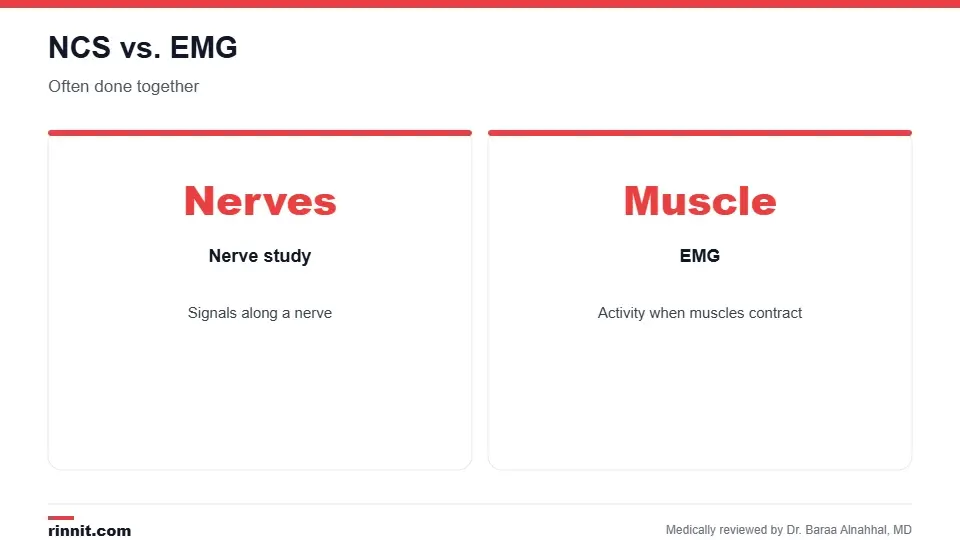
They're often done at the same visit.
Test | What it measures |
Nerve conduction study | Electrical signals traveling through a nerve |
Electrical activity in a muscle when it contracts |
Sources: [1]
How to prepare
Bathe or shower beforehand.
Don't use lotion, cream or perfume, which can affect results.
Wear loose, comfortable clothing.
Tell your provider if you have a pacemaker or other electrical device. Sources: [1]
What happens during the test
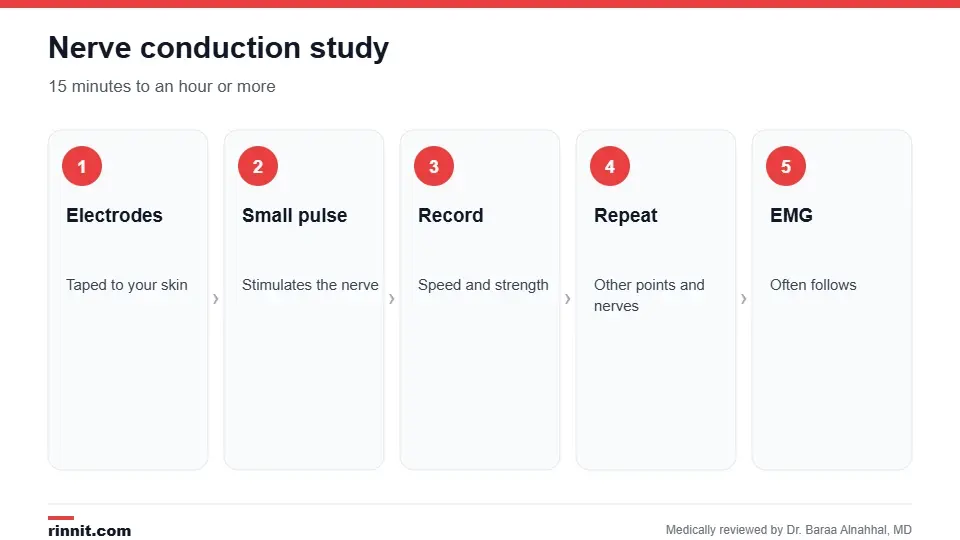
The test takes 15 minutes to an hour or more.
You sit or lie down.
Electrode patches are taped to your skin over the nerve and the muscle it controls.
A mild electrical pulse stimulates the nerve.
A computer records how fast and strongly the signal travels.
The test is repeated at different points and on other nerves.
An EMG often follows. Sources: [1]
The pulses aren't painful but may feel like static electricity or tingling and may startle you at first. Sources: [1]
Risks
Nerve conduction studies are generally safe. The pulses can be uncomfortable but are brief. Sources: [1]
Results
Results are usually ready within 24 to 48 hours. Slower or weaker signals suggest nerve damage. Your provider will combine the results with your symptoms, history and other tests to make a diagnosis. Sources: [1, 2, 3]
Conclusion
A nerve conduction study is a quick, safe test that shows how well your nerves work and where damage may be. It helps your provider find the cause of numbness or tingling and plan the right treatment.
Keep learning: read about EMG and peripheral neuropathy.
Frequently asked questions
What is a nerve conduction study?
A test that measures how well electrical signals travel through your nerves.
What does a nerve conduction study diagnose?
Peripheral neuropathy and pinched nerves like carpal tunnel syndrome.
Does a nerve conduction study hurt?
It may feel like a brief static shock or tingling.
How long does it take?
About 15 minutes to an hour or more.
What's the difference between NCS and EMG?
NCS tests nerves; EMG tests muscles.
How do I prepare?
Shower and skip lotions, creams and perfume.
Can I have it with a pacemaker?
Tell your provider first.
How fast do healthy nerves conduct signals?
Up to about 120 miles per hour.
When will I get results?
Usually within 24 to 48 hours.
Is it safe?
Yes. The pulses are brief and mild.
Related Reading
EMG (Electromyography): What It Tests, What to Expect and Results a muscle test often done with NCS.
Peripheral Neuropathy: Symptoms, Causes, and Treatment Options Explained nerve damage the test can detect.
Carpal Tunnel Syndrome: Symptoms, Causes, Diagnosis and Treatment a common pinched nerve in the wrist.
Diabetic Neuropathy: Symptoms, Types, Causes & Treatment nerve damage from diabetes.
Guillain-Barré Syndrome: When the Immune System Turns on Your Nerves, and How Treatment Helps You Recover an autoimmune nerve condition.
References
Cleveland Clinic. Nerve Conduction Study: What It Is, Procedure & Results. Cleveland Clinic. Last updated March 2, 2023. https://my.clevelandclinic.org/health/treatments/24821-nerve-conduction-study
Demino C, Fowler JR. The sensitivity and specificity of nerve conduction studies for diagnosis of carpal tunnel syndrome: a systematic review. Hand. 2021;16(2):174-178. PMID 31203646. https://doi.org/10.1177/1558944719855442
Strickland JW, Gozani SN. Accuracy of in-office nerve conduction studies for median neuropathy: a meta-analysis. Journal of Hand Surgery. 2011;36(1):52-60. PMID 21131139. https://doi.org/10.1016/j.jhsa.2010.09.012
Medical disclaimer
This article is for general education only and does not replace advice from a qualified healthcare professional. Talk to your doctor about your own diagnosis and treatment, and seek emergency care right away for severe or sudden symptoms.



Comments