Laxatives: Types, How They Work, Safe Use and When to Get Help

Updated: 2 days ago
Medically reviewed by Dr. Baraa Alnahhal, MD · Last reviewed: October 2026
Quick Answer: What is a laxative?
A laxative is a medicine that helps you have a bowel movement when constipated, by softening stool, drawing water into the colon, lubricating or stimulating colon muscles. Most are available without a prescription. Try lifestyle changes first, and take only the directed amount, since overdose is possible. Never give a child a laxative without a pediatrician's advice. [1]

What the research says
For chronic constipation, two over-the-counter options have the strongest trial evidence. A systematic review found 41 eligible randomized trials (of 1,297 studies identified, each lasting at least four weeks). It found good evidence for polyethylene glycol (an osmotic laxative) and senna (a stimulant), and moderate evidence for psyllium, magnesium salts and bisacodyl (Rao & Brenner, Am J Gastroenterol, 2021). [2]
There is little evidence for using stimulant laxatives beyond four weeks. A review of five randomized trials of bisacodyl or sodium picosulfate (1,008 patients, 26% of whom dropped out) concluded that the evidence does not support using stimulant laxatives for more than four weeks (Noergaard et al., Scand J Gastroenterol, 2019). [3]
What are laxatives?
Laxatives are medicines that help you have a bowel movement when you are constipated. Constipation can mean struggling to pass stool, hard or dry stool, or the feeling that your bowels are not empty even after a bowel movement. [1]
Laxatives can make stool softer or stimulate the bowels to move, and some types do both. Many are sold in pharmacies, grocery stores and online, and they may be labeled as laxatives, stool softeners or fiber supplements. [1]
Lifestyle changes usually come first. Eating high-fiber foods, taking probiotics, drinking more fluids and exercising often help the digestive system move stool. If these changes do not improve occasional constipation, a laxative may be considered. [1]
Who may need a laxative?
Adults may need a laxative to treat constipation, including occasional constipation, constipation from a chronic condition or a bowel cleanse before a digestive procedure. A person may consider one for:
Occasional constipation that has not improved with lifestyle changes. [1]
A chronic condition that causes constipation, such as Crohn’s disease or ulcerative colitis. [1]
A bowel cleanse to flush stool out of the colon before a procedure on the digestive system. [1]
Laxatives are not safe for everyone with constipation. Check with your healthcare provider before taking one if you are pregnant or take a prescription medicine, because some laxatives can counteract the effects of certain medicines. Never give a child a laxative unless the child’s pediatrician recommends it. Whether a laxative is appropriate for you depends on the cause of your constipation, your health history, your medicines and the product instructions. [1]
How do laxatives work?
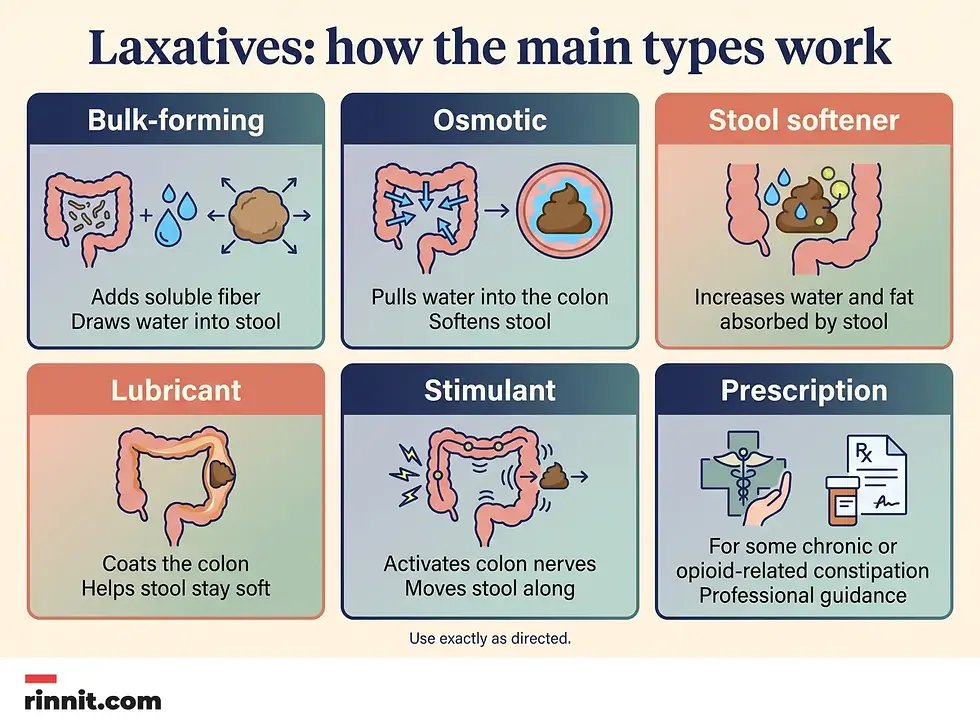
Laxatives change the way your digestive system handles stool so that it is easier to pass. Some make stool softer by adding or retaining water, some coat the colon to make passage more slippery, and some activate the nerves that control the colon’s muscles. Different classes act in different places, which is why timing, side effects and safe-use instructions vary.
What are the types of laxatives?
Most laxatives are available without a prescription. They work differently, but they are generally used for occasional or short-term constipation. Taking them for long periods can cause side effects, sometimes serious ones, and can even worsen constipation. [1]
Laxative class | How it works | Good to know |
Bulk-forming (fiber supplements) | Adds soluble fiber, which draws water into stool, making it bigger and softer. The larger size stimulates the colon to contract. | Generally the gentlest and least likely to cause side effects; often the first to try unless your provider recommends otherwise. |
Osmotic | Pulls water from other parts of the body into the colon, softening stool. | Saline laxatives are a type of osmotic laxative; they contain salt that holds water in the colon. |
Stool softener | Increases the water and fat absorbed by stool, softening it. | Also called emollient laxatives. |
Lubricant | Coats the colon, helping stool stay soft and making passage more slippery. | Prevents the colon from absorbing water from stool. |
Stimulant | Activates the nerves that control colon muscles, moving stool along. | May be needed when other over-the-counter types have not helped. |
Prescription-only | Used for chronic constipation, including constipation linked to irritable bowel syndrome, or constipation caused by opioids. | Choose with a healthcare provider. |
How should I take a laxative?
Take laxatives exactly as the instructions say, so they work properly and your risk of side effects stays low. Some types must be taken at certain times of day or only at night. Some need to be taken with food or drink, while others must be taken alone, and some should not be taken with certain medicines. [1]
Do not take more than the label or your provider says. It can be tempting to take extra when you want fast relief, but it is possible to overdose on laxatives, even over-the-counter ones. If the laxative is not working, be patient and contact a provider instead. [1]
Laxatives come as pills or capsules, powders mixed into water or another liquid, liquids or syrups, suppositories (inserted into the anus) and enemas (delivered into the anus from a small squeezable tube). Read the product label for its instructions, possible side effects, timing and interactions, and ask a pharmacist if you are unsure. Do not use this article to choose a dose or product for yourself. [1]
How long do laxatives take to work?
How long laxatives take to work depends on the type and how you take them. Enemas and suppositories work fastest because they deliver medicine directly into the anus, but they carry a greater risk of side effects such as diarrhea and stomach cramps. Gentler types, such as bulk-forming laxatives, may take a few days. [1]
Laxative type | Time to help you have a bowel movement |
Enemas and suppositories | 15 minutes to one hour |
Lubricants | Six to eight hours |
Stimulants | Six to 12 hours |
Stool softeners | 12 hours to three days |
Bulk-forming laxatives | 12 hours to three days |
Osmotic laxatives | One to three days (saline types act sooner, from 30 minutes to six hours) |
These ranges are not a promise for any one person. Ingredients, dose, digestive health and the cause of constipation all matter. Bulk-forming laxatives leave the body with stool, while other types gradually break down in the digestive system. If you take a laxative as directed, you should have a bowel movement within the timeframe on the label. If it is not working, or you have side effects such as severe diarrhea, contact a healthcare provider. [1]
What are common side effects?
Common laxative side effects include bloating, gas, stomach cramps, stomach upset and dehydration, and following the instructions can prevent many of them. General side effects include:
Bloating and gas [1]
Stomach cramps [1]
Stomach upset [1]
Dehydration, with symptoms such as feeling weak and having darker-than-normal urine [1]
Laxatives that pull water from the body to soften stool, such as bulk-forming laxatives and osmotics, can contribute to dehydration, which is why the instructions often tell you to drink more liquid. Read the label before you take any laxative so you understand its possible side effects and precautions. [1]
What can happen with laxative overuse?
Laxative overuse can lead to complications that sometimes need a visit to your provider or even the emergency room.
Electrolyte imbalance (an imbalance of water and salt in the body)
Chronic constipation [1]
A blockage in the intestine (see intestinal obstruction) [1]
Taking stimulant laxatives for longer than directed can cause you to lose muscle tone in the colon, which can stop the colon from helping you pass stool and worsen constipation. Laxatives also treat the symptom, not the cause. If a condition is causing your constipation, laxatives can mask the problem and delay its diagnosis. The safest response to a laxative that is not working is not to keep increasing the amount, but to contact a healthcare provider or pharmacist. [1]
How do lifestyle changes fit in?
Lifestyle changes are the usual first step. High-fiber foods, probiotics, more fluids and exercise often help the digestive system move stool on its own. If constipation is frequent, persistent or comes with concerning symptoms, ask a healthcare provider about the cause rather than repeatedly treating it yourself. Laxatives are a reasonable “plan B” when lifestyle changes have not done the job. [1]
Are laxatives safe during pregnancy, for children or with prescription medicines?
Laxatives need extra caution during pregnancy, in children and with prescription medicines, so check with a healthcare provider or pediatrician before using one.
Pregnancy: check with a healthcare provider before taking a laxative. [1]
Children: use only if a pediatrician recommends it. [1]
Prescription medicines: some laxatives can counteract the effects of certain medicines, so ask a healthcare provider before starting one. [1]
Chronic or opioid-related constipation: a prescription option or an evaluation may be needed.

When should I contact a healthcare provider?
Contact your provider if you are having trouble pooping or are unsure whether a laxative is safe for you. Reach out if you have tried one type of laxative and it has not helped, or if you are frequently constipated. Your provider may suggest a different type or ask you to come in so they can check for conditions that cause constipation. Also contact a provider for severe diarrhea or symptoms of dehydration, such as weakness and darker-than-normal urine. If nothing is working, do not wait it out or keep taking more. Get medical care right away for rectal bleeding or blood in the stool, severe belly pain, vomiting, a swollen belly, or being unable to pass gas, and do not take a laxative for belly pain, nausea or vomiting unless a provider advises it.
What questions should you ask before taking laxatives?
Questions to ask before taking a laxative cover the cause of your constipation, safety with your conditions and medicines, which type suits you and what to do if it doesn't work.
Could something other than occasional constipation be causing this?
Is this laxative safe with my health conditions and medicines?
Should I check first because I am pregnant?
Has a pediatrician recommended this for my child?
Which type is appropriate for my situation, and how long should it take to work?
Should it be taken with food, drink or other medicines?
What amount do the product label or my care plan specify?
Which side effects should prompt a call, and what should I do if it does not work?
Should the cause of my frequent constipation be evaluated?
How long is this type intended to be used?
Conclusion
Laxatives help relieve constipation by softening stool, drawing water into the colon, lubricating passage or stimulating colon muscles. The main classes are bulk-forming, osmotic, stool-softener, lubricant and stimulant laxatives, with prescription options for some chronic or opioid-induced constipation.
Lifestyle changes such as fiber, fluids, probiotics and exercise often help first. If a laxative is needed, take it exactly as directed, do not take extra when relief is delayed, and remember that laxatives treat symptoms rather than every possible cause of constipation.
Before taking a laxative, read the label and ask a healthcare provider or pharmacist about safety, timing, interactions and what to do if it does not work. Seek guidance for frequent constipation, severe diarrhea, signs of dehydration, pregnancy, use in a child or any uncertainty about the right approach.
Frequently Asked Questions
What do laxatives do?
They help you have a bowel movement when you are constipated by softening stool, drawing water into the colon, lubricating passage or stimulating bowel muscles.
Are laxatives the first treatment for constipation?
Usually not. Lifestyle changes such as fiber, fluids, probiotics and exercise often help first. A laxative may be considered when occasional constipation does not improve.
What are the gentlest laxatives?
Bulk-forming laxatives are generally considered the gentlest and least likely to cause side effects. A provider may recommend another type depending on your situation.
What is a bulk-forming laxative?
It adds soluble fiber to stool, which draws in water, makes the stool bigger and softer, and stimulates the colon to contract.
What is an osmotic laxative?
It pulls water into the colon so stool becomes softer and easier to pass. Saline laxatives are a type of osmotic laxative.
What is a stool softener?
A stool softener, also called an emollient laxative, increases the water and fat absorbed by stool, softening it.
What is a lubricant laxative?
It coats the colon so stool stays soft and passes through a more slippery passage.
What is a stimulant laxative?
It activates the nerves that control the muscles in the colon so stool moves along.
How fast do suppositories and enemas work?
Usually within 15 minutes to one hour. These forms also carry a greater risk of diarrhea and stomach cramps.
How long do bulk-forming laxatives take to work?
12 hours to three days. They are slower than faster-acting forms but are generally gentler.
How long do osmotic laxatives take to work?
One to three days, although saline types may act within 30 minutes to six hours.
Can laxatives cause dehydration?
Yes. Dehydration is a listed side effect, and its symptoms include weakness and darker-than-normal urine. Follow the product’s instructions, drink extra liquid if directed, and ask a provider if you are concerned.
Can laxatives worsen constipation?
Yes. Long-term use can worsen constipation, and using stimulant laxatives for longer than directed can reduce muscle tone in the colon.
Can I take more laxative if it has not worked?
No. Do not take more than the label or your provider says. Contact a healthcare provider instead.
Can I take laxatives during pregnancy?
Check with a healthcare provider before taking a laxative if you are pregnant.
Can children use laxatives?
Never give a child a laxative unless the child’s pediatrician recommends it.
Can laxatives interact with prescription medicines?
Some laxatives can counteract the effects of certain medicines. Ask a healthcare provider before taking one if you use a prescription medicine.
What are the main side effects?
Bloating, gas, stomach cramps, stomach upset and dehydration. Severe diarrhea needs medical attention.
What complications can overuse cause?
Electrolyte imbalance, chronic constipation, a blockage in the intestine and severe diarrhea.
Can laxatives hide another problem?
Yes. Laxatives treat constipation symptoms but not necessarily the cause, so repeated or prolonged use can mask a condition and delay its diagnosis.
When should I contact a healthcare provider?
Contact one if you have trouble pooping, are unsure a laxative is safe, have tried a laxative that did not help, are frequently constipated, or have severe diarrhea or symptoms of dehydration.
Related Reading
Digital Disimpaction: Procedure, Benefits and Risks explains digital disimpaction.
References
Cleveland Clinic. Laxatives: What They Do, Types & How To Use Them. Cleveland Clinic. Last updated July 10, 2023. https://my.clevelandclinic.org/health/treatments/25121-laxatives
Rao SSC, Brenner DM. Efficacy and safety of over-the-counter therapies for chronic constipation: an updated systematic review. Am J Gastroenterol. 2021;116(6):1156-1181. PMID 33767108. https://doi.org/10.14309/ajg.0000000000001222
Noergaard M, Traerup Andersen J, Jimenez-Solem E, et al. Long term treatment with stimulant laxatives - clinical evidence for effectiveness and safety? Scand J Gastroenterol. 2019;54(1):27-34. PMID 30700194. https://doi.org/10.1080/00365521.2018.1563806
Disclaimer
This article is for general educational purposes and is not a substitute for professional medical advice, diagnosis or treatment. Always seek the advice of a qualified healthcare professional with any questions about a medical condition or treatment.



Comments