Intestinal Obstruction: Symptoms, Causes, and Treatment

Updated: 3 days ago
Medically reviewed by Dr. Baraa Alnahhal, MD. Last reviewed October 13, 2026. This content is for educational purposes and is not medical advice.
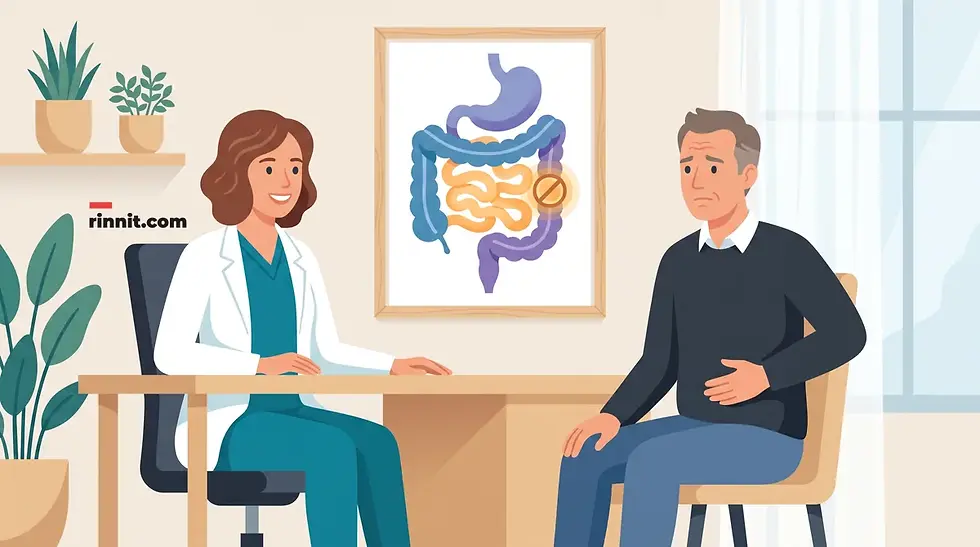
Quick Answer: What is intestinal obstruction?
Intestinal obstruction is a blockage that keeps food or liquid from passing through the small or large intestine, causing crampy pain, vomiting, constipation, a swollen abdomen and inability to pass gas. [1] In adults it is most often caused by adhesions, hernias or colon cancer. [1] [4] Treatment involves hospital stabilization, then surgery or a stent for complete blockages. [2]
What the research says
Contrast dye may shorten hospital stays for scar-tissue blockages, but it has not clearly cut surgery rates. A meta-analysis of 11 randomized trials (817 patients) of water-soluble contrast for adhesive small bowel obstruction found that stays for patients who did not need surgery were 1.95 days shorter (95% CI 0.56 to 3.3), while operative rates were not significantly different (19.8% vs. 21.4%); the authors noted the studies were varied and had design limits (Klingbeil et al., Annals of Surgery, 2022). [5]
Stents can be a bridge to surgery for colon blockages caused by cancer. A meta-analysis of 27 studies with 3,894 patients found no significant difference in 3- or 5-year survival between stenting and emergency surgery, but stenting led to a higher primary anastomosis rate (RR 1.25) and, in curative cases, lower 30-day mortality (RR 0.65) and fewer complications (RR 0.65) (Spannenburg et al., European Journal of Surgical Oncology, 2020). [6]
Air enemas work well for intussusception in children. A meta-analysis of 102 articles covering 32,451 children found a combined success rate of 82.7% (95% CI 79.9% to 85.6%) for air enema versus 69.6% (95% CI 65.0% to 74.1%) for liquid enema, with similar perforation rates (0.39% vs. 0.43%) (Sadigh et al., American Journal of Roentgenology, 2015). [7]
What intestinal obstruction actually means
Your digestive tract is a long tube that takes nutrients out of the foods you eat. Whatever the intestines do not absorb continues along the tract and is passed as stool during a bowel movement.
Intestinal obstruction is a blockage that keeps food or liquid from passing through that tube, in either the small intestine or the large intestine (colon). [1]
The distinction that matters most is between a partial and a complete obstruction. In a partial obstruction, some food and fluid can still get through. In a complete obstruction, nothing is able to pass. [2]
Untreated, the blocked parts of the intestine can die, leading to serious problems. With prompt medical care, intestinal obstruction often can be successfully treated. [1]

Symptoms
The warning signs of intestinal obstruction are fairly consistent, because they all come from the same problem: the digestive tube cannot empty.
Symptom | What it means |
Crampy abdominal pain that comes and goes [1] | The intestine squeezes against the blockage |
Loss of appetite [1] | The digestive system stops accepting food |
Constipation [1] | Nothing is moving through |
Vomiting [1] | Contents back up behind the blockage |
Inability to have a bowel movement or pass gas [1] | The tube below the blockage is empty |
Swelling of the abdomen [1] | Trapped gas and fluid stretch the belly |
Severe abdominal pain or any combination of these symptoms is a medical emergency. Because of the serious complications that can develop, seek immediate medical care if you have severe abdominal pain or other symptoms of intestinal obstruction. [1]
Causes
In adults, the most common causes of intestinal obstruction are:
Cause | How it blocks the intestine |
Intestinal adhesions [1] | Bands of fibrous tissue in the abdominal cavity that form after abdominal or pelvic surgery, squeezing or kinking the intestine |
Hernias [1] | Portions of intestine that protrude into another part of the body, getting pinched in the process |
Colon cancer [1] | A tumor grows into and closes off the passageway |
In children, the most common cause is intussusception, a rare, serious disorder in which one part of the intestine slides inside an adjacent part [1], like a telescope.
Other possible causes include inflammatory bowel diseases such as Crohn's disease, diverticulitis (small bulging pouches in the digestive tract that become inflamed or infected), twisting of the colon (volvulus), and impacted feces. [1] Certain medications can also contribute to obstruction. [1]
What pseudo-obstruction is (and why it matters)
There is a look-alike condition worth knowing about: intestinal pseudo-obstruction, also called paralytic ileus.
It causes the same signs and symptoms as an intestinal obstruction, but it does not involve a physical blockage. [1] [3] Instead, muscle or nerve problems disrupt the normal coordinated muscle contractions of the intestines, slowing or stopping the movement of food and fluid through the digestive system. [1] [3]
Paralytic ileus can affect any part of the intestine. Its causes include abdominal or pelvic surgery, infection, certain medications that affect muscles and nerves (including antidepressants and opioids), and muscle and nerve disorders such as Parkinson's disease. [1]
Risk factors
Complications
This is why intestinal obstruction is never something to wait out at home.
Tissue death. An obstruction can cut off the blood supply to part of your intestine. Lack of blood causes the intestinal wall to die. That tissue death can result in a tear (perforation) in the intestinal wall, which can lead to infection. [1]
Infection. Peritonitis is the medical term for infection in the abdominal cavity. It is a life-threatening condition that requires immediate medical and often surgical attention. [1]
How doctors diagnose it
Test or procedure | What it shows |
Physical exam | A swollen, tender, or lumpy abdomen; bowel sounds heard with a stethoscope can hint at the problem [2] |
Abdominal X-ray | Can confirm a diagnosis, though some obstructions cannot be seen on standard X-rays [2] |
CT scan | Cross-sectional images more detailed than X-rays, and more likely to show an obstruction [2] |
Ultrasound | Often the preferred imaging in children [2]; intussusception typically shows a “bull's-eye,” representing the intestine coiled within the intestine |
Air or barium enema | Enhanced imaging of the colon through air or liquid barium inserted via the rectum; in children with intussusception, it can also fix the problem [2] |
Treatment
Stabilizing you in the hospital
When you arrive at the hospital, doctors stabilize you so you can undergo treatment. This process may include placing an intravenous (IV) line into a vein in your arm so fluids can be given, putting a tube through your nose and into your stomach (a nasogastric tube) to suck out air and fluid and relieve abdominal swelling, and placing a thin catheter into your bladder to drain urine for testing. [2]

Partial obstruction
If some food and fluid can still get through, you may not need further treatment after stabilization. Your doctor may recommend a special low-fiber diet that is easier for a partially blocked intestine to process. [2] If the obstruction does not clear on its own, you may need surgery. [2]
Complete obstruction
If nothing can pass through, you will usually need surgery to relieve the blockage. [2] The procedure depends on what is causing the obstruction and which part of the intestine is affected. Surgery typically involves removing the obstruction, as well as any section of intestine that has died or is damaged. [2]
Alternatively, doctors may treat the obstruction with a self-expanding metal stent. This wire mesh tube is inserted via an endoscope passed through the mouth or colon, and it forces open the intestine so the obstruction can clear. Stents are generally used to treat people with colon cancer or to provide temporary relief when emergency surgery is too risky; you may still need surgery once your condition is stable. [2]
Children with intussusception
A barium or air enema serves as both a diagnostic procedure and a treatment. If the enema works, further treatment is usually not necessary. [2]
Pseudo-obstruction
If your signs and symptoms are caused by paralytic ileus, your doctor may monitor your condition for a day or two in the hospital and treat the cause if it is known. [2] Paralytic ileus can get better on its own. [2] In the meantime, you will likely receive food through a nasogastric tube or an IV to prevent malnutrition.
If it does not improve, your doctor may prescribe medication that causes muscle contractions to help move food and fluids through the intestines. [2] If the ileus is caused by an illness or a medication, the doctor will treat the illness or stop the medication. Rarely, surgery is needed. [2] Where the colon is enlarged, decompression through a colonoscopy or surgery can provide relief. [2]
When to see a doctor
Because of the serious complications that can develop, seek immediate medical care if you have severe abdominal pain or other symptoms of intestinal obstruction. [1] Intestinal obstruction is usually a medical emergency [2], so you may not have much time to prepare for an appointment.
If you have time before your appointment, make a list of your signs and symptoms so that you can better answer your doctor's questions. Your doctor is likely to ask when your abdominal pain or other symptoms began, whether symptoms came on suddenly or have occurred before, whether the pain is continuous, whether you have had nausea, vomiting, fever, blood in your stool, diarrhea, or constipation, and whether you have had surgery or radiation in your abdomen. [2]
Conclusion and next steps
Intestinal obstruction is one of those conditions where timing is everything. The intestine is a working organ that cannot pause, so when something blocks it, the pressure builds and the tissue downstream is put at risk. The symptoms — crampy pain that comes and goes, vomiting, a swollen belly, and the inability to pass gas — are your body's clear alarm system.
The good news is that with prompt medical care, intestinal obstruction often can be successfully treated. Surgery, stents, and in children even a simple enema routinely resolve the problem.
If you or a family member has these symptoms, do not wait to see whether they pass. Go to emergency care.
Your next step: If you are experiencing crampy abdominal pain, vomiting, or a swollen belly that does not pass gas, seek emergency medical care now.
Frequently asked questions
What is intestinal obstruction in simple terms? Intestinal obstruction is a blockage that stops food and liquid from moving through the small intestine or large intestine [1], so contents back up behind the blockage instead of continuing to a bowel movement.
What does the pain of an intestinal obstruction feel like? The pain of an intestinal obstruction is typically crampy abdominal pain that comes and goes, often combined with vomiting, a swollen belly, constipation, and the inability to pass gas. [1]
Is intestinal obstruction a medical emergency? Yes. A blocked section of intestine can lose its blood supply, die, and tear open, causing peritonitis — a life-threatening infection in the abdominal cavity that requires immediate medical and often surgical attention. [1]
What is intussusception, and who gets it? Intussusception is the most common cause of intestinal obstruction in children: one part of the intestine slides inside an adjacent part [1], like a telescope. It is treated in children, often successfully, with an air or barium enema. [2]
Can an intestinal obstruction go away on its own? A partial obstruction, where some food and fluid still get through, may clear on its own with a low-fiber diet and hospital observation. A complete obstruction usually requires surgery or a stent. [2]
What causes intestinal obstruction in adults? The most common causes in adults are scar tissue (adhesions) from past belly or pelvic surgery, hernias and colon cancer. Crohn's disease, diverticulitis, a twisted colon and hard, impacted stool can also cause a blockage.
Can you still pass gas or stool with a bowel obstruction? Sometimes. With a partial blockage, some gas or stool may still pass, so this does not rule out an obstruction. Crampy belly pain with vomiting or a swollen belly needs emergency care.
How do doctors diagnose a bowel obstruction? Doctors start with a physical exam of the belly. An abdominal X-ray or CT scan usually shows the blockage, and ultrasound is often used in children.
What is the difference between a bowel obstruction and paralytic ileus? A bowel obstruction is a physical blockage. Paralytic ileus causes the same symptoms, but nothing is blocking the bowel; the muscles or nerves stop moving food along, often after surgery, an infection or certain medicines such as opioids.
What happens in the hospital for a bowel obstruction? You will usually get IV fluids, and a thin tube may be passed through your nose into your stomach to remove air and fluid. Then the team watches whether the blockage clears or treats it with surgery or a stent.
Trusted External Resources
Related Reading
Abdominal Adhesions: Symptoms, Causes, Diagnosis, and Treatment explains the scar tissue bands that are a leading cause of blockages.
Intussusception: A Comprehensive Guide to Bowel Obstruction and Emergency Care covers the telescoping bowel problem that blocks the intestine in children.
Paralytic Ileus: Symptoms, Causes, and Management explains bowel slowdown that mimics a blockage without a physical obstruction.
Hernia: What It Is, Why It Happens, and How It’s Treated explains hernia types, warning signs and repair options.
References
Mayo Clinic Staff. Intestinal obstruction - Symptoms & causes. Mayo Clinic. January 20, 2021. https://www.mayoclinic.org/diseases-conditions/intestinal-obstruction/symptoms-causes/syc-20351460
Mayo Clinic Staff. Intestinal obstruction - Diagnosis & treatment. Mayo Clinic. January 20, 2021. https://www.mayoclinic.org/diseases-conditions/intestinal-obstruction/diagnosis-treatment/drc-20351465
National Institute of Diabetes and Digestive and Kidney Diseases. Intestinal Pseudo-obstruction. NIDDK. Last reviewed October 2021. https://www.niddk.nih.gov/health-information/digestive-diseases/intestinal-pseudo-obstruction
Ansari P. Intestinal Obstruction. Merck Manual Professional Version. Last updated July 2024. https://www.merckmanuals.com/professional/gastrointestinal-disorders/acute-abdomen-and-surgical-gastroenterology/intestinal-obstruction
Klingbeil KD, Wu JX, Osuna-Garcia A, et al. The Effect of Hyperosmolar Water-Soluble Contrast for the Management of Adhesive Small Bowel Obstruction: A Systematic Review and Meta-Analysis. Ann Surg. 2022;276(6):981-988. PMID 35837888. https://doi.org/10.1097/SLA.0000000000005573
Spannenburg L, Sanchez Gonzalez M, Brooks A, et al. Surgical outcomes of colonic stents as a bridge to surgery versus emergency surgery for malignant colorectal obstruction: A systematic review and meta-analysis of high quality prospective and randomised controlled trials. Eur J Surg Oncol. 2020;46(8):1404-1414. PMID 32418754. https://doi.org/10.1016/j.ejso.2020.04.052
Sadigh G, Zou KH, Razavi SA, et al. Meta-analysis of Air Versus Liquid Enema for Intussusception Reduction in Children. AJR Am J Roentgenol. 2015;205(5):W542-9. PMID 26496576. https://doi.org/10.2214/AJR.14.14060



Comments