Hormone Therapy for Menopause: Benefits, Risks and Types

Updated: 6 days ago
Written and medically reviewed by Dr. Baraa Alnahhal, MD · Last reviewed: October 2026 · How we review
Quick Answer: What is hormone therapy for menopause?
Hormone therapy for menopause is a treatment that replaces the estrogen, and sometimes progesterone, that the ovaries stop making, to relieve hot flashes, night sweats, vaginal dryness, poor sleep and bone loss. Risks are generally lower when it is started before age 60 or within 10 years of menopause, and a clinician should weigh benefits and risks first. [1][2]
What the research says
Hormone therapy cut hot flashes by about three-quarters. A review of 24 placebo-controlled trials with 3,329 women found oral hormone therapy reduced weekly hot flash frequency by 75% and also made hot flashes much less severe (MacLennan et al., Cochrane Database Syst Rev, 2004). [3]
When you start shapes the benefit-risk balance. Long-term follow-up of two large trials (16,608 women with a uterus and 10,739 women after hysterectomy) showed more favorable effects in women under 60 or within 10 years of menopause; in younger women whose ovaries had been removed, estrogen-only therapy was linked to a 32% lower risk of death from any cause (Manson et al., Menopause, 2020). [2]
Breast cancer risk depends on type and duration. An analysis of 108,647 women with breast cancer found risk rose with longer use and was higher with estrogen plus progestin than estrogen alone, while vaginal estrogen showed no excess risk; 5 years of use from age 50 was estimated to add about 1 case per 50 users of estrogen plus daily progestin and 1 per 200 users of estrogen alone (Collaborative Group on Hormonal Factors in Breast Cancer, Lancet, 2019). [4]
Key takeaways
Hormone therapy (HT) replaces hormones the ovaries no longer make in high amounts during menopause.
The two main types are estrogen-only therapy and combination therapy (estrogen plus a progestin).
If you still have a uterus, you need a progestin to protect against uterine cancer.
Systemic forms (pills, patches, gels, sprays) treat body-wide symptoms; local vaginal forms mainly treat vaginal dryness.
Risks are generally lower if you start before age 60 or within 10 years of menopause.
Most people take hormone therapy for 5 years or less, but there is no fixed time limit.
Non-hormonal options exist if hormone therapy isn't right for you.
What is hormone therapy for menopause?
Hormone therapy for menopause is a treatment that gives back the hormones your body is no longer making enough of after menopause. As you move toward menopause, your ovaries stop making high levels of estrogen. [1]
That drop in estrogen can cause uncomfortable symptoms, including:
Hot flashes and night sweats
Vaginal dryness and painful sex
Mood swings, depression or irritability
Trouble sleeping (insomnia)
Leaking urine
Once hormone levels rise again, most people find relief from these symptoms. Hormone therapy can also help prevent bone loss, such as osteoporosis and osteopenia. [1]
What is the difference between HT and HRT?
HT (hormone therapy) and HRT (hormone replacement therapy) usually mean the same thing when treating menopause symptoms. The terms differ slightly in how they are used. [1]
Term | Usually used when | Notes |
HT (hormone therapy) | Treatment starts after age 50, close to natural menopause | A broader term — can also mean hormone treatment for cancer or hormone imbalances |
HRT (hormone replacement therapy) | Treatment starts at a younger age, especially before 40 | Replaces hormones the body would normally still be making |
The difference matters because the risks of treatment can change with your age. [1]
What are the types of hormone therapy for menopause?
The two main types of hormone therapy for menopause are estrogen-only therapy and combination therapy, which pairs estrogen with a progestin. Your clinician recommends a type based on your symptoms, medical history and preferences. [1]

Estrogen-only therapy (ET) | Combination therapy (EPT) | |
Hormones | Estrogen alone | Estrogen + a progestin |
Usually for | People who have had a hysterectomy (uterus removed) | People who still have a uterus |
Why | Fewer long-term risks than combination therapy | Progestin lowers the risk of uterine cancer |
Schedule | Daily | Continuous or cyclic (see below) |
Forms | Pill, patch, gel, spray, vaginal ring, cream or tablet | Usually a pill or skin patch; also an IUD |
Why do people with a uterus need a progestin?
People with a uterus need a progestin because estrogen taken alone raises the risk of uterine cancer. Before menopause, the uterine lining sheds each month during a period. After periods stop, estrogen alone can cause the lining to overgrow, which can lead to cancer. A progestin helps prevent this. [1]
"Progestin" is the name for all hormones that act like progesterone, including synthetic ones. [1]
How is hormone therapy for menopause taken?
Hormone therapy for menopause is taken either systemically, so it reaches the whole body, or locally, applied directly to the vagina. Which one you use depends on your main symptoms. [1]
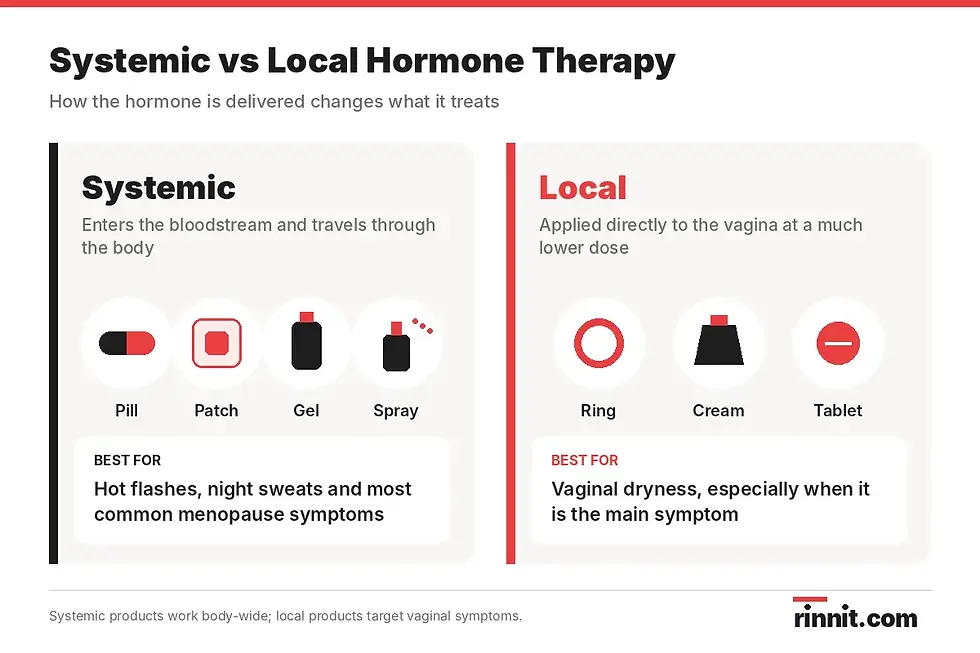
Systemic therapy | Local therapy | |
How it works | Enters the bloodstream and travels to organs and tissues | Works in the specific area where it is applied |
Forms | Pills, skin patches, gels, sprays | Vaginal cream, ring or tablet (tablets melt inside the vagina) |
Dose | Standard dose | Much lower dose |
Best for | Hot flashes, night sweats and most common menopause symptoms | Vaginal dryness, especially when it is the main symptom |
If vaginal dryness is your main concern, our guide to vaginal atrophy (genitourinary syndrome of menopause) explains this symptom in more depth.
How often do you take hormone therapy for menopause?
Hormone therapy for menopause usually starts at the lowest effective dose — the smallest dose that controls your symptoms. People who lose estrogen early (before age 40) are usually given higher doses to replace what their ovaries would normally make at their age. [1]
Regimen | How it's taken |
Estrogen-only | Estrogen every day |
Continuous-combined | Estrogen and progesterone every day |
Cyclic (sequential) | Estrogen every day, plus progesterone for 12 to 15 days each month — usually as a pill |
There's no one-size-fits-all approach. Your clinician builds a plan around your symptoms and health history. [1]
What are the benefits of hormone therapy for menopause?
The main benefit of hormone therapy for menopause is relief from uncomfortable menopause symptoms, which can improve quality of life and help you get back to activities you enjoy. [1]
Hormone therapy can help with:
Hot flashes and night sweats
Vaginal dryness and uncomfortable sex
Estrogen deficiency — if your ovaries were removed (oophorectomy) before age 45, estrogen therapy can lower the risk of low-estrogen conditions such as osteoporosis
Other possible health benefits include:
Lower risk of osteoporosis and broken bones
Better mood and overall happiness in some people
Better sleep
Lower risk of colon cancer (with combination therapy)
Lower risk of diabetes
What are the risks of hormone therapy for menopause?
Hormone therapy for menopause carries some health risks, and many of them depend on your overall health and family history. [1]

Possible risk | When it applies |
Uterine cancer | Only if you still have a uterus and take estrogen without a progestin |
Heart disease | If you start hormone therapy 10 or more years after menopause begins |
Blood clots and stroke | Increased risk — see deep vein thrombosis and stroke |
Gallbladder disease | Increased risk — see gallbladder disease |
Breast cancer | With long-term use in some people |
How can you lower the risks of hormone therapy?
You can lower the risks of hormone therapy by starting it at the right time and choosing the right type with your clinician. Risks are generally lower if you: [1]
Start before age 60 or within 10 years of menopause. The risk of complications is higher if you begin more than 10 years after menopause symptoms start. Taking hormone therapy in your 40s or 50s is usually not linked to higher cardiovascular risk.
Take a progestin if you still have a uterus.
Find the type that suits you best with your clinician.
Live a healthy lifestyle — stay active, manage chronic conditions and keep a weight that's healthy for you.
Keep up with regular gynecological exams and mammograms.
Does hormone therapy increase breast cancer risk?
Combined hormone therapy may increase breast cancer risk, and the increase is generally small. Risk rises the longer hormone therapy is used, and many other factors also shape your personal breast cancer risk. [1][4]
Your clinician can help you understand your own risk. You can also read our guide to breast cancer symptoms, causes and treatment.
Does hormone therapy increase heart disease risk?
Hormone therapy started closer to menopause, such as in your early 50s, carries less heart disease risk than starting after age 60. [1][2]
People who lose estrogen before age 40 face a higher risk of heart disease if they don't use hormone therapy, because early estrogen loss raises the risk of many conditions, including cardiovascular disease. Heart risk also depends on family history and conditions such as high blood pressure or high cholesterol. [1]
Who should not take hormone therapy for menopause?
Hormone therapy for menopause may not be right for you if any of the following apply: [1]
Condition | Why it matters |
Current or past breast, ovarian or uterine cancer | Hormones may affect these cancers |
Abnormal vaginal bleeding | Needs evaluation first |
Past blood clots or high clot risk | Hormone therapy raises clot risk |
History of stroke, heart attack or high cardiovascular risk | Hormone therapy may add to this risk |
Pregnancy | Not used during pregnancy |
Gallbladder or liver disease | Hormone therapy may worsen these conditions |
What are the side effects of hormone therapy for menopause?
The most common side effects of hormone therapy for menopause are irregular vaginal bleeding, breast tenderness and mood swings. [1]
Common side effects | Less common side effects |
Irregular vaginal bleeding | Bloating |
Breast tenderness | Headaches |
Mood swings | Skin discoloration |
Denser breast tissue, which can make mammograms harder to read | |
Skin irritation under an estrogen patch |
How can you reduce side effects?
Side effects of hormone therapy are usually mild and often go away on their own within a few months. If they bother you, ask your clinician about changing the dose or the form of hormone therapy. Never change or stop your medication without talking to your clinician first. [1]
How long should you take hormone therapy for menopause?
Most people take hormone therapy for menopause for 5 years or less, but there is no set time limit. The right length depends on how severe your symptoms are, the type of hormone therapy and your preferences. [1]
Your clinician will keep monitoring you and review your plan over time. If you develop a new medical condition while on hormone therapy, check whether it's still safe to continue. [1]
What are the alternatives to hormone therapy for menopause?
Alternatives to hormone therapy for menopause include non-hormonal medicines and over-the-counter products that target specific symptoms. Ask your clinician whether any of these could work for you: [1]
Option | What it can help with |
Over-the-counter vaginal lubricants | Vaginal dryness |
Antidepressants | Hot flashes |
Selective estrogen receptor modulators (SERMs) | Painful sex (ospemifene); a SERM combined with estrogen can ease hot flashes |
Gabapentin, oxybutynin or clonidine | Hot flashes and insomnia (approved for other conditions but can help menopause symptoms) |
Fezolinetant or paroxetine | Hot flashes (both FDA-approved for this use) |
For the latest treatment guidance, see our report on new hot flash treatment recommendations.
Are bioidentical hormones better than standard hormone therapy?
Bioidentical hormones are a type of hormone therapy that more closely match the body's natural estrogen and progesterone than other synthetic hormones. Several FDA-approved bioidentical options exist. [1]
Some bioidentical hormones are custom-mixed at a pharmacy (compounded hormones). Compounded hormones aren't well studied and their long-term effects are unclear, so many clinicians don't recommend them. The best choice depends on your symptoms, medical history and your clinician's advice. [1]
Why do some doctors advise against hormone therapy?
Some doctors advise against hormone therapy for a specific person because they have weighed that person's risks, not because they want symptoms to go untreated. The decision depends on your health history, age and symptoms. If hormone therapy isn't right for you, ask about alternative treatments. [1]
When should you see a doctor about menopause symptoms?
See your clinician if menopause symptoms are disrupting your daily life. They can explain your treatment options, including hormone therapy, and how the pros and cons apply to your situation. [1]
Make your decision only after all your questions are answered. It helps to book a visit dedicated to this conversation so there's time to cover the different types and forms of hormone therapy. [1]
Conclusion
Hormone therapy for menopause is one of the most effective ways to relieve hot flashes, night sweats and vaginal dryness, and it can also protect your bones. It isn't right for everyone. The type you need depends on whether you still have a uterus, the form depends on your main symptoms, and your risks depend largely on your age, how long ago menopause began and your personal and family history. Starting before 60 or within 10 years of menopause, using the lowest effective dose and reviewing your plan regularly all help keep the balance in your favor.
Ready to take the next step? Write down your symptoms, how much they affect your daily life and your family health history, then book a visit dedicated to discussing hormone therapy with your clinician. Not sure your symptoms are menopause-related yet? Start with our guide to perimenopause symptoms and treatments.
FAQ
What is the difference between HT and HRT?
HT and HRT usually mean the same treatment for menopause symptoms. HRT is more often used when treatment starts at a younger age, especially before 40, while HT is often used after age 50 and can also describe other hormone treatments.
Who should not take hormone therapy for menopause?
Hormone therapy for menopause may not be suitable for people with current or past breast, ovarian or uterine cancer, abnormal vaginal bleeding, past blood clots, stroke or heart attack, pregnancy, or gallbladder or liver disease. Your clinician will review your history first.
What are the most common side effects of hormone therapy?
The most common side effects of hormone therapy are irregular vaginal bleeding, breast tenderness and mood swings. They are usually mild and often fade within a few months.
How long can you stay on hormone therapy for menopause?
Most people take hormone therapy for menopause for 5 years or less, but there is no fixed limit. Your clinician reviews your plan regularly based on your symptoms, the type you take and your preferences.
Does hormone therapy cause breast cancer?
Combined hormone therapy may slightly increase breast cancer risk, and the risk rises with longer use. Many other factors affect breast cancer risk, so discuss your personal risk with your clinician.
Are bioidentical hormones safer than regular hormone therapy?
Bioidentical hormones are a type of hormone therapy that closely match the body's own hormones, and FDA-approved options exist. Custom-compounded versions aren't well studied, so many clinicians don't recommend them.
What can I use instead of hormone therapy for menopause?
Alternatives to hormone therapy include vaginal lubricants, certain antidepressants, SERMs, gabapentin, oxybutynin, clonidine, and the FDA-approved hot flash treatments fezolinetant and paroxetine. Your clinician can match an option to your symptoms.
When should I see a doctor about menopause symptoms?
See a clinician when menopause symptoms disrupt your daily life. They can explain treatment options, including hormone therapy, and how the benefits and risks apply to you.
Why do I need a progestin if I still have a uterus?
Taking estrogen alone can thicken the lining of the uterus and raise the risk of uterine cancer. A progestin protects the lining, so people with a uterus usually take combination therapy.
What forms does menopause hormone therapy come in?
Systemic hormone therapy comes as pills, skin patches, gels and sprays and treats body-wide symptoms such as hot flashes. Low-dose vaginal creams, rings and tablets mainly treat vaginal dryness.
Related Reading
Bioidentical Hormones: Uses, Safety and Side Effects explains bioidentical hormone therapy.
References
Cleveland Clinic. Hormone Replacement Therapy (HRT) for Menopause. Cleveland Clinic. Last updated March 12, 2024. https://my.clevelandclinic.org/health/treatments/15245-hormone-therapy-for-menopause-symptoms
Manson JE, Bassuk SS, Kaunitz AM, et al. The Women's Health Initiative trials of menopausal hormone therapy: lessons learned. Menopause. 2020;27(8):918-928. PMID 32345788. https://doi.org/10.1097/GME.0000000000001553
MacLennan AH, Broadbent JL, Lester S, et al. Oral oestrogen and combined oestrogen/progestogen therapy versus placebo for hot flushes. Cochrane Database Syst Rev. 2004;2004(4):CD002978. PMID 15495039. https://doi.org/10.1002/14651858.CD002978.pub2
Collaborative Group on Hormonal Factors in Breast Cancer. Type and timing of menopausal hormone therapy and breast cancer risk: individual participant meta-analysis of the worldwide epidemiological evidence. Lancet. 2019;394(10204):1159-1168. PMID 31474332. https://doi.org/10.1016/S0140-6736(19)31709-X
Disclaimer
This article is for general education only and is not a substitute for professional medical advice, diagnosis or treatment. Always talk with a qualified healthcare professional about your own situation before starting, changing or stopping any medication.



Comments