Perimenopause: Symptoms, Causes, and Treatments Explained

Updated: 2 days ago
Medically reviewed by Dr. Baraa Alnahhal, MD · Last reviewed: October 2026
Perimenopause is the transition before menopause, when estrogen levels rise and fall unpredictably. It most often begins in the 40s but can start as early as the 30s or as late as the 50s. Common signs include irregular periods, hot flashes, sleep problems, mood changes, vaginal dryness, and lower fertility. Menopause is reached after 12 months in a row without a period, and most symptoms can be managed with hormone therapy, hormone-free medicines, and lifestyle changes [1] [2].
Quick Answer
Perimenopause is the time before menopause when the body prepares to stop having periods, driven by changing estrogen and progesterone. There is no single test, so providers diagnose it from age, menstrual history and symptoms. Treatment ranges from estrogen to hormone-free medicines, along with diet, exercise and sleep habits. See a professional if symptoms bother you or bleeding is unusual. [1] [2]
What the research says
A hormone-free hot flash medicine cut daily hot flashes in a phase 3 trial. In a 12-week placebo-controlled trial of women aged 40-65 with at least 7 moderate-to-severe hot flashes a day, fezolinetant reduced daily hot flashes versus placebo (by 1.86 per day at 30 mg and 2.53 per day at 45 mg at week 12), with benefits maintained through week 52. The trial was manufacturer-sponsored and studied menopause-related hot flashes generally (Johnson et al., J Clin Endocrinol Metab, 2023).
It also worked in people who cannot or prefer not to use hormones. In 453 people unsuitable for hormone therapy, fezolinetant 45 mg reduced hot flash frequency more than placebo at 24 weeks (difference -1.93 per day, 95% CI -2.64 to -1.22) and improved sleep disturbance; side effects were similar between groups (65.0% vs 61.1% any adverse event) (Schaudig et al., BMJ, 2024).
Compared with other options, results were mixed. In a network meta-analysis by manufacturer-affiliated authors, fezolinetant 45 mg did not differ significantly from 27 hormone therapy regimens in hot flash frequency, and reduced frequency more than paroxetine, desvenlafaxine, and extended-release gabapentin (Morga et al., Menopause, 2024).
Research summaries are based on article abstracts retrieved from PubMed.
What Is Perimenopause?
Perimenopause, sometimes called the menopausal transition, is the time before menopause when your body is getting ready to stop having periods. Women start perimenopause at different ages: many notice the first signs, such as irregular periods, in their 40s, some in their 30s, and others as late as their 50s [1].
During perimenopause, estrogen, the main female hormone, rises and falls. Periods may get longer or shorter, and you may skip ovulation, meaning the ovaries do not release an egg. Once you have gone 12 months in a row without a period, you have reached menopause and perimenopause is over [1].

What are the symptoms of perimenopause?
Changes during perimenopause range from subtle to obvious [1].
Changes in Your Periods
Period changes are often the first sign. As ovulation becomes more unpredictable, the time between periods may be longer or shorter, flow may range from light to heavy, and some periods may be skipped.
Period Pattern | What It May Mean |
Cycle length consistently different by 7 days or more | You may be in early perimenopause |
60 days or more between periods | You are likely in late perimenopause |
Bleeding after 12 months without a period | Talk to your healthcare professional right away; it could signal a health issue |
Hot Flashes and Sleep Problems
Many people have hot flashes during perimenopause, and they vary in how strong they are, how long they last, and how often they happen. Trouble sleeping is often due to hot flashes or night sweats, but sleep patterns can change even without them [1].
Mood Changes
Mood swings, irritability, or an increased risk of depression may happen. Mood changes can have other causes too. People with a history of hormonal mood changes, such as premenstrual syndrome, premenstrual dysphoric disorder, or postpartum depression, and people with past depression or anxiety are more likely to have mood changes during perimenopause [1].
Vaginal, Bladder, Sexual, and Fertility Changes
Body Change | What Happens |
Vaginal dryness | Tissues become drier and less elastic as estrogen drops |
Pain during sex | Caused by dry, less elastic vaginal tissue |
Bladder changes | Burning when you urinate even without an infection, more leakage, frequency, or urgency |
Infections | Urinary and vaginal infections become more likely |
Fertility | Harder to get pregnant, but still possible while you have periods |
Sexual function | Arousal and desire may increase or decrease |
If you do not want to get pregnant, use birth control until you have gone 12 months without a period. If you are concerned about your sexual health, talk to your healthcare professional [1].
Bone and Cholesterol Changes
As estrogen levels lower, you lose bone more quickly than you replace it, which raises the risk of osteoporosis and broken bones. Less estrogen may also raise LDL ("bad") cholesterol while HDL ("good") cholesterol decreases in many women as they age. Together these changes increase the risk of heart disease [1].
When should you see a doctor about perimenopause?
Some women see a healthcare professional for perimenopausal symptoms, while others tolerate the changes or have no bothersome symptoms. Because symptoms can develop slowly, you may not realize perimenopause is the cause. If any symptom bothers you, see your healthcare professional [1].
What causes perimenopause to begin?
Perimenopause is caused by changes in two key hormones, estrogen and progesterone, which rise and fall during the transition. Many of the changes you notice are caused by lower estrogen [1].
What raises the risk of earlier perimenopause?
Perimenopause and menopause may start earlier in some women, for example before age 40 or between 40 and 45. Factors that make an earlier start more likely include [1]:
Risk Factor | What It Does |
Smoking | Menopause happens 1 to 2 years earlier in smokers than in nonsmokers |
Family history | A family history of early menopause is linked to early menopause |
Cancer treatment | Chemotherapy and pelvic radiation have been linked to early menopause |
Hysterectomy | Removing the uterus but not the ovaries usually does not cause menopause right away, but can sometimes bring it on earlier; if one ovary is removed, the other might stop working sooner |
Thyroid disease | May make early menopause more likely |
Autoimmune diseases | Rheumatoid arthritis and other autoimmune diseases may make early menopause more likely |

When does irregular bleeding during perimenopause need attention?
Irregular periods are common in perimenopause and usually nothing to worry about. See your healthcare professional if bleeding is very heavy, lasts longer than seven days, happens between periods, or if your periods are usually less than 21 days apart. These may signal a reproductive health issue that needs diagnosis and treatment. If you have gone 12 months without a period and then start bleeding, tell your healthcare professional promptly [1].
How is perimenopause diagnosed?
Perimenopause is a gradual change, and there is no single test or symptom that shows you have started it. Your healthcare professional looks at your age, menstrual history, and the symptoms you notice. Other than a thyroid check, which can affect hormone levels, hormone testing usually is not helpful because hormone levels change unpredictably during perimenopause [2].
How are perimenopause symptoms treated?
Medicines are often used to treat perimenopausal symptoms. Before choosing, talk with your healthcare professional about the benefits and risks of each option, and check in yearly to make sure your treatment is still right for you [2].
Hormone Therapy
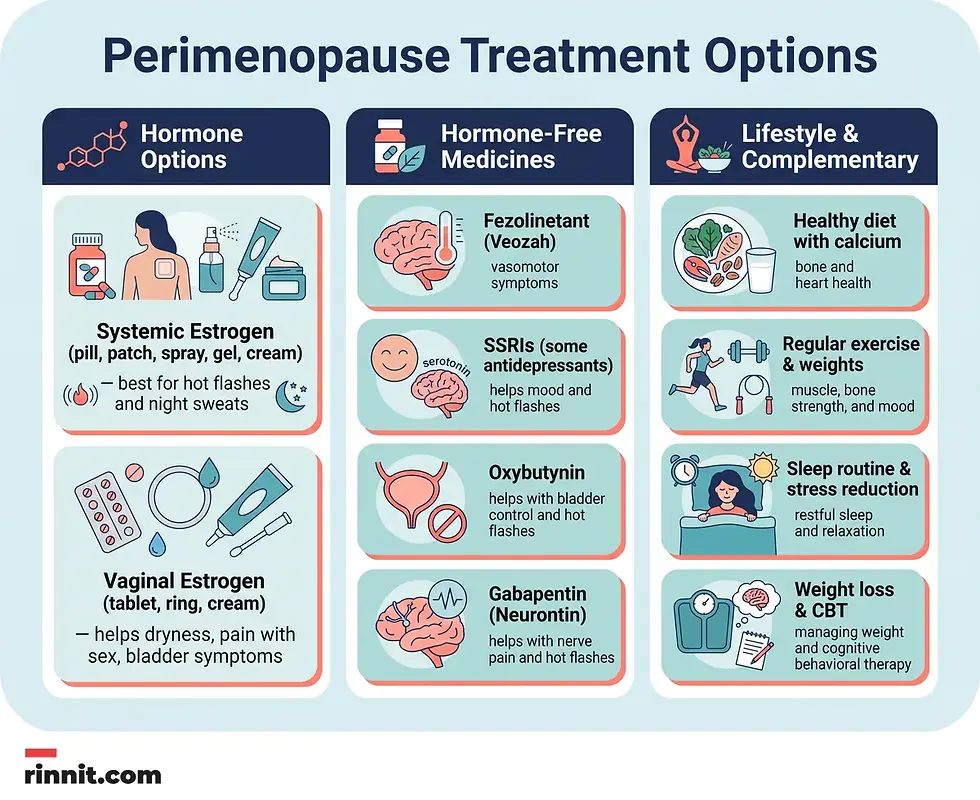
Systemic estrogen is hormone therapy for the whole body, taken as a pill, patch, spray, gel, or cream. It is the best treatment for hot flashes and night sweats. Your provider may recommend the lowest dose that helps, and if you still have your uterus you will need a progestogen in addition. Systemic estrogen may help with bone loss, but it can increase the risk of stroke, blood clots, and breast cancer [2].
Vaginal Estrogen
Estrogen can also be used in the vagina as a tablet, ring, or cream, releasing just a small amount into the vaginal tissue. It can help with vaginal dryness, pain during sex, and some bladder symptoms, and it may help prevent urinary tract infections [2].
Hormone-Free and Other Medicines
Medicine | How It Helps |
Fezolinetant (Veozah) or elinzanetant (Lynkuet) | Hormone-free; treat hot flashes by blocking pathways in the brain that help regulate body temperature |
SSRIs (some antidepressants) | May reduce hot flashes; helpful if estrogen is not an option or a mood disorder needs treatment |
Oxybutynin | Mainly treats overactive bladder and leakage; can also help hot flashes |
Gabapentin (Neurontin) | Can help hot flashes; may suit people who cannot take estrogen or who struggle with sleep, pain, or migraines |
Which lifestyle and home remedies help with perimenopause symptoms?
Healthy habits may ease some symptoms and support good health as you age [2]:
Ease vaginal discomfort. Use over-the-counter, water-based vaginal lubricants or moisturizers. Mayo Clinic advises avoiding products with glycerin, which can cause burning or irritation in some people, or parabens. Staying sexually active can also improve blood flow to the vagina.
Eat a healthy diet. Because osteoporosis and heart disease risk rise, choose a low-fat, high-fiber diet rich in fruits, vegetables, and whole grains, add calcium-rich foods, and avoid alcohol and caffeine if they trigger hot flashes. Ask your provider whether you need calcium or vitamin D supplements.
Be active. Regular exercise helps prevent weight gain, improves sleep, and lifts mood. Aim for 30 minutes or more most days, but not right before bed. Exercise with weights helps keep bones strong.
Get enough sleep. Keep a regular bedtime and wake time, and avoid caffeine and alcohol, which can disrupt sleep.
Do stress-reducing activities. Mindfulness meditation or yoga can help you relax, and moving meditation such as tai chi can help with balance.
Can alternative medicine help perimenopause symptoms?
Researchers are studying complementary and alternative approaches, but more research is needed on how well they work and whether they are safe. Talk with your healthcare professional before taking any herbal or dietary supplement, because the FDA does not regulate herbal products and some can be dangerous or change how other medicines work [2] [6].
Supplement | What the Research Shows |
Black cohosh | Not enough research to know if it works; some studies suggest it may harm the liver |
Phytoestrogens (isoflavones, lignans) | Found in soy, flaxseed, and whole grains; unclear whether they help symptoms or affect breast cancer risk |
DHEA | Mixed research on painful sex from vaginal dryness; some concerns about possible risks such as cancer |
"Bioidentical" hormones are plant-based and some are FDA-approved. Compounded (custom-mixed) bioidentical hormones are not controlled by the FDA, so quality and safety can vary, and there is no research showing they are safer or better than standard hormone therapy [2] [6].
Low-risk complementary therapies that may help [2]:
Therapy | Potential Benefit |
Acupuncture | May help hot flashes, but more research is needed |
Yoga and mindfulness meditation | Can reduce stress, which may help symptoms |
Cognitive behavioral therapy | Coping skills that may help mood, sleep, and pain during sex |
Hypnosis (hypnotherapy) | Some studies show it can help hot flashes and sleep |
Weight loss | Shown to help hot flashes and night sweats, especially in early menopause for people with obesity |
Conclusion
Perimenopause is a natural transition, but you do not have to endure it in silence. Irregular periods, hot flashes, sleep trouble, and mood swings are real and common, and there are many options, from estrogen therapy and hormone-free medicines to everyday habits like exercise, diet, and good sleep. The first step is bringing what you notice to a healthcare professional [1] [2].
If perimenopause symptoms are bothering you, talk to your healthcare professional. A simple conversation about your periods, sleep, and hot flashes is a good place to start.
Frequently Asked Questions
What is perimenopause?
The time before menopause when the body prepares to stop having periods, sometimes called the menopausal transition. It usually begins in the 40s but can start in the 30s or 50s, and it ends once you have gone 12 months without a period [1].
How do you know you are in perimenopause?
Common signs include irregular periods, hot flashes, sleep problems, mood changes, vaginal dryness, and lower fertility. If your cycle length is consistently different by seven days or more, you may be in early perimenopause [1].
What causes perimenopause?
Changes in estrogen and progesterone, which rise and fall during the transition. Most changes are caused by lower estrogen [1].
How long does perimenopause last?
There is no fixed length. It lasts until menopause, which is reached after 12 months in a row without a period [1].
Can you get pregnant during perimenopause?
Yes. It is harder to get pregnant as ovulation becomes less regular, but pregnancy is still possible while you have periods. Use birth control until you have gone 12 months without a period [1].
Is there a test for perimenopause?
No single test confirms it. Providers use your age, menstrual history, and symptoms. Hormone blood tests are usually not helpful because levels change unpredictably, though a thyroid check may be done [2].
What is the best treatment for hot flashes?
Systemic estrogen is the best treatment for hot flashes and night sweats. Hormone-free options include fezolinetant, elinzanetant, some SSRIs, oxybutynin, and gabapentin [2].
Does perimenopause affect bones and the heart?
Yes. Lower estrogen speeds up bone loss, raising osteoporosis risk, and can raise LDL cholesterol while lowering HDL cholesterol, which increases heart disease risk [1].
What does smoking do to perimenopause?
Menopause happens 1 to 2 years earlier in smokers than in nonsmokers [1].
Are bioidentical hormones safer?
Not necessarily. Compounded bioidentical hormones are not controlled by the FDA, so quality and safety can vary, and no research shows they are safer or better than standard hormone therapy [2].
When should irregular bleeding be checked?
See your healthcare professional if bleeding is very heavy, lasts longer than seven days, happens between periods, or your periods are usually less than 21 days apart, and tell them promptly if bleeding starts after 12 months without a period [1].
External Resources
For deeper reading from trusted organizations:
Mayo Clinic Staff. Perimenopause: Symptoms and causes. Mayo Clinic. August 22, 2026. https://www.mayoclinic.org/diseases-conditions/perimenopause/symptoms-causes/syc-20354666
The Menopause Society. MenoNotes. The Menopause Society. Accessed October 30, 2026. https://menopause.org/patient-education/menonotes
National Center for Complementary and Integrative Health. Menopausal Symptoms: In Depth. NCCIH. Last updated May 2017. https://www.nccih.nih.gov/health/menopausal-symptoms-in-depth
Related Reading
Bioidentical Hormones: Uses, Safety and Side Effects explains bioidentical hormone therapy.
References
Mayo Clinic Staff. Perimenopause: Symptoms and causes. Mayo Clinic. August 22, 2026. https://www.mayoclinic.org/diseases-conditions/perimenopause/symptoms-causes/syc-20354666
Mayo Clinic Staff. Perimenopause: Diagnosis and treatment. Mayo Clinic. August 22, 2026. https://www.mayoclinic.org/diseases-conditions/perimenopause/diagnosis-treatment/drc-20354671
Johnson KA, Martin N, Nappi RE, et al. Efficacy and safety of fezolinetant in moderate to severe vasomotor symptoms associated with menopause: a phase 3 RCT. J Clin Endocrinol Metab. 2023;108(8):1981-1997. PMID: 36734148. doi:10.1210/clinem/dgad058
Schaudig K, Wang X, Bouchard C, et al. Efficacy and safety of fezolinetant for moderate-severe vasomotor symptoms associated with menopause in individuals unsuitable for hormone therapy: phase 3b randomised controlled trial. BMJ. 2024;387:e079525. PMID: 39557487. doi:10.1136/bmj-2024-079525
Morga A, Ajmera M, Gao E, et al. Systematic review and network meta-analysis comparing the efficacy of fezolinetant with hormone and nonhormone therapies for treatment of vasomotor symptoms due to menopause. Menopause. 2024;31(1):68-76. PMID: 38016166. doi:10.1097/GME.0000000000002281
National Center for Complementary and Integrative Health. Menopausal Symptoms: In Depth. NCCIH. Last updated May 2017. https://www.nccih.nih.gov/health/menopausal-symptoms-in-depth
Medical disclaimer
This article is for informational purposes only and is not a substitute for professional medical advice, diagnosis, or treatment. Always seek the advice of your physician or other qualified health provider with any questions you may have about a medical condition.



Comments