Gestational Diabetes: Symptoms, Causes, Risks & Treatment — Complete Guide

Updated: 2 days ago
Medically reviewed by Dr. Baraa Alnahhal, MD · Last reviewed: October 2026
Quick Answer
Gestational diabetes is diabetes first diagnosed during pregnancy, when hormone changes make it harder for the body to use blood sugar, which can affect the pregnancy and baby. It can usually be controlled with diet, exercise and medicine, typically insulin, when needed. Blood sugar usually normalizes after birth, but type 2 diabetes risk rises, so follow-up testing matters.
What the research says
Diet and exercise choices can change how much medicine is needed. A network meta-analysis of 39 randomized trials (2,712 women) found that the DASH diet and resistance exercise each reduced insulin requirements (by 71%, 95% credible interval 52% to 84%, and 67%, 48% to 85%, respectively), and the DASH diet also reduced macrosomia by 89% (53% to 98%) and the cesarean section rate by 46%; the certainty of evidence was low to very low. (Zhang et al., Adv Nutr, 2024) [3]
When medicine is needed, metformin was compared head-to-head with insulin and glyburide. A network meta-analysis of 23 trials (4,533 participants) found metformin lowered 2-hour postprandial blood glucose more than glyburide (standardized mean difference 0.18; 95% credible interval 0.01 to 0.34) and was linked to less neonatal hypoglycemia (risk difference −0.07; 95% CI −0.11 to −0.02) and less preeclampsia (−0.03; 95% CI −0.06 to 0) than insulin; the authors concluded metformin may be as effective as insulin for glycemic control. (Yu et al., BMC Endocr Disord, 2021) [4]
Preventing type 2 diabetes after gestational diabetes is still an open research question. Gestational diabetes is associated with a higher risk of type 2 diabetes later in life, but a systematic review of 35 trials (6,624 women) found only one randomized trial (1,601 participants) that reported type 2 diabetes incidence; a diet-and-physical-activity intervention showed little to no effect (hazard ratio 0.89; 95% CI 0.65 to 1.22; low-certainty evidence), and the authors judged the overall evidence insufficient for strong conclusions. (Katsuragawa et al., Am J Obstet Gynecol MFM, 2025) [5]
At a Glance
Item | Summary |
What it is | Diabetes first diagnosed during pregnancy; affects how the body's cells use sugar (glucose) |
Typical symptoms | Usually none that are easy to notice; possible thirst and frequent urination |
When screened | Weeks 24–28 of pregnancy (earlier if high risk) |
Diagnosis numbers | Glucose challenge: 190 mg/dL (10.6 mmol/L) or higher at 1 hour; follow-up 3-hour glucose tolerance test if above 140 mg/dL (7.8 mmol/L) |
Main treatment | Healthy diet, regular exercise, blood sugar monitoring, insulin if needed |
After delivery | Blood sugar usually returns to normal; recheck at 6–12 weeks |
Main risk going forward | Higher chance of type 2 diabetes later in life — check at least every 3 years |

What Is Gestational Diabetes?
Gestational diabetes is diabetes that is first diagnosed during pregnancy. The word gestational refers to pregnancy itself, which is sometimes called gestation.
Like other types of diabetes, gestational diabetes affects how the body's cells use sugar, also called glucose. It causes high blood sugar that can affect a pregnancy and a baby's health.
The good news is that you may be able to control gestational diabetes. Eating healthy foods, exercising, and — if needed — taking medicine can keep blood sugar in a healthy range. That helps keep you and your baby healthy and may prevent some problems during delivery.
Gestational Diabetes Symptoms
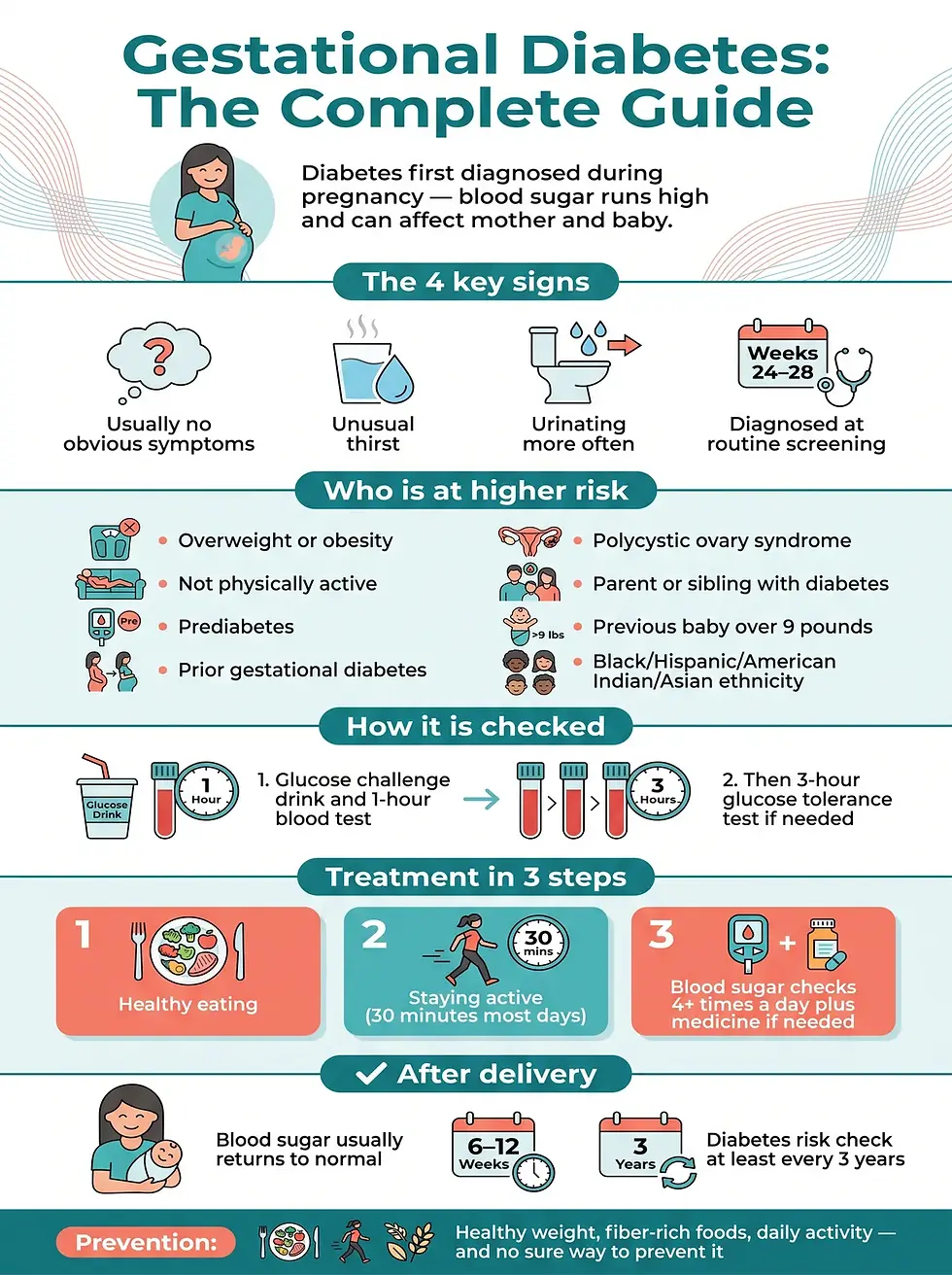
Most of the time, gestational diabetes doesn't cause symptoms that are easy to notice. This is one reason routine screening during pregnancy is so important.
Two possible symptoms are:
Being very thirsty
Urinating more often
Because symptoms are usually absent or subtle, most people find out they have the condition through routine prenatal screening rather than from symptoms.
What Causes Gestational Diabetes?
Experts don't yet know why some people get gestational diabetes and others don't. Extra weight before pregnancy often plays a role.
Here is the basic mechanism:
Hormones — mainly insulin — keep blood sugar at the right level in the body.
During pregnancy, hormone levels change.
Those changes may make it harder for the body to use blood sugar as it should.
This makes blood sugar rise.
Gestational Diabetes Risk Factors
Several factors raise the chance of developing gestational diabetes during pregnancy:
Risk factor | Why it matters |
Being overweight or obese | Extra weight before pregnancy often plays a role in the condition |
Not being physically active | Low activity reduces the body's ability to use blood sugar |
Having prediabetes | Blood sugar is already running higher than normal before pregnancy |
Gestational diabetes in an earlier pregnancy | Prior history raises the risk of it happening again |
Polycystic ovary syndrome (PCOS) | A hormone condition linked to insulin resistance |
A parent or sibling with diabetes | Family history of diabetes raises risk |
A previous baby weighing more than 9 pounds (4.1 kg) | Prior large birth weight is a warning sign |
Black, Hispanic, American Indian, or Asian ethnicity | These groups have a statistically higher risk |
Gestational Diabetes Complications
If high blood sugar isn't controlled, it can cause health problems for you and your baby. This includes an increased risk of needing surgery to deliver the baby — called a C-section.
Complications That May Affect Your Baby
Complication | What happens |
High birth weight | High blood sugar may cause the baby to grow too large; babies 9 pounds or more are more likely to become stuck in the birth canal, have birth injuries, or need a C-section |
Early (preterm) birth | High blood sugar may raise the risk of delivery before the due date, or an early delivery because the baby is large |
Trouble breathing | Babies born early may develop respiratory distress syndrome, a condition that makes breathing hard |
Low blood sugar (hypoglycemia) | Babies sometimes have low blood sugar shortly after birth; severe cases may cause seizures; feeding right away and sometimes glucose through a vein helps |
Obesity and type 2 diabetes later in life | Babies have a higher risk of both |
Stillbirth | Untreated gestational diabetes could result in a baby's death before or shortly after birth |
Complications That May Affect You
Complication | What happens |
High blood pressure and preeclampsia | Gestational diabetes raises the risk of high blood pressure and preeclampsia — a serious pregnancy complication that can threaten your life and your baby's life |
Surgical delivery | You are more likely to have a C-section |
Future diabetes | More likely to have gestational diabetes again in a future pregnancy, and a higher risk of type 2 diabetes as you get older |
Can Gestational Diabetes Be Prevented?
There is no sure way to prevent gestational diabetes. But healthy habits before pregnancy can help — and if you've had it before, these same choices may lower the risk of getting it again or developing type 2 diabetes in the future.
Eat healthy foods. Choose a variety of foods high in fiber and low in fat and calories. Focus on fruits, vegetables, and whole grains, and eat healthy portion sizes.
Keep active. Aim for 30 minutes of moderate activity on most days of the week — a brisk daily walk, biking, or swimming laps. Short bursts count too, such as parking farther from the store or taking short walks throughout the day.
Start pregnancy at a healthy weight. If you're planning to get pregnant, losing extra weight beforehand may help. Make lasting changes to eating habits, such as eating more vegetables and fruits.
Don't gain more weight than recommended. Some weight gain during pregnancy is healthy, but gaining too much too quickly raises risk. Ask your healthcare professional what a good amount of weight gain is for you.
When to See a Doctor
If possible, seek healthcare when you start to think about trying to get pregnant, so your provider can check your risk of gestational diabetes and your overall wellness.
Once you're pregnant, screening for gestational diabetes becomes part of your routine prenatal care.
If you are diagnosed, you'll need checkups more often — most likely during the last three months of pregnancy — so your provider can check your blood sugar level and your baby's health.
How Is Gestational Diabetes Diagnosed?
Screening Timeline
Average risk: a screening test during the second trimester, usually between weeks 24 and 28 of pregnancy.
High risk: screening may happen earlier; some people at high risk are tested at their first prenatal visit. High-risk factors include being overweight or obese before pregnancy, having a parent or sibling with diabetes, or having had gestational diabetes during an earlier pregnancy.
The Two Screening Tests
Test | How it works | Results |
Initial glucose challenge test | Drink a syrupy glucose solution; one hour later, a blood test measures your blood sugar level | A level of 190 mg/dL (10.6 mmol/L) or higher means you have gestational diabetes; below 140 mg/dL (7.8 mmol/L) is usually within the standard range (varies by clinic or lab); higher-than-expected results lead to a follow-up test |
Follow-up glucose tolerance test | Similar to the first test, but the sweet drink has even more sugar; blood sugar is checked every hour for three hours | If two of the blood sugar readings are higher than expected, you have gestational diabetes |
Gestational Diabetes Treatment
Treatment has three main parts: lifestyle changes, blood sugar monitoring, and medicine if needed. Keeping your blood sugar level in a good range helps keep you and your baby healthy and may help you avoid problems during pregnancy and delivery.
An important note: because your body is working hard to support a growing baby, it is not a good idea to lose weight during pregnancy. Your provider can help you set weight gain goals based on your weight before pregnancy.
1. Lifestyle Changes
Healthy diet. Focus on foods that are high in nutrition and fiber and low in fat and calories — fruits, vegetables, whole grains, and lean protein. Limit refined carbohydrates such as white bread, white rice, and sweets. A registered dietitian or a certified diabetes care and education specialist can build a meal plan based on your weight, pregnancy weight gain goals, blood sugar level, exercise amount, food preferences, and budget.
Staying active. Regular physical activity lowers blood sugar and can ease common pregnancy discomforts such as back pain, muscle cramps, swelling, constipation, and sleep problems. With your provider's OK, aim for 30 minutes of moderate exercise most days. Walking, cycling, and swimming are good choices during pregnancy — and everyday activities such as housework and gardening also count.
2. Blood Sugar Monitoring
While you're pregnant, your healthcare team may ask you to check your blood sugar level four or more times a day — most people do this first thing in the morning and after meals — to make sure it stays within a healthy range.
3. Medicine
If diet and exercise aren't enough, you may need insulin shots to lower your blood sugar. Only a small number of people with gestational diabetes need insulin to reach their blood sugar goals.
Some healthcare professionals prescribe medicine taken by mouth to manage blood sugar levels. Others believe that more research is needed to make sure those oral medicines are as safe and work as well as insulin shots for gestational diabetes.
Watching Your Baby Closely
Throughout the pregnancy, your provider may check your baby with ultrasounds or other tests. If you don't go into labor by your due date, your provider may induce labor (start labor artificially), because delivering after your due date could raise the risk of health problems for you and your baby. In some situations, labor may be induced before the due date.
Follow-Up After Delivery
Your provider checks your blood sugar after delivery and again at 6 to 12 weeks to make sure it has returned to the standard range.
If your blood sugar is back in range, your diabetes risk should be checked at least every three years.
If tests show prediabetes, talk with your provider about steps to prevent it from turning into type 2 diabetes.
If tests show type 2 diabetes, work with your healthcare team to make a plan to control it.
Coping and Support
It can be stressful to learn you have a condition that may affect your baby. The very steps that help control blood sugar — healthy eating and exercising — may also help relieve stress, while nourishing your baby and helping prevent type 2 diabetes in the future.
Learning more about gestational diabetes may ease stress too. Talk to your healthcare team, read books and articles about the condition, and consider a support group for people with gestational diabetes — your team can point you to one.
Preparing for Your Appointment
You'll likely find out you have gestational diabetes from a routine screening test during pregnancy. You may be referred to specialists such as an endocrinologist, a certified diabetes care and education specialist, or a registered dietitian. Consider bringing a family member or friend to help remember all the information you get.
What You Can Do
When making the appointment, ask if you need to fast before lab tests or do anything else to prepare.
Make a list of any symptoms you have, including those that might not seem linked to gestational diabetes.
Note key personal information, including major stresses or recent life changes other than being pregnant.
List all medicines, vitamins, or supplements you take, including doses and how often.
Prepare your questions to ask (see below).
Questions to Ask Your Healthcare Professional
What can I do to help control my condition?
Can you suggest a registered dietitian or certified diabetes care and education specialist to help me plan meals, create an exercise program, and learn ways to cope?
Will I need medicine to control my blood sugar?
For what symptoms should I seek medical attention?
Are there brochures or other printed materials I can take? What websites do you recommend?
What to Expect From Your Doctor
Your doctor may ask:
Have you been more thirsty than usual or urinated more than usual? When did these symptoms start, and how often?
Do you have a parent or sibling who has diabetes?
Have you been pregnant before? Did you have gestational diabetes during earlier pregnancies?
Did you have other problems in earlier pregnancies?
If you have other children, how much did each weigh at birth?
FAQ: Gestational Diabetes
What is gestational diabetes?
Gestational diabetes is diabetes that is first diagnosed during pregnancy. It affects how the body's cells use sugar (glucose), causing high blood sugar that can affect the pregnancy and the baby's health.
What are the symptoms of gestational diabetes?
Most of the time, gestational diabetes doesn't cause symptoms that are easy to notice. Being very thirsty and urinating more often are possible symptoms, which is why routine screening at weeks 24–28 matters.
What causes gestational diabetes?
Experts don't yet know exactly why some people get it and others don't. During pregnancy, hormone changes may make it harder for the body to use blood sugar as it should, and extra weight before pregnancy often plays a role.
How is gestational diabetes diagnosed?
Most people are screened with a glucose challenge test between weeks 24 and 28 of pregnancy. A blood sugar level of 190 mg/dL (10.6 mmol/L) or higher one hour after the glucose drink means gestational diabetes; levels above 140 mg/dL (7.8 mmol/L) usually lead to a follow-up 3-hour glucose tolerance test.
How do you treat gestational diabetes?
Treatment focuses on lifestyle changes — a healthy, high-fiber diet and regular physical activity — plus checking blood sugar four or more times a day. If diet and exercise aren't enough, insulin shots are used; only a small number of people need medicine.
Can gestational diabetes harm the baby?
If blood sugar isn't controlled, yes. Possible complications include high birth weight, early birth, trouble breathing after birth, low blood sugar in the newborn, a higher risk of obesity and type 2 diabetes later in life, and — in untreated cases — stillbirth.
Will I have diabetes forever after gestational diabetes?
Usually not. For most people, blood sugar returns to its usual level soon after the baby is born. However, having had gestational diabetes raises the risk of type 2 diabetes later, so blood sugar should be rechecked at 6–12 weeks and diabetes risk screened at least every three years.
Conclusion
Gestational diabetes is a pregnancy-time form of diabetes caused by hormone changes that make the body struggle to use blood sugar — and the good news is that it is highly manageable. The three things to remember are:
It usually has no obvious symptoms, so routine screening at weeks 24–28 is essential.
Diet, daily activity, and blood sugar monitoring control it, with insulin only when needed.
Blood sugar usually returns to normal after delivery, but the risk of type 2 diabetes later means follow-up checks are a lifelong habit.
This guide covered the symptoms, causes, the 8 risk factors, the complications for mother and baby, the two screening tests, and the full 3-step treatment plan. For a deeper look at the most common complication of uncontrolled blood sugar, our complete guide on dehydration explains the warning signs and how to stay properly hydrated, and our diabetes complete guide shows how the other types of diabetes work and compare. You can also explore the full rinnit.com library for more evidence-based health guides.
Disclaimer: This article is for general informational purposes only and does not constitute medical advice. Always consult a qualified healthcare professional for diagnosis and treatment of any health condition. Never disregard professional medical advice or delay seeking it because of something you have read here.
Related Reading
Fetal Biometry: Ultrasound Measurements of Baby's Growth Explained explains the ultrasound measurements used to track fetal growth.
Learn more in our guide to A1C Test: Normal Levels, Prediabetes and Diabetes Ranges and What Affects Results.
Fasting Blood Sugar Test: How to Prepare, Normal Levels and What Your Results Mean explains how a fasting blood sugar test checks for diabetes during pregnancy.
Glucose Test in Pregnancy: One-Hour Screening, Three-Hour Test and Results explains the one-hour and three-hour tests used to screen for and diagnose gestational diabetes.
Learn more in our guide to Nonstress Test (NST): Why It's Done, What to Expect and Reactive vs Nonreactive Results.
Blood Glucose Test: Normal Blood Sugar Levels, Prediabetes and Diabetes Ranges explains normal, prediabetes and diabetes blood sugar ranges.
Biophysical Profile (BPP): Purpose, the Five Parts, Scoring and Results explains the late-pregnancy ultrasound and heart rate test, its five parts and what the score means.
Glucose Tolerance Test: Types, How to Prepare, What Happens and What Results Mean explains the 2-hour sugar-load test used to diagnose prediabetes, diabetes and gestational diabetes.
References
Mayo Clinic Staff. Gestational diabetes - Symptoms & causes. Mayo Clinic. May 30, 2025. https://www.mayoclinic.org/diseases-conditions/gestational-diabetes/symptoms-causes/syc-20355339
Mayo Clinic Staff. Gestational diabetes - Diagnosis & treatment. Mayo Clinic. May 30, 2025. https://www.mayoclinic.org/diseases-conditions/gestational-diabetes/diagnosis-treatment/drc-20355345
Zhang L, et al. Effects of Dietary Approaches and Exercise Interventions on Gestational Diabetes Mellitus: A Systematic Review and Bayesian Network Meta-analysis. Adv Nutr. 2024;15(12):100330. PMID 39481539. https://doi.org/10.1016/j.advnut.2024.100330
Yu DQ, et al. Glycemic control and neonatal outcomes in women with gestational diabetes mellitus treated using glyburide, metformin, or insulin: a pairwise and network meta-analysis. BMC Endocr Disord. 2021;21(1):199. PMID 34641848. https://doi.org/10.1186/s12902-021-00865-9
Katsuragawa S, et al. Effectiveness of self-care interventions for the prevention of type 2 diabetes among women with previous gestational diabetes: a systematic review and meta-analysis. Am J Obstet Gynecol MFM. 2025;7(9):101731. PMID 40609899. https://doi.org/10.1016/j.ajogmf.2025.101731



Comments