Dentures: Types, Procedure, Care and How Long They Last

Updated: 6 days ago
Written and medically reviewed by Dr. Baraa Alnahhal, MD · Last reviewed: October 2026 · How we review
Quick Answer: What are dentures?
Dentures are removable or fixed oral appliances that replace missing teeth in the upper jaw, lower jaw, or both. Main types include full, partial, immediate, implant-retained and implant-supported dentures. They improve chewing, speech and appearance, usually last seven to 10 years, and need daily cleaning plus a reline every one to two years. [1]
What the research says
Implant-retained dentures leave people more satisfied. A meta-analysis of 8 studies (812 patients) found that lower dentures held by two implants scored about 14 points higher for overall satisfaction on a 100-point scale than conventional dentures, with better comfort, speech, chewing and stability, but no difference in appearance or hygiene. (Egido Moreno et al., Clin Exp Dent Res, 2021)
Sleeping in dentures is linked to pneumonia in older adults. In 524 community-living adults aged 85 or older followed for 3 years, the 40.8% of denture wearers who kept dentures in overnight had about 2.4 times the risk of pneumonia (HR 2.38), plus more plaque, gum inflammation and Candida. (Iinuma et al., J Dent Res, 2015)
Better chewing does not automatically mean better nutrition. Pooling 3 trials (322 adults aged 65+), implant overdentures and conventional dentures produced no significant difference in body mass index, albumin or vitamin B12 six months after treatment. (Yamazaki et al., BMJ Open, 2016)
Key takeaways
Dentures replace some or all missing teeth and rest on the gums, hook onto natural teeth, or attach to dental implants. [1]
Making dentures takes several steps and visits, and getting used to them can take weeks or months. [1]
With good care, dentures last about seven to 10 years; relines every one to two years keep the fit comfortable. [1]
Take dentures out for at least eight hours every day, ideally overnight. [1]
What are dentures?
Dentures are custom-made oral appliances that replace missing teeth in the upper jaw, lower jaw, or both. [1]
Dental technicians build them from materials such as acrylic, resin, nylon, metal and porcelain. [1] A typical denture has artificial teeth set into a gum-colored base. [1]
Losing teeth makes everyday tasks like eating and speaking harder, which is why replacing them matters for long-term oral health. [1] When all teeth are lost, facial muscles can sag; dentures help fill out the face and profile. [2]
What are the main types of dentures?
The five main types of dentures are full, partial, immediate, implant-retained and implant-supported, and the right one depends on your oral health needs. [1]
Type | What it replaces | How it stays in place | Removable? |
Full (complete) | An entire arch of teeth | Rests on the gums, supported by the palate or lower jaw ridge; adhesive may help | Yes |
Partial | Several or most teeth in one or both jaws | Gums and bone, plus clasps that hook around remaining natural teeth | Yes |
Immediate | Teeth removed on the same day | Worn right after extractions; may be swapped for a final denture after healing | Yes |
Implant-retained ("snap-in") | A full arch | Snaps onto dental implants in the jaw; no adhesive needed | Yes |
Implant-supported ("permanent" or hybrid) | A full arch | Fixed to implants; only a dentist can remove it | No |
Source: [1]

Full dentures
A full denture replaces every tooth in one arch and rests on top of the gums. [1] Upper dentures rely on the palate (roof of the mouth); lower dentures rely on the jawbone ridge. [1] Some people use denture adhesive to keep them firmly in place. [1]
Partial dentures
A partial denture is an option when several or most teeth are missing but some natural teeth remain. [1] Special clasps hook around the remaining teeth for extra stability. [1] Many partials use a metal framework with pink plastic for the gums and plastic or resin teeth. [3]
Immediate dentures
An immediate denture is worn right after tooth extractions, so you are not without teeth while you heal. [1] It is often temporary and replaced with a final denture once the gums settle, though some people can wear their final denture straight away. [1] It may need relining or remaking after the jaw heals. [2]
Implant-retained dentures
Implant-retained dentures snap onto dental implants, which are small threaded posts placed in the jawbone to replace tooth roots. [1] They are more stable than traditional dentures and do not need glue, but you still take them out at night to clean and soak them. [1]
Implant-supported dentures
Implant-supported dentures are fixed in place and cannot be removed at home. [1] They suit people who do not want a removable appliance. [1] The trade-off is more thorough daily cleaning, including flossing underneath the denture. [1]
What happens at a denture consultation?
At a denture consultation, the dentist examines your jaws, gums and any remaining teeth and takes dental X-rays to check jawbone thickness. [1]
If dentures are right for you, the choice of type depends on: [1]
How many teeth are missing, and for how long
Whether you want a removable or fixed appliance
The density and volume of your jawbone
How your upper and lower jaws line up
Your personal preferences
How are dentures made and fitted?
Dentures are made in a dental lab from impressions of your mouth, then fitted and adjusted over several visits. [1]
Impressions. The dentist takes molds of your upper and lower jaws, gums and remaining teeth, often a preliminary and a final set. [1]
Stone model. A dental technician uses the impressions to make a replica of your mouth. [1]
Custom build. Wax registration blocks guide where the teeth go; the base is built up from acrylic, nylon or resin, and the teeth are set so the upper and lower rows bite together correctly. [1]
Polish. The finished denture is polished to a natural-looking shine. [1]
Fitting. The dentist checks the fit, looks for areas that press too hard on the gums and makes final adjustments. [1]
Reaching the ideal fit usually takes several visits, because the soft tissues in your mouth need time to adapt. [1]

What are the benefits and drawbacks of dentures?
Dentures improve chewing, speech and appearance, but traditional removable dentures can shift and do not stop jawbone shrinkage. [1]
Benefits | Drawbacks |
Better chewing | Removable dentures may wobble or slip when talking or eating |
Clearer speech | The jawbone gradually shrinks after tooth loss |
Improved appearance | Bone loss can cause facial changes such as sunken cheeks |
Better nutrition through easier chewing | Regular adjustments and relines are needed |
Source: [1]
Studies report higher satisfaction, comfort and stability with implant-retained lower dentures than with conventional ones. [4]
How long does it take to get used to dentures?
Getting used to new dentures takes weeks and sometimes months, and it differs for everyone. [1]
New dentures may feel loose while your cheek and tongue muscles learn to hold them in place. [2] Minor soreness and extra saliva are common early on and usually settle. [2] You may need several adjustments in the first couple of weeks. [1] See your dentist if irritation or soreness does not go away. [2]
How long do dentures last?
Dentures last about seven to 10 years on average, after which most people need a replacement. [1]
A reline every one to two years, or whenever the fit changes, keeps them comfortable. [1] During a reline, the dentist adds material to the denture base so it fits your gums better. [1]
How do you take care of dentures?
Caring for dentures means cleaning them daily, soaking them overnight and keeping your mouth clean too. [1]
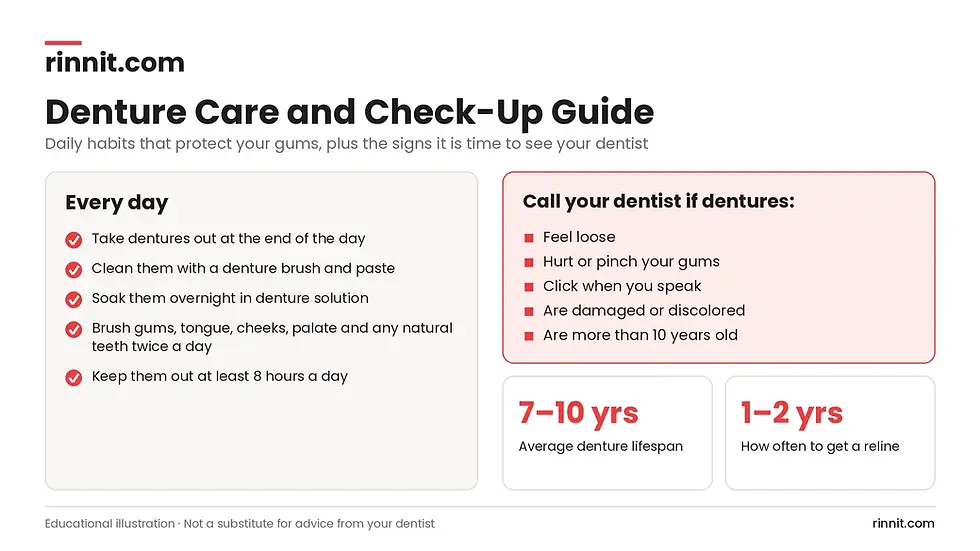
Take dentures out at the end of every day. [1]
Rinse off loose food, then brush all surfaces with a denture brush and non-abrasive denture paste. [1][2]
Soak them overnight in denture solution; when they are out, keep them covered in liquid so they do not warp. [1][2]
Brush your gums, tongue, inner cheeks, palate and any natural teeth twice a day. [1]
If you use adhesive, follow the product directions exactly. [2]
Leaving dentures out for at least eight hours a day rests your gums, lowers harmful mouth bacteria and helps keep your jawbone strong. [1] Poor denture hygiene can also encourage oral thrush, a yeast infection of the mouth.
Is it OK to sleep with dentures in?
Most people sleep without their dentures because it is more comfortable and gives the mouth tissues a rest. [1]
Whether you take them out at night or during the day, keep them out for at least eight hours daily. [1] Research in adults aged 85 and older links overnight wear with a higher pneumonia risk. [5]
When should you see a dentist about your dentures?
You should see a dentist when dentures feel loose, hurt, click or show damage, because these can mean they need adjusting or replacing. [1]
Book an appointment if your dentures: [1]
Feel loose
Hurt or pinch your gums
Click when you speak
Are damaged or discolored
Are more than 10 years old
Pain, swelling or a bad taste around remaining teeth can point to an infection such as a tooth abscess, which needs prompt care.
What are the alternatives to dentures?
The two main alternatives to dentures are dental implants and dental bridges. [1]
Option | Best for | Key points |
Dentures | Many or all teeth missing | Removable or fixed; average lifespan 7–10 years |
Dental implants | One, several or all teeth | Most common alternative; help stop jawbone loss; cost more but can last a lifetime with care |
Dental bridges | 1–3 missing teeth in a row with healthy teeth on each side | Crowns on neighboring teeth hold artificial teeth in the gap |
Source: [1]
Learn how bridges, crowns and implants compare in our guide to dental restorations. If gum disease caused your tooth loss, treating it first protects your remaining teeth — see gum disease treatment. For teeth lost in an accident, read about dental injuries.
Conclusion
Dentures restore the ability to chew, speak and smile with confidence after tooth loss. Full, partial, immediate and implant-based designs each suit different needs, and a dentist can match the right option to your mouth, jawbone and preferences. With daily cleaning, nightly rest for your gums, regular relines and timely check-ups, a well-made denture can serve you for many years.
Ready to protect your smile? Save this guide, share it with someone weighing their options, and explore more clear, doctor-reviewed oral health guides in our health library. Then book a visit with your dentist to discuss which type of denture fits you best.
FAQ
What are dentures made of?
Dentures are made from materials such as acrylic, resin, nylon, metal and porcelain. The artificial teeth sit on a gum-colored base, and partial dentures often add a metal framework and clasps. [1][3]
What is the difference between full and partial dentures?
Full dentures replace an entire arch of teeth, while partial dentures replace several teeth and use clasps on remaining natural teeth for support. Both rest on the gums and underlying bone. [1]
What are snap-in dentures?
Snap-in dentures are implant-retained dentures that click onto dental implants in the jaw. They are more stable than traditional dentures, need no adhesive, and are still removed at night for cleaning. [1]
Are permanent dentures really permanent?
Permanent dentures are implant-supported dentures fixed to implants, so only a dentist can remove them. They need careful daily cleaning, including flossing underneath. [1]
How long do dentures last?
Dentures last about seven to 10 years on average. A reline every one to two years helps keep them fitting comfortably until replacement. [1]
How long does it take to get used to new dentures?
Getting used to new dentures takes weeks or sometimes months. Several adjustments may be needed in the first couple of weeks. [1]
Should I take my dentures out at night?
Most people take dentures out at night, and they should be out for at least eight hours a day. This rests the gums, reduces harmful bacteria and helps protect the jawbone. [1]
When do dentures need to be replaced?
Dentures may need replacing when they feel loose, hurt, click when you speak, are damaged or discolored, or are more than 10 years old. A dentist can confirm whether a reline or new denture is needed. [1]
How do I clean my dentures?
Brush your dentures every day with a soft brush and a nonabrasive denture cleaner, then soak them overnight as directed. Regular toothpaste can scratch dentures. Rinse them well before putting them back in.
Can I eat normally with dentures?
At first, start with soft foods cut into small pieces and chew slowly using both sides of your mouth. As you get used to your dentures, you can slowly add harder foods.
Related Reading
Dental Bridges: Types, Procedure and How Long They Last explains dental bridges.
Prosthodontics: What It Is, Treatments and When to See a Prosthodontist explains prosthodontics and tooth replacement.
Dental Bone Graft: Purpose, Procedure and Healing explains dental bone grafts for rebuilding the jaw.
Dental Implants: Types, Procedure, Recovery and Success Rates explains how dental implants replace missing teeth.
Dental Impressions: Types, Digital Scans and What to Expect explains the molds and digital scans used to make custom dental work.
References
Cleveland Clinic. What Are Dentures? Types, Care & Benefits. Cleveland Clinic. Last updated March 10, 2023. https://my.clevelandclinic.org/health/treatments/10900-dentures
American Dental Association. Dentures. MouthHealthy. Accessed October 30, 2026. https://www.mouthhealthy.org/all-topics-a-z/dentures
American College of Prosthodontists. Dentures. GoToAPro. Accessed October 30, 2026. https://www.gotoapro.org/dentures/
Egido Moreno S, Ayuso Montero R, Schemel Suárez M, et al. Evaluation of the quality of life and satisfaction in patients using complete dentures versus mandibular overdentures. Systematic review and meta-analysis. Clin Exp Dent Res. 2021;7(2):231-241. PMID 33205918. https://doi.org/10.1002/cre2.347
Iinuma T, Arai Y, Abe Y, et al. Denture wearing during sleep doubles the risk of pneumonia in the very elderly. J Dent Res. 2015;94(3 Suppl):28S-36S. PMID 25294364. https://doi.org/10.1177/0022034514552493
Yamazaki T, Martiniuk AL, Irie K, et al. Does a mandibular overdenture improve nutrient intake and markers of nutritional status better than conventional complete denture? A systematic review and meta-analysis. BMJ Open. 2016;6(8):e011799. PMID 27489156. https://doi.org/10.1136/bmjopen-2016-011799
Medical disclaimer
This article is for general educational purposes and does not replace professional dental or medical advice, diagnosis or treatment. Always ask your dentist or another qualified health provider about any questions you have regarding dentures or your oral health.



Comments