What Is Carcinoma? Types, Stages, Treatments, and What Your Diagnosis Means

Updated: 3 days ago
Medically reviewed by Dr. Baraa Alnahhal, MD · Last reviewed: October 2026
Quick Answer
Carcinoma is the most common category of cancer, beginning in the epithelial cells that line the skin and internal organs. [5] It is classified by spread, as in situ, invasive or metastatic, and by the cell type where it started, such as glandular, basal or squamous cells. [5] A biopsy confirms it [5], and early detection dramatically improves outcomes.
Key takeaways
Carcinoma is cancer that forms in epithelial tissue, which lines the skin and most internal organs and passageways. [5]
It represents 80%–90% of all cancer diagnoses, making it the most common cancer category. [5]
Cancers are grouped by the tissue where they start: carcinoma (epithelial), sarcoma (connective tissue), myeloma (plasma cells), leukemia (blood-forming tissue), and lymphoma (lymphatic system). [5]
The stage at diagnosis — 0 through 4 — reflects whether and how far the cancer has spread, and Stage 0 (in situ) cancers are often curable with prompt treatment. [5]
Basal cell carcinoma has a five-year survival rate of 100%, and squamous cell carcinoma's is 95% [5] — early detection matters.
What the research says
Screening has made DCIS common. With screening mammography, ductal carcinoma in situ now accounts for approximately 20% of newly diagnosed breast cancer cases; it is a heterogeneous disease, and there is still no uniform approach to workup and treatment (Parikh et al., AJR Am J Roentgenol, 2018) [1].
Most skin squamous cell cancers are cured by surgery, but some are aggressive. Cutaneous squamous cell carcinoma makes up 20% to 50% of skin cancers; most are successfully eradicated by surgical excision, but a subset has features linked to a higher likelihood of recurrence, metastasis, and death (Que et al., J Am Acad Dermatol, 2018) [2].
Adenocarcinoma is now the main type of lung cancer. It accounts for almost half of all lung cancer cases, and the 2015 WHO classification divides it into adenocarcinoma in situ, minimally invasive adenocarcinoma, and invasive subtypes that carry different prognoses (Kuhn et al., Pathologica, 2018) [3].
What Is Carcinoma?

Carcinoma is a cancer that develops in epithelial tissue. [5] This is the tissue that covers the outside of your body (your skin) and lines your internal organs and passageways, such as the esophagus, lungs, breast ducts, colon, and prostate. [5] Because epithelial cells are found almost everywhere in the body, carcinomas can develop in many locations.
Cancers of the skin, breast, kidney, liver, lungs, pancreas, prostate, head, and neck are mostly carcinomas. [5] When cells in epithelial tissue develop a genetic mutation and keep multiplying, they can form a solid mass called a tumor. [5] If left untreated, that tumor can grow into nearby tissue or travel to distant organs.
How Carcinoma Is Different From Other Cancers
Cancers are classified by the type of tissue where they first form. Carcinoma is only one of several categories, and the distinction matters because each type behaves differently and responds to different treatments.
Cancer type | Where it starts |
Carcinoma | Epithelial tissue (skin and organ linings) |
Myeloma (multiple myeloma) | Plasma cells in the bone marrow |
Leukemia (leukemia guide) | Bone marrow, where blood cells are made |
Lymphoma | The lymphatic system (lymph nodes, spleen) |
Sarcoma | Connective or supportive tissue (muscle, bone, cartilage) |
Mixed types | More than one tissue type |
Because so many cancers are carcinomas, most people who receive a cancer diagnosis will hear this word. Carcinomas usually grow as solid tumors, whereas leukemia starts in blood-forming tissue and doesn't typically form one. [5]
The Five Main Types of Carcinoma
Each type is named for the specific epithelial cell where the cancer began.

Type | Where it starts | Key facts |
Adenocarcinoma | Glandular cells lining organs (cells that secrete mucus, digestive juices, and other fluids) | The majority of prostate, breast, colorectal, and pancreatic cancers. Includes renal cell carcinoma (85% of kidney cancers); hepatocellular carcinoma, the most common liver cancer, is a separate carcinoma that starts in liver cells |
Basal cell layer of the epidermis, where new skin cells are made | The most common skin cancer; grows slowly | |
Squamous cell layer near the top of the epidermis | Appears on sun-exposed skin (face, ears, neck, arms, legs) and on mucous membranes of the lungs, esophagus, head, and neck; spreads faster than BCC | |
Ductal carcinoma in situ (DCIS) | Milk ducts of the breast, without spreading outside the ducts | Noninvasive ("pre-invasive") breast cancer that is highly treatable |
Milk ducts of the breast, with spread into nearby tissue | The most common breast cancer; can spread bodywide through the lymphatic system and bloodstream |
For basal cell carcinoma, ultraviolet (UV) exposure is the major carcinogenic factor, and surgery is the standard treatment for most cases because it allows control of the excision margins and carries a low risk of recurrence (Basset-Seguin & Herms, 2020) [4].
How Carcinoma Is Classified by Spread
Doctors describe a carcinoma by how far it has traveled from its starting point. This classification guides treatment urgency and choices.
A carcinoma in situ has not spread beyond where it formed. These early cancers are often curable with prompt treatment. [5] An invasive carcinoma has grown into the surrounding tissue close to where it formed. [5] A metastatic carcinoma has traveled to other parts of the body through the bloodstream or lymphatic system, [5] making it more serious and harder to treat.
What Causes Carcinoma?
Carcinoma begins with a genetic mutation that transforms a normal epithelial cell into a cancer cell. [5] The mutated cell keeps multiplying instead of dying when it should. Researchers do not yet know exactly what triggers the initial mutation, but certain factors are known to raise the risk depending on the carcinoma type. [5]
Carcinoma type | Risk factors |
Adenocarcinoma | Tobacco use; alcohol; exposure to harmful toxins; previous radiation therapy; inherited genetic mutations (BRCA, HNPCC, FAP) |
Basal and squamous cell carcinoma | Excessive ultraviolet (UV) radiation from the sun or tanning beds; light skin that burns or freckles easily; blue or green eyes; blonde or red hair; high-risk HPV infection; previous radiation therapy; toxin exposure |
Ductal carcinoma (breast) | Family history of breast cancer, especially relatives diagnosed under age 50; BRCA1 or BRCA2 mutations; high body mass index; never having been pregnant or pregnancy at an older age; early first period; previous radiation therapy; late menopause |
Who Gets Carcinoma?
Age is a major factor. The risk of developing carcinoma increases significantly after age 65, and these cancers are rare in children. [5] Men are generally at higher risk than women for most carcinomas, with the notable exception of breast carcinomas. [5]
Race and ethnicity also play a role for specific types. Black people face a greater risk of certain adenocarcinomas, including those of the lung, colon, and prostate. [5] People of Ashkenazi Jewish descent have one of the highest risks of colon cancer of any ethnic group. [5] Because people with less melanin in their skin have less natural protection against ultraviolet radiation, white people are at greater risk of skin carcinomas. [5]
How Carcinoma Is Diagnosed
Diagnosis always starts with a thorough medical and family history plus a symptom review. [5] A physical exam may reveal skin changes typical of basal or squamous cell carcinoma, or breast exams may detect abnormal growths and nipple discharge. [5] Blood tests can check protein and enzyme levels as well as tumor markers that suggest certain cancers. [5]
Imaging helps locate and evaluate tumors. Depending on the suspected location, this may include a mammogram, colonoscopy, ultrasound, MRI, CT scan, PET scan, or X-ray [5], with specialized imaging for organ-specific tumors.
A biopsy is the only way to confirm a carcinoma diagnosis. [5] It involves removing a tissue sample that a laboratory tests for cancer cells.
Biopsy methods include shave biopsies, punch biopsies, fine-needle aspiration, core needle biopsies, surgical lymph node biopsies, incisional biopsies, and excisional biopsies. [5] The choice depends on the tumor's location and size, but every method shares the same goal: getting a tissue sample for the lab.
Carcinoma Staging: What Stage 0 to Stage 4 Means
Staging describes how far the cancer has progressed. Your stage determines your treatment plan and helps your team estimate outcomes.
Stage | What it means |
Stage 0 | Cancer has not spread beyond where it formed (in situ). Often curable with prompt treatment. |
Stage 1 | The tumor is more pronounced than Stage 0 but has not spread to nearby tissues, organs, or lymph nodes. |
Stage 2 | The tumor is bigger than Stage 1 and may or may not have spread to nearby lymph nodes. |
Stage 3 | The tumor is larger and has spread to nearby tissues or lymph nodes. |
Stage 4 | Metastatic cancer that has spread to other organs or parts of the body. |
How Carcinoma Is Treated
Treatment depends on your overall health, the cancer stage, the pathology report, your age, and your personal goals. [5] Many patients receive more than one type of treatment. [5]
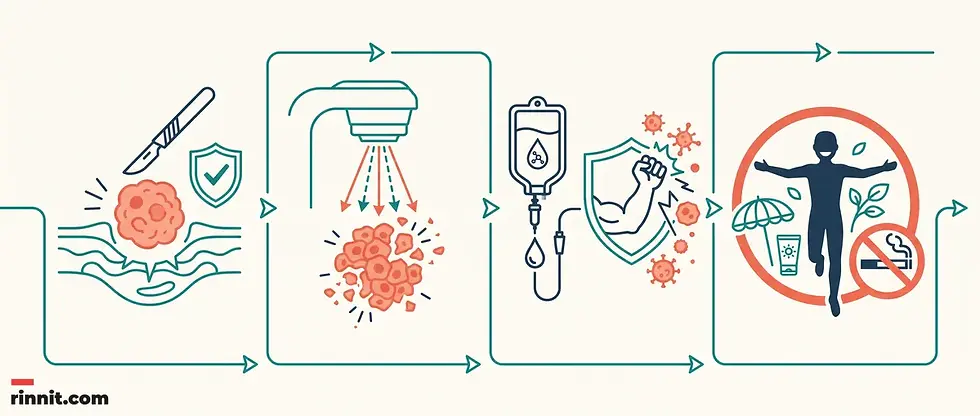
Surgery removes cancer cells and the tumor along with some nearby healthy tissue, and is typically an option when the cancer is confined to one area. [5] Chemotherapy uses drugs that kill cancer cells or prevent them from multiplying. [5] It can be neoadjuvant (given before surgery to shrink the tumor) or adjuvant (given after surgery to prevent the cancer from returning) [5], and is often combined with surgery or radiation. [5]
Radiation therapy delivers targeted energy beams, such as X-rays, to kill cancer cells [5] (one advanced form is proton therapy). It can shrink a tumor before surgery, eliminate remaining cells afterward, or relieve symptoms. [5] Targeted therapy uses drugs aimed at specific weaknesses or genetic changes in cancer cells [5], such as PARP inhibitors for BRCA-related cancers. Immunotherapy helps your immune system identify and eliminate cancer cells [5] and is often used alongside chemotherapy. [5] Hormone therapy reduces sex hormones that fuel certain cancers — estrogen for breast cancer and androgens for prostate cancer. [5]
Curative vs. Palliative Goals
Carcinoma treatment may be curative, aiming for remission [5] — the point where signs and symptoms of cancer are gone. When a cure is not possible, treatment may be palliative, focusing on managing symptoms, keeping you comfortable, and helping you feel confident in care decisions. [5] Some treatment plans pursue both goals at once. [5]
What Is the Outlook?
The prognosis depends on the carcinoma type, its location, when it was diagnosed, and whether it has spread. [5] Metastatic carcinoma is more serious than carcinoma in situ, and slow-growing cancers such as basal cell carcinoma are far less dangerous than fast-growing types such as Merkel cell carcinoma. [5]
The numbers for common skin carcinomas are encouraging. Basal cell carcinoma has a five-year survival rate of 100% [5] — people diagnosed with it are as likely to be alive five years later as people who never had it. Squamous cell carcinoma has a five-year survival rate of 95%. [5] Early detection is the key driver behind these outcomes.
How Can I Reduce My Risk?
You cannot eliminate cancer risk entirely, but you can lower it substantially. Share your full family history with your provider, who may recommend earlier or more frequent screenings or genetic testing based on your risk profile. [5]
For prevention, avoid smoking and all tobacco products, maintain a healthy weight, and limit alcohol. Protect your skin with broad-spectrum sunscreen of at least SPF 15 [5] (many dermatologists recommend SPF 30 or higher), avoid direct sun between 10 a.m. and 4 p.m., and never use tanning beds. [5]
When to Contact Your Healthcare Provider
See a provider promptly if you notice a new or changing skin growth, an unexplained lump, blood in your urine or stool, persistent hoarseness or swallowing difficulty, or any symptom that does not resolve within a few weeks. Tell your provider about any family history of cancer, especially relatives diagnosed at a young age, because it may change which screenings you need and when.
Questions to Ask Your Provider
What type of carcinoma do I have?
Has it spread to other parts of my body?
What treatments would you recommend?
What is the goal of my treatment?
How long will treatment take?
What are the likely outcomes of treatment?
How can I take care of myself during treatment?
Conclusion
Carcinoma is the most common category of cancer, and the word itself can feel alarming. But it is also one of the most studied and most treatable categories. From in situ breast cancer to basal cell skin cancer, early-stage carcinomas are frequently curable, and even advanced cases have an expanding toolbox of surgery, radiation, chemotherapy, targeted therapy, immunotherapy, and hormone therapy. The single most powerful thing you can do is act on warning signs early and keep your preventive screenings up to date.
Turn complex health information into clear visuals. Rinnit's infographic templates help educators, clinics, and content teams explain conditions like carcinoma in a way anyone can understand at a glance.
Frequently Asked Questions
What is a carcinoma in simple terms?
Carcinoma is a cancer that starts in epithelial tissue — the lining that covers your skin and coats the inside of your organs and passageways. It is the most common cancer category. [5]
Is carcinoma the same as cancer?
No. Carcinoma is one type of cancer. The term "cancer" covers all malignancies, while carcinoma specifically means cancer that begins in epithelial tissue. Other categories include sarcoma, leukemia, lymphoma, and myeloma. [5]
How common is carcinoma?
Very common. Carcinomas account for 80% to 90% of all cancer diagnoses, [5] so most people with cancer have some form of carcinoma.
What are the five main types of carcinoma?
Adenocarcinoma, basal cell carcinoma, squamous cell carcinoma, ductal carcinoma in situ, and invasive ductal carcinoma. [5] Each is named for the cell type and location where it starts.
What is adenocarcinoma?
Adenocarcinoma begins in glandular cells that secrete fluids such as mucus and digestive juices. It accounts for most prostate, breast, colorectal, and pancreatic cancers, [5] as well as most kidney cancers.
What is basal cell carcinoma?
Basal cell carcinoma is the most common skin cancer, starting in the basal cell layer of the epidermis where new skin cells are produced. It grows slowly and has a 100% five-year survival rate. [5]
What is squamous cell carcinoma?
Squamous cell carcinoma starts in the squamous cell layer at the top of the epidermis. [5] It appears on sun-exposed skin and on mucous membranes of the lungs, esophagus, head, and neck, and spreads faster than basal cell carcinoma. [5]
What does "carcinoma in situ" mean?
Carcinoma in situ means the cancer cells have not spread beyond where they formed. "In situ" cancers are Stage 0 and are often curable with prompt treatment. [5]
What is the difference between in situ and invasive carcinoma?
In situ carcinoma stays in its original location. Invasive carcinoma has grown into nearby tissue. A third category, metastatic carcinoma, has spread to distant organs. [5]
What is ductal carcinoma in situ (DCIS)?
DCIS is breast cancer that starts in the milk ducts and has not spread outside them. It is called noninvasive or pre-invasive breast cancer and is highly treatable. [5]
What is invasive ductal carcinoma?
Invasive ductal carcinoma starts in the breast's milk ducts and has already spread into nearby breast tissue. It is the most common type of breast cancer and can eventually travel through the lymphatic system or bloodstream. [5]
Is carcinoma a solid tumor?
Usually, yes. Carcinomas typically form solid masses as cells grow and multiply. This differs from leukemia, which starts in blood-forming tissue and doesn't usually form a solid tumor. [5]
What causes carcinoma?
A genetic mutation transforms a normal epithelial cell into a cancer cell that keeps multiplying. Scientists do not know exactly what triggers the mutation, but risk factors like tobacco, alcohol, UV exposure, and certain inherited genes raise the odds. [5]
Is carcinoma contagious?
No. Carcinoma cannot be passed from person to person. It develops from your own cells.
Who is at highest risk of carcinoma?
Risk rises significantly after age 65, and men are at higher risk for most types except breast cancer. [5] People with certain inherited mutations, heavy UV exposure, tobacco use, or a strong family history face elevated risk.
How is carcinoma diagnosed?
Diagnosis combines a medical history review, physical exam, blood tests including tumor markers, and imaging such as mammograms, CT scans, MRIs, or colonoscopies. [5]
Why is a biopsy required?
A biopsy is the only definitive way to confirm carcinoma. The removed tissue is tested in a laboratory for cancer cells, [5] and it also reveals the type and grade of the cancer.
What do carcinoma stages 0 through 4 mean?
Stage 0 has not spread; Stage 1 is larger but localized; Stage 2 may involve nearby lymph nodes; Stage 3 has spread to nearby tissues or lymph nodes; Stage 4 is metastatic, having reached other organs. [5]
Can carcinoma be cured?
Some forms are curable, especially when detected early. Basal cell carcinoma has a 100% five-year survival rate and squamous cell carcinoma has a 95% rate. [5] Metastatic carcinoma is more difficult to cure but often manageable.
How is carcinoma treated?
Options include surgery, chemotherapy, radiation therapy, targeted therapy, immunotherapy, and hormone therapy, used alone or in combination. The plan depends on the type, stage, location, and your health and goals. [5]
What is neoadjuvant vs. adjuvant chemotherapy?
Neoadjuvant chemotherapy is given before surgery to shrink a tumor. Adjuvant chemotherapy is given after surgery to kill remaining cells and prevent the cancer from returning. [5]
What does remission mean?
Remission means signs and symptoms of cancer are gone after curative treatment. [5] It is the goal of curative therapy, though follow-up monitoring continues.
Can carcinoma come back after treatment?
Yes, recurrence is possible, which is why adjuvant therapy and regular follow-up visits matter. Your provider will set a monitoring schedule based on your cancer type and stage.
How can I prevent carcinoma?
Avoid tobacco, limit alcohol, maintain a healthy weight, use broad-spectrum sunscreen of at least SPF 15 [5] (many dermatologists recommend SPF 30 or higher), avoid midday sun and tanning beds, and keep up with recommended screenings based on your family history. [5]
What questions should I ask my provider after a carcinoma diagnosis?
Ask what type you have, whether it has spread, what treatments are recommended, what the treatment goal is, how long it will take, and how to care for yourself during treatment. [5]
Related Reading
Cancer Staging and Grading: What They Are, Why They Matter, Tests and Results explains how doctors stage and grade cancer and why the results guide treatment.
References
Parikh U, Chhor CM, Mercado CL. Ductal carcinoma in situ: the whole truth. AJR Am J Roentgenol. 2018;210(2):246-255. PMID: 29045181. https://doi.org/10.2214/AJR.17.18778
Que SKT, Zwald FO, Schmults CD. Cutaneous squamous cell carcinoma: incidence, risk factors, diagnosis, and staging. J Am Acad Dermatol. 2018;78(2):237-247. PMID: 29332704. https://doi.org/10.1016/j.jaad.2017.08.059
Kuhn E, Morbini P, Cancellieri A, et al. Adenocarcinoma classification: patterns and prognosis. Pathologica. 2018;110(1):5-11. PMID: 30259909. https://pubmed.ncbi.nlm.nih.gov/30259909/
Basset-Seguin N, Herms F. Update in the management of basal cell carcinoma. Acta Derm Venereol. 2020;100(11):adv00140. PMID: 32346750. https://doi.org/10.2340/00015555-3495
Cleveland Clinic. Carcinoma. Accessed October 15, 2026. https://my.clevelandclinic.org/health/diseases/23180-carcinoma
Medical disclaimer
This article is for general informational purposes only and does not constitute medical advice. It should not replace professional diagnosis, treatment, or individualized care. Always consult a qualified healthcare professional about any medical condition or treatment decision.



Comments