What Is Capillary Leak Syndrome? When Plasma Leaks From Tiny Blood Vessels

Updated: 3 days ago
Medically reviewed by Dr. Baraa Alnahhal, MD · Last reviewed: October 17, 2026
Quick Answer
Capillary leak syndrome is a condition in which blood plasma leaks from the capillaries into surrounding tissues, usually in recurring attacks. [4] The systemic form's cause is unknown, while the secondary form is triggered by sepsis, autoimmune disease or certain cancers or drugs. [3] [4] Episodes are treated in the hospital with IV fluids and glucocorticoids, [4] and IVIG can help prevent them. [1] [4]
Key takeaways
Capillary leak syndrome is plasma leaking out of tiny blood vessels into muscles, tissues, organs and body cavities. [4]
Systemic capillary leak syndrome (Clarkson's disease) is extremely rare — fewer than 500 cases worldwide — and mostly affects middle-aged adults. [4]
Every episode passes through three stages: a warning (prodromal) phase one to two days before, the leak phase with falling blood pressure, and a recovery (recruitment) phase. [4]
The systemic form has no known cure, but IV fluids, steroids and diuretics manage episodes, and preventive medications like monthly IVIG can reduce future attacks. [1] [4]
Episodes can cause compartment syndrome, heart or kidney failure, stroke and cardiac arrest — seek immediate care at the first signs of an attack. [4]
What the research says
Preventive IVIG is linked to better survival. In a European registry of 69 people with monoclonal gammopathy-associated systemic capillary-leak syndrome (median follow-up 5.1 years), 35% died, 5- and 10-year survival were 78% and 69%, and preventive treatment with intravenous immunoglobulin was the strongest factor tied to survival (hazard ratio 0.27, 95% CI 0.10–0.70) (Pineton de Chambrun et al., Am J Med, 2017) [1].
Stopping IVIG may be risky. In 59 registry patients who received IVIG, 10-year survival was 50% in those whose IVIG was ever withdrawn versus 83% in those who stayed on it (log-rank P = .02), and withdrawal was linked to more relapses; the authors suggest tapering only cautiously in stable patients (Moyon et al., J Allergy Clin Immunol Pract, 2022) [2].
What Is Capillary Leak Syndrome?

Capillary leak syndrome happens when plasma — the liquid part of your blood — escapes out of tiny blood vessels called capillaries. Instead of staying inside the bloodstream, the fluid leaks into muscles, tissues, organs and body cavities, the spaces that hold organs. [4]
The condition strikes in attacks or episodes. For some people these attacks occur several times a year; for others, only once. [4] What makes the condition dangerous is its speed. If capillary leak syndrome is not treated promptly, blood pressure drops rapidly, which can lead to organ failure and even death. [4]
There is no cure for capillary leak syndrome. [4] The goal of care is to manage symptoms during an attack, prevent complications, and use regular medications to reduce the frequency and severity of future episodes. [4]
Types of Capillary Leak Syndrome
There are two major types of capillary leak syndrome, and the distinction matters because the causes and the patterns of illness differ significantly.
Feature | Systemic (primary) capillary leak syndrome | Secondary capillary leak syndrome |
Also called | Clarkson's disease | N/A |
Pattern | Repeated episodes over time | A single episode |
Typical patient | Otherwise healthy people, usually middle-aged | Anyone, at any age |
Trigger | Unknown (suspected immune response to illness or infection) | Another disease, condition, or medication |
Rarity | Extremely rare — fewer than 500 cases worldwide | More common, because it follows other illnesses |
People with the systemic form may be misdiagnosed, which means the true number of cases could be higher than recorded. [4] The secondary form is much more common because sepsis and the other conditions that trigger it occur far more frequently.
The Three Stages of an Episode
Understanding the three stages of a capillary leak syndrome episode helps explain why symptoms change so quickly.
1. Prodromal phase (one to two days before the attack). Symptoms begin quietly: fatigue, unusual thirst and sudden weight gain. [4] These early warning signs are important, because acting on them early can lead to a better outcome.
2. Leak or resuscitation phase (during the attack). Fluids and albumin — the protein found in blood plasma — leak from the capillaries into tissue spaces. The flow of oxygen-carrying blood to the tissues slows, blood pressure falls, and red blood cells build up. This fluid loss from the bloodstream results in hypovolemia, a decrease in the volume of blood in the body. [4]
3. Post-leak phase or recruitment phase (after the attack). The capillaries reabsorb the leaked fluid and albumin back from the tissues. This reabsorption can cause fluid overload, leading to too much urine (polyuria) and fluid in the lungs (pulmonary edema). [4]
Symptoms of Capillary Leak Syndrome
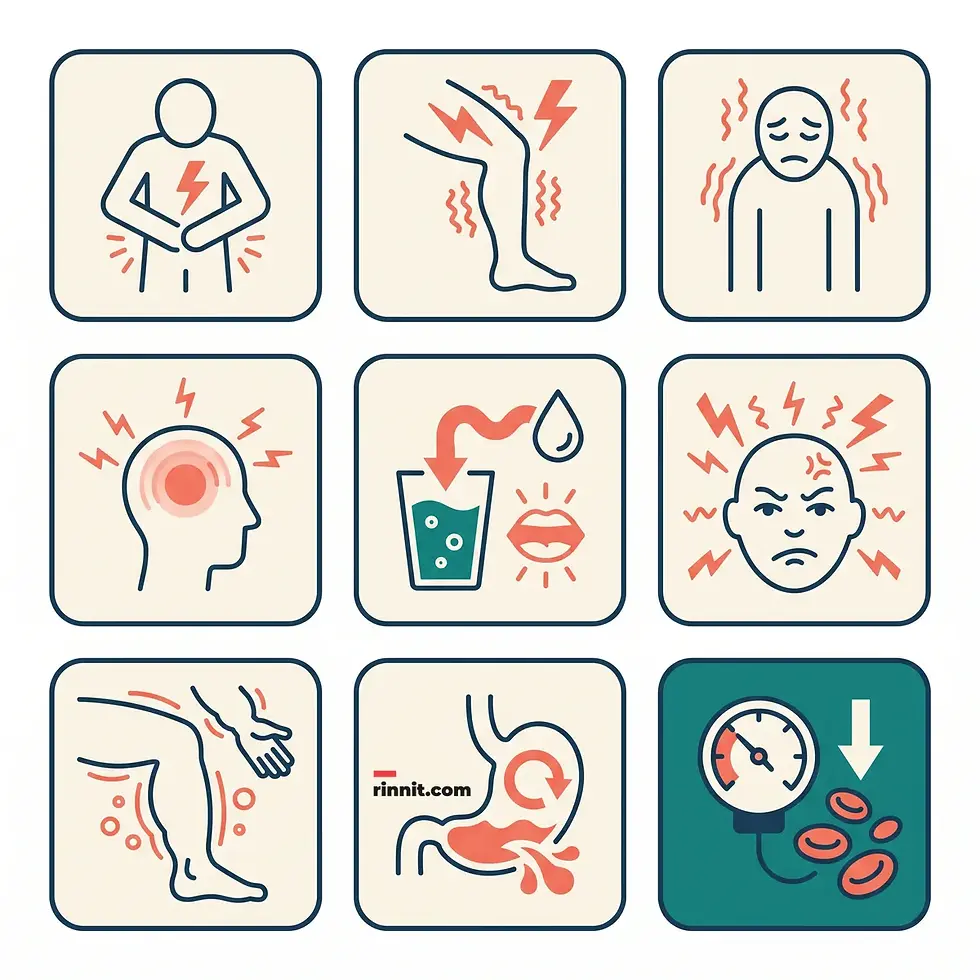
Symptoms appear in two waves: warning signs before the attack and more severe signs during the attack.
Warning signs before an attack (prodromal phase)
These symptoms usually begin one or two days before an attack. [4] Recognizing them early gives treatment teams the best chance to intervene before blood pressure collapses.
Symptom | What it looks like |
Abdominal pain or muscle pain (myalgia) | Pain in the belly or aching muscles |
Fatigue or weakness | Sudden, unusual tiredness |
Headache | Head pain developing before the attack |
Increased thirst | Feeling unusually thirsty |
Irritability | Mood changes and agitation |
Nausea | Feeling sick to the stomach |
Sudden body weight increase | Rapid gain from fluid shifting into tissues |
Viral or upper respiratory tract infection | A recent or current respiratory illness |
Symptoms during an attack (leak or resuscitation phase)
During the episode itself, symptoms vary from person to person. Common signs include body swelling, especially in the legs and arms (peripheral edema), diarrhea, low blood pressure (hypotension), and thickened blood (hypercoagulability) caused by an elevated red blood cell count (hematocrit) or elevated white blood cell count (leukocytosis). [4]
Symptom | What it looks like |
Body swelling | General puffiness across the body |
Swelling of legs and arms | Peripheral edema in the limbs |
Diarrhea | Loose, watery stools during the attack |
Hypotension as plasma leaves the bloodstream | |
Thickened blood | Elevated hematocrit or white blood cell count |
Causes of Capillary Leak Syndrome
The cause of systemic capillary leak syndrome is unknown. Researchers suspect that an immune system response to an illness or infection may trigger the condition, [4] but no definitive mechanism has been identified.
Secondary capillary leak syndrome is different: it is a single episode triggered by another disease, condition or medication. [4] Sepsis — the life-threatening complication of infection — is the most common trigger. [3] [4]
Category | Triggers of secondary capillary leak syndrome |
Infections | Sepsis (most common), viral hemorrhagic fevers |
Immune conditions | Autoimmune diseases, hemophagocytic lymphohistiocytosis (an overactive immune response) |
Cancer treatments | Differentiation syndrome (from therapy for acute promyelocytic or acute myeloid leukemia), engraftment syndrome (after bone marrow transplant) |
Fertility treatments | |
Poisons and venom | Ricin poisoning, snakebites |
Medications | Chemotherapy drugs gemcitabine (Gemzar) and tagraxofusp (Elzonris) |
How Is Capillary Leak Syndrome Diagnosed?
Healthcare providers diagnose capillary leak syndrome by taking a health history and performing a physical examination, with special attention to blood pressure, which will be low during or near an attack. [4]
Because the symptoms overlap with many other conditions, providers may also need to exclude other conditions before confirming the diagnosis. [4] Blood tests play a central role in this process.
Test | What providers look for |
Blood pressure check | Low blood pressure (hypotension) |
Hematocrit test | Increased red blood cell concentration |
Hemoglobin test | Increased hemoglobin, a protein in red blood cells |
Albumin test | Low blood protein (hypoalbuminemia) from plasma loss |
M protein test | Abnormal immunoglobulin protein (monoclonal gammopathy); some people with the condition have abnormal M protein in their blood |
Treatment of Capillary Leak Syndrome
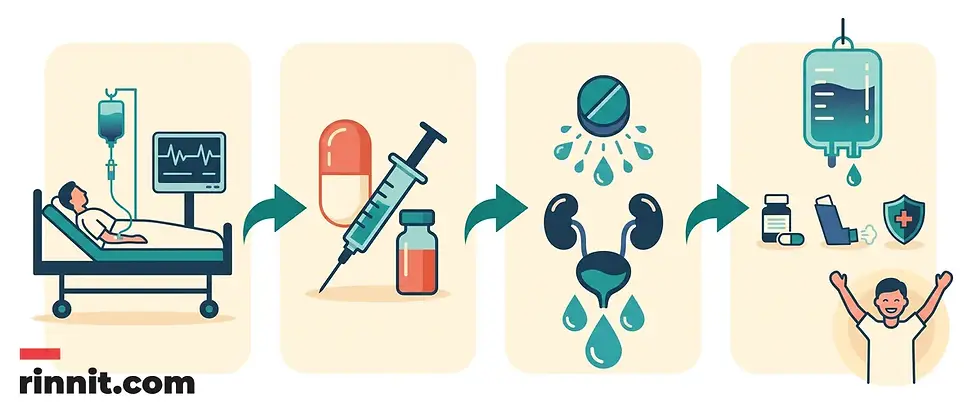
There is no cure for capillary leak syndrome, so treatment focuses on managing symptoms and preventing complications. [4] During an episode, providers work to control blood pressure so that blood flow to the organs is maintained, while also preventing excess swelling and fluid buildup.
Treatment usually takes place in the hospital. [4] Providers constantly monitor venous and arterial pressure, because giving too much fluid can itself cause complications such as pulmonary edema and sudden cardiac arrest. [4]
Treatment | How it works |
Glucocorticoids | Steroids that reduce capillary leaks |
Intravenous fluids | Liquids that increase blood flow to organs such as the kidneys |
Diuretics (after the attack) | Pills that help the body get rid of water and salt through increased urine, used in the post-leak phase |
Preventive infusions | Monthly IVIG (intravenous immune globulin) to prevent future episodes |
Preventive oral medications | Asthma medications such as theophylline, terbutaline and montelukast |
Preventive steroids | Medications that reduce inflammation |
Complications of Capillary Leak Syndrome
When episodes go untreated or occur repeatedly, the fluid shifts can damage organs and tissues in serious ways. Earlier diagnosis and fewer complications are associated with better outcomes from preventive treatment. [4]
Complication | What happens |
Pressure builds up in muscles and reduces blood flow | |
Cardiac tamponade, pericardial and pleural effusion | Fluid collects around the heart and in the lungs |
The heart struggles to pump adequately | |
The kidneys lose their ability to filter blood | |
Nerve damage (neuropathy) | Nerves are injured by the fluid shifts |
Pulmonary edema | Excess fluid fills the lungs |
Muscle injury leads to kidney failure | |
Stroke | Blood flow to the brain is interrupted |
When to get emergency care
Seek medical attention immediately if you think a capillary leak syndrome episode is starting. [4] Without prompt treatment, blood pressure can drop rapidly, leading to organ failure and even death. [4] The sooner treatment begins, the better the chances of a positive outcome. [4]
Living With Capillary Leak Syndrome
Once you have had an attack, you know you have the condition — but the condition itself cannot be prevented from developing. [4] What can be controlled is how often episodes happen and how severe they are.
Regular use of medications or infusions may help prevent future episodes and reduce their severity. These preventive treatments include monthly infusions of intravenous immune globulin (IVIG), oral asthma medications such as theophylline (Elixophyllin), terbutaline (Brethine) and montelukast (Singulair), and steroids to reduce inflammation. [1] [4]
The most important self-care step is vigilance: see your healthcare provider immediately if you think an episode is beginning. [4] Early treatment is the single strongest factor in a good outcome.
Conclusion
Capillary leak syndrome is a rare but serious condition in which blood plasma escapes from the tiniest vessels into surrounding tissues. Its recurring systemic form, Clarkson's disease, affects fewer than 500 people worldwide and strikes most often in middle age, while the secondary form follows illnesses and treatments such as sepsis and chemotherapy. Every episode follows the same three-act pattern — warning signs, a dangerous leak phase with collapsing blood pressure, and a recovery phase with its own fluid-overload risks — which is why recognizing the prodromal signs one to two days before an attack matters so much. Although there is no cure, hospital treatment with IV fluids, steroids and diuretics manages episodes effectively, and preventive therapy with IVIG and oral medications can reduce future attacks. For anyone living with this condition, the message is simple: act fast at the first warning sign, keep up with preventive treatment, and stay in close contact with your healthcare team.
Visual learners can explore Rinnit's infographic templates to turn complex medical information like this into clear, shareable graphics.
Frequently Asked Questions
What is capillary leak syndrome?
Capillary leak syndrome happens when plasma, the liquid part of blood, leaks out of the capillaries — the body's smallest blood vessels — and into muscles, tissues, organs and body cavities. [4]
What are capillaries?
Capillaries are the tiny blood vessels that connect arteries and veins and allow oxygen, nutrients and fluid to pass between the bloodstream and the body's tissues.
What is plasma?
Plasma is the liquid component of blood, carrying proteins like albumin, water and other substances throughout the circulation.
What are the two types of capillary leak syndrome?
The systemic (primary) form, also called Clarkson's disease, involves repeated episodes usually in otherwise healthy people. [4] The secondary form is a single episode triggered by another disease, condition or medication. [4]
What is Clarkson's disease?
Clarkson's disease is another name for systemic capillary leak syndrome, the rare form characterized by recurring attacks. [4]
How rare is systemic capillary leak syndrome?
Systemic capillary leak syndrome affects fewer than 500 people worldwide, though the true number may be higher because the condition is frequently misdiagnosed. [4]
Who typically gets systemic capillary leak syndrome?
Systemic capillary leak syndrome mainly occurs in middle-aged adults and is very rare in children. [4]
What causes systemic capillary leak syndrome?
The cause is unknown. Researchers suspect an immune system response to an illness or infection may be responsible. [4]
What causes secondary capillary leak syndrome?
The most common cause is sepsis. Other triggers include autoimmune diseases, certain cancers and cancer treatments, bone marrow transplant complications, ovarian hyperstimulation syndrome, ricin poisoning, snakebites, viral hemorrhagic fevers, and chemotherapy drugs such as gemcitabine and tagraxofusp. [4]
What is the prodromal phase?
The prodromal phase is the warning stage that begins one to two days before an attack, marked by symptoms such as fatigue, thirst, sudden weight gain, nausea, headache and irritability. [4]
What happens during the leak or resuscitation phase?
Fluids and albumin leak from the capillaries into tissue spaces, oxygen-carrying blood flow slows, blood pressure falls, red blood cells build up, and the body develops hypovolemia — reduced blood volume. [4]
What is hypovolemia?
Hypovolemia is a decrease in the volume of blood circulating in the body, which lowers blood pressure and starves organs of oxygen.
What is the post-leak (recruitment) phase?
After the attack, the capillaries reabsorb the leaked fluid and albumin from the tissues, which can cause fluid overload, excess urine (polyuria) and fluid in the lungs (pulmonary edema). [4]
What is albumin?
Albumin is a protein found in blood plasma that helps keep fluid inside blood vessels; its loss into tissues is a hallmark of capillary leak episodes.
What symptoms warn that an attack is coming?
Abdominal or muscle pain, fatigue or weakness, headache, increased thirst, irritability, nausea, sudden weight gain, and a recent viral or respiratory infection. [4]
What symptoms occur during an attack?
Body swelling, swelling of the legs and arms (peripheral edema), diarrhea, low blood pressure, and thickened blood from elevated red or white blood cell counts. [4]
What is hypercoagulability?
Hypercoagulability is a state of thickened blood. In capillary leak syndrome it occurs because plasma loss concentrates the red blood cells (elevated hematocrit) and white blood cells (leukocytosis).
How is capillary leak syndrome diagnosed?
Through health history, physical examination, blood pressure measurement, and blood tests showing increased hematocrit, increased hemoglobin, low albumin, and sometimes abnormal M protein (monoclonal gammopathy). [4]
What is M protein?
M protein is an abnormal immunoglobulin detected in the blood of some people with capillary leak syndrome, checked when providers evaluate monoclonal gammopathy. [4]
Is there a cure for capillary leak syndrome?
No. Treatment focuses on managing symptoms during episodes and preventing complications and future attacks. [4]
How is an episode treated?
Hospital care with glucocorticoid steroids to reduce capillary leaks, IV fluids to maintain organ blood flow, constant pressure monitoring, and a diuretic after the attack to remove excess fluid. [4]
Why is fluid given carefully during an episode?
Because excess fluid can build up during treatment, leading to pulmonary edema and sudden cardiac arrest — venous and arterial pressures are monitored constantly to balance this risk. [4]
What is a diuretic and when is it used?
A diuretic is a pill that helps the body get rid of water and salt through increased urine. It is used in the post-leak phase to clear the reabsorbed fluid overload. [4]
What is pulmonary edema?
Pulmonary edema is excess fluid in the lungs, which can result from either the leak itself or from too much fluid given during treatment. [4]
Can future episodes be prevented?
The condition cannot be prevented from developing, but regular medications — monthly IVIG infusions, oral asthma medications like theophylline, terbutaline and montelukast, and steroids — may prevent episodes and reduce their severity. [4]
What is IVIG?
IVIG is intravenous immune globulin, a monthly infusion of antibodies used as preventive therapy for systemic capillary leak syndrome.
What complications can capillary leak syndrome cause?
Compartment syndrome, cardiac tamponade, pericardial and pleural effusion, heart failure, kidney failure, neuropathy, pulmonary edema, rhabdomyolysis and stroke. [4]
How often do episodes happen?
Attacks can occur several times a year in some people, or only once in others. [4]
Is capillary leak syndrome dangerous?
Yes — if not treated promptly, blood pressure can drop rapidly, leading to organ failure and even death. [4]
What should I do if I think an episode is starting?
Contact your healthcare provider or seek emergency medical care immediately [4], since early treatment strongly improves the outcome.
What is the outlook for people with systemic capillary leak syndrome?
The condition can usually be managed with preventive treatments, and outcomes are better when diagnosis comes early and complications are fewer. [4]
Related Reading
References
Pineton de Chambrun M, Gousseff M, Mauhin W, et al. Intravenous immunoglobulins improve survival in monoclonal gammopathy-associated systemic capillary-leak syndrome. Am J Med. 2017;130(10):1219.e19-1219.e27. PMID: 28602874. https://doi.org/10.1016/j.amjmed.2017.05.023
Moyon Q, Pineton de Chambrun M, Gousseff M, et al. Intravenous immunoglobulins tapering and withdrawal in systemic capillary leak syndrome (Clarkson disease). J Allergy Clin Immunol Pract. 2022;10(11):2889-2895. PMID: 35870726. https://doi.org/10.1016/j.jaip.2022.07.006
Siddall E, Khatri M, Radhakrishnan J. Capillary leak syndrome: etiologies, pathophysiology, and management. Kidney Int. 2017;92(1):37-46. PMID: 28318633. https://doi.org/10.1016/j.kint.2016.11.029
Cleveland Clinic. Capillary Leak Syndrome. Accessed October 15, 2026. https://my.clevelandclinic.org/health/diseases/22712-capillary-leak-syndrome
Medical disclaimer
This article is for general informational purposes only and does not constitute medical advice. Always consult a qualified healthcare professional for diagnosis and treatment decisions. If you believe you are experiencing a capillary leak syndrome episode, seek emergency medical attention immediately.



Comments