
Sepsis: Complete Guide to Symptoms, Causes, Risks, and Treatment

Updated: 2 days ago
Medically reviewed by Dr. Baraa Alnahhal, MD · Last reviewed: September 2026
TL;DR
Sepsis is a serious condition in which the body responds improperly to an infection. The infection-fighting processes turn on the body, causing the organs to work poorly. It can progress to septic shock — a dramatic drop in blood pressure that can damage the lungs, kidneys, and liver and may lead to death. Symptoms include a change in mental status, fast shallow breathing, sweating, lightheadedness, and shivering. Any infection — bacterial, viral, or fungal — can lead to sepsis. Early treatment in an intensive care unit with antibiotics and IV fluids improves survival, but the mortality rate for septic shock is about 30% to 40%.
Quick Answer: What Is Sepsis?
Sepsis is the body's dangerous, improper response to an infection — the infection-fighting processes turn on the body and cause the organs to work poorly. It can progress to septic shock, a dramatic drop in blood pressure that raises the risk of death. Sepsis symptoms include a change in mental status, fast shallow breathing, sweating, lightheadedness, and shivering. Confusion or fast breathing needs emergency care, because early, thorough treatment with antibiotics and IV fluids in an ICU improves the chances of survival.
What Is Sepsis?
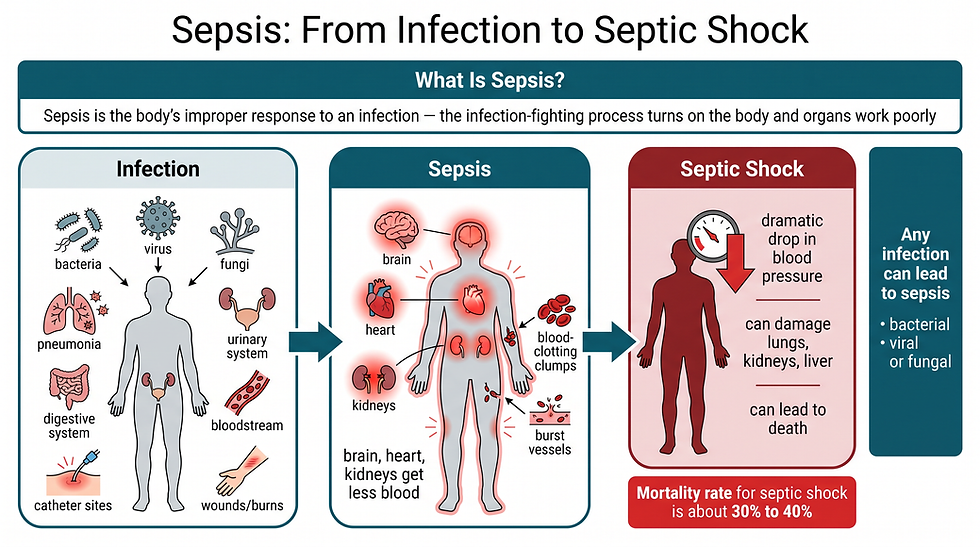
Sepsis is a serious condition in which the body responds improperly to an infection. The infection-fighting processes turn on the body, causing the organs to work poorly.
Sepsis may progress to septic shock. This is a dramatic drop in blood pressure that can damage the lungs, kidneys, liver, and other organs. When the damage is severe, it can lead to death. Early treatment of sepsis improves chances for survival.
Key Fact | Detail |
|---|---|
What it is | A serious condition in which the body responds improperly to an infection |
What goes wrong | Infection-fighting processes turn on the body; organs work poorly |
Progression | May advance to septic shock — a dramatic drop in blood pressure |
Organ damage | Can damage the lungs, kidneys, liver, and other organs |
Severity | Severe damage can lead to death |
Mortality (septic shock) | About 30% to 40% |
Sepsis Symptoms
Symptoms of sepsis may include a change in mental status, fast and shallow breathing, sweating for no clear reason, feeling lightheaded, and shivering. You may also notice symptoms specific to the type of infection, such as painful urination from a urinary tract infection or a worsening cough from pneumonia.
Importantly, symptoms of sepsis are not specific. They can vary from person to person, and sepsis may appear differently in children than in adults.
Symptoms of Septic Shock
Sepsis may progress to septic shock, a severe drop in blood pressure. Progression to septic shock raises the risk of death. Symptoms of septic shock include not being able to stand up, strong sleepiness or a hard time staying awake, and a major change in mental status, such as extreme confusion.
Sepsis Symptom | Description |
|---|---|
Change in mental status | Confusion or altered alertness |
Fast, shallow breathing | Rapid breaths that are shallow |
Sweating | Sweating for no clear reason |
Lightheadedness | Feeling faint or dizzy |
Shivering | Chills or shaking |
Infection-specific symptoms | Painful urination (urinary tract infection), worsening cough (pneumonia) |
Septic Shock Warning Sign | Description |
|---|---|
Inability to stand | Not being able to stand up |
Extreme drowsiness | Strong sleepiness or hard time staying awake |
Extreme confusion | Major change in mental status, such as extreme confusion |
When to See a Doctor
Any infection could lead to sepsis. Go to a healthcare provider if you have symptoms of sepsis or an infection or wound that isn't getting better.
Symptoms such as confusion or fast breathing need emergency care.
What Causes Sepsis?
Any type of infection can lead to sepsis. This includes bacterial, viral, or fungal infections. Those that more commonly cause sepsis include infections of the lungs, such as pneumonia; the kidney, bladder, and other parts of the urinary system; the digestive system; the bloodstream; catheter sites; and wounds or burns.
Common Infection Source | Example |
|---|---|
Lungs | Pneumonia |
Urinary system | Kidney, bladder, and other urinary tract infections |
Digestive system | Gut infections |
Bloodstream | Blood infections |
Catheter sites | Infections around catheter entry points |
Skin | Wounds or burns |
Risk Factors
Some factors increase the risk that an infection will lead to sepsis. These include people over age 65 and infants. People with a lower immune response — such as those being treated for cancer or people with human immunodeficiency virus (HIV) — are at higher risk, as are people with chronic diseases such as diabetes, kidney disease, or chronic obstructive pulmonary disease (COPD).
Hospital-related factors matter too. Admission to an intensive care unit or longer hospital stays raise the risk, as do devices that go in the body, such as intravenous catheters in the vein or breathing tubes. Treatment with antibiotics in the last 90 days is another risk factor, as is a condition that requires treatment with corticosteroids, which can lower the immune response.
Risk Factor | Why It Increases Risk |
|---|---|
Age over 65 | Higher vulnerability to severe infection |
Infancy | Immature immune defenses |
Weakened immune response | Cancer treatment or HIV lowers defenses |
Chronic diseases | Diabetes, kidney disease, or COPD add strain |
ICU admission or long hospital stays | Greater exposure and severity of illness |
Devices in the body | IV catheters and breathing tubes can introduce infection |
Antibiotics in last 90 days | Signals recent or resistant infection |
Corticosteroids | Lower the immune response |
Complications
As sepsis worsens, vital organs such as the brain, heart, and kidneys don't get as much blood as they should. Sepsis may cause atypical blood clotting. The resulting small clots or burst blood vessels may damage or destroy tissues.
Most people recover from mild sepsis, but the mortality rate for septic shock is about 30% to 40%. Also, an episode of severe sepsis raises the risk for future infections.

How Is Sepsis Diagnosed?
Doctors often order several tests to try to pinpoint the underlying infection.
Blood Tests
Blood samples are used to test for evidence of infection, blood-clotting problems, abnormal liver or kidney function, lower levels of oxygen than the body needs, and electrolyte imbalances.
Other Lab Tests
Other lab tests to find the source of the infection might include samples of urine, liquid from the wound, and mucus and saliva from the respiratory tract.
Imaging Tests
If the site of infection is not readily found, your healthcare provider may order more tests. X-rays can show infections in your lungs. Ultrasound uses sound waves to produce real-time images on a video screen and can show infections in the gallbladder and kidneys. Computerized tomography (CT) takes X-rays from a variety of angles and combines them to show cross-sectional slices of the inside of the body; infections in the liver, pancreas, or other abdominal organs are easier to see on CT scans. Magnetic resonance imaging (MRI) uses radio waves and a strong magnet to produce cross-sectional or 3D images, and it may be helpful in seeing soft tissue or bone infections.
Test | What It Finds |
|---|---|
Blood tests | Evidence of infection, clotting problems, abnormal liver or kidney function, low oxygen levels, electrolyte imbalances |
Urine sample | Urinary tract as infection source |
Wound fluid | Liquid from the wound as infection source |
Respiratory samples | Mucus and saliva from the respiratory tract |
X-ray | Infections in the lungs |
Ultrasound | Infections in the gallbladder and kidneys |
CT scan | Infections in the liver, pancreas, or other abdominal organs |
MRI | Soft tissue or bone infections |
Sepsis Treatment
Early, thorough treatment raises the likelihood of recovery. People who have sepsis need close monitoring and treatment in a hospital intensive care unit. This is because people with sepsis may need lifesaving measures to stabilize breathing and heart action.
Medications
Different medications are used in treating sepsis and septic shock. Antibiotics begin as soon as possible. Broad-spectrum antibiotics, which are effective against a variety of bacteria, are often used first. When blood test results show which germ is causing the infection, the first antibiotic may get switched out for a second one that targets the germ causing the infection.
Intravenous fluids also begin as soon as possible. Vasopressors narrow blood vessels and help increase blood pressure; a vasopressor medication may be used if blood pressure is too low even after receiving fluids. Other medications may be used, such as insulin for blood sugar levels, or painkillers.
Supportive Care and Surgery
People who have sepsis often get supportive care that includes oxygen. Some people may need a machine to help them breathe. If a person's kidneys don't work as well because of the infection, the person may need dialysis.
Surgery may help to remove sources of infection, such as pus, infected tissues, or dead tissues. Clinical trials may also explore new treatments, interventions, and tests.
Treatment | How It Works |
|---|---|
Antibiotics | Begin as soon as possible; broad-spectrum first, then switched to a targeted antibiotic once the germ is identified |
IV fluids | Begin as soon as possible to support circulation |
Vasopressors | Narrow blood vessels to raise blood pressure when fluids alone aren't enough |
Insulin or painkillers | Manage blood sugar levels and pain |
Oxygen and ventilator | Supportive care; a machine may help you breathe |
Dialysis | Used if the kidneys don't work well because of the infection |
Surgery | Removes sources of infection such as pus, infected tissues, or dead tissues |

Prevention and Awareness
Any infection could lead to sepsis, so recognizing the symptoms and acting quickly is the most important protection. Seek care for an infection or wound that isn't getting better. Take infections seriously if you're in a high-risk group — older than 65, an infant, immunocompromised, living with a chronic disease, recently hospitalized, or using a catheter or breathing tube. The Centers for Disease Control and Prevention also encourages asking your healthcare provider whether an infection could worsen into sepsis, particularly during hospital stays.
Conclusion
Sepsis is the body's improper response to an infection — a dangerous chain reaction in which the infection-fighting process turns on the body and the organs begin to work poorly. Any infection, whether bacterial, viral, or fungal, can trigger it, with pneumonia, urinary tract infections, digestive infections, bloodstream infections, catheter sites, and wounds or burns among the most common origins. The symptoms — a change in mental status, fast shallow breathing, unexplained sweating, lightheadedness, and shivering — are not specific, which is why confusion or fast breathing must be treated as a medical emergency. People over 65, infants, those with weakened immune systems or chronic diseases, and people with recent hospital stays or devices in the body are at highest risk. Diagnosis uses blood tests, fluid samples, and imaging, and treatment means immediate ICU-level care with antibiotics, IV fluids, vasopressors, oxygen, and sometimes dialysis or surgery. Early, thorough treatment raises the likelihood of recovery — most people recover from mild sepsis, though the mortality rate for septic shock remains about 30% to 40%. If an infection isn't improving or sepsis symptoms appear, seek emergency care without delay.
Take the next step: If you or a loved one shows signs of sepsis, call for emergency care immediately.
Frequently Asked Questions
What is sepsis?
Sepsis is a serious condition in which the body responds improperly to an infection. The infection-fighting processes turn on the body, causing the organs to work poorly. It can progress to septic shock, a dramatic drop in blood pressure that can be fatal.
What are the symptoms of sepsis?
Symptoms include a change in mental status, fast and shallow breathing, sweating for no clear reason, feeling lightheaded, shivering, and symptoms specific to the original infection, such as painful urination or a worsening cough. Symptoms vary from person to person and may look different in children.
What is septic shock?
Septic shock is a severe drop in blood pressure that occurs when sepsis progresses. It can damage the lungs, kidneys, liver, and other organs. Symptoms include not being able to stand up, strong sleepiness, and extreme confusion, and it raises the risk of death.
When should I seek emergency care for sepsis?
Symptoms such as confusion or fast breathing need emergency care. Go to a healthcare provider if you have symptoms of sepsis or an infection or wound that isn't getting better.
What causes sepsis?
Any type of infection — bacterial, viral, or fungal — can lead to sepsis. The most common origins are infections of the lungs (pneumonia), the urinary system, the digestive system, the bloodstream, catheter sites, and wounds or burns.
Who is most at risk?
People over age 65, infants, people with a lower immune response (such as those being treated for cancer or living with HIV), people with chronic diseases like diabetes, kidney disease, or COPD, patients admitted to an ICU or with longer hospital stays, people with devices in the body such as IV catheters or breathing tubes, those treated with antibiotics in the last 90 days, and those taking corticosteroids.
How is sepsis diagnosed?
Doctors use blood tests to check for evidence of infection, clotting problems, abnormal liver or kidney function, low oxygen, and electrolyte imbalances. They may test urine, wound fluid, and respiratory samples, and order imaging — X-rays for the lungs, ultrasound for the gallbladder and kidneys, CT for abdominal organs, and MRI for soft tissue or bone.
How is sepsis treated?
Treatment begins in a hospital ICU with antibiotics and IV fluids as soon as possible, vasopressors to raise blood pressure if needed, insulin or painkillers, oxygen or a ventilator, dialysis if the kidneys fail, and surgery to remove pus or infected tissue. Early, thorough treatment raises the likelihood of recovery.
Further Reading
Medical disclaimer: This article is for general informational purposes only and is not a substitute for professional medical advice, diagnosis, or treatment. Sepsis is a medical emergency — always seek immediate care from a qualified healthcare professional if sepsis is suspected.
Comments