Compartment Syndrome: What It Is, Why It Happens, and How It's Treated

Updated: 2 days ago
Medically reviewed by Dr. Baraa Alnahhal, MD · Last reviewed: October 2026
Quick Answer
Compartment syndrome is a painful buildup of pressure inside a muscle compartment, a bundle of muscles, nerves and blood vessels wrapped in fascia [4]. Injury or repeated stress causes swelling that squeezes blood flow and nerves, causing severe pain, tightness and numbness [4]. Acute cases require emergency fasciotomy, while chronic cases usually improve with rest, physical therapy and exercise changes [4] [5].
What the research says
Delayed diagnosis can be devastating, and risk is highest where care is complex. According to PubMed, a comprehensive review of compartment syndrome (1,625 English-language articles screened) concluded that the consequences of delayed diagnosis can be devastating. It also found that busy hospital handoffs create openings for the condition to be missed, and recommended an explicit algorithm for patients at risk (Garner et al., HSS Journal, 2014) [1].
For chronic exertional compartment syndrome, surgery gave better pain relief than conservative care. A meta-analysis of 4 studies found fasciotomy reduced pain more than conservative management (SMD -0.46, 95% CI -0.74 to -0.17) with higher patient satisfaction (OR 3.51, 95% CI 2.19 to 5.60). Return-to-activity rates did not differ significantly, and complications included hematomas, nerve injuries and scar problems (Elsenosy et al., Cureus, 2024) [2].
A normal pulse does not rule out acute compartment syndrome. A 2026 case report describes a forearm case in which pulses and arterial flow were preserved while compartment pressures reached 88 and 110 mmHg. The authors stress that early recognition and prompt surgery remain essential (Kim et al., Journal of Clinical Medicine, 2026) [3].
Study details are from PubMed abstracts.
Key Terms, Defined Simply
Key terms for understanding compartment syndrome include compartment, fascia, fasciotomy, necrosis, paresthesia and contusion.
Term | Plain-Language Meaning |
Compartment | A group of muscles, nerves, and blood vessels bundled together in the body. |
Fascia | A thin, firm membrane that wraps around each compartment and holds it in place. |
Fasciotomy | Emergency surgery that cuts through the skin and fascia to release built-up pressure. |
Necrosis | Tissue death caused by lack of blood, oxygen, and nutrients. |
Paresthesia | Tingling or a burning feeling under the skin. |
Contusion | A deep muscle bruise caused by a strong impact. |
Cross-training | Mixing up the types of exercise you do instead of repeating the same activity. |
Orthotics | Shoe inserts that support the feet and legs. |
NSAIDs | Non-steroidal anti-inflammatory drugs, such as ibuprofen, that reduce inflammation and pain. |
Acute vs. chronic | Acute = sudden and emergency-grade; chronic = slow-building and long-term. |
What Is Compartment Syndrome?
Compartment syndrome is a painful buildup of pressure around your muscles. The pressure restricts (reduces) the flow of blood, fresh oxygen, and nutrients to your muscles and nerves [4]. The condition is extremely painful.
Your body is divided into natural "bundles" of tissue. A compartment is the medical term for a group of muscles, nerves, and blood vessels traveling together. Each compartment is covered by fascia — a thin, firm membrane that holds everything in place.
Compartment syndrome happens when extra pressure builds up inside a compartment and your muscles press against the fascia more than they should. The fascia can stretch a little, but not much. When pressure keeps building, the fascia runs out of room and starts squeezing your muscles and nerves. That squeezing is what causes the pain and other symptoms.
The condition can happen to any muscle group, but it is most common in the lower legs, arms (including the hands and wrists), feet, abdomen, and buttocks [4].
How common is it?
Experts estimate that fewer than 10 in every 100,000 people in the U.S. experience acute compartment syndrome each year [4]. It is much more common in people with certain bone fractures — studies estimate that around 10% of people who break their tibia (shin bone) develop compartment syndrome [4].
What Are the Two Types of Compartment Syndrome?
Compartment syndrome comes in two types that behave very differently, and the chronic type typically appears after intense exercise.
Feature | Acute Compartment Syndrome | Chronic (Exertional) Compartment Syndrome |
How it starts | Suddenly, usually after a severe injury | Slowly, over time with intense or repetitive exercise |
Urgency | Medical emergency — go to the ER right away | Usually not an emergency, but still extremely painful |
Untreated risk | Permanent muscle damage, paralysis, or death | Ongoing pain; symptoms usually ease with rest and routine changes |
Typical treatment | Emergency surgery (fasciotomy) | Rest, medications, physical therapy, exercise changes |
Common in | Trauma and fracture patients | Athletes and people with physically demanding jobs |
Chronic compartment syndrome is also called exertional compartment syndrome because it typically appears after intense physical activity or exercise.
What Does Compartment Syndrome Feel Like?
Compartment syndrome commonly causes swelling around a muscle, unusually severe muscle pain, tightness, numbness and tingling, with intense pain being the key warning sign.
Visible bulging or swelling around a muscle
Muscle pain that is more severe than the usual soreness you would feel after intense activity
A feeling of tightness
Severe pain when stretching
Numbness
Tingling or a burning feeling under the skin (paresthesia)
A muscle that feels fuller, firmer, or bigger than usual
The pain is the key warning sign. There is an important difference between feeling satisfyingly sore a day or two after a big workout and not being able to move without feeling intense pain. "No pain, no gain" does not apply here — you should never be in agony after working out.
What Causes Compartment Syndrome?
The main cause is the same in both types: an injury or repeated stress causes swelling and bleeding inside a muscle compartment. When the pressure builds too much, the muscles press against the fascia, which squeezes blood flow away and pinches the nerves [4].
Acute compartment syndrome causes
Cause | Example |
Car accidents | High-impact collisions injuring a limb |
Falls from a height | Falling off a roof or ladder |
Bone fractures | A break that triggers swelling inside the compartment |
Crushing injuries | A heavy object falling on an arm or leg |
Severe muscle contusions | Deep muscle bruising from impact |
Sports injuries | Direct trauma during play |
Surgery complications | Pressure or swelling developing after an operation |
Casts or splints that are too tight | The immobilization device squeezing the limb |
Prolonged pressure | Not moving an arm or leg for several hours at a time |
Chronic compartment syndrome causes
Chronic (exertional) compartment syndrome usually builds up over time. Frequent, intense exercise is the most common cause [4]. Doing the same kind of workout puts repeated stress on the same muscles and causes pressure to build. Common activities include running, biking, swimming, and weightlifting [4].
Less commonly, a repetitive motion at work or as a hobby can also cause the chronic type [4].
Who Is at Risk?
People at risk of compartment syndrome include anyone with a severe injury, athletes, people with physically demanding jobs and those with hemophilia or other blood disorders [4].
Risk Factor | Why It Matters |
Severe injury | Anyone can develop acute compartment syndrome after sudden injuries like fractures or crushing trauma |
Athletes | Repeated intense training makes chronic (exertional) compartment syndrome more likely |
Physically demanding jobs | Overworking the same muscles increases chronic-type risk |
Hemophilia or other blood disorders | Bleeding-prone conditions may raise the risk of pressure buildup inside compartments |
What Are the Complications?
If the pressure in a muscle compartment gets too high, tissues stop receiving enough fresh blood, oxygen, and nutrients [4]. This can lead to tissue death (necrosis), which causes permanent damage.
Acute compartment syndrome can be fatal if it is not treated right away [4]. That is why emergency care matters so much.
How Is Compartment Syndrome Diagnosed?
A healthcare provider diagnoses compartment syndrome with a physical exam and tests. They examine your muscles and the surrounding area, and they may first rule out other issues that cause similar symptoms — such as tendinitis or shin splints [4] [5].
It helps to tell your provider what you were doing when the pain first started, and which activities make your symptoms better or worse.
Test | What It Does |
X-ray | Rules out bone fractures and other injuries |
Compartment pressure measurement | A needle is inserted into a few places in the muscle compartment; a machine reads the pressure inside your body (the test can be painful — tell your provider how much it hurts and where) |
Repeat pressure test | For suspected chronic compartment syndrome, the pressure test is repeated after exercise and compared to pre-exercise levels |
How Is Compartment Syndrome Treated?
Treatment depends entirely on which type you have. Acute compartment syndrome is a medical emergency that needs immediate surgery [4] [5]. Chronic compartment syndrome usually improves after you adjust your exercise habits [4].
Acute treatment: emergency fasciotomy
A surgeon performs an operation called a fasciotomy. They make an incision (cut) through your skin and fascia to relieve the pressure in the affected muscle compartment [4] [5].
The incision is closed after the swelling and pressure go away [4] [5]. Sometimes that cannot happen immediately, so the surgeon may do a skin graft — taking skin from another area of your body to cover the incision.
Chronic treatment: rest and routine changes
Chronic (exertional) compartment syndrome usually gets better and goes away if you rest the affected muscle compartments and avoid overusing them in the future [4]. Providers commonly suggest:
Treatment | How It Helps |
Medications | Anti-inflammatory drugs like over-the-counter NSAIDs or acetaminophen reduce inflammation and relieve pain (do not take them for more than 10 days in a row without talking to your provider) |
Changing your exercise routine | Switching to lower-impact exercises and cross-training (mixing up exercise types instead of repeating the same activity); changing where you exercise, such as running on a softer track instead of concrete |
Physical therapy | Increasing strength and flexibility in the affected muscles and learning modified exercises to prevent pressure buildup |
Orthotics | Shoe inserts that support the feet and legs, which may help people with leg compartment syndrome |
If other treatments do not work or the condition comes back (recurs), you may need a fasciotomy [2] [4] [5]. Your provider will explain when surgery makes sense and what to expect.
How Soon Will You Feel Better?
How soon you feel better after compartment syndrome depends on which type of the condition you have.
Type | Typical Recovery |
Acute | Most people rest for around a month before using the affected muscles again; your surgeon advises when it is safe to move and resume physical activity |
Chronic | Finding the right combination of treatments and exercise modifications may take a few months; symptoms improve gradually as pressure on the muscles decreases |
What Is the Outlook?
Compartment syndrome can be very painful, but your symptoms should improve once management begins.
Acute compartment syndrome usually does not come back once it has been treated with a fasciotomy [4]. The critical factor is speed — your risk of permanent damage increases the longer the acute type goes untreated [1] [4].
Chronic compartment syndrome may return, especially if you suddenly ramp up your activity level [4]. Ask your provider which activities are safe while recovering. It can take up to a year before you can safely resume intense physical activity [4].
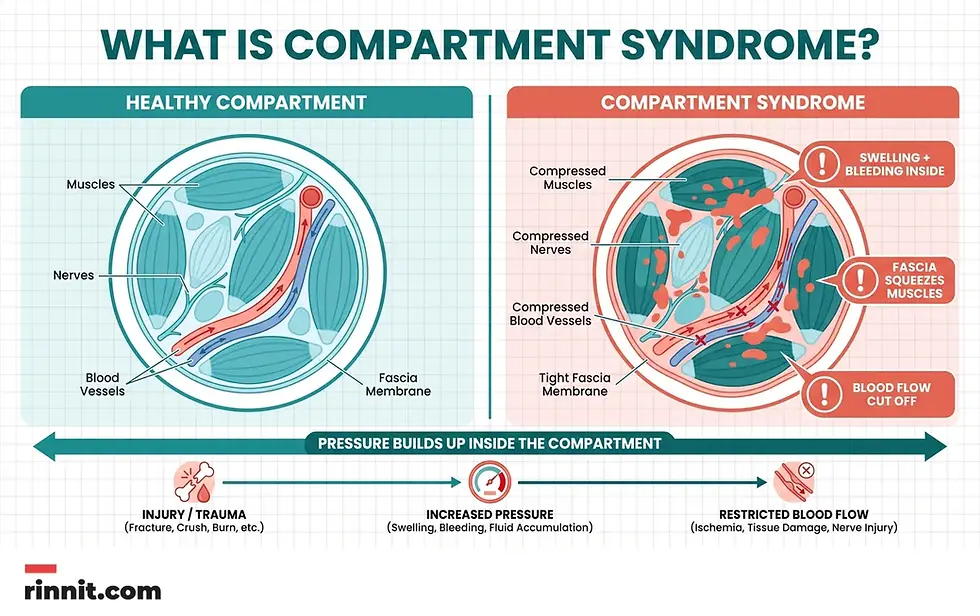
Figure 1: Compartment syndrome develops when pressure builds inside a muscle compartment and squeezes blood flow to muscles and nerves.
Can Compartment Syndrome Be Prevented?
Acute compartment syndrome cannot be prevented — it happens suddenly after an injury or as an unpredictable surgery complication. Getting to the emergency room as soon as you suspect it is the only way to prevent severe complications [4].
If you have a cast or splint that feels too tight — especially if you have taken pain medication and that body part still hurts or swells — tell your provider. They can adjust the immobilization device to prevent compartment syndrome [4].
Chronic compartment syndrome can often be prevented by avoiding too much stress on your muscles:
Prevention Step | Why It Works |
Avoid overtraining | Do not "play through pain" if your muscles hurt during or after activity |
Stretch and warm up | Warm up before working out; cool down and stretch after intense activity |
Build endurance gradually | Do not suddenly ramp up workout intensity |
Mix up your workouts | Avoid doing the same workout, in the same way, every time |
Choose softer surfaces | Avoid exercising on hard, rigid surfaces like concrete or tile floors |

Figure 2: Acute compartment syndrome follows injuries and complications, while the chronic type follows repetitive intense exercise.
When should you seek emergency care for compartment syndrome?
Go to the emergency room right away if you think you have acute compartment syndrome — for example, if you have had a serious injury or notice extreme pain, swelling, or numbness after surgery or while wearing a splint or cast [4].
Do not ignore symptoms like muscle pain or swelling. Chronic compartment syndrome is not a life-threatening emergency, but it is still serious — visit a healthcare provider if pain or swelling follows exercise, especially if it happens often.
What is the bottom line on compartment syndrome?
Compartment syndrome is a pressure problem inside the body's muscle bundles. The acute type is a true emergency that needs fast surgery to protect the muscle, and the chronic type is usually manageable through rest, smarter training, and physical therapy [4] [5]. The most important things you can do are listen to your body — never train through agony — and seek emergency care immediately after a serious injury if extreme pain, swelling, or numbness develops.

Figure 3: Acute cases go straight to emergency fasciotomy, while chronic cases typically improve with rest, medication, therapy, and exercise changes.
How can prompt care protect your muscles from compartment syndrome?
Protecting your muscles from compartment syndrome means knowing the difference between safely pushing your limits and risking injury. Listen to your body: do not train or work out when you are in pain, and see a healthcare provider if you feel unusually sore in the same area every time you exercise.
For more plain-English health guides like this one, visit Rinnit.com.
Frequently Asked Questions
What is compartment syndrome?
Compartment syndrome is a painful buildup of pressure around your muscles. The pressure restricts blood flow, fresh oxygen, and nutrients to your muscles and nerves.
What is a muscle compartment?
A compartment is a group of muscles, nerves, and blood vessels covered by fascia, a thin, firm membrane that holds them in place.
What is the difference between acute and chronic compartment syndrome?
Acute compartment syndrome happens suddenly after a severe injury and is a medical emergency. Chronic (exertional) compartment syndrome builds slowly over time, usually from intense or repetitive exercise.
Is acute compartment syndrome a medical emergency?
Yes. If it is not treated immediately, acute compartment syndrome can cause permanent muscle damage, paralysis, or death. Go to the emergency room right away.
How common is compartment syndrome?
Experts estimate fewer than 10 in every 100,000 people in the U.S. experience acute compartment syndrome each year. It is much more common with certain fractures — about 10% of people who break their tibia develop it.
Where does compartment syndrome most often occur?
Compartment syndrome is most common in the lower legs, but it can affect the arms, hands and wrists, feet, abdomen, and buttocks.
What does compartment syndrome feel like?
Severe muscle pain (worse than normal post-workout soreness), visible bulging or swelling, tightness, severe pain when stretching, numbness, tingling or burning under the skin, and a muscle that feels fuller or firmer than usual.
Why does the pressure build up?
Injury or repeated stress causes swelling and bleeding inside the compartment. The fascia cannot stretch enough to make room, so it starts squeezing the muscles and nerves.
What causes acute compartment syndrome?
Severe injuries such as car accidents, falls from a height, bone fractures, crushing injuries, severe muscle contusions, sports injuries, surgery complications, casts or splints that are too tight, and prolonged pressure on a limb.
What causes chronic compartment syndrome?
Frequent, intense exercise — especially repeating the same workout — that puts repeated stress on the same muscles. Common activities include running, biking, swimming, and weightlifting.
Who is most at risk of chronic compartment syndrome?
Athletes and people with physically demanding jobs who overtrain or overwork their muscles.
Do blood disorders increase the risk?
People with hemophilia and other blood disorders may have an increased risk.
What is necrosis?
Tissue death. If compartment pressure gets too high, tissues lose blood, oxygen, and nutrients, which can lead to necrosis and permanent damage.
Can acute compartment syndrome be fatal?
Yes, it can be fatal if it is not treated right away.
How do providers diagnose compartment syndrome?
Through a physical exam and tests such as an X-ray (to rule out fractures), a compartment pressure measurement test (a needle reads the pressure inside the compartment), and, for chronic cases, a repeat pressure test after exercise.
Is the pressure test painful?
The pressure test can be painful. Your provider should tell you how much the needle insertion hurts, and whether any spots hurt more than others.
What is a fasciotomy?
Emergency surgery in which a surgeon cuts through the skin and fascia to relieve pressure in the affected muscle compartment.
Will I need a skin graft after surgery?
Sometimes. The incision is closed after the swelling and pressure go away; if that cannot happen immediately, a surgeon may take skin from another area of your body to cover the incision.
How is chronic compartment syndrome treated?
Usually by resting the affected muscles, taking anti-inflammatory medications (NSAIDs or acetaminophen), changing your exercise routine (cross-training, softer surfaces), doing physical therapy, and sometimes using orthotics.
How long can I take NSAIDs or acetaminophen?
Not more than 10 days in a row without talking to your provider.
What is cross-training?
Mixing up the types of exercise you do instead of working out the same way or with the same activity each time.
When might I need surgery for chronic compartment syndrome?
If other treatments do not work or the condition recurs.
How long is recovery after a fasciotomy?
Most people rest for around a month before using the affected muscles again.
Does acute compartment syndrome come back after treatment?
Acute compartment syndrome usually does not recur once treated with a fasciotomy.
Does chronic compartment syndrome come back?
Chronic compartment syndrome may, especially if you suddenly ramp up your activity level.
How long until I can return to intense exercise?
It can take up to a year before you can safely resume intense physical activity.
Can compartment syndrome be prevented?
The acute type cannot be prevented — prompt emergency care is the best defense. The chronic type can often be avoided by not overtraining and by building workouts up gradually.
What if my cast or splint feels too tight?
Tell your provider right away, especially if you have taken pain medication and the limb still hurts or swells. They can adjust the device.
Does "no pain, no gain" apply to training?
No. There is a real difference between normal soreness a day or two after a big workout and being unable to move without intense pain. You should not be in agony after exercising.
When should I see a provider for exercise-related pain?
If you notice pain or swelling after exercise — especially if it happens often — or if you feel unusually sore in the same area every time you exercise.
What questions should I ask my provider?
Which type of compartment syndrome do I have? Which treatments will I need? Will I need surgery? How should I change my workout routine? When can I resume physical activities?
Is chronic compartment syndrome life-threatening?
No, it is not a life-threatening emergency, but it is still serious and deserves proper treatment.
What happens if I ignore the symptoms?
Untreated acute compartment syndrome raises the risk of permanent damage the longer it goes untreated. Chronic symptoms also worsen with continued overuse.
When should I go to the ER?
Immediately after a serious injury, or if you notice extreme pain, swelling, or numbness after surgery or while wearing a splint or cast.
Related Reading
References
Garner MR, et al. Compartment syndrome: diagnosis, management, and unique concerns in the twenty-first century. HSS J. 2014;10(2):143-152. PMID 25050098. https://doi.org/10.1007/s11420-014-9386-8
Elsenosy AM, et al. Outcomes of Fasciotomy Versus Conservative Management for Chronic Exertional Compartment Syndrome: A Systematic Review and Meta-Analysis. Cureus. 2024;16(12):e75803. PMID 39759644. https://doi.org/10.7759/cureus.75803
Kim DW, et al. Acute Forearm Compartment Syndrome Following Physical Therapy in a Patient Receiving Anticoagulation Therapy: A Case Report. J Clin Med. 2026;15(13). PMID 42452514. https://doi.org/10.3390/jcm15135052
Cleveland Clinic. Compartment Syndrome: What It Is, Symptoms & Treatments. Cleveland Clinic. Last updated December 18, 2023. https://my.clevelandclinic.org/health/diseases/15315-compartment-syndrome
Witstein JR. Compartment Syndrome. OrthoInfo, American Academy of Orthopaedic Surgeons. Accessed October 15, 2026. https://www.orthoinfo.org/diseases--conditions/compartment-syndrome
Medical Disclaimer
This article is for general informational purposes only and is not a substitute for professional medical advice, diagnosis, or treatment. Always seek the advice of your physician or other qualified health provider with any questions you may have regarding a medical condition or an injury. Never disregard professional medical advice or delay seeking it because of something you have read here. In a medical emergency, seek emergency care immediately.



Comments