Ricin Poisoning: Symptoms, Exposure, and Emergency Response

Updated: 2 days ago
Medically reviewed by Dr. Baraa Alnahhal, MD · Last reviewed: October 2026
Quick Answer: What is ricin poisoning?
Ricin poisoning is a toxic reaction to ricin, a protein in castor plant seeds, from chewing and swallowing seeds, inhaling powder or mist, or injection. [1] Ricin stops cells from making proteins [3], causing cell death. Symptoms range from severe vomiting and diarrhea to breathing and organ failure. [1] Treatment is supportive [1] [2]; seek emergency care for swallowed seeds or breathing trouble.
What the research says
Most castor seed ingestions reported to poison control caused only stomach upset. A review of 84 castor bean seed exposures reported to a US state-wide poison control system from 2001 to 2011 found that vomiting was the most common symptom (39 cases), 22 people (26%) were admitted to hospital, and no delayed symptoms, serious outcomes, or deaths were reported (Thornton et al., Clin Toxicol, 2014) [3].
Plasma exchange has been tried in children, but the evidence is limited. In a small series of 7 children (median age 8.1 years) who ate a median of 5 castor beans, plasma exchange was started a median of 73 hours after ingestion; all seven recovered and none had severe organ dysfunction (Wang et al., J Clin Apher, 2015) [4].
What Is Ricin?
Ricin is a toxic protein naturally present in the seeds of the castor plant. [1] The plant is grown around the world to make castor oil, which has many industrial uses, and it is also grown as an ornamental plant in gardens. [1] The seeds, however, contain ricin.
Castor seeds have a hard outer shell that usually lets them pass through the digestive system intact. Chewing the seeds breaks that coat and releases the ricin. [1] Castor oil itself is safe: after proper processing, it does not contain ricin. [1]
Ricin works by getting inside cells and blocking their ability to make proteins. [3] Without those proteins, cells die, and in severe poisoning many organs can be affected.
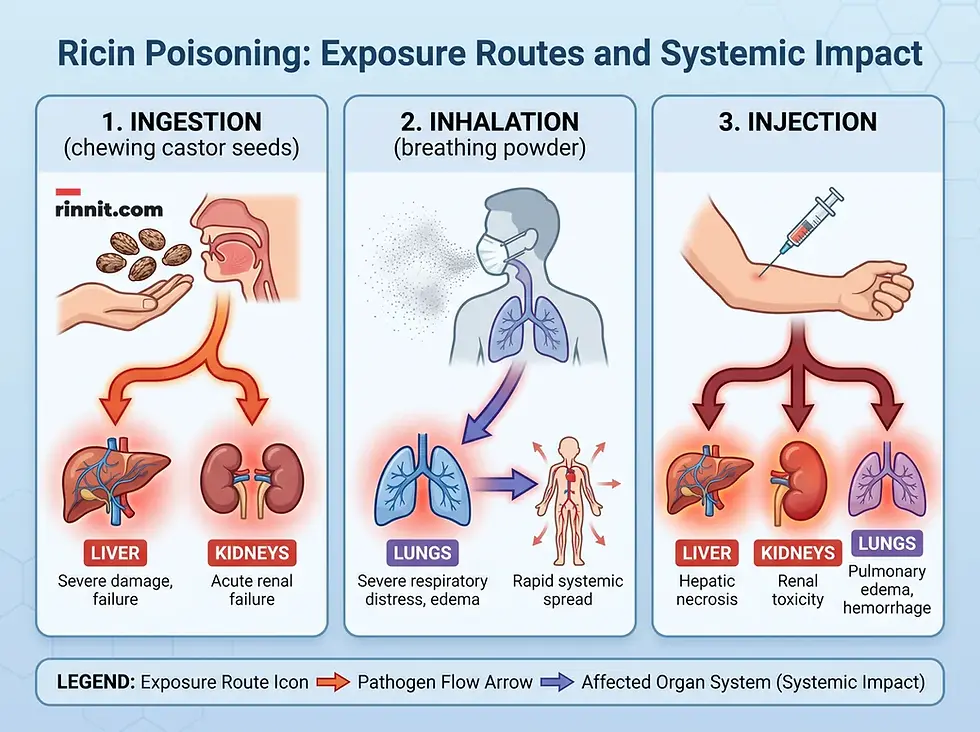
What are the symptoms of ricin poisoning by exposure route?
Symptoms depend on how ricin entered the body, and they get worse as the amount of toxin increases. Early symptoms often appear within 4 to 12 hours [1], but the most serious effects can be delayed by a day or more. [1]
Exposure Route | Usual Onset | Typical Symptoms | Delayed Complications |
|---|---|---|---|
Ingestion | About 4 to 6 hours; serious symptoms may take 1 to 3 days | Nausea, vomiting, diarrhea, blood in vomit or stool, dizziness, low blood pressure. | Liver, kidney, and spleen failure. |
Inhalation | About 4 to 8 hours; severe complications at about 18 to 36 hours | Chest pain, cough, fever, sore throat, wheezing, trouble breathing. | Coughing up blood, fluid in the lungs (pulmonary edema), respiratory failure. |
Injection | Up to 12 hours | Redness, swelling, blisters, tissue death (necrosis) at the site, fever, headache. | Multiple organ failure and bleeding in the brain, heart, lungs, and intestines. |
Ricin does not absorb well through intact skin, so skin contact alone is usually not dangerous. [1] [2] It can enter the body through the eyes, nose, mouth [1], or open wounds.
What causes ricin poisoning, and who is at risk?
Ricin poisoning is not common. [1] It usually happens when castor seeds are chewed and swallowed, but processed ricin has also been used criminally. [2]
Accidental ingestion: Children may be drawn to ornamental castor plants in gardens and chew the seeds. [1]
Workplace exposure: Processing castor seeds for oil can create a risk if safety protocols are not followed.
Criminal or terrorist use: The CDC lists ricin as a potential bioweapon, although its potential deadliness is considered low. [1]
What complications and organ damage can ricin poisoning cause?
The most dangerous effects of ricin are often delayed rather than immediate. The toxin keeps cells from making the proteins they need to survive, which leads to widespread cell death.
Ingestion: The main complication is organ failure, most often of the liver, kidneys, and spleen. [1]
Inhalation: Severe inflammation of the lungs causes fluid buildup that makes breathing very difficult and can lead to respiratory failure, which may need breathing support. [1]
Injection: Ricin can cause multiple organ failure and bleeding in critical organs, including the brain, heart, lungs, and intestines. [1]
Whatever the route, death is possible if the dose is high enough and the person does not get proper medical care. [1]
What is the emergency response and decontamination for ricin poisoning?
If you may have been exposed to ricin powder or mist, act quickly. Decontamination protects you and the people helping you.
Move to fresh air: Leave the area right away [2] and keep anyone who was not exposed away from the powder.
Call emergency services: Tell them in detail what happened. [2]
Remove contaminated clothing: Cut it off with scissors if you can instead of pulling it over your head, which could spread more powder. Try not to touch contaminated areas. [2]
Wash thoroughly: Rinse your skin with plenty of soap and water. [2] If your eyes burn or your vision is blurry, rinse them with plain water for 10 to 15 minutes. [2] Wash eyeglasses with soap and water, but remove contact lenses and throw them away with the clothing. [2]
Seal contaminated items: Place clothing in a plastic bag, tie it, put it inside a second bag, and tell emergency responders what you did with it. [2]
How is ricin poisoning diagnosed and managed?
Healthcare providers diagnose ricin poisoning from the history of exposure, the symptoms, and laboratory tests. [1]
Diagnostic Tools
Treatment and Supportive Care
There is no cure or specific antidote for ricin. [1] [2] Treatment is supportive, meaning the care team manages symptoms and organ function while the body clears the toxin.
Ventilation: A ventilator can support breathing when the lungs are affected. [1] [2]
IV fluids: Fluids help maintain blood pressure and treat dehydration from vomiting and diarrhea. [1] [2]
Medications: Medicines may be used to control heart rhythm, blood pressure, or seizures. [1] [2]
Activated charcoal or stomach pumping [1]: May be used if the toxin was swallowed very recently.
Plasma exchange: Replacing the plasma, which contains ricin, with clean plasma has been used in some cases. [1] [4]
If ricin poisoning is suspected or confirmed, you will likely stay in the hospital for at least a few days so that delayed complications can be treated right away. [1]

How can ricin poisoning be prevented?
The only way to prevent ricin poisoning is to avoid swallowing castor seeds. [1] If you have young children or pets, consider removing castor plants or not planting them, and do not let children play around them without supervision. [1] Researchers are working on a ricin vaccine, but none is available yet. [1]

Conclusion
Ricin is a potent toxin, but poisoning is uncommon and most people survive when they receive prompt medical care. [1] Prevention comes down to keeping children and pets away from castor seeds, and knowing the emergency steps after a possible exposure.
What are the next steps after possible ricin exposure?
If you have castor plants in your yard and young children or pets, consider removing them. If you suspect poisoning, do not wait for symptoms to appear. Contact emergency services or a poison control center right away.
Trusted resources: CDC: Ricin fact sheet, Poison Help Line (US): 1-800-222-1222. [2] Outside the US, contact your local poison control center or emergency number.
Frequently Asked Questions
Can you survive ricin poisoning?
Yes. Most people survive if they get supportive medical care quickly. Cleveland Clinic reports that about 98% of people who swallow ricin survive with proper care. There is very little data on survival after inhalation or injection because those exposures are so rare.
How long does it take for ricin to work?
Symptoms usually begin within 4 to 12 hours, sooner for some routes. After swallowing, first symptoms often start in about 4 to 6 hours, and after inhaling in about 4 to 8 hours. The most serious complications can take one to three days to appear.
Is there an antidote for ricin?
No. There is no specific antidote and no licensed vaccine for humans. Treatment is supportive, and researchers are still working on an antidote and a vaccine.
Can ricin be absorbed through the skin?
Ricin does not absorb well through intact skin, so skin contact alone is usually not dangerous. It can enter the body through the eyes, nose, mouth, or open wounds.
What happens if you swallow a whole castor seed?
The hard shell usually lets a whole seed pass through the digestive system without releasing ricin. If you are not sure whether the seed was chewed or crushed, call poison control or emergency services for advice.
Why is ricin considered a bioweapon?
Ricin comes from a widely available plant and can be made into a powder, mist, or pellet. The CDC lists it as a potential bioweapon, although its potential deadliness is considered low.
Does cooking castor seeds destroy the ricin?
Very high heat can inactivate ricin, but cooking is never a safe way to prepare castor seeds. Do not eat them in any form.
What are the signs of ricin inhalation?
The first signs are usually respiratory: cough, chest tightness, fever, nausea, and difficulty breathing. They can begin about 4 to 8 hours after exposure.
Can ricin poisoning be mistaken for the flu?
Early inhalation symptoms such as fever and cough can look like a respiratory infection. Tell your healthcare provider about any possible exposure so it is not missed.
How do doctors test for ricin?
Doctors use your exposure history, symptoms, and blood and urine tests. A urine test for ricinine, a related castor plant marker, is not available at most hospitals and is usually done by regional or public health laboratories.
Is castor oil safe?
Properly processed castor oil does not contain ricin and is safe when used as directed. The seeds themselves are never safe to eat.
What should I do with contaminated clothes?
Do not wash them. Cut them off instead of pulling them over your head, seal them in a plastic bag, place that bag inside a second bag, and tell emergency responders where it is.
Can ricin cause lasting damage?
Severe poisoning can cause organ failure, especially of the kidneys and liver. How well someone recovers depends on the dose, the route, and how quickly they receive care.
Are castor plants illegal?
Castor plants are commonly grown for oil and as ornamentals in many places, including the United States. Rules vary by country and region, so check your local regulations.
Who is most at risk?
Young children are at the highest risk of accidental poisoning because they may chew the seeds of ornamental castor plants. Workers who process castor seeds also need to follow safety protocols.
References
Cleveland Clinic. Ricin Poisoning. Cleveland Clinic. February 5, 2025. https://my.clevelandclinic.org/health/diseases/ricin-poisoning
Centers for Disease Control and Prevention. Ricin. Chemical Emergencies, CDC. Last reviewed June 11, 2026. https://www.cdc.gov/chemical-emergencies/chemical-fact-sheets/ricin.html
Thornton SL, Darracq M, Lo J, et al. Castor bean seed ingestions: a state-wide poison control system's experience. Clin Toxicol (Phila). 2014;52(4):265-268. PMID 24579983. https://doi.org/10.3109/15563650.2014.892124
Wang CF, Nie XJ, Chen GM, et al. Early plasma exchange for treating ricin toxicity in children after castor bean ingestion. J Clin Apher. 2015;30(3):141-146. PMID 25116073. https://doi.org/10.1002/jca.21351
Medical Disclaimer
This article is for informational purposes only and does not constitute medical advice. Ricin poisoning is a life-threatening emergency. Always seek the advice of your physician or other qualified health provider with any questions you may have regarding a medical condition. Never disregard professional medical advice or delay in seeking it because of something you have read in this article.



Comments