Respiratory Failure: Symptoms, Causes, and Management

Updated: 2 days ago
Medically reviewed by Dr. Baraa Alnahhal, MD · Last reviewed: September 2026
TL;DR
Respiratory failure is a critical condition where the body cannot maintain adequate oxygen levels (hypoxia) or effectively remove carbon dioxide (hypercapnia). It can occur suddenly (acute) or develop over time (chronic) due to lung diseases, heart conditions, or neuromuscular disorders. Immediate medical intervention, such as oxygen therapy or mechanical ventilation, is required for acute cases to prevent organ damage and death.
Quick Answer
What is Respiratory Failure?
Respiratory failure occurs when the respiratory system fails in one or both of its gas exchange functions: oxygenation of the blood or removal of carbon dioxide. This results in either too little oxygen in the tissues (hypoxemia) or too much carbon dioxide in the blood (hypercapnia). It is often caused by conditions that affect the lungs, heart, nerves, or muscles used for breathing, and it can be a life-threatening medical emergency.
MEDICAL EMERGENCY: CALL 911 IMMEDIATELY Acute respiratory failure is life-threatening. Seek immediate emergency care or call 911 if you or someone else experiences any of the following:
Severe shortness of breath or inability to breathe.
Blue-tinted skin, lips, or nails (cyanosis).
Extreme confusion, agitation, or inability to think clearly.
Rapid heart rate and excessive sweating.
Loss of consciousness or extreme lethargy.
What is Respiratory Failure?
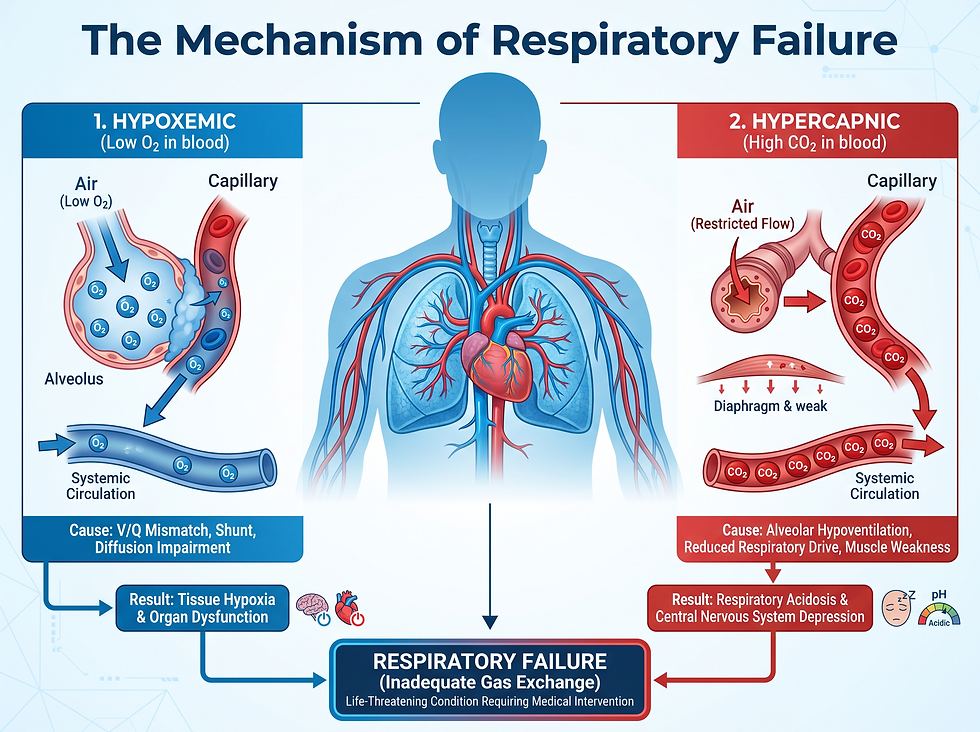
Respiratory failure is a disturbance in the body's essential process of respiration. To stay alive, your body needs to take in oxygen from the air and deliver it to your organs and tissues while simultaneously removing carbon dioxide (CO2), a waste product. When this exchange fails, the body enters a state of respiratory failure.
The condition is categorized by how it affects blood chemistry:
Hypoxemic Respiratory Failure (Type 1): Characterized by dangerously low levels of oxygen in the blood.
Hypercapnic Respiratory Failure (Type 2): Characterized by excessive levels of carbon dioxide in the blood, which leaves no room for oxygen to be transported.
Types of Respiratory Failure
Beyond the chemical classification, respiratory failure is also categorized by its onset and clinical context.
Type | Name | Primary Cause/Characteristic |
|---|---|---|
Type 1 | Hypoxemic | Low blood oxygen; often caused by heart or lung diseases. |
Type 2 | Hypercapnic | High blood CO2; often caused by lung, muscle, or brain conditions. |
Type 3 | Perioperative | Occurs during or after surgery, often due to anesthesia or collapsed air sacs. |
Type 4 | Shock-Related | Caused by low blood pressure, sepsis, or massive blood loss. |
Symptoms and Warning Signs
The symptoms of respiratory failure vary depending on whether the condition is acute or chronic and which type of gas exchange is failing.
Breathing Changes: Shortness of breath (dyspnea), rapid breathing (tachypnea), or shallow, labored breaths.
Physical Appearance: Pale or bluish skin (cyanosis), excessive sweating, and restlessness.
Neurological Impact: Confusion, blurred vision, headaches, and behavioral changes.
Cardiovascular Signs: Rapid heart rate or heart palpitations.
Severe Signs: Coughing up blood or bloody mucus (hemoptysis).
What Causes Respiratory Failure?
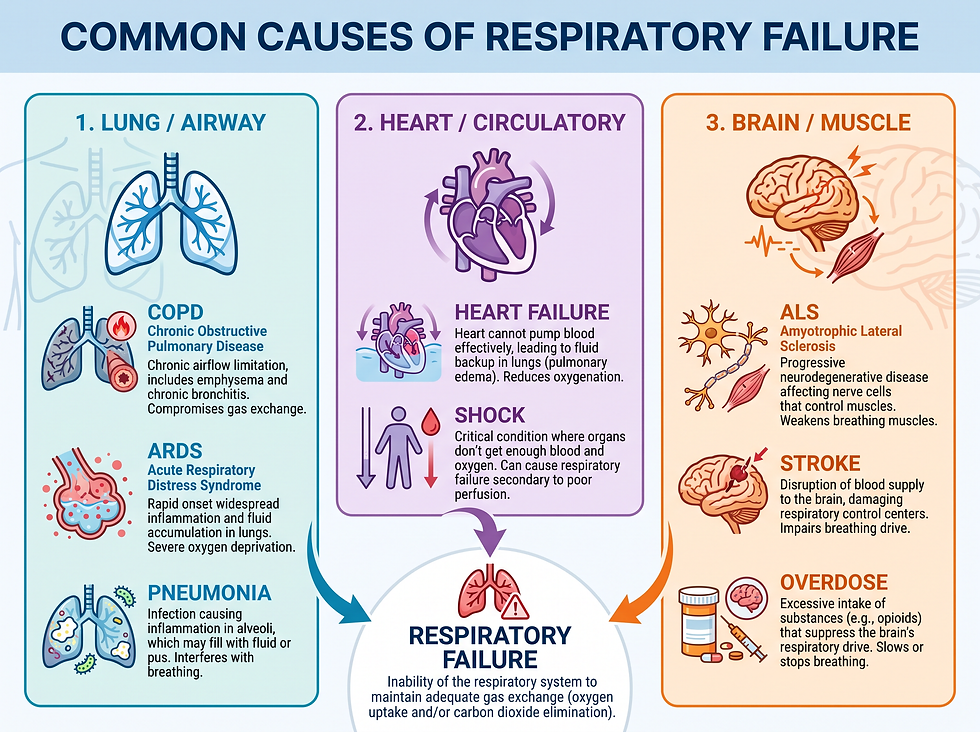
Respiratory failure happens when something disrupts the flow of air into the lungs or the flow of blood to pick up oxygen.
Lung and Airway Conditions
Chronic Diseases: COPD, asthma, cystic fibrosis, and pulmonary fibrosis.
Acute Issues: ARDS (Acute Respiratory Distress Syndrome), pneumonia, and pulmonary embolisms (blood clots).
Physical Obstructions: Fluid in the lungs (pulmonary edema) or collapsed air sacs (atelectasis).
Heart and Circulatory Issues
Heart Failure and Heart Attacks: When the heart cannot pump blood effectively to the lungs. Learn more in our guide to heart failure symptoms, causes, and treatment.
Congenital Heart Disease: Structural heart issues present from birth.
Shock: Severe low blood pressure caused by sepsis or trauma.
Neuromuscular and Brain Factors
Neuromuscular Diseases: ALS, MS, muscular dystrophy, and Guillain-Barré syndrome that weaken breathing muscles.
Brain and Spinal Injuries: Strokes or trauma that damage the brain's respiratory control center.
Substances: Overdose of drugs (like opioids) or excessive alcohol consumption that suppresses breathing drive.
Diagnosis and Testing
Healthcare providers diagnose respiratory failure by measuring the gases in your blood and assessing your physical state.
Arterial Blood Gas (ABG) Test: The gold standard for measuring oxygen, CO2, and pH levels directly from an artery.
Pulse Oximetry: A finger sensor to monitor oxygen saturation levels.
Imaging: X-rays and CT scans to identify underlying lung damage, fluid, or infections.
Electrocardiogram (EKG): To check if a heart condition is the primary cause.
Pulmonary Function Tests (PFTs): To evaluate how much air the lungs can hold and move.
How is Respiratory Failure Treated?
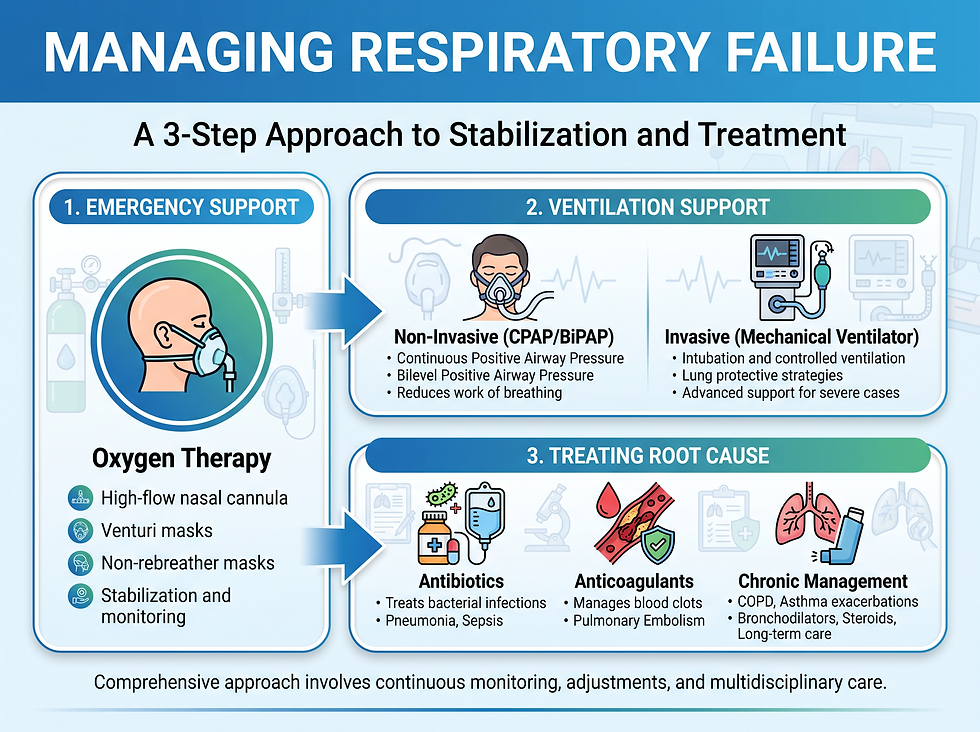
Treatment focuses on providing immediate respiratory support while addressing the root cause of the failure.
Oxygen and Ventilation Support
Oxygen Therapy: Providing supplemental oxygen through a nasal cannula or mask.
Noninvasive Ventilation: Using machines like CPAP or BiPAP to help move air into the lungs through a mask.
Mechanical Ventilation: In critical cases, a breathing tube is used, and a machine takes over the work of breathing entirely.
Managing the Underlying Cause
Infections: Antibiotics for pneumonia or sepsis.
Blood Clots: Anticoagulants (blood thinners) for pulmonary embolisms.
Chronic Conditions: Long-term management of COPD or heart failure through medication and lifestyle changes.
Conclusion
Respiratory failure is a severe medical condition that signifies a breakdown in the body's most basic life-support system. While chronic respiratory failure can be managed over time with consistent care, acute respiratory failure is a life-threatening emergency that requires immediate intervention. Understanding the risks, from lung disease to medication safety, is crucial for prevention and early detection.
Next Steps
If you have a chronic lung or heart condition, follow your treatment plan closely and monitor your breathing daily. Avoid smoking and other lung irritants, and ensure you are vaccinated against respiratory infections like pneumonia and the flu. If you ever experience sudden, severe difficulty breathing, do not wait. Seek emergency help immediately.
Frequently Asked Questions
1. Can you recover from respiratory failure?
Yes, many people recover from acute respiratory failure if the underlying cause (like pneumonia or a drug overdose) is treated quickly. Chronic respiratory failure requires ongoing management but can be stable for long periods.
2. What is the difference between hypoxemia and hypoxia?
Hypoxemia is low oxygen in the blood. Hypoxia is low oxygen in the tissues and organs. Hypoxemia often leads to hypoxia.
3. Is respiratory failure the same as a heart attack?
No. A heart attack is a blood flow problem to the heart muscle. Respiratory failure is a gas exchange problem in the lungs. However, a heart attack can cause respiratory failure.
4. What does "Type 1" respiratory failure mean?
Type 1 (hypoxemic) means your primary problem is low oxygen levels, but your carbon dioxide levels might be normal or low.
5. What does "Type 2" respiratory failure mean?
Type 2 (hypercapnic) means your primary problem is that you have too much carbon dioxide in your blood, which prevents you from getting enough oxygen.
6. Can smoking cause respiratory failure?
Yes. Smoking is a leading cause of COPD and lung cancer, both of which are major risk factors for chronic and acute respiratory failure.
7. Why do my lips turn blue?
Cyanosis (blue lips or skin) occurs when your blood lacks enough oxygen. Oxygenated blood is bright red; deoxygenated blood is darker, making the skin look blue through the surface.
8. How does sepsis cause respiratory failure?
Sepsis is a severe systemic infection that can cause "shock," leading to low blood pressure and fluid buildup in the lungs, which prevents oxygen from entering the blood.
9. Can an overdose cause respiratory failure?
Yes. Drugs like opioids and sedatives can suppress the brain's signal to breathe, leading to slow or shallow breathing (respiratory depression) and eventual failure.
10. What is ARDS?
Acute Respiratory Distress Syndrome (ARDS) is a severe lung condition where fluid leaks into the air sacs, making it nearly impossible for oxygen to get into the blood.
11. Is a ventilator permanent?
Not usually. In acute cases, a ventilator is used as a bridge to give the body time to heal from an infection or injury. Once the person can breathe on their own, the ventilator is removed.
12. Can scoliosis cause respiratory failure?
Yes. Severe curvature of the spine (scoliosis) can physically restrict the lungs' ability to expand, leading to chronic hypercapnic respiratory failure.
13. What is an ABG test like?
It involves a needle draw from an artery, usually in the wrist. It is slightly more uncomfortable than a standard vein blood draw but provides critical information about your breathing.
14. Who is at the highest risk?
Premature infants and adults over age 65 are at the highest risk, as well as anyone with chronic lung or heart disease.
15. Can I prevent respiratory failure?
Prevention involves managing chronic conditions, avoiding smoking, taking medications as prescribed, and seeking early treatment for respiratory infections.
Related Reading
Trusted External Resources
Medical Disclaimer
This article is for informational purposes only and does not constitute medical advice. Always seek the advice of your physician or other qualified health provider with any questions you may have regarding a medical condition. Never disregard professional medical advice or delay in seeking it because of something you have read in this article.
Comments