What Is Capgras Syndrome? The Imposter Belief Condition Explained

Updated: 2 days ago
Medically reviewed by Dr. Baraa Alnahhal, MD · Last reviewed: October 2026
Quick Answer: What is Capgras syndrome?
Capgras syndrome is a delusional misidentification syndrome in which a person firmly believes someone they know well has been replaced by an identical-looking imposter. [4] There is no single known cause, but it is linked to brain injury, neurodegenerative disease and mental health conditions. [4] It is treated with antipsychotic medications and therapy such as CBT, and symptoms often improve with treatment. [4]
Key takeaways
Capgras syndrome is a delusional misidentification syndrome where someone believes a familiar loved one is an imposter. [4]
The person may become agitated, aggressive, or fixated on exposing the “imposter.” [4]
Some research links it to a disconnect between facial recognition and emotional response in the brain. [4]
It commonly complicates dementia, Alzheimer's, Parkinson's, schizophrenia, bipolar disorder, or brain injury. [4]
Antipsychotic medication and empathetic therapy ease symptoms; the condition does not shorten life expectancy on its own. [4]
Family members are advised to announce themselves by voice, accept the delusion without confrontation, and take breaks from caregiving. [4]
What the research says
Capgras syndrome appears across many psychotic disorders, most often in acute ones. Among 517 patients hospitalized for a first episode of psychosis, 73 (14.1%) had Capgras syndrome. It was most common in schizophreniform (50%) and brief psychotic disorders (34.8%), and less common in major depression with psychotic features (15%), schizophrenia (11.4%), delusional disorder (11.1%), bipolar I disorder (10.3%), and schizoaffective disorder (8.2%) (Salvatore et al., Psychopathology, 2014) [1].
A single brain lesion in the right place can produce the delusion. In 17 published cases of lesion-induced delusional misidentification, all 17 lesion locations were functionally connected to the left retrosplenial cortex (a region linked to familiarity), and 16 of 17 were connected to the right frontal cortex (a region linked to evaluating beliefs) (Darby et al., Brain, 2017) [2].
Treatment in dementia is not standardized, and medication helps only some people. A systematic review of 26 studies of Capgras syndrome in dementia found that after drug treatment 28% of cases resolved and another 28% improved, while 7% worsened and 10.7% had no change; the authors noted heavy reliance on antipsychotics, few psychosocial interventions, and the risks of antipsychotic medication (Margariti & Mircea, Curr Alzheimer Res, 2024) [3].
What Is Capgras Syndrome?
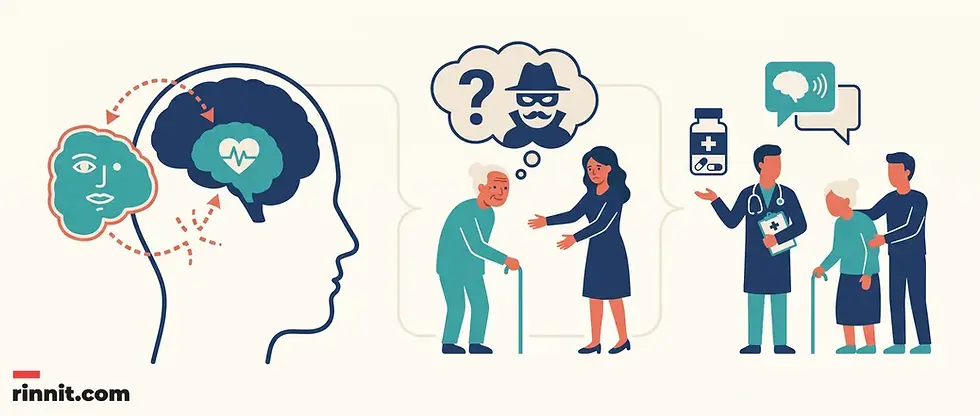
Capgras syndrome, sometimes called Capgras delusion, is an uncommon psychological condition in which a person mistakenly believes an imposter has taken the place of a family member or close friend. [4] It belongs to a group of conditions known as delusional misidentification syndromes. [4]
The belief is not casual suspicion. A person with Capgras syndrome is convinced the imposter is real. The person identified as the imposter is very often the individual's primary caregiver [4] — someone they see every day.
Capgras syndrome usually develops as a complication of another condition. Neurodegenerative diseases and mental health conditions both raise the risk. [4] Treatment focuses on easing symptoms with antipsychotic medication while continuing treatment for the underlying cause. [4]
Symptoms of Capgras Syndrome
The defining symptom of Capgras syndrome is the fixed, genuine belief that an imposter has replaced someone the person recognizes and knows well. From the person's perspective, this is not a delusion — it is reality.
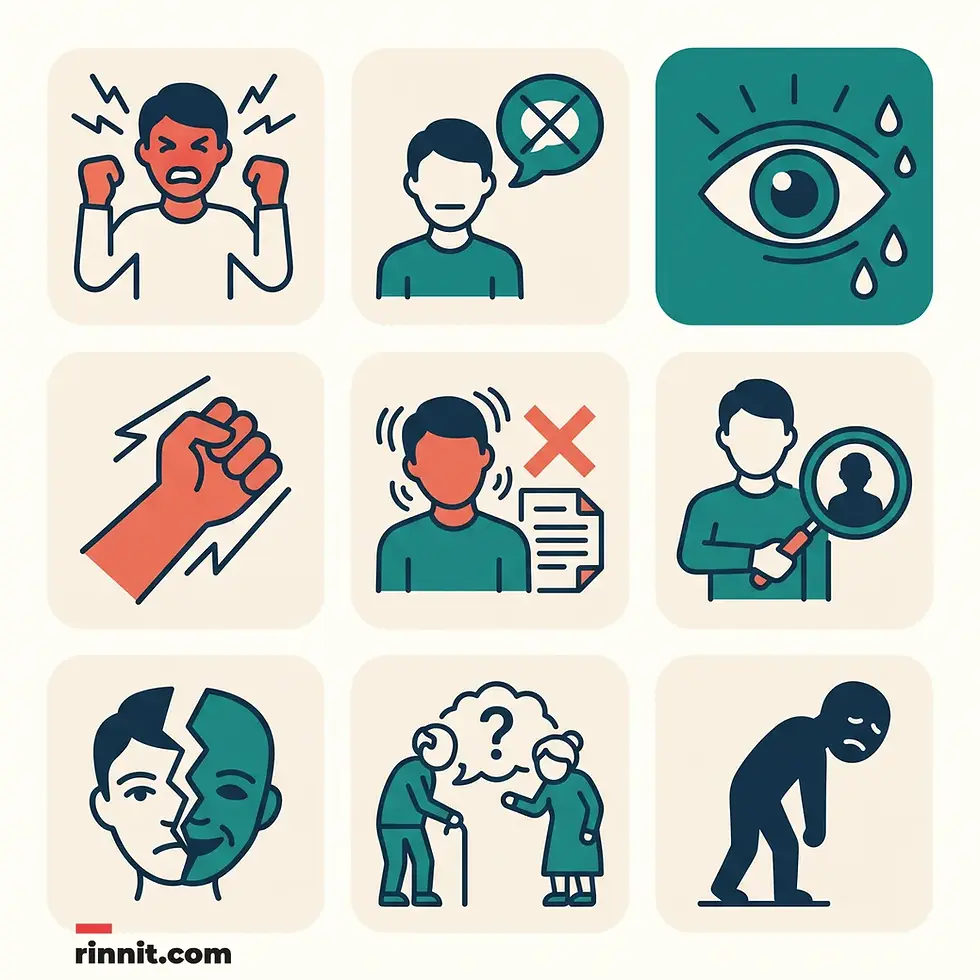
When someone with Capgras syndrome encounters the person they believe is an imposter, they may react in predictable ways. The table below summarizes the typical reactions.
Reaction | What it looks like |
Agitation or anger | Becoming agitated, angry, or upset when seeing the person |
Refusing to talk | Declining to speak to them, or refusing to talk to anyone while that person is present |
Anxiety and fear | Saying the imposter makes them feel anxious or afraid |
Aggressive behavior | Threatening the imposter or attempting to physically attack them |
Rejecting evidence | Refusing to believe any evidence that the person really is the family member or friend |
Fixation on exposure | Becoming focused on exposing the imposter |
The fifth reaction deserves emphasis. Even when shown evidence, a person with Capgras syndrome refuses to accept it, and no amount of arguing convinces them otherwise. This persistence is what marks it as a delusion rather than a passing misunderstanding.
What Causes Capgras Syndrome?
There is no single known cause of Capgras syndrome. [4] One research theory points to a disconnect between two brain regions. [4]
The temporal lobe manages facial recognition — it identifies who a person is when they see a face. The amygdala processes the immediate emotional response that normally follows recognition. [4] In Capgras syndrome, the person recognizes someone but does not believe they are the same person they love and trust.
Beyond this proposed mechanism, several conditions raise the risk.
Cause category | Conditions linked to Capgras syndrome |
Brain injury | Traumatic brain injury that damages the temporal cortex or amygdala |
Mental health conditions | Schizophreniform disorder, schizophrenia, bipolar disorder, depression |
Neurodegenerative diseases | Alzheimer's disease, advanced Parkinson's disease, dementia, Lewy body dementia |
Other CNS conditions | Epilepsy, cerebrovascular accidents (strokes), infectious diseases, toxin exposure |
Complications of Capgras Syndrome
Capgras syndrome typically affects people who are already living with a neurodegenerative disease or mental health condition, adding one more medical or psychological challenge on top of an existing one. [4]
The impact extends to the family. The person identified as the imposter is often the primary caregiver, who may already carry heavy stress from managing the loved one's illness. Studies show that caregivers who are treated as imposters feel anxious, depressed, isolated, and have trouble sleeping. [4]
How Is Capgras Syndrome Diagnosed?
Diagnosis begins with a physical examination and a complete medical history. The provider asks about conditions that increase the risk of Capgras syndrome. [4]
Test | What it contributes |
Physical examination | Establishes overall health and screens for related conditions |
Medical history review | Identifies conditions that raise Capgras risk |
Neurological examination | Assesses brain and nervous system function |
CT scan | Imaging of the brain |
MRI | Detailed imaging of brain structures |
Treatment for Capgras Syndrome
Treatment follows a two-track approach: medication to relieve symptoms, and continued care for whatever condition is underneath.

Antipsychotic Medications
Healthcare providers may prescribe antipsychotic medications that relieve the symptoms of Capgras syndrome. In older adults with dementia, antipsychotics carry an FDA boxed warning for a higher risk of death, and people with Lewy body dementia can react severely to them, so they are used cautiously at the lowest effective dose. [4] Common options include:
Medication | Brand name |
Aripiprazole | Abilify® |
Olanzapine | Zyprexa® |
Quetiapine | Seroquel® |
Psychological Therapy
Providers may also recommend psychological therapy such as cognitive behavioral therapy (CBT). [4] The approach matters: therapy for Capgras syndrome should demonstrate empathy and show genuine interest in what the person is experiencing. Crucially, therapy should avoid confronting the person about their beliefs. [4]
Outlook and Prognosis
Capgras syndrome does not go away without treatment. [4] With antipsychotic medication and counseling, symptoms often improve. [4]
The condition itself does not affect life expectancy. [4] When life expectancy is shortened in someone with Capgras syndrome, it is tied to the underlying cause rather than the delusion. [4]
How Families Can Care for Someone With Capgras Syndrome
Living with a family member who has Capgras syndrome means accepting that your loved one is experiencing a different reality — one in which you, another family member, or a close friend is an imposter. There is nothing you can say to convince them otherwise, because treatment with antipsychotic medication is the only way to resolve the delusion itself. [4] Until then, practical strategies can reduce tension.
Strategy | How it helps |
Accept the situation | Trying to prove you are not an imposter can increase tension; arguing they are wrong can trigger anger and aggression |
Announce yourself | Capgras syndrome does not seem to affect voice recognition; saying hello before appearing in their sight may reduce the chance they'll react |
Find a short-term substitute | Asking someone else to step in as primary caregiver for a while is not a permanent fix, but a break may help ease the tension between you |
When Should Someone See a Provider?
Contact a healthcare provider as soon as you suspect a family member believes you or another person is an imposter. [4]
Capgras Syndrome vs. Related Conditions
People often confuse Capgras syndrome with similarly named conditions. The table below clears up the most common mix-ups.
Condition | What it is | How it differs from Capgras |
Fregoli syndrome | A delusional misidentification syndrome | The person believes someone they know keeps showing up in disguise as different people |
Imposter syndrome | A pattern of self-doubt | The person constantly questions their own intelligence, skills, and abilities — unrelated to believing others are imposters |
Conclusion
Capgras syndrome may sound like something from a science fiction story, but it is a real and documented condition affecting people with neurodegenerative diseases and mental health conditions. The delusion — that a loved one has been replaced by an identical imposter — may spring from a disconnect between the brain's recognition and emotional centers. While nothing you say will talk someone out of the belief, antipsychotic medication often eases symptoms, and family strategies like announcing yourself by voice can help keep everyday interactions calmer.
If you suspect a loved one is experiencing this delusion, contact a healthcare provider early. Understanding the condition takes much of the fear out of it — for the person living with it and for the family around them.
Want to explain health topics like this one visually? Infographics make complex concepts easy for readers of every age. Rinnit's infographic templates help you build clear, professional visuals for your own audience.
Frequently Asked Questions
What is Capgras syndrome?
Capgras syndrome is an uncommon psychological condition where a person genuinely believes a family member or close friend has been replaced by an imposter. [4]
Is Capgras syndrome the same as Capgras delusion?
Yes. Capgras delusion is simply another name for the same condition. [4] Both terms describe the imposter-belief delusion.
What type of condition is Capgras syndrome?
It is a type of delusional misidentification syndrome [4] — a group of psychiatric conditions involving false beliefs about the identity of people or places.
Who does the person usually believe is an imposter?
Very often the person identified as the imposter is the individual's primary caregiver — the family member they see most frequently. [4]
Can the person be talked out of the belief?
No. Nothing anyone says can convince them otherwise. Treatment, usually antipsychotic medication along with care for the underlying cause, is what eases the delusion, though it helps only some people. [4]
Is Capgras syndrome dangerous?
It can be. Some people respond with aggressive behavior, including threatening or physically attacking the person they believe is an imposter. [4]
What does Capgras syndrome feel like to the person who has it?
To them, it does not feel like an illness. They recognize the person, but they truly believe an imposter has taken that person's place.
What is the brain mechanism behind Capgras syndrome?
There is no single known cause. Some research suggests a disconnect between the temporal lobe, which handles facial recognition, and the amygdala, which processes the emotional response that normally follows recognition. [4]
Does Capgras syndrome affect voice recognition?
No. Capgras syndrome does not seem to affect voice recognition, which is why saying hello before appearing in someone's sight may reduce fearful reactions. [4]
Can brain injury cause Capgras syndrome?
Yes. Traumatic brain injury that damages the temporal cortex or amygdala is one recognized potential cause. [4]
Which mental health conditions are linked to Capgras syndrome?
Schizophreniform disorder, schizophrenia, bipolar disorder, and depression are all conditions associated with Capgras syndrome. [4]
Which neurodegenerative diseases are linked to Capgras syndrome?
Alzheimer's disease, advanced Parkinson's disease, dementia, and Lewy body dementia are potential underlying causes. [4]
Can strokes cause Capgras syndrome?
Yes. Cerebrovascular accidents (strokes) are listed among the central nervous system conditions that may cause it, along with epilepsy, infections, and toxin exposure. [4]
How is Capgras syndrome diagnosed?
Providers use a physical examination, a complete medical history, a neurological examination, and imaging tests such as CT scans and MRI. [4]
What medications treat Capgras syndrome?
Antipsychotic medications such as aripiprazole (Abilify), olanzapine (Zyprexa), and quetiapine (Seroquel) may be prescribed to relieve symptoms. [4]
Does therapy help with Capgras syndrome?
Psychological therapy such as cognitive behavioral therapy (CBT) may be recommended. It should be empathetic and must avoid confronting the person about their beliefs. [4]
Can Capgras syndrome go away on its own?
No. The condition does not go away without treatment. Medication and counseling often ease symptoms. [4]
Does Capgras syndrome affect life expectancy?
The condition itself does not affect life expectancy. Life expectancy is tied to the underlying cause. [4]
Why do caregivers suffer when they are named as imposters?
Studies show caregivers identified as imposters feel anxious, depressed, and isolated, and have trouble sleeping [4] — on top of the stress they already carry.
Should I argue with someone who thinks I'm an imposter?
No. Trying to prove you are not an imposter can increase tension, and convincing them they are wrong can lead to anger and aggression. Acceptance of the situation is the recommended approach. [4]
What practical step may help reduce fearful reactions at home?
Announce yourself by voice before appearing in the person's sight. Because voice recognition doesn't seem to be affected, a friendly “hello” may reduce the chance of a reaction. [4]
What is the difference between Capgras syndrome and Fregoli syndrome?
In Capgras syndrome, a familiar person is believed to be an imposter. In Fregoli syndrome, the person believes someone they know keeps appearing in disguise as different people. [4]
What is the difference between imposter syndrome and Capgras syndrome?
Imposter syndrome involves constantly questioning your own intelligence, skills, and abilities. Capgras syndrome involves believing someone else is an imposter. [4]
When should I contact a healthcare provider?
Contact a provider as soon as you suspect a family member believes you or another person is an imposter. [4] Early treatment prevents escalation.
Is Capgras syndrome curable?
The delusion does not resolve on its own, but symptoms often ease with antipsychotic medication and supportive counseling. [4]
Is Capgras syndrome rare?
Yes. It is described as an uncommon psychological condition, [4] most often seen as a complication of other neurological or psychiatric illness.
Can Capgras syndrome happen to someone without another illness?
Capgras syndrome typically affects people who already have a neurodegenerative disease or a mental health condition, and it can add to the challenges of managing those conditions. [4]
What should a family member do about caregiver strain?
Consider arranging a short-term substitute caregiver. A temporary break is not a permanent solution, but it can ease tension between you and your loved one. [4]
Can imaging tests confirm Capgras syndrome?
CT scans and MRI don't diagnose the delusion on their own, but they are part of the evaluation providers use to look at the brain.
Related Reading
Fregoli Syndrome: Symptoms, Causes, Diagnosis, Treatment and Outlook — What You Need to Know
What Are Mood Disorders? A Plain-Language Guide to Depression, Bipolar Disorder, and Getting Help
Alzheimer's Disease: Symptoms, Causes, Treatment & Complete Guide
Lewy Body Dementia (LBD): Symptoms, Causes, Diagnosis & Treatment — Complete Guide
Antipsychotic Medications: A Guide to Treatment and Recovery
Understanding the Amygdala: Functions, Anatomy, and Emotional Health
Caregiver Burnout: Signs, Causes, Recovery, and How to Take Care of Yourself First
References
Salvatore P, Bhuvaneswar C, Tohen M, et al. Capgras' syndrome in first-episode psychotic disorders. Psychopathology. 2014;47(4):261-269. PMID: 24516070. https://doi.org/10.1159/000357813
Darby RR, Laganiere S, Pascual-Leone A, et al. Finding the imposter: brain connectivity of lesions causing delusional misidentifications. Brain. 2017;140(2):497-507. PMID: 28082298. https://doi.org/10.1093/brain/aww288
Margariti C, Mircea MT. Capgras syndrome in dementia: a systematic review of case studies. Curr Alzheimer Res. 2024;21(5):312-323. PMID: 39411962. https://doi.org/10.2174/0115672050335918240919073012
Cleveland Clinic. Capgras Syndrome. Cleveland Clinic. Last updated October 16, 2024. https://my.clevelandclinic.org/health/diseases/capgras-syndrome
Medical disclaimer
This article is for general informational purposes only and is not a substitute for professional medical advice, diagnosis, or treatment. Always consult a qualified healthcare provider about any medical condition.



Comments