Paranoid Schizophrenia: Understanding an Evolving Diagnosis

Updated: 2 days ago
Medically reviewed by Dr. Baraa Alnahhal, MD · Last reviewed: September 2026
TL;DR: Paranoid schizophrenia is an outdated clinical term for a subtype of schizophrenia characterized by intense delusions and hallucinations. While official psychiatric organizations like the APA and WHO no longer use the subtype classification, paranoia remains a critical symptom of the schizophrenia spectrum. Schizophrenia affects approximately 85 out of every 10,000 people globally and typically emerges in early adulthood. Modern management focuses on early diagnosis, long-term antipsychotic medication, and comprehensive psychotherapy to achieve and maintain remission.
Quick answer: Paranoid schizophrenia is an obsolete term previously used to describe a subtype of schizophrenia where paranoia and delusions were the most prominent features. Since 2013, experts have recognized schizophrenia as a single, specific disease within a broader spectrum of psychotic disorders. Although the "paranoid" label is no longer an official diagnosis, the symptoms of paranoia—such as persecutory delusions and auditory hallucinations—are still central to the diagnostic and treatment process for many individuals living with schizophrenia.
The Shift in Clinical Classification
The removal of "paranoid schizophrenia" from official medical literature marks a significant shift toward viewing schizophrenia as a spectrum rather than a collection of distinct subtypes.

Key Milestones in Reclassification
DSM-5 (2013): The American Psychiatric Association removed the subtype from the Diagnostic and Statistical Manual of Mental Disorders.
ICD-11 (2019): The World Health Organization followed suit, removing the term from the International Classification of Diseases.
Modern perspective: Schizophrenia is now treated as a unified condition with varying degrees of symptom severity across the spectrum.
Understanding Paranoia and Psychosis
While the name has changed, the symptoms once associated with the paranoid subtype remain prevalent. Paranoia in schizophrenia manifests as a deep-seated distrust and suspicion of others.
Persecutory delusions: A persistent false belief that others intend to cause harm. This leads to increased social withdrawal and defensive behaviors.
Auditory hallucinations: Hearing voices or sounds that do not exist. These feed into delusions by providing false "evidence."
Anosognosia: A "lack of insight" where the brain cannot recognize the illness. This often leads to resistance toward medical treatment.
Disorganized speech: Incoherent or rapidly shifting thought patterns. This makes it difficult to communicate needs to caregivers.
Prevalence and Demographics
Schizophrenia is a global health concern that affects individuals across all biological sexes, though the age of onset often varies.
Global impact: Approximately 2.77 million new cases are diagnosed worldwide each year.
Age of onset (males): Typically occurs between the ages of 15 and 25.
Age of onset (females): Typically occurs between the ages of 25 and 35.
Childhood cases: Extremely rare and usually associated with more severe long-term outcomes.
Causes and Suspected Triggers
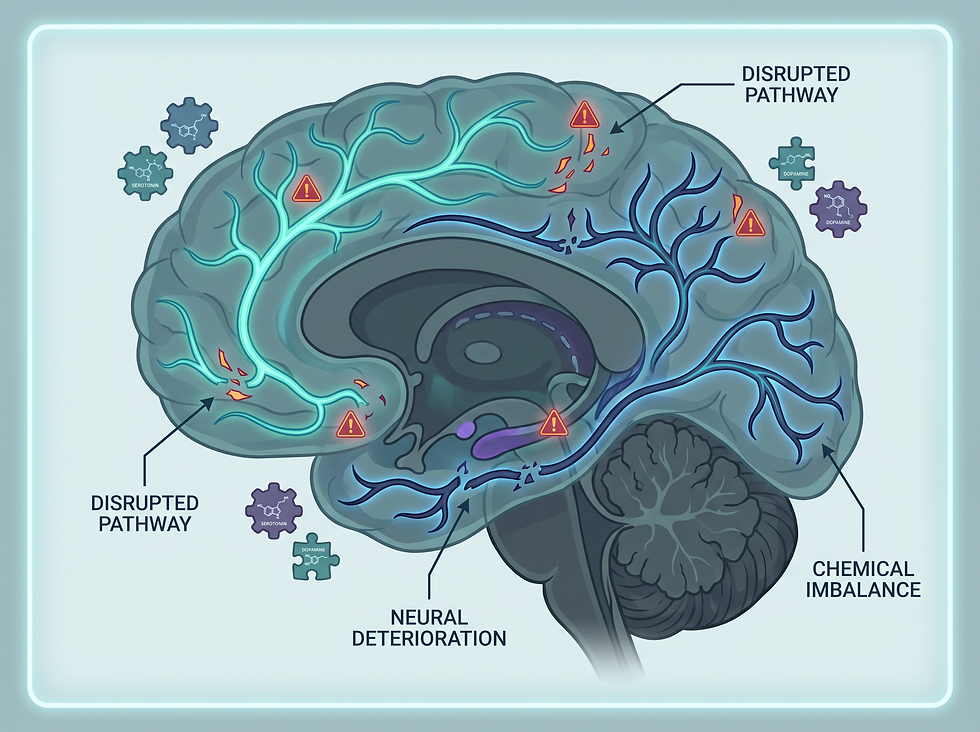
Schizophrenia does not have a single, confirmed cause. Instead, researchers believe a combination of biological and environmental factors leads to the deterioration of brain cell communication.
Suspected Biological Factors
Chemical imbalances: Disruptions in how brain cells use chemicals to communicate.
Congenital development: Problems affecting brain growth before birth.
Network deterioration: Deterioration of the intricate connections between different brain regions.
Genetic risk: Mutations inherited from parents that increase susceptibility.
The Diagnostic Pathway
Diagnosing schizophrenia requires careful observation by a mental health specialist, such as a psychiatrist. Because symptoms can mimic other conditions like delusional disorder, a rigorous set of criteria must be met.
Clinical Requirements for Diagnosis
Symptom count: Presence of at least two of the five main symptoms (delusions, hallucinations, disorganized speech, disorganized behavior, negative symptoms).
Duration: Main symptoms must persist for at least one month, with overall effects lasting six months or longer.
Functional impact: Significant disruption in the patient's social or professional life.
Supporting Tests
While no single test can diagnose schizophrenia, providers use imaging and laboratory work to rule out other issues:
Imaging (MRI/CT): To rule out brain tumors or structural abnormalities.
Fluid testing: Blood, urine, and spinal taps to check for infections or poisoning.
Brain activity (EEG): To rule out seizures or epilepsy.
Treatment and Long-Term Management
Schizophrenia is a chronic condition that is almost always treatable, though it is not considered curable. The goal of modern medicine is to achieve a state of "remission."
Therapeutic Approaches
Antipsychotic medications: The cornerstone of treatment, divided into typical and atypical categories. Learn more in our guide to antipsychotic medications.
Psychotherapy: Helps patients understand their condition and adapt to social environments.
Electroconvulsive therapy (ECT): Reserved for severe cases where symptoms are resistant to medication or the patient is in immediate danger.

Frequently Asked Questions
Why is the term "paranoid schizophrenia" no longer used?
Clinical experts found that the subtypes were not helpful for predicting treatment outcomes. Instead, they now view schizophrenia as a single disease with a spectrum of symptoms.
Is schizophrenia contagious?
No. Schizophrenia is a mental health condition caused by biological and environmental factors; it cannot be spread from person to person.
Can schizophrenia be cured?
While some people experience long-term remission where symptoms do not return, there is currently no way to predict this, so it is considered a treatable but chronic condition.
What is the difference between a hallucination and a delusion?
A hallucination involves imagining a sensory experience (like hearing voices), while a delusion is a persistent false belief (like believing someone is spying on you).
Why do people with schizophrenia sometimes refuse treatment?
Many patients experience anosognosia, a "lack of insight" where their brain is physically unable to recognize that they have a medical condition.
At what age does schizophrenia usually start?
It typically begins in the late teens to mid-20s for males and the mid-20s to mid-30s for females.
Is paranoia always present in schizophrenia?
No, but it is a very common symptom. This is why it was previously used as a subtype classification.
What are "negative symptoms"?
These are symptoms that represent a loss of normal function, such as a lack of emotion, loss of motivation, or reduced social interaction.
Can drugs cause schizophrenia?
Recreational drug use is considered a risk factor that may contribute to the development of the condition in susceptible individuals, but it is not a confirmed direct cause.
How common is the condition?
Approximately 85 out of every 10,000 people will develop schizophrenia at some point in their lives.
Is electroconvulsive therapy (ECT) safe?
Yes, modern ECT is a controlled medical procedure used for severe or treatment-resistant cases of psychosis.
Can children have schizophrenia?
It is extremely rare in children. When it does occur, it is often much more severe than adult-onset cases.
What should I do if a loved one shows signs of paranoia?
You should encourage them to see a healthcare provider or mental health specialist for a professional evaluation.
Are there different types of antipsychotics?
Yes, there are typical (first-generation) and atypical (second-generation) antipsychotics, each with different side-effect profiles.
Can someone with schizophrenia live a normal life?
With consistent treatment and support, many people with schizophrenia can manage their symptoms and lead fulfilling lives.
Helpful Resources
Medical Disclaimer
This content is for informational purposes only and does not constitute medical advice. Always seek the advice of your physician or other qualified health provider with any questions you may have regarding a medical condition.
Source date: June 26, 2022.
Comments