What Is Bullous Emphysema? Causes, Symptoms, and Treatment Options

Updated: 2 days ago
Medically reviewed by Dr. Baraa Alnahhal, MD · Last reviewed: October 17, 2026
Quick Answer
Bullous emphysema is a lung disease in which damage to the alveolar walls creates large air pockets, called bullae, larger than 1 centimeter that reduce the lungs' ability to exchange gases. [7] Cigarette smoking is the top cause. [7] It cannot be cured and the damage is permanent, but bronchodilators, oxygen therapy, bullectomy and lung volume reduction can ease symptoms. [7]
Key takeaways
Bullous emphysema forms when damaged alveolar walls stretch into large air pockets (bullae) larger than 1 cm, harming oxygen and carbon dioxide exchange. [7]
Cigarette smoking is the top cause [7]; smoking crack cocaine or marijuana and intravenous drug use are also linked to bullae.
BE usually occurs alongside COPD, which affected an estimated 11.7% of adults aged 30 and older worldwide in 2010. [1]
The main symptom is shortness of breath; other symptoms include cough (often worse in the morning), chest pain, fatigue, nausea, and loss of appetite. [7]
There is no cure, but bronchodilators, oxygen therapy, short-term antibiotics or corticosteroids, and surgery can manage symptoms. [7]
Quitting smoking is the best step to stop progression; seek immediate care for bluish lips or nails, confusion, worsening breathlessness, or rapid heartbeat.
What the research says
Bullous emphysema sits inside a very common disease group. A systematic review and meta-analysis of 123 spirometry-based studies estimated that 11.7% of adults aged 30 or older worldwide had COPD in 2010 — about 384 million people, a 68.9% increase since 1990 — with higher prevalence in men (14.3%) than in women (7.6%) (Adeloye et al., J Glob Health, 2015) [1].
Lung volume reduction can improve airflow, but it carries real risks. A network meta-analysis of 25 randomized trials (4,283 patients) found that lung volume reduction surgery improved FEV1 by 187.2 mL and endobronchial valves by 111.8 mL, but valves raised the risk of pneumothorax (risk ratio 12.75, 95% CrI 5.52–35.48), and mid-term mortality was higher with both surgery (RR 3.26) and valves (RR 2.06) (Yamamoto et al., Lung, 2025) [2].
Valve treatment helped breathing in a randomized trial. In 190 people with heterogeneous emphysema, 47.7% of those treated with a Zephyr endobronchial valve improved FEV1 by at least 15% at 12 months versus 16.8% with standard care; pneumothorax was the most common serious side effect, affecting 26.6% of valve patients (Criner et al., Am J Respir Crit Care Med, 2018) [3].
What Is Bullous Emphysema?

Bullous emphysema (BE) is a type of emphysema, a lung disease. Emphysema involves damage to the walls of the air sacs (alveoli) in your lungs. [7] Alveoli bring in oxygen when you breathe in and remove carbon dioxide when you breathe out. [7]
Bullous emphysema occurs when damage to your alveolar walls causes them to stretch and form large pockets of air called bullae. These air pockets can measure larger than 1 centimeter (cm). [7]
How bullae affect the lungs
Bullae make it more difficult for your alveoli to exchange oxygen and carbon dioxide. You can have bullous emphysema in one or both lungs. Having BE in one lung can affect the expansion of your other lung, making it more difficult to breathe. [7]
If the bullae become very large, they can cause lung shrinkage and present as vanishing lung syndrome. [7] In one reported case, giant bullae on both sides displaced up to 50% of lung volume (Giller et al., J Cardiothorac Surg, 2020) [6]. Although BE can cause permanent damage to your lungs, treatment can help you manage the condition and improve your outlook.
Who might have bullous emphysema?
People of every age, race, and sex can have bullous emphysema. It's commonly associated with chronic obstructive pulmonary disease (COPD), a smoking-related lung disease. However, you're at higher risk of developing BE if you have certain genetic conditions or infections:
Risk factor | Why it raises risk |
A genetic condition that weakens the alveolar walls | |
A connective tissue disorder that weakens lung tissue | |
A genetic disorder affecting connective tissue, including lung walls | |
Having human immunodeficiency virus can also increase your risk of bullous emphysema |
How common is bullous emphysema?
There isn't a precise count of people living with bullous emphysema on its own, because it usually occurs as part of COPD. COPD itself is very common: a meta-analysis estimated that about 11.7% of adults aged 30 or older worldwide had it in 2010, and its burden is high and growing (Adeloye et al., 2015) [1].
What Causes Bullous Emphysema?
Bullous emphysema can result from chronic obstructive pulmonary disease (COPD). Cigarette smoking is the top cause of BE. [7] Chronic inflammation from smoking results in a breakdown of your alveolar walls. This causes bullae to enlarge, which affects the flow of oxygen and carbon dioxide.
Cause | How it contributes |
Cigarette smoking | Chronic inflammation breaks down alveolar walls, causing bullae to enlarge |
COPD | BE often develops as part of this smoking-related lung disease |
Crack cocaine or marijuana smoking | Smoke irritates and damages the alveolar walls |
Intravenous drug use | Drug use through the vein is linked to bullae formation |
Genetic conditions | Alpha-1 antitrypsin deficiency, Ehlers-Danlos syndrome, and Marfan syndrome weaken the alveolar walls and result in damage |
Case reports link heavy cannabis smoking with severe bullous lung disease and pneumothorax, but large epidemiological studies have not clearly shown that cannabis causes emphysema (Gracie & Hancox, Addiction, 2021) [4].
What Are the Symptoms of Bullous Emphysema?
The main symptom of BE is shortness of breath [7]. Other common symptoms include:
Symptom | What it feels like |
Shortness of breath | The main symptom of BE |
Chest pain or pressure | Discomfort or tightness in the chest |
Often worse in the morning | |
Fatigue | Feeling tired and low on energy |
Loss of appetite | Reduced desire to eat |
Nausea | Feeling sick to your stomach |
Trouble breathing | Increased effort needed to breathe |
Some people with bullous emphysema don't have symptoms. If large bullae (called giant bullae) develop, they can cause more symptoms. [7]

Signs your provider may look for
Your healthcare provider may look for the following signs when they examine you:
Sign | What it is |
Barrel-shaped chest | A rounded, enlarged chest shape |
Clubbed fingers | Rounded, swollen fingertips and nails |
Loud heartbeat sound | Caused by pulmonary hypertension (high blood pressure in the lungs) |
Swelling (edema) | Fluid buildup in the body |
Wheezing | A whistling sound when breathing |
How Is Bullous Emphysema Diagnosed?
Your healthcare provider will first ask about your symptoms, health history, and family medical history. They'll also do a physical exam.
If your provider suspects bullous emphysema, they'll do pulmonary function testing. These tests measure how well your lungs exchange air and whether bullae have obstructed your airflow. As part of this testing, your provider may do spirometry. During this test, you breathe through a tube into a machine (spirometer). Spirometry looks at the amount of air that passes into and out of your lungs as you breathe.
Your provider may also suggest imaging tests to look for enlarged or damaged alveoli, plus additional laboratory and heart tests:
Test | What it checks |
Spirometry | Amount of air passing into and out of your lungs as you breathe through a tube |
Chest X-ray | Whether you have bullae and where they are in your lungs |
CT scan | The location, number, and size of bullae; it also helps tell giant bullae from a collapsed lung, which they can mimic (Muhamad et al., Respir Med Case Rep, 2020) [5] |
Blood tests | Acidic blood from carbon dioxide buildup (respiratory acidosis) or low oxygen levels |
Complete blood count (CBC) | Whether you have low hemoglobin levels |
Electrocardiogram (EKG) | Signs of lung disease affecting your heart |
Alpha-1 antitrypsin blood test | Whether a genetic deficiency is contributing to the condition |
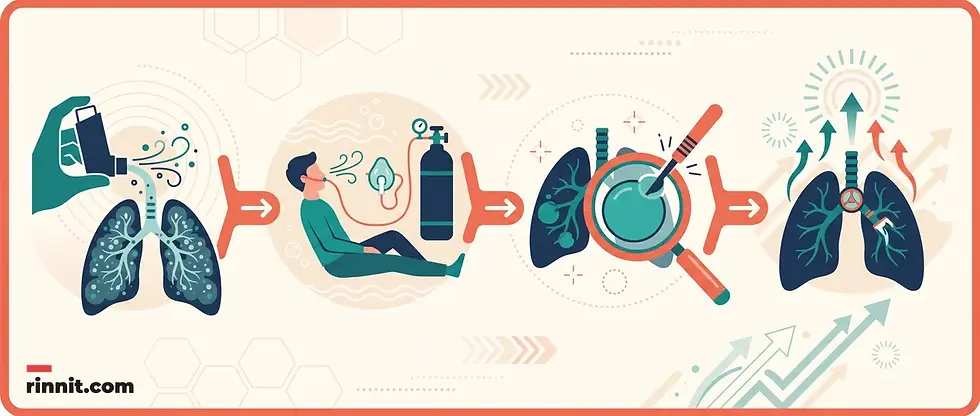
How Is Bullous Emphysema Treated?
Is there a cure?
Unfortunately, there's no cure for bullous emphysema. [7] But there are treatments to help you better cope with the symptoms and help stop BE from getting worse.
Treatment options
Treatment | How it helps |
Bronchodilators | Breathed in through an inhaler; they improve airflow and relieve shortness of breath by relaxing the muscles in your airways |
Antibiotics | Short-term treatment for lung infections or severe symptoms |
Corticosteroids | Short-term treatment to reduce inflammation |
Supplies extra oxygen through a tube inside your nostrils or a face mask when oxygen levels are low |
Surgery options
You may need surgery if you have giant bullae, severe shortness of breath, or complications of BE such as a collapsed lung (pneumothorax), coughing up blood (hemoptysis), or a lung infection. [7]
Surgery type | How it works |
Bullectomy | The surgeon removes the bullae from your lungs using open surgery (thoracotomy) or a minimally invasive procedure (video-assisted thoracic surgery, VATS) |
A valve is inserted into your lungs using a minimally invasive procedure to intentionally collapse a part of your lung | |
Lung volume reduction surgery (LVRS) | The surgeon removes damaged lung tissue so the remaining tissue can function better |
Lung transplant | Considered if your condition doesn't respond to any other treatments |
What Can I Expect If I Have Bullous Emphysema?
Bullous emphysema is a lifelong health condition. Once your lungs become damaged, they won't heal. [7] But the sooner you start treating BE, the sooner you can help stop it from becoming worse.
Can Bullous Emphysema Be Prevented?
You can reduce your risk of BE by not smoking or by quitting smoking. [7] Your provider can work with you to find techniques to help you quit, such as nicotine replacement therapy.
How Do I Take Care of Myself?
You can continue to take care of yourself by managing your symptoms. Finding treatments that work for you will greatly improve your quality of life.
You'll want to stay healthy and prevent serious health complications. Talk with your healthcare provider about what vaccines you might need, including flu, COVID, and pneumococcal vaccines.
When to seek immediate medical attention
Contact emergency care if you experience any of these signs: a bluish or greyish color in your lips or nails (cyanosis); difficulty staying mentally alert; increased shortness of breath; or a rapid heartbeat (tachycardia). [7]
Conclusion
Bullous emphysema is a serious but manageable lung condition in which damaged alveolar walls stretch into air pockets larger than 1 centimeter, making it harder for the lungs to exchange oxygen and carbon dioxide. Smoking is the leading cause, and the condition usually occurs alongside COPD, a common lung disease with a high and growing global burden.
There is no cure, and lung damage is permanent — but the condition is far from hopeless. Bronchodilators relax the airways, oxygen therapy restores oxygen levels, and surgical options such as bullectomy, lung volume reduction, and even transplant can improve breathing and quality of life for appropriate candidates. Quitting smoking remains the most powerful single step anyone can take to slow the disease's progression.
For educators and health communicators, visual diagrams of alveolar damage and treatment pathways make these concepts far easier to teach. Explore Rinnit's medical infographics to build engaging visuals for lung health and other medical topics.
Frequently Asked Questions
What is bullous emphysema?
Bullous emphysema (BE) is a type of emphysema — a lung disease in which damage to the air sac walls creates large air pockets called bullae.
What are alveoli?
Alveoli are the air sacs in your lungs. They bring in oxygen when you breathe in and remove carbon dioxide when you breathe out.
What are bullae?
Bullae are large pockets of air that form when damaged alveolar walls stretch. They can measure larger than 1 centimeter.
How do bullae affect breathing?
Bullae make it more difficult for your alveoli to exchange oxygen and carbon dioxide, and they can restrict the expansion of healthy lung tissue.
Can bullous emphysema affect one or both lungs?
Yes. It can occur in one or both lungs. Having BE in one lung can affect the expansion of the other lung, making it more difficult to breathe.
What is vanishing lung syndrome?
Vanishing lung syndrome is a presentation in which very large bullae cause lung shrinkage. It is frequently misdiagnosed as a collapsed lung (pneumothorax), and a CT scan helps tell them apart.
Is bullous emphysema curable?
No. There is no cure, and once the lungs are damaged they won't heal. But treatments can manage symptoms and slow progression.
What is the main symptom of bullous emphysema?
The main symptom is shortness of breath.
What other symptoms occur with bullous emphysema?
Common symptoms include chest pain or pressure, a cough that's often worse in the morning, fatigue, loss of appetite, nausea, and trouble breathing.
Can you have bullous emphysema without symptoms?
Yes. Some people with bullous emphysema don't have symptoms, especially before giant bullae develop.
What is a barrel-shaped chest?
A rounded, enlarged chest shape that healthcare providers may look for during an examination of someone with bullous emphysema.
What are clubbed fingers?
Clubbed fingers are rounded, swollen fingertips and nails — a sign a provider may look for when examining you.
What is pulmonary hypertension in this context?
High blood pressure in the lungs that can cause a loud heartbeat sound a provider may detect during examination.
What are the main causes of bullous emphysema?
Cigarette smoking is the top cause. Smoking crack cocaine or marijuana and intravenous drug use are also linked to bullae.
How does smoking cause bullous emphysema?
Chronic inflammation from smoking breaks down alveolar walls, causing bullae to enlarge and disrupting oxygen and carbon dioxide flow.
Can genetic conditions cause bullous emphysema?
Yes. Alpha-1 antitrypsin deficiency, Ehlers-Danlos syndrome, and Marfan syndrome cause the alveolar walls to become weak, resulting in damage and bullous emphysema.
Does HIV increase the risk?
Yes. Having HIV can increase your risk of bullous emphysema.
Who gets bullous emphysema?
People of every age, race, and sex can have it. It's commonly associated with COPD, a smoking-related lung disease.
How common is bullous emphysema?
There isn't a precise count for bullous emphysema on its own because it usually occurs alongside COPD. COPD affected an estimated 11.7% of adults aged 30 or older worldwide in 2010.
How is bullous emphysema diagnosed?
Through a physical exam, symptom and family history review, pulmonary function testing, spirometry, chest X-ray, CT scan, blood tests, CBC, EKG, and possibly an alpha-1 antitrypsin test.
What is spirometry?
A test where you breathe through a tube into a machine (spirometer) that measures how much air passes into and out of your lungs.
What does a chest X-ray show?
Whether you have bullae and where they are located in your lungs.
What does a CT scan show?
The location, number, and size of the bullae.
Why are blood tests ordered?
To check for acidic blood caused by carbon dioxide buildup (respiratory acidosis) or low oxygen levels.
Why is an EKG ordered?
To look for signs of lung disease affecting your heart.
What are bronchodilators?
Medications breathed in through an inhaler that improve airflow and relieve shortness of breath by relaxing the muscles in your airways.
When are antibiotics used?
For a short time, if you have severe symptoms or a lung infection.
When are corticosteroids used?
For a short time, to reduce inflammation during severe symptoms or infection.
When is oxygen therapy recommended?
When your oxygen levels are low — it supplies extra oxygen through a tube inside your nostrils or a face mask.
What is a bullectomy?
A surgery in which the surgeon removes the bullae from your lungs using open surgery (thoracotomy) or a minimally invasive procedure (video-assisted thoracic surgery, VATS).
What is bronchoscopic lung volume reduction (BLVR)?
A minimally invasive procedure in which a valve is inserted into your lungs to intentionally collapse a part of your lung.
What is lung volume reduction surgery (LVRS)?
A surgery in which damaged lung tissue is removed so the remaining tissue can function better.
When is lung transplant considered?
If your condition doesn't respond to other treatments and you are an appropriate candidate.
What complications may require surgery?
Giant bullae, severe shortness of breath, collapsed lung (pneumothorax), coughing up blood (hemoptysis), and lung infection.
Can I prevent bullous emphysema?
You can reduce your risk by not smoking or by quitting smoking. Your provider can help you find techniques to quit.
Will my lungs ever heal?
Once lungs become damaged by BE, they won't heal. The sooner you start treatment, the sooner you can help stop the condition from worsening.
What vaccines should I discuss with my provider?
Flu, COVID, and pneumococcus vaccines help prevent serious health complications.
When should I seek emergency care?
Seek immediate medical attention for bluish or greyish lips or nails (cyanosis), difficulty staying mentally alert, increased shortness of breath, or rapid heartbeat (tachycardia).
What should I do now?
If you have persistent shortness of breath or a chronic cough — especially if you smoke — see a healthcare provider for evaluation, spirometry, and imaging. If you smoke, quitting is the single most important step you can take, and a provider can help you build a plan.
Related Reading
Learn more in our guide to Bullectomy.
References
Adeloye D, Chua S, Lee C, et al. Global and regional estimates of COPD prevalence: systematic review and meta-analysis. J Glob Health. 2015;5(2):020415. PMID: 26755942. https://doi.org/10.7189/jogh.05.020415
Yamamoto S, Horita N, Imai R, et al. Surgical and bronchoscopic lung volume reduction for severe emphysema: a systematic review and network meta-analysis. Lung. 2025;203(1):22. PMID: 39762564. https://doi.org/10.1007/s00408-024-00777-0
Criner GJ, Sue R, Wright S, et al. A multicenter randomized controlled trial of Zephyr endobronchial valve treatment in heterogeneous emphysema (LIBERATE). Am J Respir Crit Care Med. 2018;198(9):1151-1164. PMID: 29787288. https://doi.org/10.1164/rccm.201803-0590OC
Gracie K, Hancox RJ. Cannabis use disorder and the lungs. Addiction. 2021;116(1):182-190. PMID: 32285993. https://doi.org/10.1111/add.15075
Muhamad NI, Mohd Nawi SN, Yusoff BM, et al. Vanishing lung syndrome masquerading as bilateral pneumothorax: a case report. Respir Med Case Rep. 2020;31:101276. PMID: 33209576. https://doi.org/10.1016/j.rmcr.2020.101276
Giller DB, Scherbakova GV, Giller BD, et al. Surgical treatment of bilateral vanishing lung syndrome: a case report. J Cardiothorac Surg. 2020;15:201. PMID: 32727518. https://doi.org/10.1186/s13019-020-01246-4
Cleveland Clinic. Bullous Emphysema. Accessed October 15, 2026. https://my.clevelandclinic.org/health/diseases/24728-bullous-emphysema
Medical disclaimer
This article is for general informational purposes only and does not constitute medical advice. Always consult a qualified healthcare professional for diagnosis and treatment decisions. Increased shortness of breath, bluish lips or nails, confusion, or rapid heartbeat require immediate emergency medical care.



Comments