Pursed-Lip Breathing: Techniques for Improved Lung Function

Updated: 3 days ago
Medically reviewed by Dr. Baraa Alnahhal, MD · Last reviewed: October 2026
Definition: A breathing exercise designed to slow respiration and improve oxygen exchange.
How it works: Inhale through the nose and exhale slowly through puckered lips to keep airways open longer, release trapped air, and reduce the effort of breathing. [1]
Who benefits: People with chronic lung conditions like COPD and asthma, as well as anyone managing stress and anxiety. [1]
Safety: Stop if you feel dizzy or lightheaded, and seek emergency help for severe shortness of breath or chest pain. [1]
Quick Answer: What is pursed-lip breathing?
Pursed-lip breathing is a controlled breathing technique that slows breathing and keeps the airways open longer. [1] You inhale slowly through the nose and exhale gently through pursed lips, as if whistling. [1] This releases trapped air, relieves shortness of breath and reduces the work of breathing, making daily activities and exercise easier for people with respiratory conditions. [1]
What the research says
In COPD, breathing exercises, including pursed-lip breathing, improve walking distance. A Cochrane review of 16 trials (1,233 participants) found that breathing exercises over four to 15 weeks improved functional exercise capacity compared with no intervention, with a single study of pursed-lip breathing (60 participants) showing a mean gain of 50 metres in six-minute walk distance. Effects on breathlessness and quality of life were inconsistent (Holland et al., Cochrane Database Syst Rev, 2012) [2].
Pursed-lip breathing slows and deepens breathing, though evidence on breathlessness is mixed. A systematic review and meta-analysis of 19 randomized trials (745 patients with COPD) found pursed-lip breathing significantly improved respiratory rate, tidal volume, inspiratory time, and total respiratory time compared with controls (all p of 0.007 or lower), but no breathing exercise significantly improved dyspnea, and the quality of evidence was low to moderate (Ubolnuar et al., Ann Rehabil Med, 2019) [3].
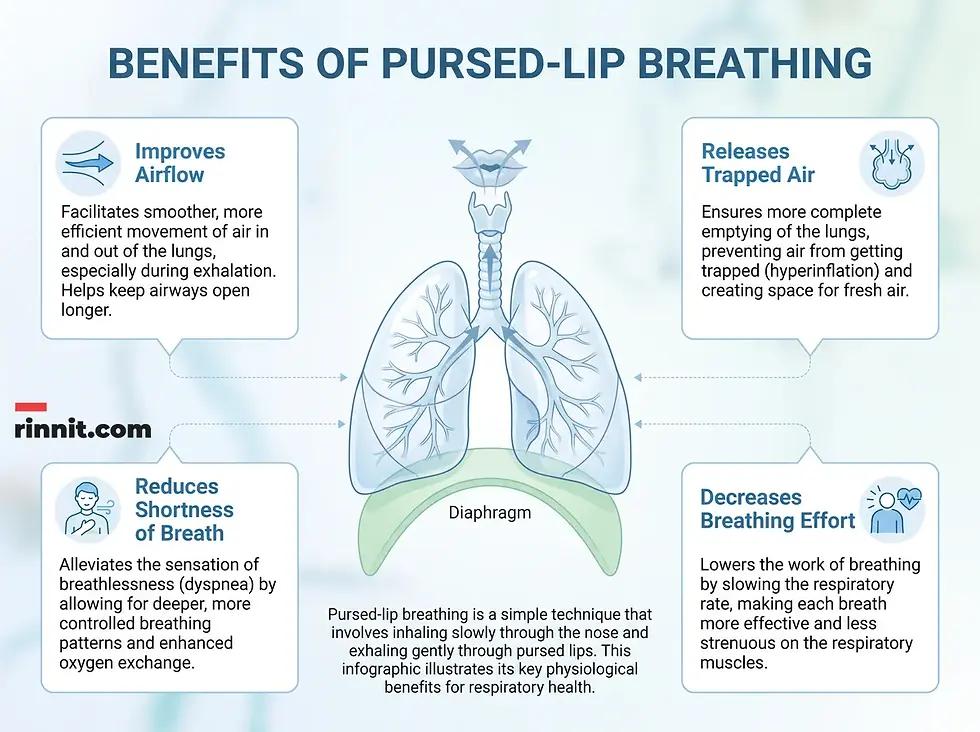
What are the benefits of pursed-lip breathing?
Implementing pursed-lip breathing into a daily routine offers a wide range of physical and psychological benefits. It is a versatile tool that can be used both during rest and during periods of physical exertion.
Benefit Category | Specific Advantages |
Respiratory Efficiency | Improves airflow, releases trapped air, and relieves shortness of breath. [1] |
Physical Performance | Makes walking, climbing stairs, and exercising easier by reducing effort. [1] |
Psychological Health | Reduces stress, calms anxiety, and promotes overall relaxation. [1] |
Quality of Life | Enhances independence and the ability to perform daily activities. [1] |
How do you do pursed-lip breathing?
The technique is simple to learn and can be practiced anywhere. For the best results, it is recommended to practice four to five times daily for at least five to ten minutes until the pattern becomes natural. [1]
Preparation: Sit comfortably in a chair and relax your neck and shoulders to minimize unnecessary tension. [1]
Inhalation: With your mouth closed, breathe in slowly through your nose for approximately two seconds. [1] You should feel your abdomen move outward as your lungs fill. [1]
Pursing: Pucker your lips as if you were preparing to whistle or blow on a hot beverage. [1]
Exhalation: Breathe out slowly and gently through your pursed lips for at least four seconds. [1] Allow your belly to slowly return to its resting position.

When should you use pursed-lip breathing?
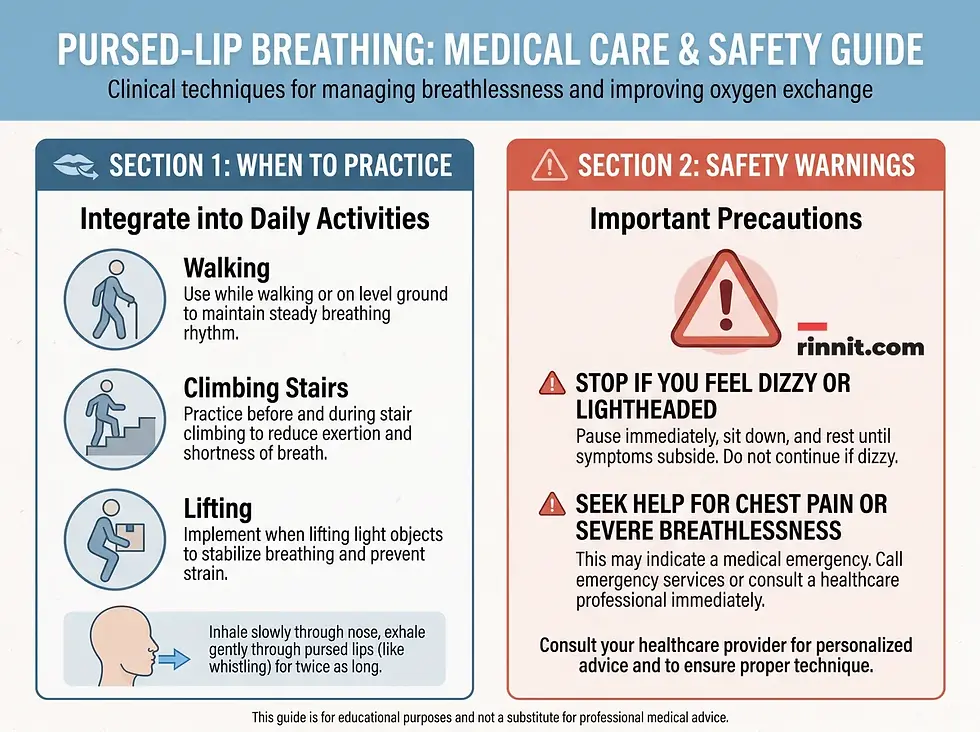
Pursed-lip breathing helps manage acute symptoms and also works as a preventive tool during daily activities. Using the technique during the most difficult part of physical activities can prevent significant shortness of breath before it starts.
Physical Activities: Use the technique while bending, lifting, walking, or climbing stairs to maintain steady oxygen levels.
During Exercise: Incorporate pursed-lip breathing into your workout routine to increase endurance and reduce fatigue.
Resting Moments: Practice while reading, watching TV, or waiting in line to reinforce the habit so it comes naturally when needed. [1]
Stressful Situations: Utilize the slow, controlled rhythm to calm the nervous system during moments of high anxiety or stress.
Who should use pursed-lip breathing, and is it safe?
Pursed-lip breathing is especially helpful for individuals with chronic obstructive pulmonary disease (COPD), asthma, or pulmonary fibrosis. [1] However, it is a universal skill that can benefit anyone looking to improve their breath control.
Anyone can benefit from learning how to control their breath. Pursed-lip breathing is especially helpful if you have a lung disease or another condition that affects your breathing. [1]
It is important to listen to your body while practicing. If you feel dizzy, lightheaded, or excessively tired, take a break and return to normal breathing. [1] Always consult with a healthcare provider before starting new breathing exercises, especially if you have a pre-existing medical condition.
Warning Sign | Action Required |
Dizziness/Lightheadedness | Stop the exercise and rest. [1] |
Severe Shortness of Breath | Seek immediate medical attention (Call 911). |
Chest Pain | Seek immediate medical attention (Call 911). |
Sudden Weakness | Seek immediate medical attention (Call 911). |
Conclusion
Pursed-lip breathing is a simple yet powerful technique that empowers individuals to take control of their respiratory health. By slowing the breath and optimizing oxygen exchange, it provides immediate relief from shortness of breath and enhances the ability to lead an active, independent life.
Frequently Asked Questions
What is pursed-lip breathing?
Pursed-lip breathing is a technique that involves inhaling through the nose and exhaling slowly through puckered lips to improve lung function and oxygen levels.
How does pursed-lip breathing help the lungs?
Pursed-lip breathing keeps the airways open for a longer time, allowing more oxygen to enter the lungs and helping to release air that has become trapped.
Who can benefit from this technique?
While especially helpful for those with COPD, asthma, or pulmonary fibrosis, anyone experiencing stress, anxiety, or shortness of breath can benefit.
How do I purse my lips correctly?
Pucker your lips as if you are getting ready to whistle or blow on a hot drink, creating a small "O" shape for the air to pass through.
How long should the exhalation last?
The exhalation should be slow and gentle, lasting at least twice as long as the inhalation (typically four seconds or more).
Can pursed-lip breathing reduce anxiety?
Yes, the slow and controlled rhythm of the exercise helps to calm the nervous system, reduce stress, and promote relaxation.
When should I practice this exercise?
Practice four to five times a day for five to ten minutes while resting, so the technique becomes natural during physical activity.
Should I use this technique while walking?
Yes, using pursed-lip breathing during the most difficult parts of physical activities like walking or climbing stairs can help manage shortness of breath.
What should I do if I feel dizzy?
If you feel dizzy or lightheaded while practicing, stop the exercise immediately, take a break, and return to your normal breathing pattern.
When should I call a doctor?
Seek emergency medical help if you experience sudden or severe shortness of breath, chest pain, dizziness, or weakness that does not improve.
Related Reading
What Is Chronic Obstructive Pulmonary Disease (COPD)? Symptoms, Causes, Stages, and Treatment explains COPD, where pursed-lip breathing is often taught.
Pulmonary Rehabilitation: Managing Chronic Lung Disease Through Exercise and Education covers a program teaching breathing skills and safe exercise.
The Diaphragm: Understanding Your Body’s Primary Breathing Muscle explains how the main breathing muscle works.
Hyperventilation Syndrome: Causes, Symptoms, and Breathing Retraining describes rapid breathing episodes and breathing retraining methods.
References
Cleveland Clinic. Pursed-Lip Breathing. Cleveland Clinic Health Library. Accessed October 11, 2026. https://my.clevelandclinic.org/health/treatments/9443-pursed-lip-breathing
Holland AE, Hill CJ, Jones AY, McDonald CF. Breathing exercises for chronic obstructive pulmonary disease. Cochrane Database Syst Rev. 2012;10(10):CD008250. PMID: 23076942. DOI: https://doi.org/10.1002/14651858.CD008250.pub2
Ubolnuar N, Tantisuwat A, Thaveeratitham P, Lertmaharit S, Kruapanich C, Mathiyakom W. Effects of breathing exercises in patients with chronic obstructive pulmonary disease: systematic review and meta-analysis. Ann Rehabil Med. 2019;43(4):509-523. PMID: 31499605. DOI: https://doi.org/10.5535/arm.2019.43.4.509
Medical disclaimer
This article is for informational purposes only and is not a substitute for professional medical advice, diagnosis, or treatment. Always seek the advice of your physician or other qualified health provider with any questions you may have about a medical condition.



Comments