What Is a CLABSI (Central Line-Associated Bloodstream Infection)? Symptoms, Causes, Diagnosis & Treatment

Updated: 3 days ago
Medically reviewed by Dr. Baraa Alnahhal, MD · Last reviewed: October 2026
Quick Answer: What is a CLABSI?
A CLABSI is a bloodstream infection that occurs when bacteria or fungi enter the blood through a central venous catheter, a tube placed into a deep vein leading near the heart [1] [2]. Symptoms include fever, chills and redness or discharge at the site, though it can be silent [1]. Blood cultures diagnose it, and treatment begins immediately with broad-spectrum antibiotics or antifungals [1].
Key takeaways
CLABSI is a hospital-acquired infection: germs enter the bloodstream through a central line during treatment [1] [2].
About 250,000 cases happen yearly in the U.S. [1]: it is a common and serious healthcare-associated infection.
Symptoms can be subtle — or absent: fever, chills and a red insertion site are warning signs; blood cultures may be the only clue [1] [3].
It's serious and can be fatal: CLABSIs can lead to sepsis, organ failure and about 28,000 deaths a year [1] [7].
Treatment starts before lab results: broad antibiotics or antifungals begin right away, then become targeted [1].
CLABSIs are preventable: five hospital safety steps plus patient habits reduce risk dramatically.
What the research says
A prevention bundle plus direct observation took one ICU's CLABSI rate close to zero. At a coronary intensive care unit in Doha, Qatar, the rate fell from 3.1 to 0.4 per 1,000 device-days after the team introduced CLABSI prevention bundles, a single insertion kit, simulation-based insertion training and real-time bundle monitoring by direct observation. The unit then went 757 days without a CLABSI until a single case in December 2018, followed by 602 more infection-free days through July 2020. It was a quality-improvement project in one unit, so results may not carry over to every hospital (Gupta et al., BMJ Open Qual, 2021 [9]).
Candida infection and illness severity predicted who died. In a review of 166 CLABSI episodes in 158 ICU patients in Turkey, infection developed at a median of 14 days after catheterization (range 2-88), and 45.6% of catheterized patients died. High APACHE II scores and Candida bloodstream infection were the strongest predictors of death, and the femoral insertion site had the highest infection rate at 13.4% (n = 20). It was a single-hospital study (Atilla et al., Turk J Med Sci, 2017 [5]).
Several patient and device factors raise the risk, so every line should be justified. A systematic review of 15 studies covering 32,198 participants found these risk factors: multilumen catheters (3 studies), more than one central line per patient (4), hematologic malignancy (3), longer catheterization (4), surgical complexity (4), longer ICU stay (3) and parenteral nutrition (2). The authors conclude that placing a line should be weighed against each patient's risk factors. All included studies were observational (Alshahrani et al., Cureus, 2023 [8]).
What Is a CLABSI?

CLABSI is the medical abbreviation for central line-associated bloodstream infection. CLABSIs are a type of healthcare-associated infection (HAI). They occur when germs get into the bloodstream through a central line — a long, flexible tube that healthcare providers use to give medicine or fluids and to take blood samples [1].
Central lines are not the same as the shorter, thinner tubes placed in the limbs (peripheral IVs). Providers place central lines into veins deep within the neck, chest, arm, belly or groin, and they lead to a major vein close to the heart. Central lines are much more likely to cause infections than peripheral IVs [1] [2].
Central line type | How it's placed |
PICC | Inserted into a vein in the upper arm and guided to the chest [1]. |
Tunneled catheter | Placed into a vein in the chest or neck [1]. |
Non-tunneled catheter | Inserted into a vein in the neck, groin or chest [1]. |
Implanted port | Placed under the skin in the chest, arm or belly for easy vein access [1]. |
CLABSIs are serious infections that can lead to further complications, including death. In the U.S., about 250,000 CLABSI cases happen in hospitals every year [1]. The encouraging news is that these infections are preventable [3] — and there are concrete steps you can take to stay safe while in the hospital.
CLABSI Symptoms
You may not have any signs or symptoms of a CLABSI at all — your healthcare provider may discover the infection only when testing your blood (a culture) [1]. If symptoms do appear, they may include:

What Causes CLABSIs?
Central line-associated bloodstream infections happen when bacteria or fungi enter the bloodstream through a central line [1] [2]. The most common germs behind CLABSIs, as reported by Cleveland Clinic, are [1]:
CLABSI risk factors
You're more likely to develop a CLABSI if you have a long hospital stay before getting a central line, or if providers have trouble accessing your veins [1]. Certain health conditions also raise the risk [1]:
Risk factor | Why it matters |
Preterm birth | Premature infants have extra vulnerability. |
Weakened immune system | Less ability to fight off germs. |
Neutropenia | Low neutrophil white blood cells reduce infection defense. |
Burns | |
Malnutrition | Weakens the body's overall resilience. |
BMI greater than 40 | Higher body mass raises infection odds. |
Complications of CLABSIs
A CLABSI can mean the central line must be removed, making it harder to receive needed medications and fluids [1]. CLABSIs can cause severe complications, including antimicrobial-resistant infections, abnormal blood clotting, organ failure, septic shock and sepsis [1].
The impact extends well beyond the infection itself. CLABSIs are associated with [1]:
How Is a CLABSI Diagnosed?
Your healthcare provider will ask about symptoms and perform a physical exam. But the most accurate way to diagnose a CLABSI is with a blood culture. The provider draws blood from two areas — the central line and a peripheral line — labels them and sends them to a lab [1]. There, a pathologist tries to make germs in the sample grow and multiply; if the sample contains enough bacteria, an infection is confirmed.
Other tests may also be requested [1]:
Test | What it checks |
Complete blood count (CBC) | Overall blood cell health. |
Electrolyte panel | Mineral balance in the blood. |
Kidney function tests | How well the kidneys are working. |
Liver function tests | How well the liver is working. |
CLABSI Treatment Options
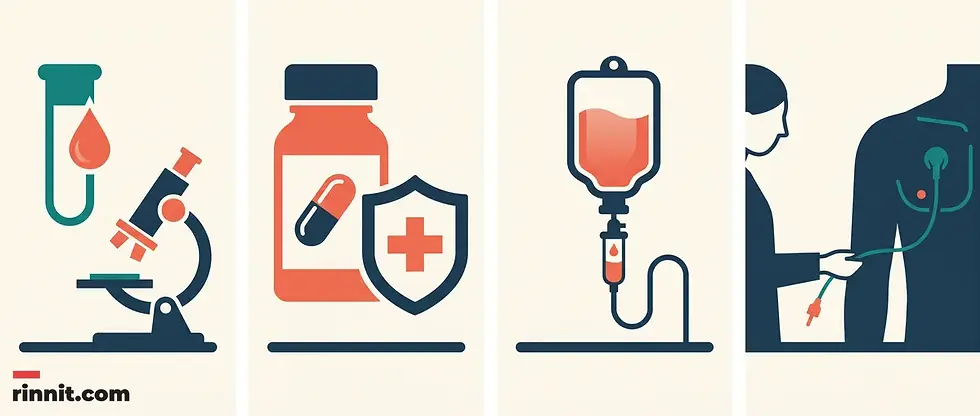
Blood culture results can take several days to come back — but if your provider suspects a CLABSI, they won't wait. Initial treatment is based on the most likely cause, your symptoms and your overall health [1]. You'll be given an antibiotic that can treat several types of bacterial infections, and an antifungal if a fungal infection is suspected [1].
Once results come back, your provider knows the specific bacterium or fungus causing the infection — and switches you to a more targeted, appropriate medication [1].
What Is the Outlook for Someone With a CLABSI?
CLABSIs have become more resistant to antibiotics and antifungals [1]. That means medication can't always stop the germs from growing and infecting the body, which can make the infection very hard to treat [1].
Sometimes providers can't find a medication that will clear the infection at all. It may spread to other areas of the body, or severe complications may develop [1]. About 28,000 people die from CLABSIs every year [1] [3].
How Can CLABSIs Be Prevented?
CLABSI prevention is possible — and as a patient, you can take real steps to reduce your risk:
Prevention step | What to do |
Speak up | Alert your provider if you think you have an infection [1], and mention recent treatments — including time in other hospitals or outside the U.S. |
Ask questions | |
Follow treatment guidelines | Take antibiotics exactly as prescribed and report any side effects [1]. |
Don't touch | Avoid touching the catheter and the area around the insertion site [1]. |
Wash hands | Make sure everyone entering your room — providers and visitors — washes hands often [1]. |
Get your room cleaned | Let hospital staff clean your room to eliminate germs [1]. |
The five elements of the CLABSI bundle
Prevention starts with healthcare providers, who often use an evidence-based system called the CLABSI bundle. If your hospital uses it, you can confirm they're following all five practices:
Bundle element | What it means |
Hand hygiene | Providers wash their hands before inserting a central line [1]. |
Maximal barrier precautions | Providers wear protective equipment — a surgical cap and mask, sterile gloves and a gown — during insertion [1]. |
Chlorhexidine skin antisepsis | The skin is cleaned and disinfected with chlorhexidine before insertion [1]. |
Optimal catheter site selection | Providers choose an appropriate vein, avoiding the femoral vein in adults [1]. |
Daily review of catheter necessity | The need for the line is questioned daily, and it's removed as soon as it's no longer needed [1]. |
Central lines let providers access your veins easily and reduce the need for repeated needle sticks. But sometimes they cause infections. The good news is that CLABSIs are preventable — hospitals follow strict guidelines, and speaking up with questions and staying cautious are key to avoiding infection.
Conclusion
CLABSI is a serious but preventable bloodstream infection that strikes when bacteria or fungi ride a central line into the bloodstream. With around 250,000 cases and roughly 28,000 deaths in U.S. hospitals each year [1], it's one of the most consequential healthcare-associated infections — yet it responds to a proven prevention playbook. Diagnosis depends on blood cultures drawn from the line and a peripheral vein, treatment begins immediately with broad-spectrum antibiotics or antifungals before narrowing to a targeted drug, and a five-element safety bundle protects patients at every step. If you or a loved one has a central line, speak up, ask questions and keep hands away from the catheter — prevention is a team effort.
Want to explain health topics like this one visually? If you want to make hospital-safety and infection-prevention concepts easy to grasp, Rinnit's infographic templates help you turn medical guidance into clear, shareable visuals.
Frequently Asked Questions
What is a CLABSI in simple terms?
A CLABSI is a bloodstream infection that happens when germs enter the blood through a central line — the long tube placed into a deep vein in the hospital.
What does CLABSI stand for?
Central line-associated bloodstream infection — "central line" (deep vein catheter), "associated" (linked to), "bloodstream infection" (germs in the blood).
Is CLABSI a hospital-acquired infection?
Yes. CLABSIs are a type of healthcare-associated infection (HAI) that occurs in hospitals and other healthcare settings.
How common are CLABSIs?
About 250,000 cases happen in U.S. hospitals every year.
How many people die from CLABSIs?
About 28,000 people die from CLABSIs every year.
What is a central line?
A central line is a long, flexible tube placed into a deep vein in the neck, chest, arm, belly or groin that leads to a major vein near the heart. It's used to give medicine or fluids and take blood samples.
How is a central line different from a regular IV?
Regular peripheral IVs are shorter and thinner and go into the limbs. Central lines reach a major vein near the heart and are much more likely to cause infections.
What types of central lines are there?
PICCs (upper arm), tunneled catheters (chest or neck), non-tunneled catheters (neck, groin or chest) and implanted ports (under the skin in chest, arm or belly).
What is a PICC line?
A peripherally inserted central catheter — inserted into a vein in the upper arm and guided to the chest.
What is an implanted port?
A device placed under the skin in the chest, arm or belly that provides easy access to a vein.
How do germs get into the bloodstream with a central line?
Bacteria or fungi enter the bloodstream through the central line itself or around its insertion site.
What germs cause CLABSIs?
The most common are staphylococci (34.1%), enterococci (16%), Candida species (11.8%), Staphylococcus aureus (9.9%), Klebsiella (5.8%), Enterobacter (3.9%), Pseudomonas (3.1%), E. coli (2.7%) and Acinetobacter (2.2%).
What is the most common germ in CLABSIs?
Staphylococci account for 34.1% of CLABSIs.
Can fungi cause CLABSIs?
Yes. Candida species cause about 11.8% of CLABSIs.
What are the first symptoms of a CLABSI?
Fever and chills are common early signs, along with redness, pain, soreness or swelling around the catheter insertion site.
Can you have a CLABSI without symptoms?
Yes. You may have no signs at all — the provider may only find the infection during a blood culture test.
Does a CLABSI cause fever?
Yes. Fever is one of the recognized symptoms.
Does a CLABSI cause chills?
Yes. Chills commonly accompany the fever.
What does a CLABSI look like on the skin?
Redness or darker skin, pain, soreness, swelling or discharge around the catheter insertion site.
Can a CLABSI cause discharge at the insertion site?
Yes. Fluid discharge from the site is a warning sign.
Why is blood hard to draw with a CLABSI?
Infection can block the line or reduce flow, causing trouble drawing blood and poor blood flow through the catheter.
Who is at risk of a CLABSI?
Patients with long hospital stays before getting a central line, hard-to-access veins, preterm birth, weakened immune systems, neutropenia, burns, malnutrition or a BMI over 40.
Does neutropenia increase CLABSI risk?
Yes. Low neutrophil counts reduce the body's ability to fight off germs.
Does a weak immune system increase CLABSI risk?
Yes. A weakened immune system makes it harder to fight off bacteria and fungi.
Is a CLABSI dangerous?
Yes. CLABSIs are serious infections that can lead to severe complications, including death.
Can a CLABSI cause sepsis?
Yes. Sepsis and septic shock are among the severe complications.
Can a CLABSI cause organ failure?
Yes. Organ failure is a possible severe complication.
Does a CLABSI increase the chance of abnormal blood clotting?
Yes. Abnormal blood clotting is one of the severe complications.
How long does a CLABSI keep someone in the hospital?
On average, CLABSI patients spend 45 days in the hospital versus 11 days for patients without one, and 24 days in the ICU versus 5 days.
What is the death rate with a CLABSI?
Patients with a CLABSI face a 51% risk of death versus 28% without one.
How is a CLABSI diagnosed?
Through symptom assessment, physical exam and, most accurately, a blood culture — blood drawn from both the central line and a peripheral line and grown in a lab.
What is a blood culture?
A lab test where blood samples are incubated so germs can grow and multiply; enough bacteria confirms an infection.
Why is blood drawn from two areas for a CLABSI culture?
Drawing from both the central line and a peripheral line helps confirm the infection came through the line.
What other tests help diagnose a CLABSI?
Complete blood count (CBC), electrolyte panel, kidney function tests and liver function tests.
Can a CLABSI be treated?
Yes. Treatment starts immediately with broad-spectrum antibiotics or antifungals, then switches to a targeted drug once the specific germ is identified.
Why is treatment started before culture results?
Cultures take several days, and providers won't wait when a CLABSI is suspected — they treat based on the most likely cause, symptoms and overall health.
What antibiotics are used for CLABSIs?
Providers start with an antibiotic that treats several types of bacterial infections, then narrow to the specific drug once the germ is identified.
Do CLABSIs need antifungal treatment?
If a fungal infection is suspected, an antifungal is given alongside or instead of antibiotics.
Does the central line need to be removed for a CLABSI?
Often, yes. A CLABSI can mean the line must come out, making it harder to receive medications and fluids.
Are CLABSIs antibiotic-resistant?
Increasingly, yes. CLABSIs have become more resistant to both antibiotics and antifungals, making them harder to treat.
What happens if antibiotics don't work?
The infection may spread to other areas of the body or cause severe complications, and sometimes no medication can clear it.
Is CLABSI curable?
Many cases are successfully treated, but resistant infections can be very hard to clear, which is why prevention is critical.
Can CLABSIs be prevented?
Yes. CLABSIs are preventable through hospital safety practices and patient habits.
What is the CLABSI bundle?
An evidence-based five-step prevention system used by hospital providers during central line insertion and care.
What are the five elements of the CLABSI bundle?
Hand hygiene, maximal barrier precautions (PPE), chlorhexidine skin antisepsis, optimal catheter site selection and daily review of catheter necessity.
Why is chlorhexidine used before central line insertion?
It cleans and disinfects the skin to kill germs before the line enters the body.
Why do providers review the need for a central line daily?
So it can be removed as soon as it's no longer needed — fewer days with a line means less infection risk.
Which vein should be avoided for central lines in adults?
The femoral vein in the groin.
What can patients do to prevent CLABSIs?
Speak up about symptoms, ask questions about the line, take antibiotics exactly as prescribed, avoid touching the catheter, ensure everyone washes their hands and keep the room cleaned.
Should visitors wash their hands around a central line?
Yes. Making sure all visitors and providers wash hands often helps eliminate germs.
Should I touch the area around my central line?
No. Avoid touching the catheter and the area around the insertion site.
What questions should I ask about my central line?
Ask about the pros and cons, when it will be removed, and what's being done to protect you from antimicrobial-resistant infections.
Why should I mention treatments at other hospitals?
Recent treatments — including at other hospitals or outside the U.S. — help providers assess infection risk and choose the right care.
Are CLABSIs getting worse?
They're becoming more resistant to antibiotics and antifungals, which makes treatment harder and prevention more important than ever.
Is my central line necessary?
Ask your provider. Daily review of catheter necessity is a standard safety practice, and lines should be removed as soon as they're no longer needed.
What should I do if I think I have a CLABSI?
Speak up immediately — tell your provider about any fever, chills or changes at the insertion site so treatment can start right away.
Can a CLABSI recur?
The risk persists as long as a central line is in place, which is why daily necessity reviews and early removal matter.
Related Reading
Avoiding Healthcare-Associated Infections: Essential Steps for Patients and Families
Understanding PICC Lines: A Guide to Peripherally Inserted Central Catheters
Understanding Non-Tunneled Central Venous Catheters: A Guide to Short-Term Vascular Access
Understanding Implanted Ports: A Guide to Long-Term Vascular Access
What Is Candida Albicans? Symptoms, Causes, and Treatment Explained
What Is an MRSA Infection? A Plain-Language Guide to This Tough Staph Germ
Carbapenem-Resistant Enterobacterales (CRE): The Antibiotic-Resistant "Superbug" Infection Explained
Sepsis: Complete Guide to Symptoms, Causes, Risks, and Treatment
References
Cleveland Clinic. CLABSI. Cleveland Clinic. Medically reviewed; last updated January 26, 2026. https://my.clevelandclinic.org/health/diseases/clabsi
Centers for Disease Control and Prevention. Central Line-associated Bloodstream Infection (CLABSI) Basics. CDC. Last updated June 12, 2025. https://www.cdc.gov/clabsi/about/index.html
Haddadin Y, Annamaraju P, Regunath H. Central Line-Associated Blood Stream Infections. In: StatPearls [Internet]. Treasure Island (FL): StatPearls Publishing; 2025 Jan-. Updated November 26, 2022. PMID: 28613641. https://www.ncbi.nlm.nih.gov/books/NBK430891/
Alotaibi NH, Barri AM, Somily AM. The attributable factors that increase the likelihood of central line associated blood stream infection related in-hospital 30-day mortality. Cureus. 2023;15(3):e35898. PMID: 37033526. https://doi.org/10.7759/cureus.35898
Atilla A, Doğanay Z, Kefeli Çelik H, et al. Central line-associated blood stream infections: characteristics and risk factors for mortality over a 5.5-year period. Turk J Med Sci. 2017;47(2):646-652. PMID: 28425261. https://doi.org/10.3906/sag-1511-29
National Library of Medicine (US). Central line infections - hospitals. MedlinePlus. Accessed November 4, 2026. https://medlineplus.gov/ency/patientinstructions/000474.htm
Sagana R, Hyzy RC. Achieving zero central line-associated bloodstream infection rates in your intensive care unit. Crit Care Clin. 2013;29(1):1-9. PMID: 23182523. https://doi.org/10.1016/j.ccc.2012.10.003
Alshahrani KM, Alhuwaishel AZ, Alangari NM, et al. Clinical impacts and risk factors for central line-associated bloodstream infection: a systematic review. Cureus. 2023;15(6):e40954. PMID: 37503497. https://doi.org/10.7759/cureus.40954
Gupta P, Thomas M, Patel A, et al. Bundle approach used to achieve zero central line-associated bloodstream infections in an adult coronary intensive care unit. BMJ Open Qual. 2021;10(1):e001200. PMID: 33597274. https://doi.org/10.1136/bmjoq-2020-001200
Medical disclaimer
This article is for informational purposes only and is not a substitute for professional medical advice, diagnosis, or treatment. Always seek the advice of a qualified healthcare provider with any questions about a medical condition or before making decisions about treatment. Never disregard professional medical advice or delay seeking it because of something you have read here.



Comments