Understanding PICC Lines: A Guide to Peripherally Inserted Central Catheters

Updated: 2 days ago
Medically reviewed by Dr. Baraa Alnahhal, MD · Last reviewed: September 2026
Quick Answer
A peripherally inserted central catheter (PICC) is a long, flexible tube inserted into a vein in your upper arm that travels to the large vein above your heart, providing reliable, long-term access for medical treatments. It is used for treatments lasting weeks to months, such as chemotherapy, long-term antibiotics, or intravenous nutrition. By accessing larger veins, it prevents the irritation often caused by standard IVs in smaller vessels, and patients can receive multiple medications simultaneously while avoiding frequent needle pokes for blood tests. While it requires careful maintenance to prevent infection and blockage, a PICC line offers a flexible, durable solution for patients needing extended care in various settings, including at home.

The Purpose and Function of a PICC Line
Modern medical treatments often require consistent access to the bloodstream over extended periods. A peripherally inserted central catheter, commonly known as a PICC line, is designed to meet this need. It is a type of central venous catheter that is much longer and more durable than a standard intravenous (IV) line. While a regular IV is typically used for short-term fluids or medications in a hospital setting, a PICC line is intended for treatments that may last for several weeks, months, or even longer than a year.
The primary advantage of a PICC line is its ability to reach the superior vena cava, a large vein located just above the heart. This allows medications to be diluted quickly by a high volume of blood flow, which protects the smaller, more fragile veins in the arms from irritation and damage. It is an essential tool for delivering chemotherapy, long-term antibiotics, and total parenteral nutrition (TPN). Additionally, healthcare providers can use the line to draw blood for laboratory tests, significantly reducing the number of needle sticks a patient must endure.
A PICC line is one type of central venous catheter used for long-term vascular access, alongside other options your care team may consider based on your treatment needs.
The Placement Procedure
The insertion of a PICC line is a specialized but common procedure that typically takes about one hour. Patients remain awake and lie on their back while a healthcare provider uses ultrasound technology to locate a suitable vein in the upper arm, usually just above the elbow. After the area is numbed with a local anesthetic, the catheter is gently threaded through the vein until the tip reaches the large vein near the heart.
Procedure Phase | Key Activities |
Preparation | Review of medical history, medications, and blood tests to check clotting and kidney function. |
Insertion | Ultrasound-guided placement into an upper arm vein under sterile conditions with local numbing. |
Confirmation | A chest X-ray is often performed immediately after placement to verify the exact position of the catheter tip. |
Most patients experience little to no discomfort during the procedure and are able to go home the same day. Following placement, it is normal to experience minor pain or swelling at the insertion site for a short period, but patients can typically resume most normal daily activities quickly.

Daily Care and Maintenance
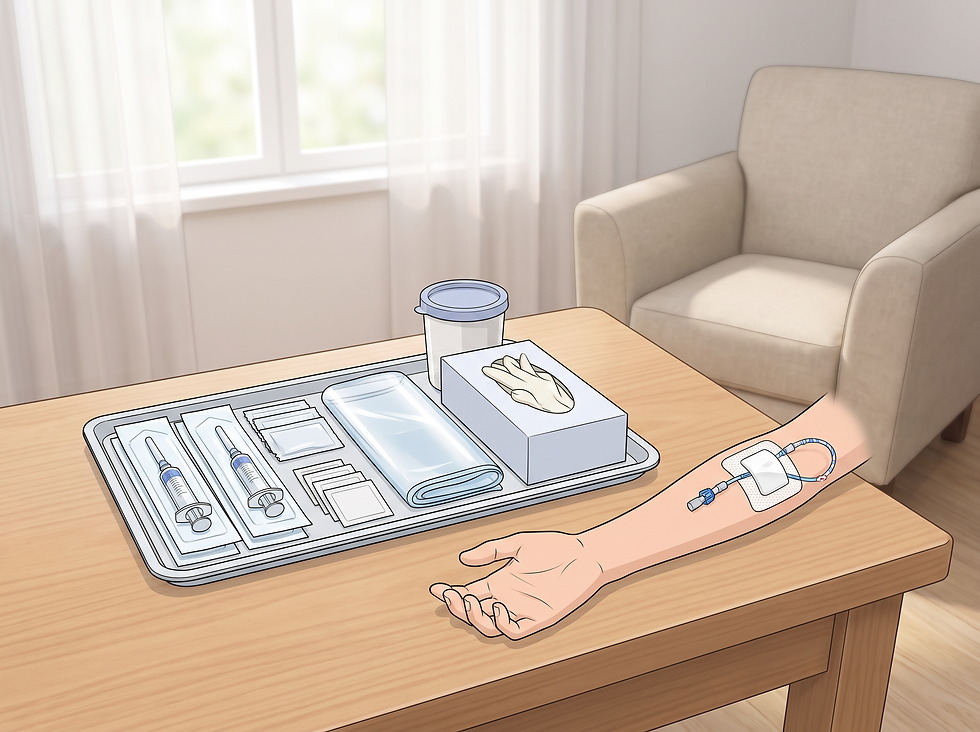
Maintaining a PICC line is critical to its longevity and the prevention of complications. The most important aspect of care is keeping the insertion site sterile. A sterile bandage, or dressing, covers the site where the tube enters the arm and must be kept clean and dry at all times. If the dressing becomes wet, torn, or visibly soiled, it must be changed immediately by a trained healthcare professional.
Care Aspect | Maintenance Requirements |
Dressing Changes | Typically performed every seven days by a nurse or licensed caregiver using sterile technique. |
Line Flushing | Regular flushing with a sterile saline solution to keep the catheter clear and prevent blockages. |
Hygiene | The line must be covered with a waterproof wrap during showering to protect the dressing. |
Site Inspection | Daily checks for signs of redness, swelling, or drainage that could indicate an infection. |
Patients are also advised to avoid certain physical activities that could dislodge the line or cause irritation. This includes heavy lifting (typically anything over 10 pounds), contact sports, and repetitive arm-swinging motions such as those used in golfing or bowling.
Benefits and Potential Risks
The use of a PICC line offers significant benefits, particularly for those requiring complex or long-term therapy. It provides a reliable "highway" for medications, allows for the simultaneous delivery of different treatments through multiple openings (lumens), and can be used in various care settings, including the patient's home.
However, like any medical device that enters the body, there are associated risks. The most common concerns include the formation of blood clots (thrombosis) around the catheter or the development of an infection at the insertion site. In rare cases, an infection can enter the bloodstream, leading to a serious condition known as sepsis. Other potential issues include the catheter moving out of position or becoming blocked by a clot. Despite these risks, the procedure has a high success rate, with more than 95% of placements being effective.
Conclusion
A PICC line is a vital medical tool that simplifies the delivery of complex treatments while improving patient comfort by reducing frequent needle pokes. While it requires a commitment to careful maintenance and hygiene, its ability to provide stable, long-term intravenous access makes it an invaluable asset in modern healthcare. By following the guidance of their medical team, patients can safely use a PICC line to receive the care they need in the most comfortable setting possible.
Next Steps
Initial Training: Ensure you or your caregiver receive thorough instructions from a nurse on how to flush the line and protect the dressing.
Activity Adjustment: Identify daily tasks that involve heavy lifting or repetitive arm motions and arrange for assistance during your treatment period.
Supply Check: Confirm you have all necessary supplies for line maintenance, including waterproof covers for showering and alcohol swabs for cleaning the line tips.
Emergency Planning: Know exactly who to call if you notice signs of infection, such as fever, or if the line becomes dislodged or blocked.
Frequently Asked Questions
How long can a PICC line stay in place?
A PICC line can remain for several weeks, months, or even over a year, as long as it is functioning correctly and still needed for treatment.
Does it hurt to get a PICC line?
The area is numbed with a local anesthetic before insertion, so most patients feel little to no pain during the procedure.
Can I shower with a PICC line?
Yes, but you must cover the dressing with a waterproof wrap or plastic to keep it completely dry.
What is the difference between a PICC line and a regular IV?
A PICC line is longer, more durable, and reaches the large veins near the heart, whereas a regular IV is short-term and stays in smaller veins in the hand or arm.
Can I use my arm normally?
You can use your arm for most daily tasks, but you must avoid heavy lifting and activities that involve swinging your arm.
What should I do if my dressing gets wet?
Contact your healthcare provider or home health nurse immediately to have the dressing changed, as a wet dressing increases the risk of infection.
How often does the line need to be flushed?
The frequency depends on your specific treatment plan, but it is typically flushed after each use or at least once a day if not in use.
Can I exercise with a PICC line?
Light activity is fine, but you should avoid strenuous exercise, swimming, and contact sports.
What are the signs of a blood clot?
Signs include swelling, pain, or redness in the arm, shoulder, or neck on the side where the PICC line is located.
Can I go home with a PICC line?
Yes, many patients receive their treatments at home with the help of a home health nurse or by being trained to manage the line themselves.
How is a PICC line removed?
A healthcare provider gently pulls the catheter out. It is a quick procedure and usually painless.
Can blood be drawn from a PICC line?
Yes, one of the benefits of a PICC line is that it can be used for frequent blood draws, reducing the need for additional needle sticks.
What if the line gets blocked?
Healthcare providers can often use special medications to clear a blockage in the line.
Is a PICC line the same as a port?
No, a PICC line has a "tail" that stays outside the body, while a port is completely implanted under the skin.
What happens if the line accidentally gets pulled?
If the line moves or comes out partially, do not try to push it back in. Cover the site and contact your healthcare provider immediately.
This article is for informational purposes only and does not constitute medical advice. Always seek the guidance of your physician or other qualified health provider with any questions you may have regarding a medical condition or treatment.
Comments