Understanding Implanted Ports: A Guide to Long-Term Vascular Access

Updated: 2 days ago
Medically reviewed by Dr. Baraa Alnahhal, MD · Last reviewed: September 2026
TL;DR
An implanted port is a small medical device placed under the skin to provide easy, long-term access to a vein for treatments like chemotherapy, blood transfusions, and frequent blood draws. It consists of a self-sealing septum and a catheter threaded into a large vein. The device reduces the need for repeated needle sticks, protects veins from damage, and can last for years with proper care.
Quick Answer
An implanted port is a small device placed under the skin for long-term vein access. It consists of a self-sealing reservoir and a catheter entering a central vein. This system allows providers to deliver medications or draw blood with one needle stick, reducing repeated IV insertions and protecting smaller veins during frequent treatments.
Overview of Implanted Ports
Implanted ports serve as a vital tool for individuals requiring frequent or prolonged intravenous therapies. By providing a stable and reliable access point, these devices minimize the physical and emotional stress associated with repeated needle insertions. Whether used for oncology treatments, chronic infection management, or nutritional support, the implanted port offers a durable solution that integrates into a patient's daily life with minimal disruption.
Anatomical Components and Function
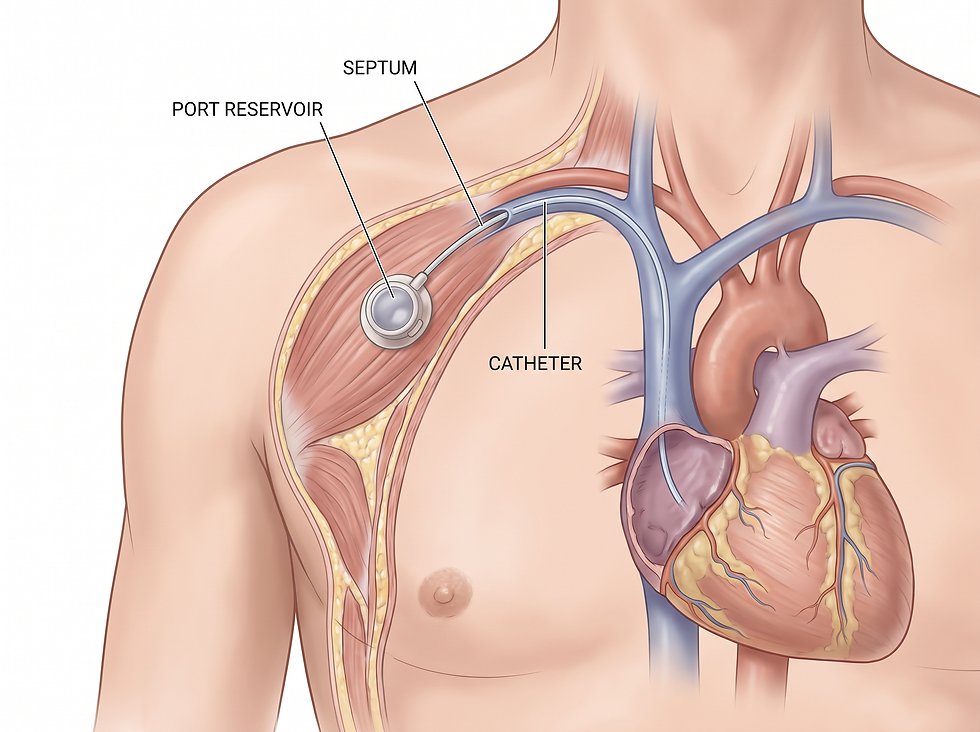
The device is composed of two primary parts: a port reservoir and a catheter. The reservoir is a small disc, typically made of plastic or metal, featuring a self-sealing silicone top known as a septum. This septum is designed to be punctured by specialized needles up to 2,000 times without losing its integrity. The catheter is a thin, flexible tube attached to the reservoir that is threaded into a large central vein, such as the superior vena cava, to ensure rapid and safe distribution of medications throughout the body.
Port reservoir (plastic or metal): Acts as the main housing and injection site under the skin.
Septum (silicone): A self-sealing rubber cap that allows needle access.
Catheter (flexible tubing): Transports fluids from the port directly into a major vein.
Lumen (single or double): Determines whether one or two treatments can be given at once.
Indications for Port Placement
Healthcare providers recommend implanted ports for patients facing medical conditions that require consistent vascular access. This includes individuals undergoing chemotherapy for cancer, where strong medications could otherwise damage smaller peripheral veins. It is also essential for patients with kidney failure requiring dialysis, those with severe infections needing long-term antibiotics, and individuals with inflammatory bowel disease (IBD) who require parenteral nutrition.
The Insertion Procedure
The placement of an implanted port is a minor, outpatient surgical procedure that typically lasts about one hour. Patients are usually given light sedation and local anesthesia to ensure comfort. Using fluoroscopy (continuous X-ray imaging) for guidance, a surgeon creates a small pouch under the skin to house the port and threads the catheter into the target vein. Stitches used to close the small incisions are typically dissolvable, and most patients return home the same day.
Procedure Phases
Pre-operative: Fasting and blood tests to ensure patient safety and check clotting function.
Intra-operative: Fluoroscopy guidance for precise placement of the port and catheter.
Post-operative: A chest X-ray to confirm the device is in the correct position.
Recovery: Wound care to prevent infection and allow the incision to heal.
Clinical Benefits and Advantages
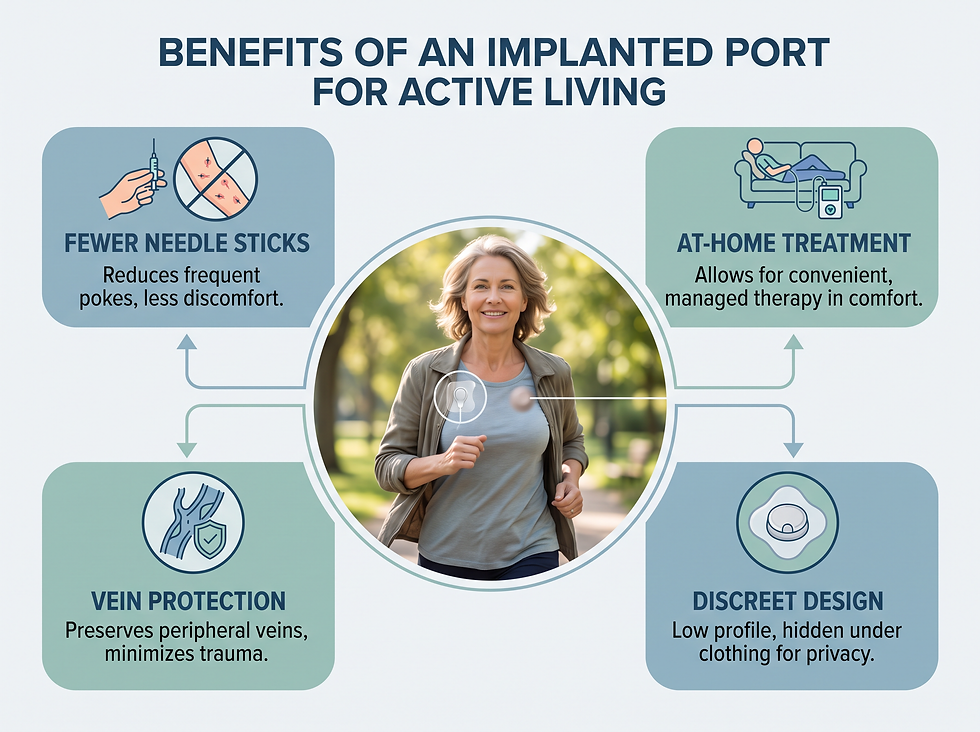
The primary advantage of an implanted port is the significant reduction in needle sticks. A single access point can facilitate multiple blood draws and treatments in a single day. Furthermore, ports allow for at-home treatments in some cases, providing patients with greater autonomy. Because the entire system is under the skin, it lowers the risk of infection compared to external catheters and protects tissues from potential leaks of irritating medications.
Access and Maintenance
Accessing the port involves cleaning the skin with an antiseptic and inserting a needle through the skin into the septum. Numbing creams can be applied beforehand to eliminate sensation. To maintain the device's functionality, it must be flushed periodically with a specialized solution to prevent blood clots from forming within the catheter. With this routine care, a port can remain functional for several years.

Long-Term Considerations and Removal
Once the medical necessity for the port has concluded, it is removed through a procedure that is even faster than the initial insertion. A small incision is made, and the entire system is gently withdrawn. Like the insertion, this is performed under local anesthesia. Patients are advised to avoid strenuous activity until the removal site has fully healed, after which they can return to their normal routines without restriction.
Conclusion
Implanted ports represent a significant advancement in patient care for those requiring chronic vascular access. By providing a safe, durable, and discreet method for delivering life-saving treatments, these devices enhance both clinical outcomes and quality of life. Understanding the procedure, benefits, and maintenance requirements can help patients and caregivers navigate their treatment journey with confidence.
What you can do now: If you or a loved one are beginning a treatment plan that requires frequent IV access, speak with your healthcare team about whether an implanted port is the right choice for you. Early discussion can ensure that your vascular access is optimized for comfort and safety from the start of your therapy.
Frequently Asked Questions (FAQ)
1. What is an implanted port?
It is a small medical device placed under the skin to provide easy access to a vein for long-term treatments.
2. How long does the insertion procedure take?
The procedure is typically performed in an outpatient setting and takes approximately one hour.
3. Will I be awake during the port placement?
Most adults receive light sedation and local anesthesia, meaning they are relaxed but may remain conscious.
4. Can I see the port under my skin?
You may notice a small, firm bulge where the port is located, but it is entirely contained beneath the skin.
5. How many times can a port be used?
A standard port is designed to withstand up to 2,000 needle sticks before it may need replacement.
6. Does accessing the port hurt?
While the needle stick may cause minor discomfort, numbing creams can be used to significantly reduce sensation.
7. What is a double-lumen port?
It is a port with two access points, allowing healthcare providers to give two different medications simultaneously.
8. Can I shower with an implanted port?
Once the initial surgical incision has healed, you can shower and swim normally as the device is under the skin.
9. How often does the port need to be flushed?
If not in regular use, the port usually requires flushing every four weeks to prevent blood clots.
10. Who performs the port insertion?
The procedure is typically performed by a surgeon or an interventional radiologist.
11. Can I have an MRI with a port?
Many ports are MRI-safe, but you should always inform the imaging technician about your device.
12. What are the signs of a port infection?
Signs include redness, swelling, warmth, or drainage at the site, as well as fever or chills.
13. Is a port permanent?
No, the port is intended for long-term use but is removed once your treatment is complete.
14. What is a power-injectable port?
It is a specialized port that can withstand the high pressure required to inject contrast dye for imaging scans.
15. How is the port removed?
It is removed through a minor surgical procedure under local anesthesia, similar to but faster than the insertion.
Medical disclaimer: The information provided is for educational purposes only and should not be used as a substitute for professional medical advice, diagnosis, or treatment. Always seek the advice of your physician or other qualified health provider with any questions you may have regarding a medical condition. Based on information dated February 28, 2024.
Comments