Understanding Hyperinsulinemia: Symptoms, Causes, and Management

Updated: 2 days ago
Medically reviewed by Dr. Baraa Alnahhal, MD · Last reviewed: October 2026
Quick Answer
Hyperinsulinemia is a condition in which the blood contains more insulin than normal, usually as a response to insulin resistance: because cells do not use insulin properly, the pancreas releases extra insulin to keep blood sugar in range. [1] It differs from hyperinsulinism, a rarer condition caused by a pancreas problem that leads to low blood sugar. [1]

What the research says
Lifestyle changes can sharply cut the risk of diabetes. In 3,234 adults at high risk of type 2 diabetes who were followed for an average of 2.8 years, a program with at least 7% weight loss and at least 150 minutes of physical activity per week reduced the incidence of diabetes by 58% compared with placebo. Metformin reduced it by 31%, and the lifestyle program was significantly more effective than metformin (Knowler et al., New England Journal of Medicine, 2002 [2]).
High-intensity interval training lowers insulin resistance. A meta-analysis of 50 studies found lower insulin resistance after high-intensity interval training than with no exercise (standardized mean difference -0.49) or continuous moderate training (-0.35). Compared with no exercise, HbA1c fell by 0.19% and body weight by 1.3 kg (Jelleyman et al., Obesity Reviews, 2015 [3]).
For women with PCOS, lifestyle programs help, but the evidence is limited. A Cochrane review of 15 randomized trials with 498 women found that lifestyle programs may reduce weight by about 1.7 kg and improve the free androgen index. The effect on glucose tolerance was uncertain, and most studies were of low quality (Lim et al., Cochrane Database of Systematic Reviews, 2019 [4]).
Key Takeaways
Feature | Details |
Definition | A higher-than-normal amount of insulin in the blood, usually because of insulin resistance. [1] |
Primary Cause | Insulin resistance, when muscle, fat, and liver cells do not respond properly to insulin. [1] |
Main Risk Factors | Excess body fat (especially around the belly), little physical activity, age 45 or older, and a close relative with diabetes. [1] |
Common Symptoms | Often none. Darkened skin patches (acanthosis nigricans) and skin tags can appear as prediabetes develops. [1] |
Associated Conditions | Prediabetes, type 2 diabetes, obesity, metabolic syndrome, PCOS, high blood pressure, high triglycerides, high uric acid, and atherosclerosis. [1] |
Diagnosis | No single test. Providers use your history, an exam, and blood tests such as fasting plasma glucose. [1] |
Main Treatment | Lifestyle changes first (diet, exercise, weight loss). Medication or bariatric surgery may help some people. [1] |
Outlook | Often improvable or manageable with lifestyle changes, but not every cause can be reversed. [1] |
What is hyperinsulinemia, and how does it develop?
Insulin is a hormone made by your pancreas that is essential for life. [1] It regulates blood sugar (glucose) by lowering glucose levels, letting cells take up sugar for energy. When cells become resistant to insulin, the pancreas releases more of it to keep blood sugar stable. [1] This higher insulin state is hyperinsulinemia. Learn more about this hormone in our guide to insulin.
Hyperinsulinemia vs. Hyperinsulinism
The names are similar, so the two are often confused:
Hyperinsulinemia: Excess insulin that results from insulin resistance. Because the extra insulin is working against resistance, it does not usually cause low blood sugar. [1]
Hyperinsulinism: Excess insulin caused by a problem with the pancreas, such as an insulin-producing tumor (insulinoma) or an inherited gene change. [1] Unlike hyperinsulinemia, it causes low blood sugar (hypoglycemia).
How Common Is It?
Because there is no common test for hyperinsulinemia and there are usually no symptoms until insulin resistance turns into prediabetes or type 2 diabetes, prevalence is best estimated from prediabetes cases. [1] The CDC estimates that about 98 million adults in the United States, more than one in three, have prediabetes. [1]
What are the symptoms and warning signs of hyperinsulinemia?
Hyperinsulinemia caused by insulin resistance may cause no noticeable symptoms, because the pancreas can make enough insulin to overcome the resistance. [1] Symptoms usually appear only when blood sugar starts to rise. Some people with prediabetes notice:
Acanthosis nigricans: Darkened, velvety skin in the armpits or on the back and sides of the neck. See our guide to acanthosis nigricans.
Skin tags: Small, harmless skin growths. See skin tags.
Eye changes: Changes that can lead to diabetic retinopathy. [1]
If hyperinsulinemia progresses to type 2 diabetes, symptoms can include: [1]
Increased thirst
Frequent urination
Increased hunger
Blurred vision
Headaches
Vaginal and skin infections
Slow-healing cuts and sores
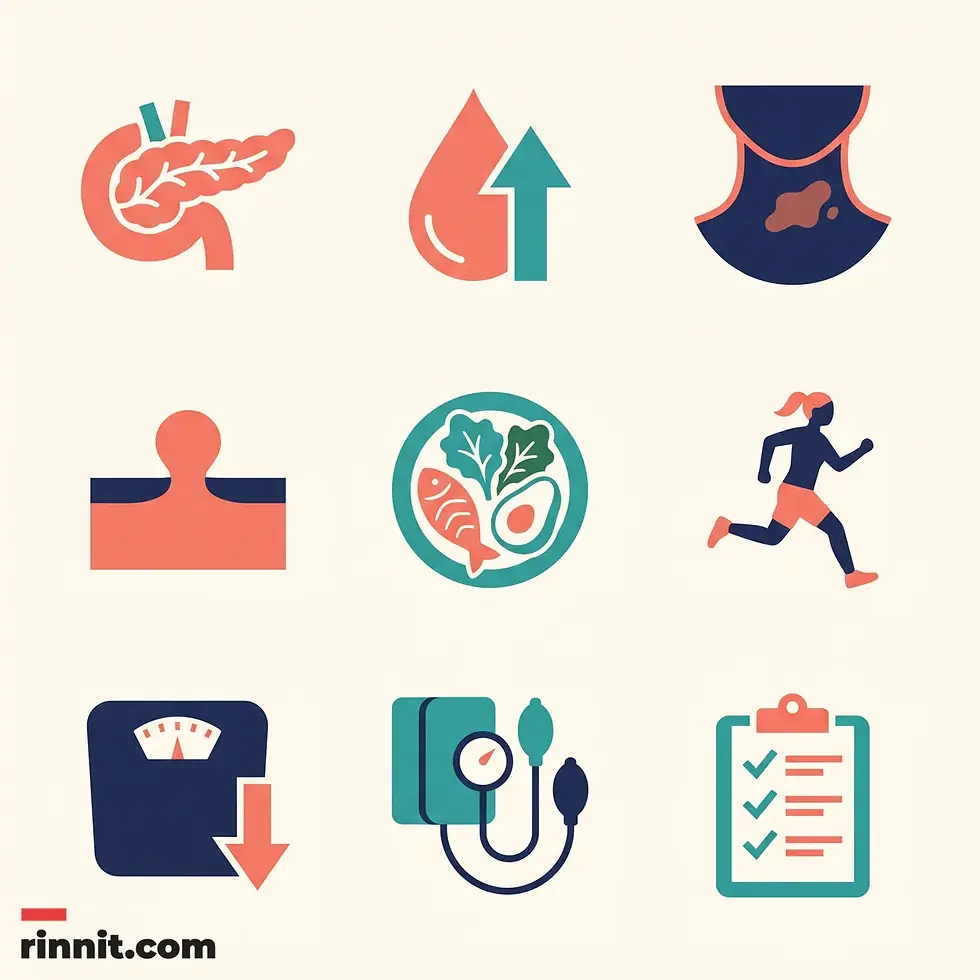
What causes hyperinsulinemia, and what are the risk factors?
Insulin resistance is the main cause of hyperinsulinemia, and excess belly fat and a lack of physical activity seem to be the two main contributors. [1] The two main factors that seem to contribute to insulin resistance are excess body fat, especially around your belly, and a lack of physical activity. Cleveland Clinic lists these risk factors:
Having overweight or obesity, especially excess fat around the belly
Being age 45 or older
Having a parent or sibling with diabetes
Having a sedentary lifestyle
Having high blood pressure or abnormal cholesterol levels
Having a history of heart disease or stroke
Having a sleep disorder such as sleep apnea
Smoking [1]
What health conditions are associated with hyperinsulinemia?
Besides prediabetes and type 2 diabetes, hyperinsulinemia is linked to obesity, metabolic syndrome, PCOS, high triglycerides, high uric acid, atherosclerosis and high blood pressure. [1]
How is hyperinsulinemia diagnosed and tested?
Hyperinsulinemia can be tricky to diagnose because it often has no symptoms and there is no common test for excess insulin. It often has no symptoms unless it leads to prediabetes or type 2 diabetes, and there is no common test for excess insulin because insulin levels vary widely during the day. [1] Instead, your healthcare provider will consider:
Medical history: Including weight changes, sleep, and other conditions.
Family history: Especially diabetes and heart disease.
Physical exam: Looking for signs such as acanthosis nigricans and a larger waist measurement.
Signs and symptoms: Including any symptoms of high blood sugar.
Blood tests: Such as a fasting plasma glucose (FPG) test [1], and an A1c test, which shows your average blood sugar over the past 2 to 3 months.
How is hyperinsulinemia managed and treated?
Not every factor that contributes to hyperinsulinemia can be changed, such as age and genetics, so lifestyle changes are the primary treatment. [1]
Lifestyle Modifications
Diet: Cleveland Clinic suggests avoiding excessive carbohydrates and eating less unhealthy fat, sugar, red meat, and processed starches. Choose whole foods such as vegetables, fruits, whole grains, fish, and lean poultry. [1]
Exercise: Exercise lowers insulin levels and gradually increases insulin sensitivity. [1] A meta-analysis found that high-intensity interval training lowered insulin resistance compared with no exercise. [3]
Weight loss: Losing weight is associated with improvement in hyperinsulinemia, while weight gain is associated with worsening. [1] Treating obesity with lifestyle changes, diet, medication, or bariatric surgery can improve it. [1]
Medical Interventions
Medication: In some people at high risk of type 2 diabetes, a doctor may prescribe metformin. [2] In the Diabetes Prevention Program it reduced the incidence of diabetes by 31%, compared with 58% for the lifestyle program. [2]
Bariatric surgery: For people with class III obesity, Cleveland Clinic reports that surgery results in a rapid correction of hyperinsulinemia within one week, with insulin sensitivity improving between 6 and 24 months afterward. [1] Not everyone is a good candidate.

What is the outlook for hyperinsulinemia, and can it be prevented?
The outlook depends on the cause and severity of insulin resistance, how likely you are to develop complications, and how well you follow treatment. [1] Some people have mild insulin resistance and hyperinsulinemia that never turn into prediabetes or type 2 diabetes. [1] Others have a form that is reversible or very manageable with lifestyle changes. [1] If it does progress to type 2 diabetes, careful management helps prevent complications.
Since hyperinsulinemia usually has no symptoms until it turns into prediabetes or type 2 diabetes, the best approach is to prevent and reverse insulin resistance by maintaining a healthy weight, exercising regularly, and eating a healthy diet.
When should you see a healthcare provider about hyperinsulinemia?
If you have been diagnosed with hyperinsulinemia or related conditions, see your provider regularly to check that your blood sugar is in a healthy range and that your treatment is working. If you notice symptoms of high blood sugar or prediabetes, such as increased thirst, frequent urination, blurred vision, or darkened skin patches, contact your provider. [1] Simple tests can check your blood sugar.
Conclusion
Hyperinsulinemia is a warning sign that the body is working harder than it should to control blood sugar. By addressing insulin resistance through diet, movement, and a healthy weight, many people can improve it and lower their risk of prediabetes, type 2 diabetes, and heart disease.
Frequently Asked Questions
Can hyperinsulinemia cause low blood sugar?
Usually not. When hyperinsulinemia is caused by insulin resistance, the extra insulin is just enough to keep blood sugar in a healthy range. [1] Excess insulin without insulin resistance, as in hyperinsulinism, can cause low blood sugar. [1]
Is hyperinsulinemia the same as diabetes?
No. It often comes before prediabetes and type 2 diabetes, but many people with hyperinsulinemia never develop diabetes. [1]
How do I know if I have insulin resistance?
Often you will not, because there are usually no symptoms. Clues include extra fat around the belly, high blood pressure, abnormal cholesterol, and darkened skin patches. Only a healthcare provider can assess it.
Can hyperinsulinemia be reversed?
It can often be improved or kept in check with a healthy diet, regular exercise, and weight loss. Not every cause is reversible, such as age and genetics. [1]
What foods should I limit?
Cleveland Clinic suggests limiting excessive carbohydrates, unhealthy fat, sugar, red meat, and processed starches, and eating more vegetables, fruits, whole grains, fish, and lean poultry. [1]
Does exercise lower insulin right away?
A single workout can improve how muscles take up glucose. Regular exercise lowers insulin levels and gradually increases insulin sensitivity. [1]
Why does belly fat matter more than other fat?
Excess fat around the belly is one of the two main factors linked to insulin resistance and hyperinsulinemia, along with low physical activity. [1]
Is metformin used for hyperinsulinemia?
Metformin may be prescribed for some people at high risk of type 2 diabetes. In a large trial it reduced the incidence of diabetes by 31%, but lifestyle changes worked better (58%). [2] Ask your provider whether it is right for you.
Can stress cause high insulin?
Stress hormones such as cortisol can raise blood sugar, which may lead the pancreas to release more insulin. Long-term stress can also make healthy habits harder to keep up.
How is hyperinsulinemia different from hyperinsulinism?
Hyperinsulinism is a different condition in which the pancreas releases too much insulin because of a problem such as an insulin-producing tumor or an inherited gene change. Unlike hyperinsulinemia, it causes low blood sugar. [1]
Is hyperinsulinemia linked to PCOS?
Yes. Cleveland Clinic lists polycystic ovary syndrome among the conditions associated with hyperinsulinemia. [1] High insulin may worsen the hormone imbalance in PCOS.
What is acanthosis nigricans?
Dark, velvety skin patches, usually in the armpits or on the back and sides of the neck. It can be a sign of insulin resistance or prediabetes.
Does high insulin cause weight gain?
Insulin helps the body store energy, and weight gain and hyperinsulinemia tend to worsen each other. Weight loss is associated with improvement in hyperinsulinemia.
Is hyperinsulinemia genetic?
Genetics play a role. Having a parent or sibling with diabetes raises your risk [1], but body weight and physical activity matter a great deal too.
How often should I test my insulin?
There is no common test for hyperinsulinemia, and insulin levels vary widely during the day. [1] Your provider will usually look at your history, exam, and blood sugar tests, and may order other tests if needed.
Can children have hyperinsulinemia?
Insulin resistance can occur in children, especially with excess weight and little physical activity. See our guide to type 2 diabetes in children.
What is metabolic syndrome?
A cluster of conditions that raise the risk of heart disease and diabetes, including a large waist, high blood pressure, high blood sugar, high triglycerides, and low HDL cholesterol. Insulin resistance is thought to be its main driver.
Does sleep affect insulin?
Sleep disorders such as sleep apnea are listed by Cleveland Clinic as risk factors for hyperinsulinemia. [1] Treating sleep problems may support metabolic health.
Can I have hyperinsulinemia if I am thin?
Yes. It is more common with excess body fat, but people at a healthy weight can also have insulin resistance because of genetics, inactivity, or fat stored deep in the belly.
Is there a standard "normal" fasting insulin level?
There is no single universally accepted cutoff, and labs use different reference ranges. Because insulin changes during the day, your provider will interpret any result together with your other tests.
Does vinegar help with insulin spikes?
Some small studies suggest that vinegar before a carbohydrate-rich meal may lower blood sugar rises, but the evidence is limited. It is not a substitute for diet, exercise, or medical care.
Is a low-carb diet good for hyperinsulinemia?
Eating fewer refined carbohydrates lowers the glucose load and the insulin needed to handle it. The best eating pattern depends on your health and what you can keep up, so ask a dietitian.
Can hyperinsulinemia cause acne?
High insulin can raise androgen hormones, which may contribute to acne, particularly in people with PCOS. Many other factors also play a role.
What is an insulinoma?
A rare tumor of the pancreas that releases excess insulin and causes low blood sugar. It is a form of hyperinsulinism, not the usual cause of hyperinsulinemia.
How does bariatric surgery affect hyperinsulinemia?
Cleveland Clinic reports that in people with class III obesity, surgery corrects hyperinsulinemia within one week, and insulin sensitivity improves between 6 and 24 months afterward. [1] Not everyone is a good candidate.
Does caffeine affect insulin?
In the short term, caffeine can slightly reduce insulin sensitivity in some people, while long-term coffee drinking has been linked to a lower risk of type 2 diabetes. Responses vary.
Can hyperinsulinemia cause headaches?
Hyperinsulinemia from insulin resistance usually causes no symptoms. Headaches can occur with high blood sugar once type 2 diabetes develops, and they have many other causes.
Is fiber important for insulin?
Yes. Fiber slows how quickly sugar is absorbed, which helps prevent sharp rises in blood sugar and insulin. Vegetables, fruits, whole grains, and legumes are good sources.
Can high insulin cause high blood pressure?
Hyperinsulinemia is associated with high blood pressure. [1] Insulin can make the kidneys hold on to sodium, which may raise blood pressure. See our guide to high blood pressure.
What is the A1c test?
A blood test that shows your average blood sugar over the past 2 to 3 months. It is used to check for prediabetes and diabetes.
Can hyperinsulinemia cause hair loss?
In women with PCOS, raised androgen hormones can cause hair thinning. Insulin resistance is thought to contribute to the hormone imbalance in PCOS.
Is intermittent fasting good for this?
Some studies suggest intermittent fasting can lower fasting insulin in some people, but it is not right for everyone, for example people on diabetes medicines, pregnant women, or anyone with a history of disordered eating. Ask your provider first.
Does alcohol affect insulin?
Heavy drinking can worsen insulin resistance and metabolic health. If you drink, keep it moderate and ask your provider what is safe for you.
Can hyperinsulinemia cause fatigue?
On its own, hyperinsulinemia usually does not cause symptoms. Tiredness can appear when blood sugar becomes high and has many other causes, so tell your provider if it persists.
What is visceral fat?
Fat stored deep in the belly, around organs such as the liver and intestines.
Can I take supplements for insulin?
Magnesium, chromium, and berberine have been studied for blood sugar, but the evidence is mixed and some supplements can interact with medicines. Talk to your provider first.
Is hyperinsulinemia permanent?
Not always. It can be reversible or very manageable with lifestyle changes, but not all causes can be reversed. [1]
Does aging make insulin resistance inevitable?
No, but being 45 or older is a risk factor [1], and muscle loss with age can reduce the body's use of glucose. Regular strength and aerobic exercise help.
Can high insulin cause inflammation?
Hyperinsulinemia and low-grade inflammation are linked, but researchers are still working out cause and effect.
What is the "insulin index"?
A ranking of foods by how much they raise blood insulin, which can differ from the glycemic index.
Does protein trigger insulin?
Yes, but generally less than carbohydrates. Some proteins, such as whey, cause a relatively large insulin response.
Can hyperinsulinemia cause blurry vision?
Blurred vision is a symptom of high blood sugar and type 2 diabetes. Eye changes can also appear in prediabetes, so get regular eye exams.
Is high uric acid a sign of high insulin?
Cleveland Clinic lists high uric acid among the conditions associated with hyperinsulinemia. [1] High uric acid can lead to gout.
Can I reverse it without medication?
Many people improve with lifestyle changes alone, which are the main treatment for hyperinsulinemia. [1] Your provider can tell you whether medication is also needed.
How long does it take to see results?
It varies. Exercise can affect blood sugar within hours, but increasing insulin sensitivity is gradual, and lasting results come from sustained changes.
Is hyperinsulinemia linked to memory problems or dementia?
Insulin resistance has been linked to cognitive decline in research, but it is not proven that hyperinsulinemia causes dementia. Keeping weight, blood pressure, and blood sugar in a healthy range also supports brain health.
What is the best type of exercise?
Both aerobic exercise and strength training help. A meta-analysis of 50 studies found that high-intensity interval training lowered insulin resistance compared with no exercise and compared with continuous moderate training. [3] The best plan is one you can keep up safely.
Should I see an endocrinologist?
Consider it if you have prediabetes, diabetes, signs of metabolic syndrome, or a strong family history, or if your provider suggests it.
What are the risk factors for hyperinsulinemia?
Excess weight (especially around the belly), age 45 or older, a parent or sibling with diabetes, little physical activity, high blood pressure, abnormal cholesterol, a history of heart disease or stroke, sleep disorders such as sleep apnea, and smoking. [1]
How common is hyperinsulinemia?
There is no common test, so it is hard to measure. Cleveland Clinic points to prediabetes as a guide: the CDC estimates about 98 million US adults, more than one in three, have it. [1]
Related Reading
Insulin Resistance: A Comprehensive Guide to Symptoms, Causes, and Management explains the most common cause of high insulin levels.
Prediabetes: Symptoms, Causes, and Treatment covers early blood sugar changes and how to reverse them.
What Is Metabolic Syndrome? Five Warning Signs and How to Reverse Your Risk describes the cluster of risks often tied to high insulin.
Understanding Insulinoma: Symptoms, Causes, and Recovery explains a rare insulin-making tumor that causes low blood sugar.
References
Cleveland Clinic. Hyperinsulinemia. Cleveland Clinic. Last updated September 20, 2022. https://my.clevelandclinic.org/health/diseases/24178-hyperinsulinemia
Knowler WC, Barrett-Connor E, Fowler SE, et al. Reduction in the incidence of type 2 diabetes with lifestyle intervention or metformin. New England Journal of Medicine. 2002;346(6):393-403. PMID 11832527. https://doi.org/10.1056/NEJMoa012512
Jelleyman C, Yates T, O'Donovan G, et al. The effects of high-intensity interval training on glucose regulation and insulin resistance: a meta-analysis. Obesity Reviews. 2015;16(11):942-961. PMID 26481101. https://doi.org/10.1111/obr.12317
Lim SS, Hutchison SK, Van Ryswyk E, et al. Lifestyle changes in women with polycystic ovary syndrome. Cochrane Database of Systematic Reviews. 2019;3(3):CD007506. PMID 30921477. https://doi.org/10.1002/14651858.CD007506.pub4
Disclaimer
This article is for informational purposes only and does not constitute medical advice. Always seek the advice of your physician or other qualified health provider with any questions you may have regarding a medical condition.



Comments