Type 2 Diabetes in Children: The Complete Parent's Guide to Signs, Causes, and Treatment

Updated: 2 days ago
Medically reviewed by Dr. Baraa Alnahhal, MD · Last reviewed: October 2026
Quick Answer: What Is Type 2 Diabetes in Children?
Type 2 diabetes in children is a lifelong condition in which the body can't process glucose properly, letting sugar build up and damage the heart, kidneys, eyes and nerves. It often has no early symptoms, so screening at age 10 or older is essential for children with overweight. Treatment centers on healthy eating, daily activity and medicines when needed.
What the research says
Complications can start early, even in youth. A systematic review and meta-analysis of 57 studies (51,819 children and adolescents with diabetes, 7,669 of them with type 2) found pooled prevalences in youth with type 2 diabetes of 12.63% for nephropathy (95% CI 7.99–18.07), 11.04% for peripheral neuropathy, and 2.97% for retinopathy; the authors concluded that routine screening is essential for all young people with diabetes. (Ezzatvar et al., Pediatr Diabetes, 2025) [3]
Weight history in childhood predicts later type 2 diabetes. A systematic review and meta-analysis of 17 cohort studies found that a persistently overweight body mass index trajectory from childhood to adulthood carried a relative risk of type 2 diabetes of 4.62 (95% CI 2.36–9.04), compared with a normal-weight trajectory throughout. (Kibret et al., Obes Rev, 2024) [4]
Some groups carry a much higher burden. A systematic review of 49 studies found that type 2 diabetes prevalence in Indigenous youth varied widely (0–44 per 1000), that 77% of the studies with gender-specific data showed a female predominance, and that prevalence rose over time in most trend studies. (Papadimos et al., Diabetologia, 2026) [5]
Type 2 Diabetes in Children at a Glance
Aspect | Summary |
What it is | A chronic disease where a child's body can't process sugar (glucose) properly |
Typical age | Often early teens, but it can occur at any age — girls more than boys |
Key warning signs | Increased thirst, frequent urination, fatigue, blurry vision, dark skin patches |
Biggest risk factor | Being overweight, especially extra fat around the abdomen |
How it's diagnosed | Random blood sugar (200+), fasting blood sugar (126+), A1C (6.5%+), or glucose tolerance test (200+) |
First-line treatment | Healthy eating + at least 60 minutes of daily activity |
Medicines for kids | Metformin (pill), liraglutide (injection), and insulin |
Control target | A1C of 7% or lower |
Outlook | Complications develop over many years — good control dramatically reduces the risk |
What Is Type 2 Diabetes in Children?
Type 2 diabetes in children is a chronic disease that affects the way your child's body processes sugar (glucose) for fuel. Without treatment, sugar builds up in the bloodstream and can lead to serious long-term consequences that affect nearly every organ in the body.
This condition used to be called adult-onset diabetes because it was almost exclusively seen in adults. But the rising number of children with obesity has led to more and more cases in younger people.
Here's the good news: there's plenty you can do to help manage or prevent type 2 diabetes in your child. Healthy eating, plenty of physical activity, and a healthy weight go a long way — and if those aren't enough, oral medication or insulin can fill the gap.

How type 2 diabetes works — insulin unlocks the cell in a healthy body, but in type 2 diabetes the cells resist insulin and sugar builds up in the blood. Source: rinnit.com
What are the signs and symptoms of type 2 diabetes in children?
Type 2 diabetes in children may develop so gradually that there are no noticeable symptoms. Sometimes the condition is only discovered during a routine check-up — which is exactly why screening matters.
When symptoms do appear, they come from too much sugar circulating in the bloodstream.
Sign or symptom | What you might notice |
Increased thirst | Drinking much more than usual |
Frequent urination | Needing the bathroom constantly, including bed-wetting in a previously dry child |
Increased hunger | Always hungry, even shortly after eating |
Fatigue | Unusual tiredness and low energy |
Blurry vision | Trouble seeing clearly |
Darkened skin patches | Darkened areas of skin, most often around the neck or in the armpits and groin |
Unintended weight loss | Losing weight without trying — less common in type 2 than in type 1 |
Frequent infections | Repeated or lingering infections |
When to see a doctor: If you notice any of these signs, have your child seen by a health care provider promptly. Undiagnosed, the disease can cause serious damage. Screening is recommended for children who have started puberty or are at least 10 years old, who are overweight or obese, and who have at least one other risk factor.
What causes type 2 diabetes in children?
The exact cause of type 2 diabetes is unknown, but family history and genetics appear to play an important role. What is clear is that children with type 2 diabetes can't process sugar (glucose) properly.
Most of the sugar in the body comes from food. When food is digested, sugar enters the bloodstream. Insulin — a hormone produced by the pancreas (a gland located behind the stomach) — acts like a key that allows sugar to enter the cells, lowering the amount of sugar in the blood. The pancreas releases insulin when food is eaten and slows down as blood sugar drops.
When your child has type 2 diabetes, this process breaks down in one of two ways:
The pancreas may not make enough insulin, or
The cells become resistant to insulin and don't allow as much sugar in.
The result is the same either way: instead of fueling the cells, sugar accumulates in the bloodstream.
Risk Factors: Who Is Most at Risk?
Researchers don't fully understand why some children develop type 2 diabetes and others don't, even with similar risk factors. But certain factors clearly increase the odds.
Risk factor | How it raises risk |
Weight | Being overweight is a strong risk factor. The more fatty tissue a child has — especially inside and between the muscle and skin around the abdomen — the more resistant the body's cells become to insulin |
Inactivity | The less active children are, the greater their risk |
Diet | Red meat, processed meat, and sugar-sweetened beverages are linked to higher risk |
Family history | A parent or sibling with the disease raises a child's risk |
Race or ethnicity | Black, Hispanic, American Indian, and Asian American children are more likely to develop type 2 diabetes |
Age and sex | Many children develop it in their early teens, but it can occur at any age; adolescent girls are more likely than boys |
Maternal gestational diabetes | Children born to mothers who had diabetes during pregnancy face a higher risk |
Low birth weight or preterm birth | Low birth weight, or birth before 39 to 42 weeks' gestation, is linked to higher risk |
Conditions Often Linked to Type 2 Diabetes
Type 2 diabetes in children is often associated with metabolic syndrome and polycystic ovary syndrome (PCOS) — and both deserve your attention.
Metabolic syndrome is a cluster of conditions that occur alongside obesity and are tied to insulin resistance. The combination increases the risk of diabetes, heart disease, and stroke.
Component of metabolic syndrome | What it means |
High blood pressure | Blood pressure above the healthy range |
Low HDL ("good") cholesterol | Too little of the cholesterol that protects blood vessels |
High triglycerides | Too much of another blood fat |
High blood sugar levels | Blood sugar above the normal range |
Large waist size | Extra fat carried around the abdomen |
Polycystic ovary syndrome (PCOS) affects young females after puberty. It's caused by an imbalance of hormones, producing signs such as weight gain, irregular menstrual periods, and excess face and body hair. Because PCOS often disrupts metabolism, it can lead to insulin resistance and type 2 diabetes.
What complications can type 2 diabetes cause in children?
Type 2 diabetes can affect nearly every organ in your child's body, including the blood vessels, nerves, eyes, and kidneys. The long-term complications develop gradually over many years — and eventually can become severe or even life-threatening.
Complication | What it involves |
High cholesterol | Unhealthy blood fat levels |
Heart and blood vessel disease | Damage to the heart and circulation |
Stroke | Disrupted blood flow to the brain |
Nerve damage | Numbness, tingling, or pain in the extremities |
Kidney disease | Declining kidney function |
Eye disease, including blindness | Damage to the eyes that can progress to vision loss |
The encouraging message from the medical literature is direct: keeping your child's blood sugar level close to the standard range most of the time can dramatically reduce the risk of these complications. Three habits drive that protection — maintaining good blood sugar control, teaching healthy eating and regular physical activity, and scheduling regular visits with the diabetes treatment team.
How can parents help prevent type 2 diabetes in children?
Healthy-lifestyle choices can help prevent type 2 diabetes in children. Encourage your child to:
Eat healthy foods. Offer foods low in fat and calories, and focus on fruits, vegetables, and whole grains. Strive for variety to prevent boredom.
Get more physical activity. Encourage your child to become active — sign them up for a sports team or dance lessons.
Better yet, make it a family affair. The same lifestyle choices that help prevent type 2 diabetes in children do the same for adults — so the whole household benefits.
How is type 2 diabetes diagnosed in children?
If diabetes is suspected, your child's health care provider will likely recommend a screening test. Four blood tests can diagnose type 2 diabetes in children. [2]
Test | How it works | Result that suggests diabetes |
Random blood sugar test | Blood sample taken at any time, regardless of when your child last ate | 200 mg/dL (11.1 mmol/L) or higher |
Fasting blood sugar test | Blood sample taken after at least 8 hours (or overnight) without food or anything but water | 126 mg/dL (7.0 mmol/L) or higher |
Glycated hemoglobin (A1C) test | Shows your child's average blood sugar over the past 3 months | 6.5% or higher |
Oral glucose tolerance test | Fast overnight, then drink a sugary liquid; blood sugar tested periodically over the next 2 hours | 200 mg/dL (11.1 mmol/L) or higher |
Your provider may also order additional tests to distinguish between type 1 and type 2 diabetes, because the treatment strategies for each type differ. If you're unsure which type your child has, this comparison is worth discussing in detail with your child's health care team — type 1 has an immune-system cause, while type 2 involves insulin resistance.
What is the 5-part treatment plan for type 2 diabetes in children?
Treatment for type 2 diabetes is lifelong and can include healthy eating, regular physical activity, insulin or other medications, blood sugar monitoring, and in some cases weight-loss surgery. [2]
You'll work closely with your child's diabetes treatment team — typically a health care provider, a certified diabetes care and education specialist, a registered dietitian, and other specialists as needed. The goal is to keep your child's blood sugar within a target range as close to the standard range as possible. The provider will set the target range and may also set an A1C target — and these numbers may change as your child grows.
1. Healthy Eating
Food is a big part of any diabetes treatment plan, but that doesn't mean your child has to follow a strict "diabetes diet." If your child is overweight, the provider may recommend weight loss — and blood sugar levels can improve with weight loss.
The dietitian will suggest that your child — and the rest of the family — eat foods that are high in nutritional value and low in fat and calories: plenty of fruits, vegetables, nuts, whole grains, and olive oil, with high fiber and a variety of options so goals are met without sacrificing taste.
Practical dietitian tips for your child:
Habit | Why it helps |
Reduce portion sizes; no need to finish everything on the plate | Lowers calorie and carb intake |
Substitute a fruit or vegetable for a carbohydrate-rich food | Better blood sugar response |
Replace high-calorie beverages (soft drinks, fruit juices) with water | Cuts hidden sugar |
Eat at home more often instead of restaurants or takeout | More control over ingredients |
Help make meals | Builds lasting healthy habits |
Eat at the dinner table instead of in front of the TV | Mindful eating, fewer mindless bites |
2. Physical Activity
Everyone needs regular aerobic exercise, and children with type 2 diabetes are no exception. Physical activity helps children control their weight, uses up sugar for energy, and makes the body use insulin more effectively — which lowers blood sugar.
Make activity part of your child's daily routine. It doesn't have to be all at once — breaking it into smaller chunks is fine. The target: at least 60 minutes of physical activity daily, and even better, exercise with your child.
3. Medication
Three medications have been approved by the Food and Drug Administration (FDA) for treating type 2 diabetes in children.
Medication | How it's taken | How it works | Watch for |
Metformin (Glumetza, others) | Pill | Reduces the sugar the liver releases between meals; helps cells use insulin more effectively | — |
Liraglutide (Victoza) | Injection | Helps the body release more insulin from the pancreas after meals, when blood sugar levels are higher | Digestive side effects such as nausea or diarrhea |
Insulin | Syringe or pen — often a long-acting insulin once a day plus a short- or rapid-acting insulin with meals | Needed when blood sugar is very high; carries sugar into the cells for energy | With lifestyle changes and other medications, your child may be able to be weaned off insulin |
4. Blood Sugar Monitoring
Your provider will set how often your child should check and record blood sugar. Children who take insulin usually need to test more frequently — possibly four times a day or more. Depending on treatment needs, continuous glucose monitoring (CGM) may be an option. Frequent testing is the only way to confirm that blood sugar stays within the target range.
5. Weight-Loss Surgery (in Some Cases)
These procedures are not an option for everyone. But for teens who are significantly obese — a body mass index (BMI) at or above 35 — weight-loss surgery may lead to improved management of type 2 diabetes.
Ongoing Medical Care
Your child will need regular appointments to ensure good diabetes management. Each visit typically reviews blood sugar patterns, eating habits, physical activity, weight, and medication — and healthy-lifestyle changes can reduce the need for medications over time.
The American Diabetes Association generally recommends an A1C of 7% or lower for all children and teens with diabetes. Your provider will also periodically check your child's growth, blood pressure, cholesterol levels, kidney and liver function, eyes (usually annually), and feet, and will assess the risk of polycystic ovary syndrome and obstructive sleep apnea.
Vaccinations matter too: a flu shot every year, plus the pneumonia vaccine and the COVID-19 vaccine if your child is age 5 or older.
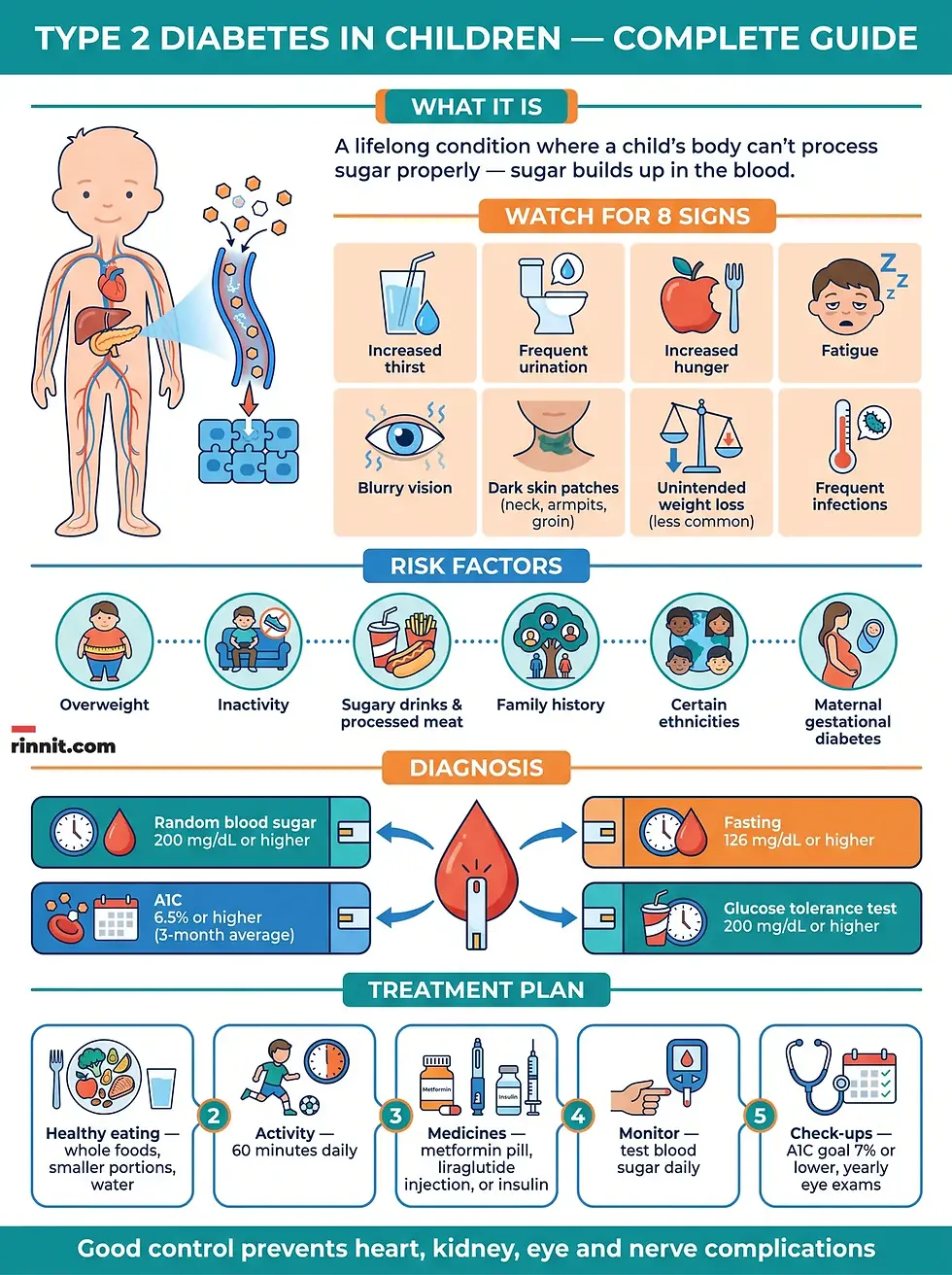
The complete guide — 8 signs to watch, risk factors, the 4 diagnostic tests with their numbers, and the 5-part treatment plan. Source: rinnit.com
What 4 emergencies should parents know for type 2 diabetes in children?
Despite your best efforts, problems will sometimes arise. Four short-term complications — low blood sugar, high blood sugar, diabetic ketoacidosis, and hyperosmolar hyperglycemic state — require immediate care.
Low Blood Sugar (Hypoglycemia)
Hypoglycemia means a blood sugar level below your child's target range. It can happen after skipping a meal, eating fewer carbohydrates than planned, getting more physical activity than typical, or injecting too much insulin. (Children with type 2 diabetes have less risk of low blood sugar than kids with type 1.)
Signs include pallor, shakiness, hunger, sweating, irritability and mood changes, difficulty concentrating or confusion, dizziness, loss of coordination, slurred speech, and in severe cases loss of consciousness or seizures. Teach your child the symptoms — and when in doubt, always do a blood sugar test.
The 15–15 rule for treating a low:
Give a fast-acting carbohydrate. Have your child consume 15 to 20 grams of a fast-acting carbohydrate — fruit juice, glucose tablets, hard candy, or regular (not diet) soda. Avoid foods with added fat, such as chocolate or ice cream: fat slows down sugar absorption.
Retest in about 15 minutes to make sure blood sugar is back in the target range.
Repeat if needed. If it's still low, give another fast-acting carbohydrate and retest in 15 minutes until you reach the target range.
High Blood Sugar (Hyperglycemia)
Hyperglycemia means a blood sugar level above your child's target range. It can be caused by illness, eating too much, eating certain types of foods, or not taking enough diabetes medication or insulin.
Signs include frequent urination, increased thirst or dry mouth, blurred vision, fatigue, and nausea. If you suspect hyperglycemia, check the blood sugar — the meal plan or medications may need adjusting. Contact your provider if your child's blood sugar is regularly above the target range.
Diabetic Ketoacidosis (DKA)
A severe lack of insulin causes the body to produce toxic acids called ketones. When excess ketones build up, your child may develop DKA — a potentially life-threatening condition. It's more common in children with type 1 diabetes but can sometimes occur in type 2.
Signs include thirst or a very dry mouth, increased urination, dry or flushed skin, nausea, vomiting or abdominal pain, a sweet fruity smell on the breath, and confusion. If you suspect DKA, check your child's urine for excess ketones using an over-the-counter test kit — and if ketone levels are high, call your provider or seek emergency care.
Hyperosmolar Hyperglycemic State (HHS)
HHS may develop over a few days in children with type 2 diabetes. Blood sugar climbs to extremely high levels — 600 mg/dL or higher — often alongside severe infections, illness, or other medical conditions. The body tries to get rid of the excess sugar by passing it in the urine, which causes severe dehydration.
Signs include no or minimal ketones in the urine, increased urination, increased thirst, dry mouth and warm, dry skin, confusion or combativeness, seizures, and coma. HHS is life-threatening and requires emergency care.
How can parents manage type 2 diabetes in children at home?
Managing type 2 diabetes in children at home takes round-the-clock commitment, but careful management greatly reduces the risk of serious complications. As your child gets older, the plan evolves:
Encourage your child to take an increasingly active role in diabetes management.
Stress the importance of lifelong diabetes care.
Teach your child how to test blood sugar levels and take medications correctly.
Help your child make healthy food choices and stay active every day.
Foster a relationship between your child and the diabetes treatment team.
Make sure your child wears a medical identification tag.
School and Diabetes
Work with your child's school nurse and teachers so they know the symptoms of high and low blood sugar. The school nurse may need to administer insulin or check blood sugar during the day. Federal law protects children with diabetes, and schools must make reasonable accommodations to ensure that every child gets a proper education.
When to Contact the Care Team
Contact your child's health care provider, certified diabetes care and education specialist, or registered dietitian between appointments if your child's blood sugar is consistently out of the target range — or if you're simply not sure what to do in a certain situation.
How can families cope with type 2 diabetes in children?
Living with type 2 diabetes isn't easy — for you or for your child. Good management requires a lot of changes, especially in the beginning, which is why some diabetes specialists include a social worker or psychologist on the care team. Remember: you're not alone, and your diabetes treatment team can help.
A few points of emotional awareness matter:
If your child or adolescent is persistently sad or pessimistic, or shows dramatic changes in sleeping habits, friends, or school performance, have your child assessed for depression.
Rebellion is possible in the teen years — a child who followed the plan closely may start ignoring diabetes care. Experimenting with drugs, alcohol, or smoking is even more dangerous for someone with diabetes.
A counselor or therapist can help your child — or you — cope with the lifestyle changes. Support resources are available through organizations such as the American Diabetes Association (ADA).
How should you prepare for your child's type 2 diabetes appointment?
Your child's family provider or pediatrician will usually make the initial diagnosis, and then refer you to a specialist in childhood metabolic disorders — a pediatric endocrinologist. The team generally also includes a certified diabetes care and education specialist and a registered dietitian.
Before the Appointment
Ask about any pre-appointment restrictions — if blood sugar testing is planned, your child might need to fast for 8 hours.
Make a list of any symptoms your child is experiencing, including any that seem unrelated.
Ask a family member or friend to join you — managing diabetes involves remembering a lot, and a second person catches what you miss.
Make a list of questions for the provider.
Questions to Ask
How often do I need to monitor my child's blood sugar?
What should my child's blood sugar levels be during the day and before bedtime?
What changes need to be made in the family diet?
How much exercise should my child get each day?
Will my child need to take medication? If so, what kind and how much?
What signs and symptoms of complications should I look for?
My child has another health condition — how can we best manage them together?
How often does my child need to be monitored, and what specialists do we need to see?
Questions Your Provider Will Likely Ask You
How comfortable are you with managing your child's diabetes?
What does a typical day's eating look like for your child?
Is your child exercising? If so, how often?
How do you feel your child is coping with diabetes and its treatment?
Frequently Asked Questions (FAQ)
Can children really get type 2 diabetes?
Yes. Although it used to be called adult-onset diabetes, the increasing number of children with obesity has led to more cases in younger people. Many children develop it in their early teens, but it can occur at any age, and adolescent girls are more likely than boys to develop it.
Why does my child's neck and armpit skin look darker?
Darkened areas of skin — most often around the neck, armpits, and groin — are one of the classic signs of type 2 diabetes in children. This darkening (acanthosis nigricans) is associated with insulin resistance and is a reason to talk to your child's health care provider.
How is type 2 diabetes different from type 1 diabetes?
In type 1, the immune system destroys the insulin-producing cells, so treatment always requires insulin. In type 2, the cells resist insulin and the pancreas may not make enough of it — treatment often starts with diet, exercise, and oral medication. Additional tests can distinguish between the two, and treatment strategies for each type differ.
What blood sugar numbers confirm diabetes?
Four tests are used: a random blood sugar of 200 mg/dL or higher, a fasting blood sugar of 126 mg/dL or higher (after 8+ hours without food), an A1C of 6.5% or higher (the 3-month average), or a glucose tolerance test result of 200 mg/dL or higher after drinking a sugary liquid.
What medicines can treat type 2 diabetes in children?
Three FDA-approved options exist: metformin (a pill that reduces the sugar the liver releases and helps cells use insulin), liraglutide (an injection that boosts insulin release after meals), and insulin (often a long-acting dose once a day plus a rapid-acting dose with meals). With lifestyle changes, some children can eventually be weaned off insulin.
Is low blood sugar dangerous, and how do I treat it?
Low blood sugar (hypoglycemia) can cause shakiness, sweating, confusion, and in severe cases seizures or loss of consciousness — so it needs prompt treatment. Give 15–20 grams of a fast-acting carbohydrate (juice, glucose tablets, or hard candy), retest in about 15 minutes, and repeat until blood sugar returns to the target range.
Can type 2 diabetes in children be prevented?
Healthy-lifestyle choices can help prevent it. Encourage your child to eat foods low in fat and calories with plenty of fruits, vegetables, and whole grains, and to stay physically active — a sports team or dance lessons work well. Making these choices a family affair protects adults in the household too.
Conclusion
Type 2 diabetes in children is a serious condition, but it is manageable — and increasingly, preventable — when parents know what to look for and act early.
Three takeaways to remember: symptoms are sneaky — type 2 diabetes can develop gradually with no noticeable signs, so screening at age 10 or older (or at puberty) is essential for children who are overweight or obese, especially with a family history; lifestyle is the foundation — healthy eating and at least 60 minutes of daily activity remain the first line of defense, with metformin, liraglutide, or insulin added when needed; and control is the goal — keeping blood sugar close to the target range and A1C at 7% or lower dramatically reduces the risk of heart disease, kidney damage, nerve damage, and vision loss later in life.
This guide has walked you through the warning signs, risk factors, diagnosis numbers, treatment plan, emergencies, and daily-life strategies — everything a parent needs to help a child thrive with type 2 diabetes.
What to do next: Explore more in-depth health guides on rinnit.com.
This content is provided for general informational purposes only and is not a substitute for professional medical advice, diagnosis, or treatment. Always seek the advice of a qualified healthcare provider with any questions about a medical condition.
Related Reading
Fasting Blood Sugar Test: How to Prepare, Normal Levels and What Your Results Mean explains how a fasting blood sugar test helps screen for type 2 diabetes.
References
Mayo Clinic Staff. Type 2 diabetes in children - Symptoms and causes. Mayo Clinic. September 23, 2026. https://www.mayoclinic.org/diseases-conditions/type-2-diabetes-in-children/symptoms-causes/syc-20355318
Mayo Clinic Staff. Type 2 diabetes in children - Diagnosis and treatment. Mayo Clinic. September 23, 2026. https://www.mayoclinic.org/diseases-conditions/type-2-diabetes-in-children/diagnosis-treatment/drc-20355324
Ezzatvar Y, et al. Global Prevalence of Microvascular Complications in Children and Adolescents With Type 1 and Type 2 Diabetes: A Systematic Review and Meta-Analysis. Pediatr Diabetes. 2025;2025:8398194. PMID 41346657. https://doi.org/10.1155/pedi/8398194
Kibret KT, et al. Life-course trajectories of body mass index and cardiovascular disease risks and health outcomes in adulthood: Systematic review and meta-analysis. Obes Rev. 2024;25(4):e13695. PMID 38226403. https://doi.org/10.1111/obr.13695
Papadimos ER, et al. Prevalence of youth type 2 diabetes in global Indigenous populations: a systematic review. Diabetologia. 2026;69(3):568-581. PMID 41037099. https://doi.org/10.1007/s00125-025-06556-7



Comments