Skin Tags (Acrochordons): Understanding Common Skin Growths

Updated: 3 days ago
Medically reviewed by Dr. Baraa Alnahhal, MD · Last reviewed: October 17, 2026
Quick Answer: What are skin tags?
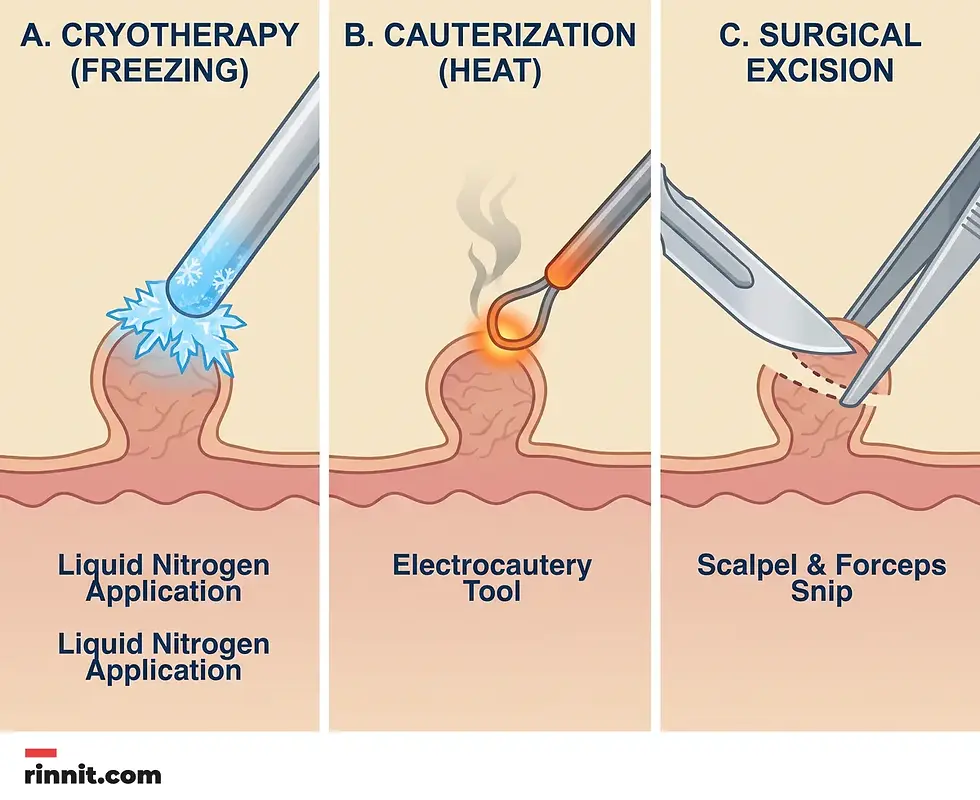
Skin tags are small, skin-colored clusters of tissue hanging from a tiny stem, often in skin folds like the neck, armpits or groin, frequently triggered by friction. [1] They are benign and usually painless, and diagnosis needs only a simple physical exam. [1] If bothersome, a healthcare provider can remove them by freezing, cauterization or surgical excision. [1]
What the research says
Skin tags are associated with insulin resistance. In a cross-sectional study of 70 patients with acanthosis nigricans or acrochordons and 70 controls, insulin resistance was found in 41.4% of patients versus 17.1% of controls, and the mean HOMA-IR score was 4.32 versus 2.27. The authors noted the small sample size, and an association does not prove cause (Singh et al., Indian J Dermatol, 2020) [2].
Skin tags alone do not justify a screening colonoscopy. Among 200 patients with skin tags, the mere presence of skin tags did not correlate significantly with colonic polyps, and the authors concluded it does not justify screening colonoscopy unless other metabolic, gastrointestinal, or biochemical markers are identified (Zaki et al., J Cosmet Dermatol, 2022) [3].
Details of the removal procedure matter. In a small study of 12 patients, three chemical solutions used to stop bleeding after snip excision of skin tags (ferric subsulfate, silver nitrate, and aluminum chloride) took a similar time to stop bleeding, but pain on application differed significantly, with silver nitrate the most painful (Coakley et al., J Clin Aesthet Dermatol, 2020) [4].
What Are Skin Tags?
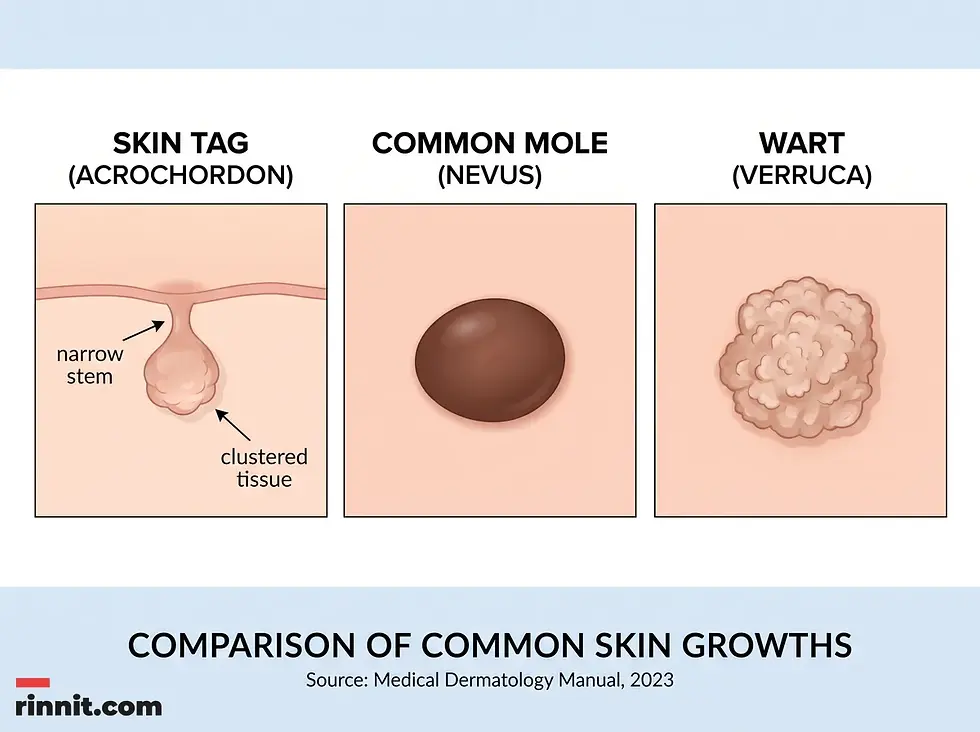
Skin tags, or acrochordons, are benign growths that frequently appear on the surface of the skin. They often look like small clusters of tissue attached to the body by a thin, narrow stem. [1] Most are the same color as the surrounding skin, though some may be slightly darker and resemble a raised mole. [1] Most skin tags are small, typically 1 to 5 millimeters, but some can grow to several centimeters. [1]
These growths are incredibly common: researchers estimate that about half of all adults will develop at least one skin tag in their lifetime. [1] Although they are medically harmless and do not lead to other health complications, they can make people feel self-conscious, particularly when they form in visible areas such as the face or neck. [1] If a growth's identity is uncertain, a professional diagnosis is essential to rule out other conditions like warts or skin cancer. [1]
What causes skin tags, and where do they commonly appear?
The primary cause of skin tags is the overproduction of extra cells in the top layers of the skin. [1] This is most likely to occur where natural body movement makes the skin rub against itself or against clothing and jewelry. [1] The friction triggers the growth of excess tissue, producing the characteristic tag.
Because friction is the driving factor, skin tags are most commonly found in skin folds and creases. [1] The likelihood of developing them increases with age and is also influenced by genetics and certain health conditions. [1] For example, people living with obesity or diabetes may be more prone to skin tags. [1] Hormonal changes during pregnancy can also raise growth factors, potentially resulting in new skin tags. [1]
Common Location | Why They Form There |
|---|---|
Armpits | Frequent friction from arm movement |
Neck | Rubbing from collars, scarves, or jewelry |
Eyelids | Delicate skin folds that rub during blinking |
Groin and thighs | Friction from walking and clothing |
Under the breasts | Constant contact between skin and undergarments |
What are the symptoms of skin tags, and how are they diagnosed?
For most people, skin tags cause no pain or discomfort. [1] However, if a skin tag sits where it frequently rubs against clothing, jewelry, or other skin, it can become irritated, inflamed, or even bleed. [1] In these cases the tag becomes a nuisance rather than just a cosmetic concern.
Diagnosing a skin tag is straightforward and usually requires only a brief physical evaluation by a healthcare provider. [1] The provider looks at the growth's shape, color, and texture to confirm it is a benign acrochordon and reviews your health history for conditions that may be contributing. [1] In most cases no laboratory tests are needed, though a biopsy may be performed if the provider suspects the growth is something else. [1]
Should skin tags be removed professionally or at home?
Skin tags are best removed by a professional such as a dermatologist, since healthcare professionals strongly advise against over-the-counter products for at-home removal. [1] Attempting removal yourself carries a high risk of complications, including:
A dermatologist is the most qualified professional to remove skin tags. [1] They have the expertise to treat tags in delicate areas such as the eyelids and to minimize visible scarring on areas like the neck. [1] Professional removal also ensures the entire growth is addressed. If a tag is completely removed, it is unlikely to grow back in that spot, although new tags may still form elsewhere on the body. [1]
What are the treatment methods for skin tags, and what is the outlook?
When removal is chosen, providers have several effective methods. These procedures are usually done in the office and cause only mild, temporary discomfort. [1] Providers often use local anesthesia or numbing medication to keep you comfortable. [1]
The outlook for people with skin tags is excellent. These growths are noncancerous and do not increase the risk of skin cancer or other health problems. [1] After a removal procedure, the treated area typically scabs over and heals within a few days. Slight skin imperfections may remain, but they are generally barely noticeable. [1]
How can skin tags be prevented and managed long term?
Skin tags cannot always be prevented, but certain lifestyle adjustments can reduce how often these growths develop. Maintaining a healthy weight and exercising regularly can lower the risk associated with obesity and metabolic conditions. [1] Being mindful of the clothing and jewelry you wear can also minimize the friction that triggers these growths. [1]

If you notice new growths on your skin, have them evaluated during your regular check-ups. Most will be harmless skin tags, but staying proactive ensures that any changes are monitored and managed appropriately by a professional.
Frequently Asked Questions
Are skin tags contagious?
No. Skin tags are benign growths linked to skin friction and extra cell growth, not to a virus or bacteria.
Can skin tags turn into cancer?
No. Skin tags are noncancerous (benign) and do not become malignant. However, some skin cancers can look like skin tags, so professional diagnosis is important.
Why do I suddenly have more skin tags?
More skin tags can be linked to aging, weight gain, hormonal changes (like pregnancy), or underlying health conditions like diabetes.
Do skin tags have roots?
No. Skin tags do not have deep roots. They are surface growths attached to the skin by a thin stem called a peduncle.
Will a skin tag grow back after it is removed?
If the entire tag is removed, it usually does not grow back in the same spot. However, new skin tags can develop in the same area or elsewhere.
Is it safe to cut off a skin tag with scissors?
No. You should never try to cut off a skin tag at home. This can cause severe bleeding, infection, and permanent scarring.
Do skin tags fall off on their own?
Occasionally a skin tag falls off if its blood supply is twisted or cut off, but most remain unless professionally removed.
Can children get skin tags?
Yes. They are more common in adults, but children can develop skin tags, especially in areas of frequent friction.
Are skin tags the same as warts?
No. Warts are caused by a viral infection (HPV), whereas skin tags are linked to friction and are not infectious.
Does skin tag removal hurt?
The procedure may cause mild discomfort, but healthcare providers use numbing medication to keep you comfortable.
Can I use tea tree oil to remove skin tags?
Some people try home remedies, but they are not medically recommended and can lead to skin irritation or incomplete removal.
Are skin tags a sign of diabetes?
Not everyone with skin tags has diabetes, but studies have found an association between skin tags and insulin resistance, so a provider may check your blood sugar if you develop many of them.
How long does it take to heal after removal?
Most areas scab over and heal within a few days to a week after a professional removal procedure.
Can skin tags appear on the genitals?
Yes. Skin tags can form in the groin and genital area because of skin-on-skin friction.
What is the medical term for a skin tag?
The medical name for a skin tag is an acrochordon.
Related Reading
Electrosurgery: Types, Uses and Risks explains electrosurgery.
Cryotherapy: Uses, Procedure, Risks and Recovery explains how freezing treatments remove abnormal tissue.
References
Cleveland Clinic. Skin tags (acrochordons). Cleveland Clinic. May 1, 2021. https://my.clevelandclinic.org/health/diseases/21528-skin-tags-acrochordons
Singh SK, Agrawal NK, Vishwakarma AK. Association of acanthosis nigricans and acrochordon with insulin resistance: a cross-sectional hospital-based study from North India. Indian J Dermatol. 2020;65(2):112-117. PMID 32180596. https://doi.org/10.4103/ijd.IJD_646_18
Zaki AM, Elshahed AR, Diab MR, et al. Prevalence and predictors of colon polyps in patients with skin tags: a cross sectional study. J Cosmet Dermatol. 2022;21(4):1547-1553. PMID 34008290. https://doi.org/10.1111/jocd.14240
Coakley A, Wu MJ, Kumar J, et al. A comparison of ferric subsulfate solution, silver nitrate, and aluminum chloride for pain assessment, time to hemostasis, and cosmesis in acrochordon snip excision. J Clin Aesthet Dermatol. 2020;13(12):32-37. PMID 33488917. https://pubmed.ncbi.nlm.nih.gov/33488917/
Medical Disclaimer
This article is for informational purposes only and does not constitute medical advice. Always seek the advice of your physician or other qualified health provider with any questions you may have regarding a medical condition or skin growth.



Comments