Weight Loss Medications: Clinical Options and Management

Updated: 3 days ago
Medically reviewed by Dr. Baraa Alnahhal, MD · Last reviewed: October 2026
TL;DR: Weight loss medications are prescription treatments designed to assist people with obesity or weight-related health conditions. These drugs work by suppressing appetite, increasing fullness, or altering fat absorption. FDA-approved options include oral pills and injectable GLP-1-based medications. While they can help most adults lose roughly 3% to 12% of their body weight in a year [1], they require medical supervision, lifestyle changes, and regular monitoring to manage side effects and support long-term success.
Quick Answer: What are weight loss medications?
Weight loss medications are drugs that help manage chronic weight issues by reducing hunger, increasing fullness or blocking fat absorption. They are typically prescribed for adults with a BMI of 30 or higher, or higher than 27 with a weight-related condition. Most adults lose between 3% and 12% of starting weight after one year, especially with lifestyle changes [1].
What the research says
Semaglutide produced much larger weight loss than placebo in a 68-week trial. In 1,961 adults with obesity (or overweight plus a weight-related condition) and without diabetes, mean body weight change was −14.9% with 2.4 mg weekly semaglutide versus −2.4% with placebo (difference −12.4 percentage points, 95% CI −13.4 to −11.5), 86.4% vs 31.5% lost at least 5%, and discontinuation because of gastrointestinal events was 4.5% vs 0.8% (According to PubMed, Wilding et al., N Engl J Med, 2021) [2].
Tirzepatide produced the largest reductions at 72 weeks. In 2,539 adults with obesity (or overweight plus a weight-related complication) and without diabetes, mean weight change was −15.0% (5 mg), −19.5% (10 mg), and −20.9% (15 mg) versus −3.1% with placebo; the most common adverse events were gastrointestinal, mostly mild to moderate, and occurred mainly during dose escalation (According to PubMed, Jastreboff et al., N Engl J Med, 2022) [3].
Effects differ widely by drug. A JAMA review of meta-analyses reported weight loss greater than placebo of 3.1% for orlistat, 4.1% for naltrexone-bupropion, 4.7% for liraglutide, 8.0% for phentermine-topiramate, 11.4% for semaglutide, and 12.4% for tirzepatide 15 mg, with nausea (28%–44%), diarrhea (21%–30%), and constipation (11%–24%) among the adverse effects of the hormone-based drugs (According to PubMed, Gudzune & Kushner, JAMA, 2024) [4].
Understanding Weight Loss Medications
Weight loss medications are prescription drugs designed to help people lose weight when diet and exercise alone are not enough. They work through several biological mechanisms to address the complex nature of obesity. They are not a quick fix or a silver bullet, and they come with risks and side effects [1], so they should always be taken under a healthcare provider's supervision.
Mechanisms of Action
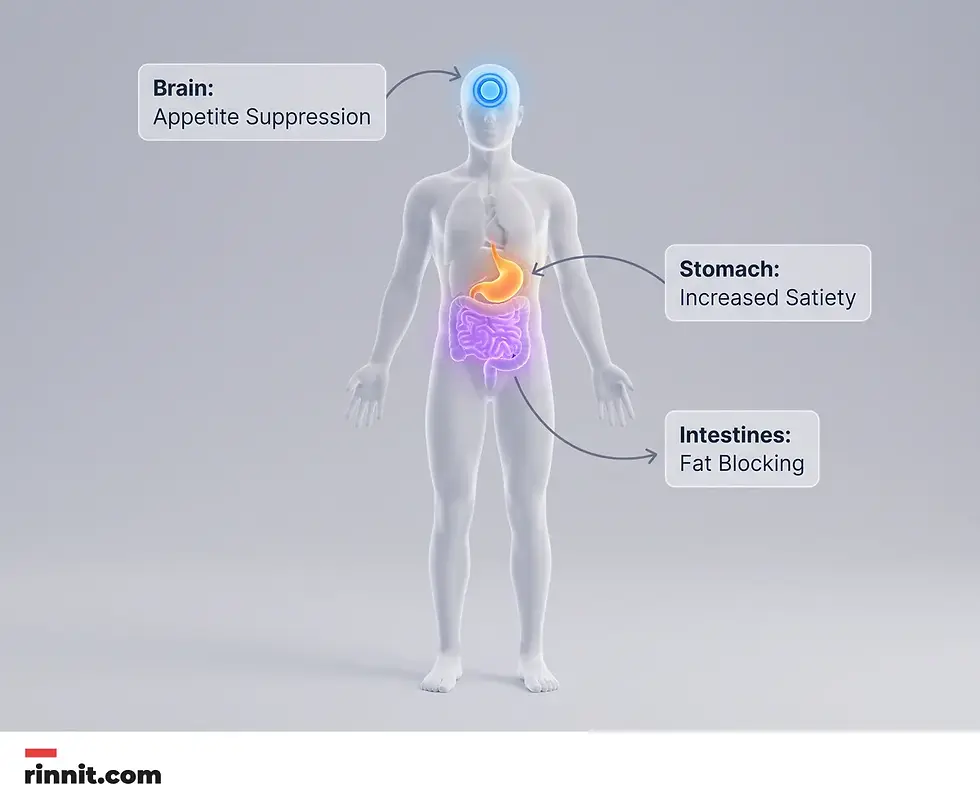
Weight loss drugs generally work in one or more of the following ways:
Appetite Suppression: Decreasing appetite or reducing cravings by changing brain chemistry [1].
Increased Satiety: Slowing stomach emptying to help you feel full longer [1].
Fat Absorption Alteration: Changing how the body digests and absorbs dietary fat [1].
Metabolic Enhancement: Increasing the number of calories the body burns [1].
Insulin Sensitivity: Improving how the body responds to insulin and manages blood sugar [1].
Weight Set Point: Acting on the brain's "weight set point" and lowering it [1].
FDA-Approved Weight Loss Drugs (2025)
As of 2025, several medications are FDA-approved for weight management in adults. They include both oral pills and injectable treatments. Most are prescription only; GLP-1 agonists are a newer class that was first used to treat type 2 diabetes before some were approved for weight loss [1].
Medication | Brand Name | Administration | Primary Mechanism |
Bupropion/naltrexone | Contrave® | Oral pill | Reduces hunger and cravings by changing brain chemistry. |
Liraglutide | Saxenda® | Daily injection | Slows stomach emptying to increase fullness. |
Orlistat | Alli®, Xenical® | Oral pill | Changes how the body digests and absorbs fat. |
Phentermine/topiramate | Qsymia® | Oral pill | Decreases appetite and helps burn calories. |
Phentermine | Adipex-P® | Oral pill | Reduces appetite; for short-term use only. |
Semaglutide | Wegovy® | Weekly injection | Increases fullness and helps manage blood sugar. |
Tirzepatide | Zepbound® | Weekly injection | Works with two hormones (GLP-1 and GIP) to lower blood sugar and appetite. |
Eligibility Criteria
Healthcare providers use specific clinical markers to decide whether someone is a candidate for weight loss medication. They may suggest it if you are an adult with:
The decision to begin weight loss drugs should only happen after you and your provider discuss your health history [1].

Safety and Side Effects
While effective, weight loss medications carry risks and potential side effects that must be managed. Most common side effects are digestive [1] and can be managed with your provider's guidance.
Common Side Effects
Nausea and vomiting
Diarrhea or constipation
Stomach cramps
Headaches and dizziness
Mood changes
Serious Risks and Considerations
Less common but more serious effects can occur and need prompt medical attention:
Organ Health: Possible kidney injury or kidney stones, pancreatitis, gallstones, vision loss, or intestinal obstruction [1].
Nutrient Deficiencies: Drugs that block fat absorption may lead to deficiencies in fat-soluble vitamins (A, D, E, and K); providers recommend taking a multivitamin [1].
Long-Term Data: Some newer medications have not been studied for years of use, so their long-term safety is still being learned [1]. Semaglutide, liraglutide and tirzepatide carry an FDA boxed warning about thyroid C-cell tumors and should not be used by anyone with a personal or family history of medullary thyroid cancer or MEN 2; naltrexone-bupropion carries a boxed warning about suicidal thoughts.
Weight Regain: There is a high chance of regaining weight if the medication is stopped, especially without lasting lifestyle changes [1].
Pregnancy: Never take weight loss drugs if you are pregnant, trying to get pregnant, or breastfeeding [1].
Clinical Outlook and Effectiveness
The effectiveness of these medications is usually measured by the percentage of starting body weight lost after one year. Average extra weight loss compared with placebo ranges from about 3% to 12%, depending on the drug; in trials, people taking semaglutide or tirzepatide lost about 15% to 21% of body weight. Most people lose around 5% of their body weight after three to six months. Success depends on the medication and your individual response, how long you use it, and whether you eat healthy and exercise while taking it [1].
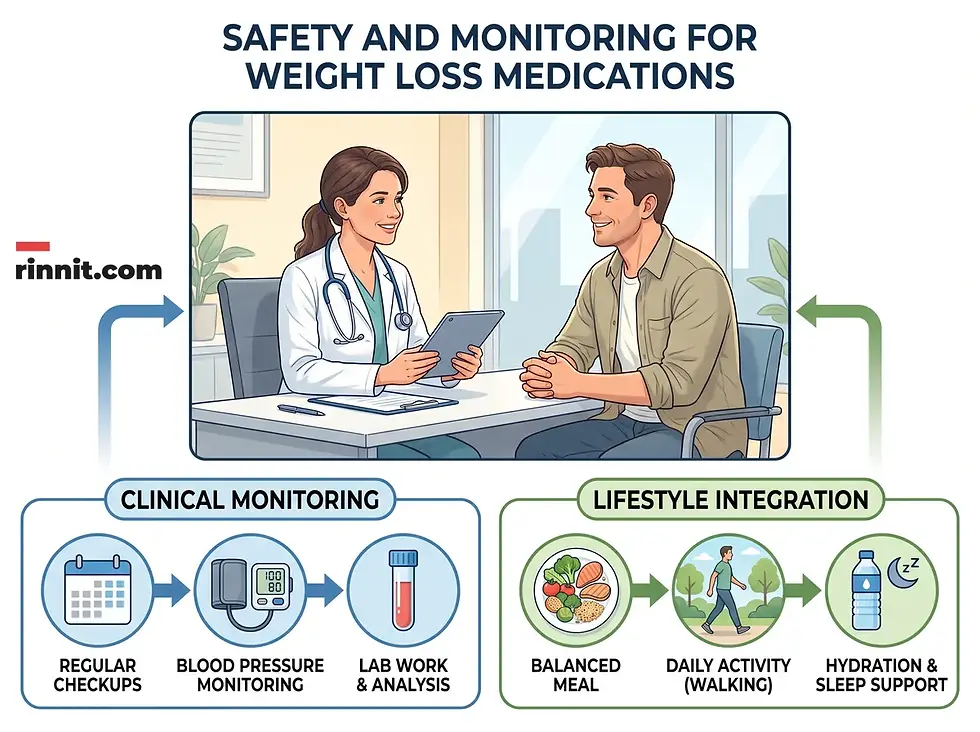
Weight loss medicines are not a quick fix, and they are not for everyone. Regular checkups are essential so your provider can monitor your progress, make sure the medication is still safe for you, and adjust treatment as needed. How long you take a medication depends on your results and side effects; if you are doing well, your provider may suggest staying on it for years [1].
Conclusion
Weight loss medications offer a viable clinical pathway for people struggling with obesity-related health challenges. By reducing appetite, increasing fullness, or changing how the body absorbs fat, these drugs can support weight reduction and improve health markers such as blood pressure, cholesterol, and blood sugar [1]. However, they must be used as part of a comprehensive plan that includes medical oversight and sustainable lifestyle changes.
When to Seek Medical Guidance
Contact your healthcare provider right away if you experience:
Serious side effects like chest pain, trouble breathing, or a fast heartbeat [1].
Significant mood changes, including depression, anxiety, or suicidal thoughts [1].
Intense or persistent stomach problems, such as constant vomiting or nausea [1].
Any other new or worsening symptoms after starting a medication.
Frequently Asked Questions
What are the most common weight loss medications?
The most common FDA-approved medications include semaglutide (Wegovy), tirzepatide (Zepbound), liraglutide (Saxenda), and oral options like orlistat (Xenical, Alli), bupropion/naltrexone (Contrave), and phentermine/topiramate (Qsymia).
How do weight loss drugs help you lose weight?
Weight loss drugs work by reducing appetite or cravings, slowing the rate at which the stomach empties to increase fullness, or changing how the body absorbs fat. Some also increase the calories you burn or improve insulin sensitivity.
Who is eligible for prescription weight loss medicine?
Eligibility is generally for adults with a BMI of 30 or higher, or a BMI higher than 27 if they have weight-related health issues like high blood pressure or type 2 diabetes.
Can I get weight loss medication over the counter?
Alli (a lower-dose version of orlistat) is the only FDA-approved weight loss medication available over the counter. Other OTC products are typically supplements and are not as well-studied or powerful.
What are the risks of taking weight loss drugs?
Risks include gastrointestinal issues (nausea, diarrhea), potential kidney or gallbladder problems, and the possibility of weight regain if the medication is stopped without lifestyle changes.
Are weight loss injections safe for long-term use?
Many healthcare providers suggest long-term use for patients who respond well, but some newer medications are still being studied for their effects over many years.
How much weight can I expect to lose?
Most adults lose between 3% and 12% of their starting body weight after one year of treatment, depending on the specific medication, the individual response, and lifestyle habits.
Should I take weight loss medication if I am pregnant?
No. Weight loss medications should never be taken during pregnancy, while trying to conceive, or while breastfeeding.
How long does it take to see results?
Most people lose around 5% of their body weight after three to six months. If you don't, your provider may suggest a different medication or add another one.
What happens if I stop taking the medication?
There is a high chance of regaining the lost weight if the medication is stopped, especially if permanent healthy eating and exercise habits have not been established.
Related Reading
Appetite Suppressants: Types, How They Work and Side Effects explains how appetite suppressants support weight loss.
References
Cleveland Clinic. Weight Loss Medications. Cleveland Clinic. Last updated 09/12/2025. https://my.clevelandclinic.org/health/treatments/weight-loss-medications
Wilding JPH, Batterham RL, Calanna S, et al. Once-weekly semaglutide in adults with overweight or obesity. N Engl J Med. 2021;384(11):989-1002. PMID 33567185. https://doi.org/10.1056/NEJMoa2032183
Jastreboff AM, Aronne LJ, Ahmad NN, et al. Tirzepatide once weekly for the treatment of obesity. N Engl J Med. 2022;387(3):205-216. PMID 35658024. https://doi.org/10.1056/NEJMoa2206038
Gudzune KA, Kushner RF. Medications for obesity: a review. JAMA. 2024;332(7):571-584. PMID 39037780. https://doi.org/10.1001/jama.2024.10816
Medical disclaimer
This article is for educational purposes only and is not a substitute for professional medical advice, diagnosis, or treatment. Always seek the advice of your physician or other qualified health provider with any questions about a medical condition.



Comments