Hypoglycemia: Managing Low Blood Sugar Emergencies and Prevention

Updated: 2 days ago
Medically reviewed by Dr. Baraa Alnahhal, MD · Last reviewed: October 2026
Quick Answer
Hypoglycemia is blood sugar that is too low for the body's needs: below 70 mg/dL with diabetes or below 55 mg/dL without diabetes. Mild cases follow the 15-15 rule: take 15 grams of fast-acting carbs, recheck after 15 minutes and repeat. Seizures or loss of consciousness need emergency glucagon and a call to 911. [1]
What the research says
Nasal glucagon worked as well as injected glucagon in a randomized crossover trial. In 66 adults with type 1 diabetes who had insulin-induced low blood sugar, 100% of participants reached treatment success with both nasal glucagon (3 mg) and intramuscular glucagon (1 mg), which showed non-inferiority. The mean time to success was 11.4 minutes with nasal glucagon and 9.9 minutes with the injection. Most side effects were mild and temporary. Several authors were employed by the manufacturer. (Suico et al., Diabetes Ther, 2020)
Nasal glucagon may cause less rebound high blood sugar. A pooled analysis of three randomized trials in adults with type 1 or type 2 diabetes found similar treatment success with nasal and injected glucagon (97% to 100% at 15 and 30 minutes). More patients had blood sugar in range (70 to 180 mg/dL) one to two hours after nasal glucagon (p = 0.0047), and fewer had a reading above 180 mg/dL (p = 0.0034). The trials used induced low blood sugar, and several authors were employed by the manufacturer. (Seaquist et al., J Endocr Soc, 2024)
What is hypoglycemia?
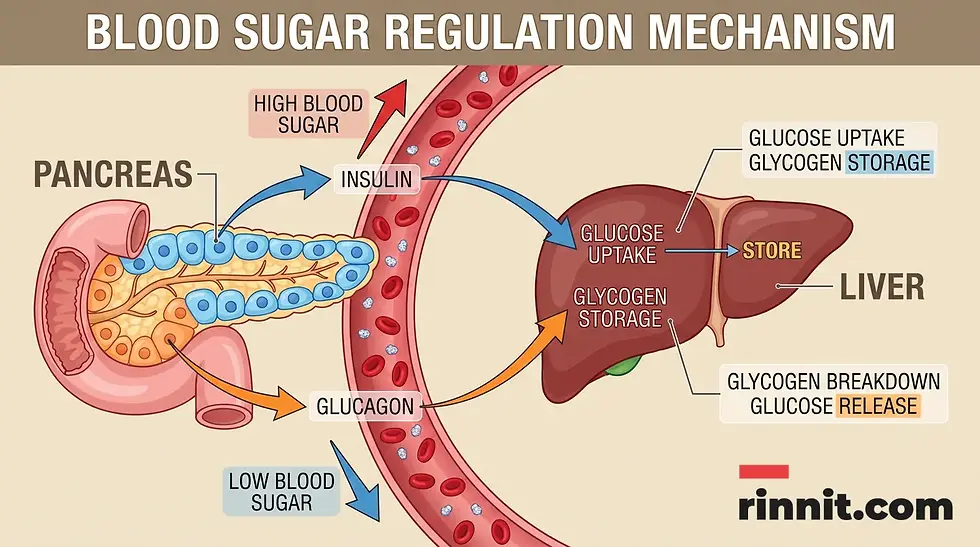
Hypoglycemia is a drop in blood sugar below a healthy range for you. It is most common in people with diabetes, especially those who take insulin, but it can also happen in people without diabetes. Glucose is the body's main energy source, so when levels are too low, the cells and the brain cannot work normally. [1]
Low blood sugar can be dangerous if it is not treated, so it is important to recognize the signs and know what to do.
Symptoms of low blood sugar

In people with diabetes, symptoms often start around 70 mg/dL or lower. A rapid drop can cause symptoms earlier, and people whose blood sugar is often high may feel symptoms at higher levels. [1]
Type | Symptoms |
Early warning signs | Shaking or trembling, sweating and chills, fast heart rate, dizziness, extreme hunger, weakness, confusion or trouble concentrating, anxiety or irritability and pale skin. [1] |
Severe symptoms | Blurred or double vision, slurred speech, clumsiness, disorientation, seizures and loss of consciousness. These can be life-threatening. [1] |
During sleep (nocturnal) | Restless sleep, nightmares, and pajamas or sheets damp from sweat. [1] |
Hypoglycemia unawareness
Some people have few or no early warning signs. This raises the risk of severe episodes and of suddenly losing consciousness. [1]
What causes hypoglycemia?
In people with diabetes
Too much insulin or diabetes medicine, the wrong insulin, or insulin injected into muscle instead of fat
Insulin and food that are not timed well, or late or skipped meals
More physical activity than usual
Alcohol without food
Pregnancy: people with type 1 diabetes have a higher risk in the first trimester
These causes are listed by Cleveland Clinic. [1]
In people without diabetes
Reactive (postprandial) hypoglycemia: Low blood sugar 2 to 4 hours after eating, often after simple carbohydrates such as potatoes, white bread, cake and pastries. Bariatric surgery can also cause it. [1]
Fasting hypoglycemia: Heavy alcohol use with little food over several days, critical illness (such as end-stage liver disease, sepsis, starvation or kidney failure), adrenal insufficiency (low cortisol), and rare tumors such as an insulinoma. [1]
Diagnosis
With diabetes: A blood glucose check confirms low blood sugar.
Without diabetes: Blood sugar is checked during a supervised fast, and imaging may look for an underlying cause.
Suspected reactive hypoglycemia: A mixed-meal tolerance test, in which you drink a protein, fat and sugar beverage and blood sugar is checked over several hours.
These approaches are described by Cleveland Clinic. [1]
Treatment: the 15-15 rule

For mild to moderate low blood sugar, use the 15-15 rule. Children may need fewer grams, so ask their provider. [1]
Take 15 grams of fast-acting carbohydrate, such as glucose tablets or fruit juice.
Recheck your blood sugar after 15 minutes.
Repeat if it is still below 70 mg/dL.
Stop once your blood sugar is at least 70 mg/dL.
Glucagon for severe episodes
Severe low blood sugar needs emergency glucagon, given as an injection or nasal powder, usually by another person. Glucagon prompts the liver to release stored glucose. Follow the package instructions. Recovery typically takes 5 to 15 minutes, and nausea and vomiting can occur. [1]
If the person is lying down, roll them onto their side to prevent choking.
Do not give food or liquid to a person with slurred speech, disorientation or loss of consciousness.
Call 911 even if glucagon has been given.
Call 911 immediately for seizures, loss of consciousness, or if the person cannot take food or drink safely. See a provider if you have frequent lows with diabetes, or if you have low blood sugar without diabetes, since underlying causes are rare but possible.
Complications
Frequent mild to moderate lows can disrupt work and school, and driving or operating heavy equipment during a low is dangerous. Prolonged severe hypoglycemia can cause multiple organ failure, heart rhythm problems, cardiac arrest, permanent brain damage, coma or death. [1]
Prevention and safety
Complete prevention is difficult with diabetes, but a provider may adjust the timing of medicines, meals and exercise to reduce lows. [1]
Track your episodes and share the details with your provider.
Keep snacks at home and with you when you are away.
Wear a medical alert ID.
Teach others how to help, and keep glucagon available with loved ones trained to use it.
Conclusion
Hypoglycemia is manageable but potentially dangerous, so it needs vigilance and quick action. Knowing the early signs, keeping fast-acting carbs and glucagon available, and working with your provider to find and reduce your triggers are the most effective ways to stay safe. [1]
Frequently Asked Questions
What is the fastest way to raise blood sugar?
Take 15 grams of fast-acting carbohydrate, such as glucose tablets or fruit juice, then recheck after 15 minutes. [1]
Can I have low blood sugar without diabetes?
Yes. Causes include reactive hypoglycemia after eating, heavy alcohol use with little food, critical illness, adrenal insufficiency and rare tumors. See a provider if it happens. [1]
What is hypoglycemia unawareness?
When a person has few or no early warning signs of low blood sugar, which raises the risk of severe episodes. [1]
Is low blood sugar during sleep dangerous?
Low blood sugar during sleep can be. Signs include restless sleep, nightmares and sheets or pajamas damp from sweat. [1]
What should I do if someone loses consciousness from low blood sugar?
Call 911 immediately and give glucagon if it is available. Do not give food or drink. [1]
How many carbs are in the 15-15 rule?
15 grams of fast-acting carbohydrate, then recheck after 15 minutes. [1]
Can exercise cause hypoglycemia?
Yes. More physical activity than usual is a listed cause in people with diabetes. [1]
What is reactive hypoglycemia?
Low blood sugar 2 to 4 hours after eating, often after simple carbohydrates. [1]
Does alcohol affect blood sugar?
Yes. Drinking alcohol without food is a cause in people with diabetes, and heavy alcohol use with little food can cause fasting hypoglycemia. [1]
What are the long-term complications of severe hypoglycemia?
Prolonged severe episodes can cause organ failure, heart rhythm problems, cardiac arrest, permanent brain damage, coma or death. [1]
Should I wear a medical alert ID?
Yes. Cleveland Clinic recommends wearing a medical alert ID. [1]
Can pregnancy cause low blood sugar?
Pregnant people with type 1 diabetes have a higher risk of low blood sugar in the first trimester. [1]
What is an insulinoma?
A rare tumor of the pancreas that makes too much insulin, often causing early-morning lows. [1]
Can bariatric surgery lead to hypoglycemia?
Yes. Bariatric surgery can cause reactive hypoglycemia. [1]
What is considered low blood sugar without diabetes?
A level below 55 mg/dL (3.0 mmol/L). With diabetes, the threshold is below 70 mg/dL (3.9 mmol/L). [1]
Related Reading
Fasting Blood Sugar Test: How to Prepare, Normal Levels and What Your Results Mean explains what a fasting blood sugar below 70 mg/dL can mean.
Blood Glucose Test: Normal Blood Sugar Levels, Prediabetes and Diabetes Ranges explains normal, prediabetes and diabetes blood sugar ranges.
C-Peptide Test: Purpose, Normal Range and What High or Low Results Mean explains the blood test that shows how much insulin your pancreas still makes.
References
Cleveland Clinic. Hypoglycemia (Low Blood Sugar): Symptoms & Causes. Cleveland Clinic. Last updated July 28, 2026. https://my.clevelandclinic.org/health/diseases/11647-hypoglycemia-low-blood-sugar
Suico JG, Hövelmann U, Zhang S, et al. Glucagon administration by nasal and intramuscular routes in adults with type 1 diabetes during insulin-induced hypoglycaemia: a randomised, open-label, crossover study. Diabetes Ther. 2020;11(7):1591-1603. PMID 32514794. https://doi.org/10.1007/s13300-020-00845-7
Seaquist E, Giménez M, Yan Y, et al. Nasal glucagon reverses insulin-induced hypoglycemia with less rebound hyperglycemia: pooled analysis of clinical trials. J Endocr Soc. 2024;8(4):bvae034. PMID 38444629. https://doi.org/10.1210/jendso/bvae034
Medical disclaimer
This article is for general educational purposes only and is not a substitute for professional medical advice, diagnosis, or treatment. Always seek the advice of your physician or other qualified healthcare provider with any questions you may have about a medical condition. Never disregard professional medical advice or delay seeking care because of something you have read here. If you think you may have a medical emergency, call your doctor or emergency services immediately.



Comments