What Is Metabolic Syndrome? Five Warning Signs and How to Reverse Your Risk

Updated: 3 days ago
Medically reviewed by Dr. Baraa Alnahhal, MD · Last reviewed: October 2026
Quick Answer: Key Facts About Metabolic Syndrome
Metabolic syndrome is a group of conditions, including high blood pressure, high blood sugar, excess waist fat, high triglycerides and low HDL cholesterol, that together raise the risk of heart disease, stroke and type 2 diabetes. It is diagnosed when three or more of five are present. Daily activity, healthy eating and losing 3% to 5% of body weight help. [1] [2] [3]
Feature | Details |
What it is | A group of conditions (high blood pressure, high blood sugar, excess waist fat, high triglycerides, low "good" HDL cholesterol) that together increase the risk of heart disease, stroke, and type 2 diabetes. |
How it is diagnosed | Having three or more of five measured conditions — waist size, triglycerides, HDL cholesterol, blood pressure, and fasting blood sugar — or taking medicine to manage them. |
Why it happens | It is closely linked to being overweight or obese, physical inactivity, and insulin resistance, where cells do not respond as expected to insulin. |
What it can lead to | Type 2 diabetes, plus plaque buildup in the arteries that can narrow and harden them, leading to a heart attack or stroke. |
What helps | Daily physical activity, a DASH- or Mediterranean-style diet, losing just 3% to 5% of body weight, quitting tobacco, managing stress, and sleeping 7 to 9 hours a night. |
What the research says
Metabolic syndrome roughly doubles cardiovascular risk. A meta-analysis of 87 studies and 951,083 patients found it was associated with a relative risk of 2.35 for cardiovascular disease, 2.40 for cardiovascular death, 1.99 for heart attack, 2.27 for stroke, and 1.58 for death from any cause. (Mottillo et al., J Am Coll Cardiol, 2010) [6]
Lifestyle change outperformed medicine at preventing it. In the Diabetes Prevention Program randomized trial of people with impaired glucose tolerance, an intensive lifestyle program (aiming for 7% weight loss and 150 minutes of exercise a week) cut new metabolic syndrome by 41% vs placebo, compared with 17% for metformin. Three-year cumulative incidence was 34% with lifestyle, 45% with metformin, and 51% with placebo. (Orchard et al., Ann Intern Med, 2005) [7]
A Mediterranean-style diet improves its components. A meta-analysis of 50 studies and 534,906 participants linked Mediterranean diet adherence to a lower risk of metabolic syndrome; in clinical studies it lowered systolic blood pressure by 2.35 mm Hg, triglycerides by 6.14 mg/dL, and fasting glucose by 3.89 mg/dL, and raised HDL cholesterol by 1.17 mg/dL. (Kastorini et al., J Am Coll Cardiol, 2011) [8]
Metabolic syndrome may be the most important health label you have never heard of. Unlike a single disease with a single treatment, it is a cluster of risk factors that travel together [1] — and because they usually cause no obvious symptoms, most people only discover they have it during a routine checkup. This guide explains what metabolic syndrome is, how doctors diagnose it using five specific measurements, why it develops, who is at higher risk, what it can lead to, and the lifestyle changes that work as the first line of treatment.
What is metabolic syndrome?
Metabolic syndrome is a group of conditions that increase the risk of heart disease, stroke, and type 2 diabetes. These conditions include high blood pressure, high blood sugar, too much fat around the waist, and high cholesterol or triglyceride levels. [1] [3]
Metabolic syndrome means having three or more of these conditions. But having even one of the conditions increases the risk of serious disease. [1]
The number of people with metabolic syndrome is growing. [1] [5] Up to one-third of U.S. adults have it. [1] [3] [5] Healthy lifestyle changes can slow or stop metabolic syndrome from causing serious health conditions. [1]
What do the five warning signs mean?
Each of the five conditions in metabolic syndrome is easy to measure, which is why a routine checkup can catch the whole cluster at once.
Condition | What it means in plain language |
High blood pressure | The force of blood pushing against your artery walls stays too high, straining your heart and blood vessels over time. [3] |
High blood sugar | Your blood contains more sugar (glucose) than it should after fasting, a sign your body is struggling to move sugar into cells. [1] |
Too much fat around the waist | Excess fat stored around your abdomen, not your hips, is linked to insulin resistance and heart risk. [3] |
High triglycerides | Triglycerides are a type of fat found in your blood; high levels can raise your LDL cholesterol, which raises your risk of heart disease. [3] |
Low "good" (HDL) cholesterol | HDL cholesterol helps carry bad cholesterol away; too little of it leaves arteries more vulnerable. [3] |
Body shape matters. People who have metabolic syndrome typically have apple-shaped bodies, meaning they have larger waists and carry a lot of weight around their abdomens. It is thought that having a pear-shaped body — carrying more of your weight around your hips and having a narrower waist — does not increase your risk of diabetes, heart disease, and other complications of metabolic syndrome. [1]

What are the symptoms of metabolic syndrome?
Most of the conditions in metabolic syndrome are silent — you can have high blood pressure or high blood sugar for years without feeling anything. That is why the numbers from your checkup matter more than how you feel.
A large waist size can point to metabolic syndrome. Also, people with high blood sugar might notice symptoms of diabetes. These include being thirstier than usual, urinating more than usual, being tired, and having blurred vision. [1]
How is metabolic syndrome diagnosed?
Diagnosis of metabolic syndrome is based on medical history, family medical history, a physical exam, and blood pressure and blood tests. [2]
The National Institutes of Health defines metabolic syndrome as having three or more of the following conditions or being on medicine to manage these conditions: [2]
Measurement | Threshold for metabolic syndrome |
Waist size (women) | At least 35 inches (89 centimeters) [2] |
Waist size (men) | At least 40 inches (102 centimeters) [2] |
Triglycerides (blood fat) | 150 mg/dL (1.7 mmol/L) or higher [2] |
"Good" HDL cholesterol (men) | Less than 40 mg/dL (1.0 mmol/L) [2] |
"Good" HDL cholesterol (women) | Less than 50 mg/dL (1.3 mmol/L) [2] |
Blood pressure | 130/80 mm Hg or higher [2] |
Fasting blood sugar | 100 mg/dL (5.6 mmol/L) or higher [2] |
Note how practical this definition is: a reading counts even if medicine, rather than your natural numbers, is keeping it in that range. If you are on treatment for high blood pressure or high cholesterol, those measurements still count toward the three needed for diagnosis. [2]
Why does metabolic syndrome develop?
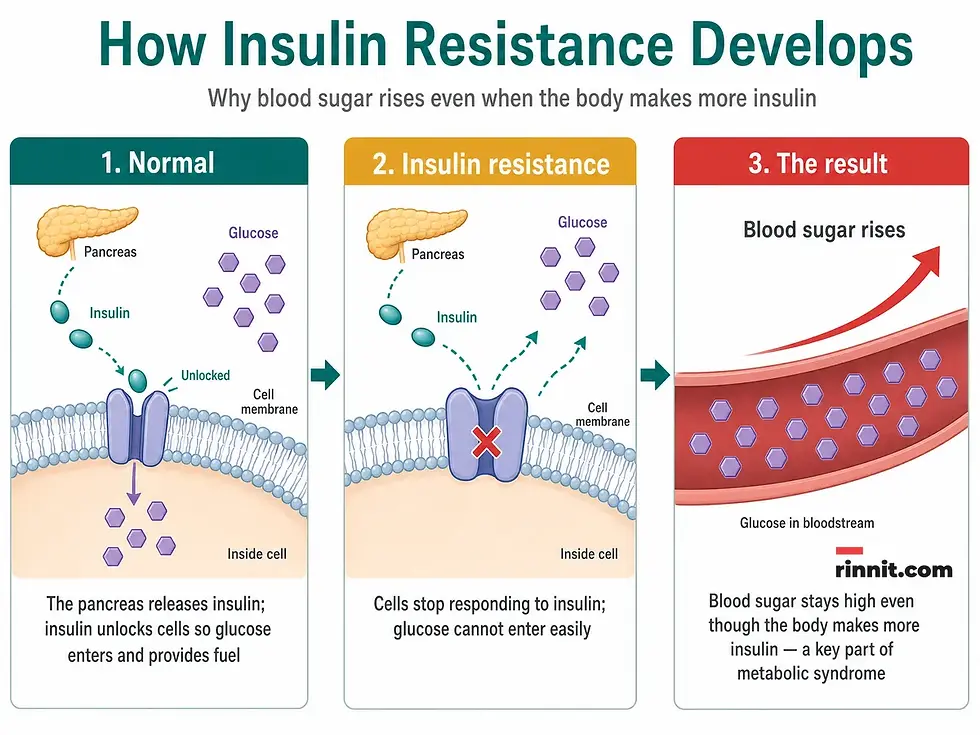
Metabolic syndrome is closely linked to overweight or obesity and inactivity. It is also linked to a condition called insulin resistance, and understanding insulin resistance explains most of what metabolic syndrome is. [1] [4]
Usually, the digestive system breaks down foods into sugar. The pancreas makes the hormone insulin. And insulin helps sugar enter cells to be used as fuel. [1]
In people with insulin resistance, cells don't respond as expected to insulin. So sugar, known as glucose, can't get into the cells as easily. As a result, blood sugar levels rise even though the body is making more insulin to try to lower the blood sugar. [1]
Who is at higher risk?
A number of different factors can raise a person's chances of developing metabolic syndrome. [1]
Risk factor | How it raises risk |
Age | |
Ethnicity | In the United States, people who are Hispanic appear to be at the greatest risk of developing metabolic syndrome. [1] |
Obesity | Carrying too much weight, especially around the stomach, increases the risk of metabolic syndrome. [1] |
Diabetes history | People who had diabetes during pregnancy (gestational diabetes) are at greater risk. So are people with a family history of type 2 diabetes. [1] |
Other conditions | Steatotic liver disease, polycystic ovary syndrome (PCOS), and sleep apnea are all linked to metabolic syndrome. [1] |
Diet and exercise | People who eat an unhealthy diet and do not get enough physical activity are at higher risk. [1] |
What problems can metabolic syndrome cause?
Left unaddressed, the cluster of conditions in metabolic syndrome tends to grow into two major illnesses.
Type 2 diabetes. Not staying at a healthy weight can lead to insulin resistance. Insulin resistance can cause blood sugar to rise. Over time, insulin resistance can lead to type 2 diabetes. [1]
Heart and blood vessel disease. High cholesterol and high blood pressure can lead to the buildup of plaque in the arteries. Plaque can narrow and harden the arteries. Narrowed arteries can cause a heart attack or stroke. [1]
When should you see a doctor?
If you have at least one metabolic syndrome condition, such as high blood pressure, ask your healthcare professional about testing for other conditions that are part of the syndrome. [1]
How is metabolic syndrome treated?
Lifestyle changes that involve diet and exercise often are the first treatment for metabolic syndrome. If lifestyle changes aren't enough, medicines may help you manage blood pressure, cholesterol, and blood sugar levels. [2]

What can you do at home?
For people with metabolic syndrome or any of the conditions that are part of it, making healthy lifestyle changes can help prevent or delay serious health conditions. [2]
Regular physical activity. Health experts recommend getting at least 30 minutes of exercise, such as brisk walking, daily. But you don't have to do that activity all at once. Look for ways to increase activity any chance you get, such as walking instead of driving and using the stairs instead of an elevator. [2]
Weight loss. Losing 3% to 5% of body weight can reduce insulin resistance and lower the risk of diabetes. It also can reduce blood pressure. It is important to keep the weight off. A healthcare professional might be able to help with ways to lose weight and keep it off, including medicines or weight-loss surgery. [2]
Healthy diet. Healthy-eating plans, such as the Dietary Approaches to Stop Hypertension diet (called the DASH diet) and the Mediterranean diet, mean eating more vegetables, fruits, high-fiber whole grains, and lean protein. They typically limit sugary beverages, alcohol, salt, sugar, fats (especially saturated fats and trans fats), and processed foods, such as frozen dinners and chips. [2]
Stopping smoking. Giving up cigarettes and other tobacco products greatly improves overall health. Ask your healthcare team for help with quitting. [2]
Reducing or managing stress. Physical activity, meditation, yoga, and other programs can ease stress and improve emotional and physical health. [2]
Getting enough good sleep. Over time, lack of good sleep can lead to health problems. For adults, 7 to 9 hours of sleep a night is the target. [2]
How do you prepare for a doctor's appointment?
You are likely to start by seeing your primary healthcare professional. You may be referred to a doctor who specializes in diabetes and other endocrine disorders, called an endocrinologist. Or you may be referred to a cardiologist, who specializes in heart disease. [2]
When you make an appointment, ask if there is anything you need to do in advance, such as fasting for a test. Make a list of your symptoms, including any that seem unrelated to the reason for your appointment, and when they began; key personal information, including other medical conditions you have and family medical history; all medicines, vitamins, or other supplements you take, including doses; and questions to ask your healthcare team. Take a family member or friend to the appointment, if possible, to help you remember the information you are given. [2]
For metabolic syndrome, some questions to ask your healthcare team include: What conditions are causing metabolic syndrome for me? How can I reduce the risk of other health conditions caused by metabolic syndrome? Will losing weight help my condition? What about exercise? Do I need any other tests? I have other health conditions; how can I best manage them together? Should I see a specialist? Are there brochures or other printed material I can have? What websites do you recommend? [2]
Your healthcare professional might ask questions about your diet, exercise, and other lifestyle habits. [2]
Conclusion and next steps
Metabolic syndrome is a warning sign, not a life sentence. It tells you that three or more of five measurable conditions — waist size, triglycerides, HDL cholesterol, blood pressure, and fasting blood sugar — have climbed into risky territory, and that together they raise your odds of type 2 diabetes, heart attack, and stroke. But the same measurements that diagnose it also make it trackable, and the first treatment requires no prescription at all: 30 minutes of daily movement, a DASH- or Mediterranean-style diet, and a weight loss of just 3% to 5% of your body weight. If you have any one of the five conditions, that is the moment to ask your healthcare professional to check the other four. [1] [2]
Talk with your healthcare team. Ask for a full metabolic screening — waist measurement, blood pressure, fasting blood sugar, and a lipid panel — and build a plan around the lifestyle changes that come first. Already managing one condition? Rinnit.com's related guides below can help you understand the pieces of the puzzle, from blood pressure to blood sugar.
Frequently Asked Questions
What is metabolic syndrome?
Metabolic syndrome is a group of conditions — high blood pressure, high blood sugar, too much fat around the waist, and high cholesterol or triglyceride levels — that together increase the risk of heart disease, stroke, and type 2 diabetes. You have metabolic syndrome when three or more of these conditions are present. [1]
What are the five measurements used for diagnosis?
The National Institutes of Health defines metabolic syndrome as having three or more of: a waist of at least 35 inches (89 cm) for women or 40 inches (102 cm) for men; triglycerides of 150 mg/dL or higher; HDL cholesterol below 40 mg/dL in men or below 50 mg/dL in women; blood pressure of 130/80 mm Hg or higher; and fasting blood sugar of 100 mg/dL or higher. Measurements also count if you are taking medicine to manage them. [2]
What causes metabolic syndrome?
Metabolic syndrome is closely linked to being overweight or obese, physical inactivity, and insulin resistance — a state in which cells do not respond normally to insulin, so glucose cannot enter cells easily and blood sugar rises even as the body produces more insulin. [1]
Does metabolic syndrome have symptoms?
Most of its conditions are silent, which is why checkups matter. A large waist size can point to metabolic syndrome, and people with high blood sugar might notice diabetes symptoms such as unusual thirst, more frequent urination, tiredness, and blurred vision. [1]
What health problems can it lead to?
Over time, insulin resistance can lead to type 2 diabetes. High cholesterol and high blood pressure can cause plaque to build up in the arteries, narrowing and hardening them; narrowed arteries can cause a heart attack or stroke. [1]
Can metabolic syndrome be reversed?
Lifestyle changes that involve diet and exercise are the first treatment. Losing 3% to 5% of body weight reduces insulin resistance and blood pressure, at least 30 minutes of daily activity is recommended, and healthy eating patterns such as the DASH and Mediterranean diets focus on vegetables, fruits, whole grains, and lean protein. If lifestyle changes are not enough, medicines can help manage blood pressure, cholesterol, and blood sugar. [2]
Related Reading
Read next on Rinnit.com:
Learn more in our guide to Apolipoprotein B (Apo B) Test: Normal Levels and What High Results Mean.
References
Mayo Clinic Staff. Metabolic syndrome - Symptoms & causes. Mayo Clinic. April 1, 2025. https://www.mayoclinic.org/diseases-conditions/metabolic-syndrome/symptoms-causes/syc-20351916
Mayo Clinic Staff. Metabolic syndrome - Diagnosis & treatment. Mayo Clinic. April 1, 2025. https://www.mayoclinic.org/diseases-conditions/metabolic-syndrome/diagnosis-treatment/drc-20351921
National Heart, Lung, and Blood Institute. Metabolic Syndrome - What Is Metabolic Syndrome? NHLBI, NIH. Last updated May 18, 2022. https://www.nhlbi.nih.gov/health/metabolic-syndrome
American Heart Association. What is Metabolic Syndrome? American Heart Association. Last reviewed October 17, 2023. https://www.heart.org/en/health-topics/metabolic-syndrome/about-metabolic-syndrome
Moore JX, et al. Metabolic syndrome prevalence by race/ethnicity and sex in the United States, National Health and Nutrition Examination Survey, 1988-2012. Prev Chronic Dis. 2017;14:E24. PMID 28301314. https://doi.org/10.5888/pcd14.160287
Mottillo S, et al. The metabolic syndrome and cardiovascular risk: a systematic review and meta-analysis. J Am Coll Cardiol. 2010;56(14):1113-1132. PMID 20863953. https://doi.org/10.1016/j.jacc.2010.05.034
Orchard TJ, et al. The effect of metformin and intensive lifestyle intervention on the metabolic syndrome: the Diabetes Prevention Program randomized trial. Ann Intern Med. 2005;142(8):611-619. PMID 15838067. https://doi.org/10.7326/0003-4819-142-8-200504190-00009
Kastorini CM, et al. The effect of Mediterranean diet on metabolic syndrome and its components: a meta-analysis of 50 studies and 534,906 individuals. J Am Coll Cardiol. 2011;57(11):1299-1313. PMID 21392646. https://doi.org/10.1016/j.jacc.2010.09.073
Medical disclaimer
This article is for informational purposes only and is not medical advice. Always consult a qualified healthcare professional for diagnosis and treatment decisions.



Comments