What Are Infectious Diseases? Causes, Symptoms, and How They Are Treated

Updated: 2 days ago
Medically reviewed by Dr. Baraa Alnahhal, MD · Last reviewed: October 2026
Quick Answer
Infectious diseases are illnesses that occur when tiny living beings such as bacteria, viruses, fungi or parasites enter the body and multiply. They spread between people, through animals, bugs, and contaminated food or water. Treatment targets the specific germ with antibiotics, antivirals, antifungals or anti-parasitics, and handwashing and vaccines help prevent them. [1] [2]
What the research says
Hand hygiene modestly lowers the risk of respiratory illness. A Cochrane review of 78 randomized trials found that hand hygiene interventions were associated with a 14% relative reduction in people with acute respiratory infections (risk ratio 0.86; 9 trials, 52,105 participants; moderate-certainty evidence). The effect on laboratory-confirmed influenza was less clear, and the authors note that adherence was often low and the risk of bias high. (Jefferson et al., Cochrane Database Syst Rev, 2023)
Washing hands with soap cuts diarrhea risk by roughly 40 to 50%. A systematic review and meta-analysis found that handwashing with soap reduced the risk of diarrheal disease by 42% to 47%, and the authors estimated that promoting it could save about a million lives. They caution that many of the studies were of poor quality and that the results may be inflated by publication bias. (Curtis & Cairncross, Lancet Infect Dis, 2003)
Antibiotic resistance is already a major cause of death. A global analysis estimated 4.95 million deaths associated with bacterial antimicrobial resistance in 2019, including 1.27 million directly attributable to it, with lower respiratory infections the most burdensome infectious syndrome. (Antimicrobial Resistance Collaborators, Lancet, 2022)
Infectious diseases touch almost everyone's life at some point, from a common cold to more serious infections that require hospital care. Understanding how germs get into the body, how infections spread, and what actually works to prevent and treat them takes a lot of the fear out of the topic. This guide explains what infectious diseases are, what causes them, how they spread, who is at higher risk, how doctors diagnose and treat them, and the everyday habits that protect you and your family.
What Is an Infectious Disease?
Infectious diseases are illnesses that happen when tiny living beings get inside the body and multiply. Bacteria, viruses, fungi and parasites are examples of organisms that can cause illness. [1]
Many organisms live in and on our bodies all the time. They are too small to see with the eyes, and they are often harmless or even helpful. But under certain conditions, some organisms can cause disease. [1]
Some infectious diseases can pass from person to person. Some spread through insects or other animals. You may get others by eating contaminated food or water, or you could be exposed to germs around you, such as those on surfaces. [1]
What Does an Infectious Disease Feel Like?
Each infectious disease has its own specific symptoms, but many illnesses share general symptoms. The general symptoms shared by many infectious diseases include fever, a faster heartbeat, diarrhea, tiredness (also called fatigue), muscle aches, coughing and night sweats. [1]
Symptoms vary depending on the cause of the infection, but fever and tiredness appear across most of them. Rest and home remedies may clear up mild infections. Other infections can be life-threatening, and treatment could involve hospital care. [1]
What Causes Infectious Diseases?
Four main types of tiny organisms cause infectious diseases. Each group behaves differently, which is why doctors try to identify the germ before choosing a treatment. [1] [2]
Germ type | What it is | Illnesses it causes |
Bacteria | One-cell organisms | Strep throat, urinary tract infections, tuberculosis |
Viruses | Microscopic germs, even smaller than bacteria | The common cold, COVID-19, HIV |
Fungi | Organisms that live in soil, plants and on skin | Ringworm and athlete's foot; some infect the lungs, eyes, liver or brain |
Parasites | Tiny organisms that live in or on a host | Malaria, which is spread by a mosquito bite; others spread from animal feces |
How Do Infectious Diseases Spread?
Germs travel in four main ways: direct contact, indirect contact, bug bites, and contaminated food or water. [1]
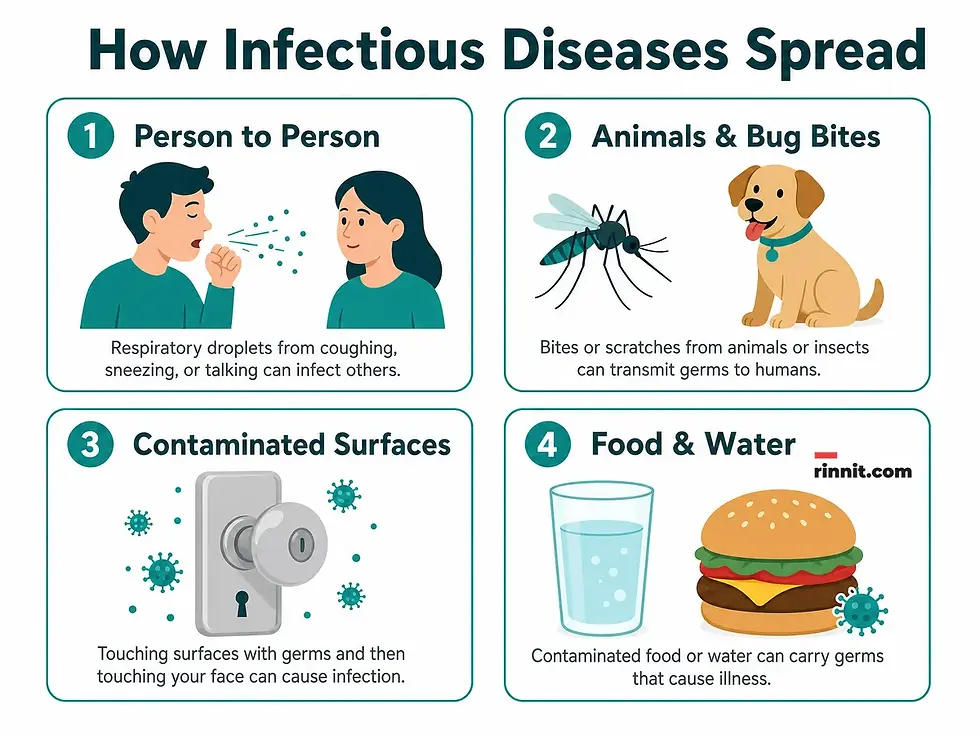
Person to person. An easy way to catch most infectious diseases is by coming in contact with an infected person or animal. An infected person can spread germs by touching, kissing, or coughing or sneezing on someone who is not infected. These germs also can spread through body fluids during sexual contact, and the person who passes the germ may have no symptoms. [1]
Animal to person. Being bitten or scratched by an infected animal, even a pet, can make you sick, and in extreme situations it can be deadly. Handling animal waste can raise the risk of catching a disease too. For example, you could get an infection from a parasite by scooping your cat's litter box without wearing disposable gloves or washing afterward. Pregnant people and others with weakened immune systems are especially at risk of this infection, called toxoplasmosis. [1]
Mother to unborn child. A pregnant person may pass germs that cause infectious diseases to the unborn baby. Some germs can pass through the placenta, the organ that sends oxygen and nutrients to an unborn child. Germs in the vagina also can be spread to the baby during birth. There is also a small risk of germs passing through breast milk, and this risk is higher if you buy breast milk online from a milk-sharing site or if your baby is fed someone else's breast milk. [1]
Surfaces and indirect contact. Disease-causing germs also can be passed by indirect contact. Many germs can linger on surfaces such as tabletops, doorknobs or faucet handles. If you touch a doorknob that has been handled by someone ill with the flu or a cold, you could pick up the germs that person left behind. If you then touch your eyes, mouth or nose before washing your hands, you may become infected. [1]
Bug bites. Bugs such as mosquitoes, fleas, lice or ticks can harbor germs and spread them to people with their bites. Mosquitoes can carry the malaria parasite or West Nile virus. Deer ticks may carry the bacterium that causes Lyme disease. [1]
Food and water. Disease-causing germs also can infect you through contaminated food and water. For example, the bacterium Escherichia coli (E. coli) is present in or on foods such as undercooked hamburger or unpasteurized fruit juice. [1]
Who Is at Higher Risk of Infection?
Anyone can catch infectious diseases, but you may be more likely to get sick if your immune system is not working properly. [1]
Risk factor | How it raises infection risk |
Immune-suppressing medicines | Steroids or other medicines that suppress the immune system, such as chemotherapy for cancer, weaken the body's defenses. |
HIV or AIDS | These conditions directly affect how the immune system fights germs. |
Cancer and immune conditions | Certain types of cancer or other conditions affect the immune system. |
Malnutrition | Poor nutrition is a risk factor for infection. |
Hospital procedures | Procedures that insert tubes in a vein to give medicine or other treatments create a path for germs. |
Can Infectious Diseases Cause Long-Term Problems?
Yes. Some infectious diseases cause minor health problems, such as the common cold. Others can become life-threatening, such as pneumonia and meningitis. [1]
A few types of infections have been linked to a long-term higher risk of cancer. Human papillomavirus is linked to cervical cancer. Helicobacter pylori is tied to stomach cancer and peptic ulcers. Hepatitis B and C have been linked to liver cancer. [1]
Some germs also stay in the body after the first illness. The germs that cause some infectious diseases may become inactive, only to cause problems again in the future. For example, someone who has had chickenpox may develop shingles much later in life. [1]
When Should You See a Doctor?
Call your healthcare professional if you have been bitten by an animal, have trouble breathing, or cough for more than a week, or if you cough up yellow-green mucus or blood. A severe headache with fever is another reason to call. Get seen if you get a rash that is widespread, comes with a fever, leaks fluid, or feels painful or warm. Unexplained or long-lasting fever and sudden vision problems also warrant a call to your healthcare professional. [1]
Warning sign | What it looks like |
Animal bite | You have been bitten by an animal. |
Breathing trouble | You have difficulty breathing. |
Persistent cough | You cough for more than a week, or cough up yellow-green mucus or blood. |
Severe headache with fever | A bad headache combined with an elevated temperature. |
Widespread rash | A rash that comes with fever, leaks fluid, or feels painful or warm. |
Unexplained fever | A fever with no clear cause, or one that lasts a long time. |
Sudden vision problems | Vision changes that appear quickly. |
How Are Infectious Diseases Diagnosed?
Your healthcare professional will likely ask you about your symptoms and medical history, and you will likely get a physical exam too. You also may need certain tests or imaging scans to help figure out the cause of your symptoms. Many infectious diseases have symptoms in common, and samples of body fluids can sometimes point to the particular germ that causes the illness, which helps your care team make sure you get the right treatment. [2]
Diagnostic test | What it involves |
Blood test | A healthcare professional inserts a needle into a vein, often in the arm. |
Urine test | This involves urinating into a container. |
Throat swab | A sterile swab takes samples from the throat or other moist areas of the body. |
Stool sample | You collect a stool sample in a container so a lab can check for parasites and other organisms. |
Spinal tap (lumbar puncture) | A needle takes a sample of the fluid that surrounds the brain and spinal cord. It is placed between the bones of the lower spine while you lie on your side with your knees pulled toward your chest. |
Imaging scans | X-ray, computerized tomography (CT), ultrasound and MRI make images of the inside of the body. |
Biopsy | A tiny sample of tissue is taken for testing. For example, a lung tissue biopsy can be checked for fungi that cause a type of pneumonia. |
How Are Infectious Diseases Treated?
Knowing what type of germ is causing your illness makes it easier for your healthcare team to choose the right treatment. The four germ types each have their own class of medicine. [2]

Treatment type | What it treats | Examples |
Antibiotics | Illnesses caused by bacteria | Targeted to the specific bacteria type, such as streptococcus or E. coli |
Antivirals | Certain viruses | The viruses that cause COVID-19, HIV, herpes, hepatitis B, hepatitis C and influenza |
Antifungals | Fungal infections | Topical medicines for skin or nails; oral medicines for the lungs or mucous membranes; intravenous medicines for severe internal organ infections |
Anti-parasitics | Diseases caused by parasites | Treatments for malaria and other parasite-borne diseases |
Antibiotics only work on bacteria. They have no effect on illnesses caused by viruses. But sometimes it is hard to tell which type of germ is at work. For example, pneumonia can be caused by a bacterium, a virus, a fungus or a parasite. [2]
Antibiotic resistance is a growing problem. The overuse of antibiotics is a problem. Bacteria can change in response to these medicines. As a result, some types of bacteria can resist the effects of one or more varieties of antibiotics. This is called antibiotic resistance, and it makes these germs much harder to treat. [2]
Fungal and parasite treatments vary by severity. Topical antifungal medications that you put on the body can treat skin or nail infections caused by fungi. Some fungal infections, such as those that affect the lungs or the mucous membranes, can be treated with an oral antifungal that you take by mouth. Worse infections of the internal organs may need intravenous antifungal medicines, which you receive through a needle in a vein at the hospital. Some diseases, including malaria, are caused by tiny parasites that live in or on host organisms and get their nutrients from or at the expense of their hosts. Medicines can treat diseases caused by parasites, but some types of parasites have developed resistance to the drugs. [2]
What Can You Do at Home?
Many infectious diseases, such as colds, go away on their own. Drink plenty of fluids and get lots of rest. If other people live in your home, try not to have close contact with them while you are sick. Think about wearing a mask around them. [2]
Do Immune-Boosting Supplements Work?
Many products have claimed to help fend off common illnesses, such as the cold or flu. Some of these substances have appeared promising in early studies, but follow-up research may have had unclear results. In general, more research needs to be done. [2]
Some of the substances that have been studied for preventing or shortening the length of infections include cranberry, echinacea, garlic, ginseng, vitamin C, vitamin D and zinc. Check with your healthcare team before you try any products that promise to boost your immune system or chase away colds and other illnesses. Some of these products may cause side effects or mix poorly with other medicines you may be taking. [2]
How Do You Prevent Infectious Diseases?
Everyday habits go a long way toward preventing infections. These seven steps lower your risk. [1]

Prevention step | What to do |
Wash your hands | Scrub with water and soap for at least 20 seconds, or use a hand sanitizer with at least 60% alcohol. Wash before and after preparing food, before eating, after using the toilet or touching garbage, after handling pets and their food or waste, after caring for someone who is sick, before and after treating a cut, and after blowing your nose. Try not to touch your eyes, nose or mouth. |
Get vaccinated | Vaccination can greatly lower your chances of getting many diseases. Keep up to date on your recommended vaccinations and your children's. Vaccines prevent diseases like measles and chickenpox, and can make illnesses like COVID-19 milder. |
Stay home when ill | Do not go to work if you are vomiting or have diarrhea or a fever, and do not send children to school with these symptoms. Wear a mask if you are sick or caring for someone sick with COVID-19. |
Prepare food safely | Keep kitchen surfaces clean. Cook ground meats to at least 160 F (71 C), poultry to 165 F (74 C), and most other meats to at least 145 F (63 C). Refrigerate leftovers quickly. |
Have safe sex | Use a condom each time if you or your partner has a history of sexually transmitted diseases or more than one sex partner. Get tested and share the results. |
Don't share personal items | Use your own toothbrush, comb and razor. Do not share drinking glasses or utensils, especially if someone seems sick. |
Travel wisely | If you are traveling out of the country, talk to your healthcare professional about special vaccinations, such as those for yellow fever, cholera, hepatitis A or B, or typhoid fever. |
How Do You Prepare for a Doctor's Appointment?
You will probably first see your primary care team. You may get referred to a specialist, depending on how bad your infection is and what parts of the body it affects. For example, a dermatologist treats skin conditions and a pulmonologist treats lung disorders. [2]
Before the visit, write a list that includes detailed descriptions of your symptoms, information about medical problems you have had, information about your parents' or siblings' medical problems, all the medicines and dietary supplements you take, and the questions you want to ask. [2]
Your healthcare professional will likely ask when your symptoms began and how serious they are, whether they come and go or are constant, whether you have recently come into contact with anyone who is sick, whether you have been bitten or scratched by an animal or come into contact with animal feces, whether you have any insect bites, whether you have eaten undercooked meat or unwashed vegetables, and whether you have been out of the country recently. [2]
Useful questions to ask include: [2]
What is the most likely cause of my symptoms, and are there other possible causes?
What kinds of tests do I need?
Is my condition likely temporary or long lasting?
What treatment do you recommend?
How can I best manage other health conditions together with this one?
Is there a generic version of the medicine being prescribed?
Conclusion and Next Steps
Infectious diseases happen when tiny organisms, such as bacteria, viruses, fungi or parasites, get inside the body and multiply. Most infections are mild and clear up with rest, but some can be life-threatening, so knowing the warning signs matters. Treatment is easiest to choose once the germ is known, because antibiotics, antivirals, antifungals and anti-parasitics each target one type. Much of the protection is in your own hands: washing for 20 seconds, staying current on vaccines, cooking food to safe temperatures and staying home when you are sick all help stop infections before they start. If you have any of the warning signs in this guide, call your healthcare professional early. [1] [2]
Ready to Protect Yourself and Your Family?
Start with the seven prevention steps in this guide, print the checklist, and post it somewhere visible in your home. If you are due for any vaccinations or have an infection that is not improving, book a visit with your healthcare team. Then explore the related Rinnit.com guides below to keep building your family's health knowledge.
Related Reading
Read next on Rinnit.com:
Learn more. For more evidence-based health guides, visit Rinnit.com.
Frequently Asked Questions
What is an infectious disease?
An infectious disease is an illness that happens when tiny living beings, such as bacteria, viruses, fungi or parasites, get inside the body and multiply. Many of these organisms live in and on our bodies harmlessly, but under certain conditions some can cause disease.
How do infectious diseases spread?
Infectious diseases spread through direct contact with an infected person or animal, indirectly through germs left on surfaces like doorknobs and tabletops, through bug bites from mosquitoes, fleas, lice or ticks, and by eating or drinking contaminated food or water. Germs can also pass from a mother to her unborn child through the placenta or during birth.
What are the common symptoms of an infectious disease?
Each disease has its own specific symptoms, but many share general ones: fever, faster heartbeat, diarrhea, tiredness (fatigue), muscle aches, coughing and night sweats. Symptoms vary depending on the cause of the infection.
When should I see a doctor about a possible infection?
Call your healthcare professional if you have been bitten by an animal, have trouble breathing, cough for more than a week or cough up yellow-green mucus or blood, have a severe headache with fever, develop a widespread rash that leaks fluid or feels painful or warm, have an unexplained or long-lasting fever, or develop sudden vision problems.
How are infectious diseases treated?
Treatment depends on the germ. Antibiotics treat bacterial infections, antivirals treat certain viruses, antifungals treat fungal infections and anti-parasitics treat diseases caused by parasites. Antibiotics have no effect on viruses, and overusing them can lead to antibiotic resistance, which makes germs harder to treat.
What can I do to prevent infectious diseases?
Wash your hands with soap and water for at least 20 seconds, keep up to date on vaccines for yourself and your children, stay home when you are vomiting or have diarrhea or a fever, cook food to safe internal temperatures, use condoms to prevent sexually transmitted infections, do not share personal items such as toothbrushes and razors, and talk to your healthcare professional about travel vaccinations before international trips.
References
Mayo Clinic Staff. Infectious diseases - Symptoms and causes. Mayo Clinic. April 8, 2025. https://www.mayoclinic.org/diseases-conditions/infectious-diseases/symptoms-causes/syc-20351173
Mayo Clinic Staff. Infectious diseases - Diagnosis and treatment. Mayo Clinic. April 8, 2025. https://www.mayoclinic.org/diseases-conditions/infectious-diseases/diagnosis-treatment/drc-20351179
Jefferson T, et al. Physical interventions to interrupt or reduce the spread of respiratory viruses. Cochrane Database Syst Rev. 2023;1(1):CD006207. PMID 36715243. https://doi.org/10.1002/14651858.CD006207.pub6
Curtis V, et al. Effect of washing hands with soap on diarrhoea risk in the community: a systematic review. Lancet Infect Dis. 2003;3(5):275-281. PMID 12726975. https://doi.org/10.1016/s1473-3099(03)00606-6
Antimicrobial Resistance Collaborators. Global burden of bacterial antimicrobial resistance in 2019: a systematic analysis. Lancet. 2022;399(10325):629-655. PMID 35065702. https://doi.org/10.1016/S0140-6736(21)02724-0
Medical disclaimer
This guide is for informational purposes only and is not medical advice. Individual diagnosis and treatment decisions should always be made with a qualified healthcare professional.



Comments