Thalassemia: Symptoms, Causes, Treatment & Complete Guide

Updated: 3 days ago
Medically reviewed by Dr. Baraa Alnahhal, MD · Last reviewed: October 2026
Quick Answer
Thalassemia is an inherited blood disorder. It causes the body to produce less hemoglobin — the protein in red blood cells that carries oxygen — which leads to anemia, tiredness, and weakness. Mild forms called thalassemia trait need no treatment at all, while severe forms such as thalassemia major may require lifelong blood transfusions and iron-removing medication.
What the research says
Luspatercept lowered transfusion needs in transfusion-dependent beta-thalassemia. In a randomized, double-blind phase 3 trial of 336 adults (224 on luspatercept, 112 on placebo), 21.4% of the luspatercept group versus 4.5% of the placebo group had a transfusion-burden reduction of at least 33% (and at least 2 red-cell units) during weeks 13 to 24 (P<0.001); serum ferritin was also lower with luspatercept (least-squares mean difference −348 µg/L; 95% CI −517 to −179), while transient bone pain, joint pain, dizziness, high blood pressure, and high uric acid were more common. (Cappellini et al., N Engl J Med, 2020) [3]
Hydroxyurea helped many people with beta-thalassemia, but the evidence lacks control groups. A meta-analysis of 2 randomized trials and 25 single-arm observational studies (1,748 individuals) found that in transfusion-dependent patients, hydroxyurea was linked to a significant drop in transfusion needs (pooled good response, meaning transfusion-free, 0.65; 95% CI 0.53 to 0.76); neutropenia and leucopenia were the most common adverse events, and the authors call for more double-masked randomized trials. (Huang et al., Front Med, 2025) [4]
Stem cell transplant is the only widely available cure, but it has not been tested head to head. A Cochrane review found no randomized or quasi-randomized trials comparing types of hematopoietic stem cell transplantation, or comparing it with regular transfusion and chelation, in transfusion-dependent beta-thalassaemia; it notes that allogeneic transplantation is the only widely available therapy with curative potential. (Sharma et al., Cochrane Database Syst Rev, 2021) [5]
Thalassemia at a Glance
Question | Answer |
What is it? | An inherited blood disorder with lower-than-usual hemoglobin |
Is it contagious? | No — it is passed through genes from parents to children |
Who is at higher risk? | People of South Asian, Italian, Greek, Middle Eastern, or African descent |
When do symptoms appear? | At birth, within the first two years, or sometimes never |
How is it diagnosed? | Blood tests for red blood cells and DNA changes; prenatal tests exist |
What is the treatment? | None for mild trait; transfusions, iron removal, medicines, or transplant for severe forms |
Can it be prevented? | Mostly no, but genetic counseling and prenatal testing help families plan |
What Is Thalassemia?
Thalassemia (pronounced thal-uh-SEE-me-uh) is a blood disorder that is inherited, meaning it passes from parents to children through genes — the carriers of biological information that influence everything from appearance to disease risk.
The disorder causes the body to have less of the protein hemoglobin than usual. Hemoglobin sits inside red blood cells and is what allows them to carry oxygen through the bloodstream. Not having enough hemoglobin or enough red blood cells leads to a condition called anemia, which makes you feel tired and weak.
Here is the good news about the mild end of the spectrum: if you have a mild form called thalassemia trait, you do not need any specific treatment. A healthy diet and regular exercise can help manage tiredness. But with more-serious forms, regular blood transfusions — treatments in which you receive blood from a donor — may become necessary.
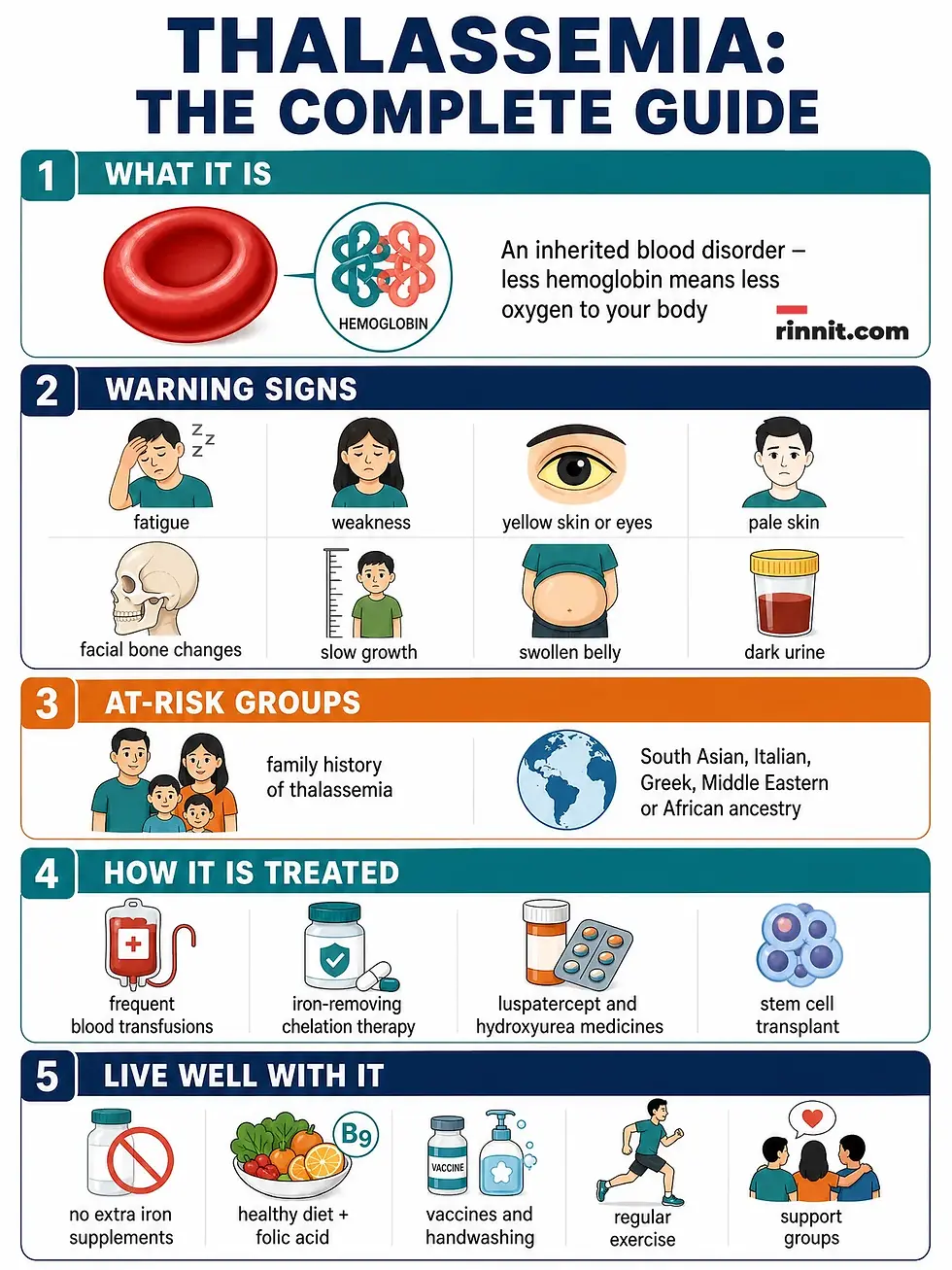
What are the symptoms of thalassemia?
Symptoms depend on the type of thalassemia and how serious it is. Some people with thalassemia never have any symptoms at all, while some babies show signs at birth and others develop them during the first two years of life.
Symptoms of severe thalassemia can include:
Tiredness, also called fatigue
Weakness
A change in skin color or a yellowing of the skin and eyes (jaundice)
Changes or problems with facial bones
Slow growth
Swelling of the stomach area, also called the abdomen
Dark urine
Poor appetite
When to See a Doctor
If your child shows any of these symptoms, make an appointment with your child's health care team for a checkup. Because severe forms typically appear within the first two years of life, early evaluation matters.
What Causes Thalassemia?
Thalassemia is caused by gene changes in the cells that make hemoglobin — the protein in red blood cells that carries oxygen throughout the body. These gene changes are passed from parents to children.
Hemoglobin molecules are built from protein chains called alpha chains and beta chains. With thalassemia, the body does not make enough of either the alpha or the beta chain, which produces the two main types of the condition: alpha-thalassemia or beta-thalassemia.
The nature of the genetic change differs between the types. In beta-thalassemia, the change is an alteration in the DNA (also called a mutation or variation). In alpha-thalassemia, one or more copies of the four genes that program the alpha chain are missing — a change termed a "deletion."

Alpha-Thalassemia: Four Genes, Four Outcomes
Four genes are involved in making the alpha hemoglobin chain — you receive two from each parent. The seriousness depends on how many copies are missing:
Missing Genes | What Happens |
One copy missing | No symptoms of thalassemia, but you carry the disease and can pass it to your children |
Two copies missing | Symptoms are likely mild — this is called alpha-thalassemia trait |
Three copies missing | Symptoms are likely moderate to severe |
All four copies missing | Rare; usually leads to stillbirth (loss of a pregnancy at or after 20 weeks); babies born with four missing genes often die shortly after birth or need lifelong transfusions |
Occasionally, a child born with all four genes missing can be treated with blood transfusions and a stem cell transplant.
Beta-Thalassemia: Two Genes, Two Outcomes
Two genes make the beta hemoglobin chain — one from each parent. Unlike the missing genes of alpha-thalassemia, small changes in the gene cause beta-thalassemia by reducing production of the beta chain.
Changed Genes | What Happens |
One gene changed | Usually mild symptoms — called nontransfusion-dependent thalassemia; with no symptoms, it may be called beta-thalassemia trait or thalassemia minor |
Two genes changed | Symptoms are typically moderate to severe — called transfusion-dependent beta-thalassemia or thalassemia major |
Babies born with two changed beta hemoglobin genes are usually healthy at birth but often develop symptoms within the first two years of life. A milder form is possible even with two changed genes.
What are the risk factors for thalassemia?
Thalassemia risk is raised by a family history of the condition and by South Asian, Italian, Greek, Middle Eastern or African ancestry.
Family history of thalassemia — the condition passes from parents to children through genetic changes in hemoglobin genes
Certain ancestry — thalassemia happens most often in people of South Asian, Italian, Greek, Middle Eastern, or African descent
What complications can moderate to severe thalassemia cause?
Health problems can stem from moderate to severe thalassemia. The most widespread is iron overload: people with thalassemia can get too much iron in their bodies, due to the disease itself or to frequent blood transfusions. Excess iron can damage the heart, liver, and hormone glands. People with thalassemia also face a higher risk of infections, especially if their spleens have been removed.
Severe thalassemia can additionally cause:
Complication | How It Develops |
Bone changes | Bone marrow (the spongy tissue inside bones) expands and makes bones widen, leading to irregular bone structure — especially in the face and skull. Expanding marrow also makes bones thin and brittle, raising the chance of broken bones |
Enlarged spleen | The spleen fights infection and removes old or damaged blood cells. Thalassemia destroys many red blood cells, so the spleen grows and works harder. This worsens anemia, shortens the life of transfused red blood cells, and may require surgical removal if the spleen grows too large |
Slowed growth | Anemia can slow a child's growth and delay puberty |
Heart problems | Congestive heart failure and irregular heart rhythms can be linked with severe thalassemia |
Can Thalassemia Be Prevented?
Most of the time, you cannot prevent thalassemia. But if you have the condition — or carry the gene changes that cause it — it is very important to talk with a genetic counselor, who can advise you on the risk of your children being affected.
People with thalassemia major who want children may consider assisted reproductive technology, such as in vitro fertilization (IVF), which joins an egg and sperm outside the body to create an embryo. An exam called preimplantation genetic testing can then check the embryo for thalassemia gene changes. An unaffected embryo can be placed in the uterus to start a pregnancy, which might help people with thalassemia — or related genes — have healthy babies. Another option is intrauterine insemination, using donor sperm from someone without thalassemia or its related genes.
How is thalassemia diagnosed?
Most children with moderate to severe thalassemia show symptoms within their first two years of life. If your child's health care professional suspects thalassemia, blood tests can confirm it.
Blood tests reveal the number of red blood cells and any irregular changes in their size, shape, or color. They can also test for gene changes in DNA.
Prenatal Testing
Testing can be done before a baby is born to find out whether the baby has thalassemia and how serious it might be:
Test | How It Works | Timing |
Chorionic villus sampling | A tiny piece of the placenta — the organ that supplies the baby with oxygen and nutrients in the womb — is removed and checked by a lab | Most often around the 11th week of pregnancy |
Amniocentesis | A sample of the fluid surrounding the unborn baby in the womb is checked | Usually around the 16th week of pregnancy |
What are the treatment options for thalassemia?
Mild forms of thalassemia trait do not need treatment. For moderate to severe thalassemia, treatments may include:
Treatment | How It Works | Key Point |
Frequent blood transfusions | Donor blood replaces what the body cannot make; some people need transfusions as often as every few weeks | Over time, transfusions cause iron buildup in the blood, which can damage the heart, liver, and other organs |
Chelation therapy | Removes extra iron from the blood — vital for health even in some people who do not receive regular transfusions | Oral medicines include deferasirox (Exjade, Jadenu) and deferiprone (Ferriprox); deferoxamine (Desferal) is given through a needle in a vein |
Luspatercept (Reblozyl) | A medicine given by shot that helps some people need fewer blood transfusions | Injected medication |
Hydroxyurea (Hydrea, Droxia) | A medicine taken by mouth that can lower the chances of other health problems caused by thalassemia | Oral medication |
Stem cell transplant | Also called a bone marrow transplant; stem cells from a donor with matching cells — often a healthy sibling — are infused | For children with severe thalassemia, it can eliminate the need for lifelong transfusions and iron-control drugs |
How can people live well with thalassemia through self-care?
Living well with thalassemia means following your treatment plan, avoiding extra iron, eating a healthy diet and lowering your risk of infections.
Do not take in extra iron. Avoid vitamins or supplements containing iron unless your health care professional recommends them. Ask whether to limit iron-rich foods such as meat, fish, spinach, and some cereals and orange juices.
Eat a healthy diet. Healthy eating helps you feel better and boosts energy. Your professional may recommend a folic acid supplement, which helps your body make new red blood cells. To keep bones healthy, get enough calcium and vitamin D — ask your team about the right amounts and whether you need supplements.
Lower your risk of infections. Wash hands often and stay away from sick people — this is especially important if your spleen has been removed. Stay current on flu and COVID-19 vaccines, and get vaccines to prevent meningitis, pneumonia, and hepatitis B. If you run a fever or show infection symptoms, see your health care professional promptly.
Get regular exercise. If you are not active now, ask your health care team to help you get started. Heart-healthy aerobic exercises include walking, biking, or jogging. If you have joint pain, gentler options such as yoga, swimming, or water aerobics work well.
How can people cope with thalassemia and find support?
If you or your child has thalassemia, reach out for help when you need it. A member of your health care team can answer questions and offer advice. You might also consider joining a support group, where you can meet other people affected by thalassemia, share experiences, and exchange useful information. Ask your health care team about groups in your area.
How should you prepare for a thalassemia appointment?
Most often, tests find moderate to severe thalassemia within the first two years of life. If you have noticed symptoms in your infant or child, see your pediatrician or the health care professional who cares for your family — you may be referred to a hematologist, a doctor who finds and treats blood disorders.
What You Can Do
Make a list of:
Your child's symptoms, including any that may not seem related to the checkup, plus when they began
Family members who have had thalassemia
All medicines, vitamins, and supplements your child takes, with the dose of each
Questions to ask your health care professional
Some questions worth asking your health care team:
What is the most likely cause of my child's symptoms?
Are there other possible causes?
What kinds of tests are needed?
What treatments are available?
What treatments do you recommend?
What are the most common side effects of each treatment?
How can this best be managed with other health conditions?
Are there dietary restrictions to follow? Do you recommend supplements?
Are there printed materials you can give me? What websites do you recommend?
What to Expect From Your Doctor
Your health care professional is likely to ask:
Do the symptoms happen all the time or come and go?
How bad are the symptoms?
Does anything seem to make the symptoms better?
What, if anything, seems to make the symptoms worse?
Frequently Asked Questions
What is thalassemia?
Thalassemia is an inherited blood disorder in which the body produces less hemoglobin than usual, often leading to anemia that causes tiredness and weakness. It is passed from parents to children through gene changes, not caught from other people.
What are the two main types of thalassemia?
The two main types are alpha-thalassemia and beta-thalassemia, depending on whether the alpha or beta hemoglobin protein chains are reduced. Alpha-thalassemia involves missing copies of four genes, while beta-thalassemia involves altered DNA in two genes.
What are the symptoms of thalassemia?
Severe thalassemia can cause fatigue, weakness, pale or yellow skin and eyes, facial bone changes, slow growth, a swollen abdomen, dark urine, and poor appetite. Some babies show symptoms at birth, others within the first two years, and some people never have symptoms at all.
Is thalassemia trait dangerous?
Thalassemia trait is a mild form of the condition that does not need specific treatment. A healthy diet and regular exercise are usually enough to manage any tiredness, though carriers can still pass the gene changes to their children.
How is thalassemia diagnosed?
Blood tests confirm thalassemia by revealing the number of red blood cells and irregular changes in their size, shape, or color, and can also detect gene changes in DNA. Before birth, chorionic villus sampling (around week 11) and amniocentesis (around week 16) can test an unborn baby.
What does thalassemia treatment involve?
Mild trait needs no treatment, while moderate to severe forms are managed with frequent blood transfusions, chelation therapy to remove excess iron, medicines such as luspatercept and hydroxyurea, or a stem cell transplant. In children with severe thalassemia, a transplant can eliminate the need for lifelong transfusions.
What is iron overload in thalassemia?
Iron overload is excess iron in the body caused by the disease itself or by frequent blood transfusions, and it can damage the heart, liver, and hormone glands. Chelation therapy removes the extra iron and is vital for long-term health, even in some people who do not receive regular transfusions.
Conclusion
Thalassemia can feel daunting, but understanding it makes it manageable. Here are the three lessons worth carrying away from this guide:
Thalassemia is inherited, not contagious — it comes from gene changes in the cells that make hemoglobin, so family history and ancestry matter
Severity spans a wide spectrum — from a completely harmless trait needing no treatment to thalassemia major requiring lifelong transfusions and iron management
Modern treatment works — transfusions, chelation therapy, newer medicines, and stem cell transplants mean many people with severe thalassemia live fuller lives than ever before
This complete guide has walked you through the symptoms, the genetics of the two types, the complications, and the full range of diagnosis and treatment options — knowledge that puts you (or your child's care team) in the strongest possible position.
Disclaimer: This article is for general informational purposes only and does not constitute medical advice. Always consult a qualified healthcare professional for diagnosis and treatment of any health condition. Never disregard professional medical advice or delay seeking it because of something you have read here.
Related Reading
Learn more in our guide to MCH Blood Test: Normal Range, Low and High MCH Explained.
Learn more in our guide to RDW Blood Test: What It Measures, Normal Range and High RDW Results.
Learn more in our guide to Hemoglobin Test: Normal Ranges, Results and What They Mean.
Iron Blood Tests: Types, What Results Mean and How to Prepare explains the blood tests used to measure iron levels and stores.
Learn more in our guide to MCV Blood Test: Normal Range and What Low or High MCV Means.
Chorionic Villus Sampling (CVS): What It Is, Why It's Done, Risks and Results explains how chorionic villus sampling checks a pregnancy for genetic conditions in the first trimester.
Hemoglobin Electrophoresis: What It Shows, Hemoglobin Types and What Results Mean explains the blood test that identifies sickle cell, thalassemia and other hemoglobin types.
References
Mayo Clinic Staff. Thalassemia - Symptoms & causes. Mayo Clinic. May 6, 2025. https://www.mayoclinic.org/diseases-conditions/thalassemia/symptoms-causes/syc-20354995
Mayo Clinic Staff. Thalassemia - Diagnosis & treatment. Mayo Clinic. May 6, 2025. https://www.mayoclinic.org/diseases-conditions/thalassemia/diagnosis-treatment/drc-20355001
Cappellini MD, et al. A Phase 3 Trial of Luspatercept in Patients with Transfusion-Dependent β-Thalassemia. N Engl J Med. 2020;382(13):1219-1231. PMID 32212518. https://doi.org/10.1056/NEJMoa1910182
Huang T, et al. Efficacy and safety of hydroxyurea therapy on patients with β-thalassemia: a systematic review and meta-analysis. Front Med (Lausanne). 2025;11:1480831. PMID 39882530. https://doi.org/10.3389/fmed.2024.1480831
Sharma A, et al. Hematopoietic stem cell transplantation for people with β-thalassaemia. Cochrane Database Syst Rev. 2021;4(4):CD008708. PMID 33880750. https://doi.org/10.1002/14651858.CD008708.pub5



Comments