Respiratory System: Organs, Function, Gas Exchange and Lung Health

Updated: 2 days ago
Medically reviewed by Dr. Baraa Alnahhal, MD · Last reviewed: October 2026
Quick Answer: What is the respiratory system?
The respiratory system is the group of organs, airways, muscles and supporting blood vessels that lets you breathe. It brings oxygen to the lungs, moves oxygen into the blood at the alveoli and removes carbon dioxide when you exhale. It also protects the airways, helps you speak and smell, and contributes to acid-base balance. [1]
Core idea | Plain-language meaning |
Main organs | Lungs, airways, diaphragm, voice box, throat, nose and mouth. |
Main job | Bring in oxygen and remove carbon dioxide. |
Upper tract | Nose, mouth, nasal cavity, sinuses and larynx. |
Lower tract | Trachea, bronchi and lungs. |
Gas exchange site | Alveoli and nearby capillaries. |
Breathing muscle | The diaphragm changes chest space to draw air in and push it out. |
Other roles | Warms and moistens air, filters irritants, supports speech and smell, and helps acid-base balance. |
Symptoms to review | Shortness of breath, a runny or stuffy nose, or blue skin, lips or nails. |
What the research says
Pulmonary rehabilitation improves breathlessness, fatigue and walking ability in COPD. A Cochrane systematic review and meta-analysis of 65 randomized trials with 3,822 participants found that, compared with usual care, rehabilitation improved dyspnoea on the Chronic Respiratory Questionnaire (mean difference 0.79, 95% CI 0.56–1.03) and six-minute walk distance (mean difference 43.93, 95% CI 32.64–55.21), both above the thresholds for clinical significance (McCarthy et al., Cochrane Database Syst Rev, 2015). [2]
Lung cancer risk falls after quitting smoking, but slowly. A meta-analysis of 49 prospective cohorts from 18 studies (139 relative risks) estimated that the percentage of reducible lung cancer risk still remaining was 57.2% (95% CI 45.7–67.3%) five years after quitting, 36.9% (95% CI 28.3–47.9%) at 10 years and 19.7% (95% CI 13.3–26.4%) at 20 years (Reitsma et al., Ann Am Thorac Soc, 2020). [3]

What is the respiratory system?
The respiratory system is the collection of organs and structures that allow you to breathe. It includes the lungs, nose, mouth and the tube-like airways that connect them. Muscles and blood vessels support the system, while the ribs help protect it. [1]
Together, these parts bring oxygen into the body during inhalation and remove carbon dioxide during exhalation. Carbon dioxide is a waste product produced when cells use oxygen to create energy. [1]
What are the main respiratory system organs?
The main organs and structures include the nose and nasal cavity, mouth and oral cavity, sinuses, pharynx, larynx, trachea, bronchi, lungs and diaphragm. [1]
Structure | Role |
Nose and nasal cavity | Entry point for air and part of the upper respiratory tract. |
Mouth and oral cavity | Another route for air to enter the body. |
Sinuses | Help regulate the temperature and humidity of inhaled air. |
Pharynx | The throat, which helps carry air toward the lower respiratory tract. |
Larynx | The voice box; air vibrating the vocal cords helps make sound. |
Trachea | The windpipe that carries air into the bronchi. |
Bronchi | Large airways that branch from the trachea. |
Bronchioles | Smaller airways that transport air toward the alveoli. |
Lungs | Main respiratory organs where alveoli support gas exchange. |
Diaphragm | A breathing muscle that changes the space inside the chest. |
For related structures, see our guides to the pleura, the phrenic nerve, the pulmonary arteries and the pulmonary veins.
What is the upper respiratory tract?
The upper respiratory tract brings air into the body and helps move it toward the lungs. It includes the nose, mouth, nasal cavity, sinuses and larynx. It also adds moisture to inhaled air, and the sinuses help regulate the temperature and humidity of air as it enters. [1]
What is the lower respiratory tract?
The lower respiratory tract includes the trachea, bronchi and lungs. The trachea, bronchi and bronchioles form the tracheobronchial tree, a series of increasingly smaller tubes that carry air toward the alveoli. [1]
The airways resemble an upside-down tree because the trachea branches into bronchi and then into smaller bronchioles. The alveoli sit at the ends of this branching pathway. [1]
How does breathing work?
When you inhale, the diaphragm pulls down. This creates more space inside the chest and draws air into the lungs. Air enters through the nose or mouth, travels down the trachea, moves through the bronchi and bronchioles and reaches the alveoli. [1]
When you exhale, the diaphragm moves upward. The chest cavity becomes smaller, and air moves back through the airways and out of the body. [1]
What is gas exchange?
Gas exchange is the movement of oxygen into the blood and carbon dioxide out of the blood. It happens between the alveoli, the lungs' small air sacs, and nearby blood vessels called capillaries. [1]
Oxygen crosses the membranes around the alveoli and enters capillaries. The blood then carries oxygen to tissues, where cells use it to create energy. Carbon dioxide travels from tissues through the bloodstream back to the alveoli and leaves the body when you exhale. [1]
Gas | Direction of travel |
Oxygen | Air → alveoli → nearby capillaries → tissues. |
Carbon dioxide | Tissues → bloodstream → alveoli → exhaled air. |
The respiratory system works closely with the circulatory system, including the heart, blood and blood vessels, to complete this exchange. [1]

How does the respiratory system protect the body?
The system warms and moistens inhaled air and helps block harmful germs and irritants. Tiny hairs called cilia filter dust, germs and other irritants as air moves through the nostrils and airways. [1]
When particles or germs get farther into the system, mucus can trap them. Cilia move mucus in a wavelike motion so the body can push it out through coughing or sneezing. [1]
How does the respiratory system support speech and smell?
Air moving across the vocal cords makes them vibrate, which allows you to talk. Breathing also moves odor molecules past the olfactory nerve, which sends information about smell to the brain. [1]
How does the respiratory system help acid-base balance?
Too much carbon dioxide lowers the blood's pH and makes it more acidic. By removing carbon dioxide during exhalation, the respiratory system helps maintain the body's acid-base balance. [1]
What conditions affect the respiratory system?
Many conditions can affect respiratory organs and tissues. Some are caused by irritants or germs in the air, including viruses, bacteria and fungi. Others may result from damage, inflammation, blockages or genetic diseases. Chronic airway conditions include asthma, chronic obstructive pulmonary disease (COPD) and cystic fibrosis.
Category | Examples |
Allergic conditions | Allergic rhinitis related to pollen, pet dander, dust or other allergens. |
Chronic airway conditions | Asthma, chronic obstructive pulmonary disease and cystic fibrosis. |
Respiratory infections | Influenza, common colds and other upper or lower respiratory infections. |
Inflammation | Bronchitis (large airways), pneumonia (alveoli), sinusitis (sinuses) or inflammation in other respiratory tissues. |
Interstitial lung disease | Pulmonary fibrosis and other conditions that can cause permanent lung scarring. |
Blockages | Foreign objects, benign growths or cancerous tumors. |
Acid-base imbalances | Respiratory alkalosis and respiratory acidosis. |
Oxygen or carbon dioxide problems | Hypoxemia, hypoxia and hypercapnia. |
What symptoms can respiratory conditions cause?
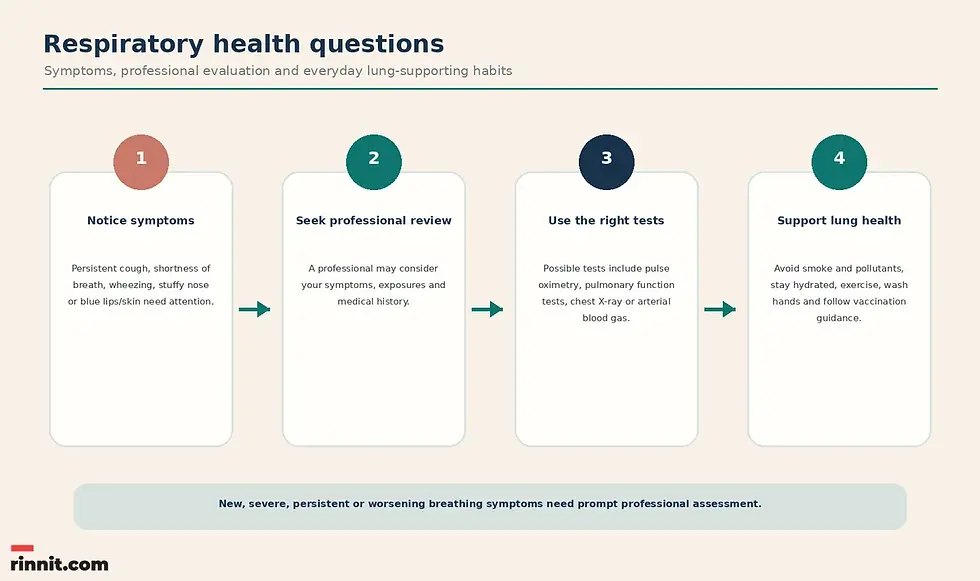
Possible signs of respiratory conditions include shortness of breath (dyspnea), a runny or stuffy nose and blue skin, lips or nails (cyanosis). A cough, wheeze or getting out of breath quickly can also be concerning, and a long-lasting or worsening cough, shortness of breath or other respiratory symptoms should be discussed with a healthcare professional. [1]
Symptom or finding | Why it matters |
Shortness of breath | Can occur with respiratory conditions and should be reviewed when new, persistent or worsening. |
Runny or stuffy nose | May reflect an upper-airway condition or infection. |
Blue skin, lips or nails | Can be a sign that something is wrong with the respiratory system. |
Long-lasting or worsening cough | Contact a healthcare professional. |
Wheezing or getting out of breath quickly | Can accompany a respiratory concern and deserves context. |
These symptoms are not a diagnosis. Breathing symptoms can have respiratory, cardiovascular or other causes.
What tests evaluate the respiratory system?
Healthcare professionals may use different tests depending on symptoms and the suspected condition.
Test | What it does |
Pulse oximetry | A simple, routine test that uses a device on a finger to measure blood oxygen level. |
Pulmonary function tests | Evaluate aspects of lung function. |
Chest X-ray | Provides imaging that may help assess the chest and lungs. |
Arterial blood gas | Measures gases and acid-base information in arterial blood. |
The appropriate test depends on the symptoms, examination and clinical question. Ask what a recommended test is intended to evaluate and how the result will affect the next step.
How are respiratory conditions treated?
Treatment depends on the specific respiratory condition and how severe it is. Options include inhaled corticosteroids or bronchodilators for narrowed airways, antiviral, antibiotic or antifungal medicines for infections, antihistamines, leukotriene modifiers, pulmonary rehabilitation, surgery for tumors or other blockages and lung transplant. These are categories of care, not personal treatment instructions. Do not start, stop or change medicines based on this article.
How can you keep your respiratory system healthy?
Supportive habit | Reason |
Do not smoke or vape | Smoking causes many lung and airway diseases or makes them worse, and vaping liquids often have many of the same ingredients as cigarettes. |
Avoid pollutants | Secondhand smoke, chemicals and radon can damage airways; wear a mask around fumes, dust or other pollutants. |
Stay hydrated | Water keeps mucus in the lungs thinner and easier to clear. |
Exercise regularly | Exercise keeps the muscles in the lungs strong and can make breathing easier. |
Wash hands often | Hand hygiene can help prevent infections. |
Get vaccinated against respiratory illnesses | Vaccination can help prevent some respiratory infections. |
When should you contact a healthcare professional?
Contact a healthcare professional for a long-lasting or worsening cough, shortness of breath or other respiratory symptoms. Regular checkups can help identify respiratory issues early, and early diagnosis can help prevent them from becoming severe.
Call emergency services (911 in the US) right away for blue skin, lips or nails, severe or sudden trouble breathing, severe chest pain, confusion, fainting, coughing up blood or rapidly worsening symptoms. These warning signs can have several causes and should not be self-managed.
Questions to ask a healthcare professional
Question | Why it helps |
Which part of my respiratory system might be involved? | Symptoms can arise in the upper airway, lower airway, lungs or supporting structures. |
Do I need a pulse-ox reading or another test? | Pulse oximetry, pulmonary function tests, chest X-rays and arterial blood gas answer different questions. |
Could a medicine, allergy, infection or pollutant be contributing? | Several triggers and conditions can affect breathing. |
What should I do if symptoms worsen? | A clear safety plan is important for breathing symptoms. |
Is an inhaler, rehabilitation or other treatment appropriate? | Treatment depends on the condition and severity. |
How can I reduce smoke, dust or chemical exposure? | Pollutants can damage the airways. |
Conclusion: The respiratory system makes breathing and gas exchange possible
The respiratory system includes the nose, mouth, throat, larynx, trachea, bronchi, bronchioles, lungs and diaphragm, supported by muscles, blood vessels and the rib cage. Its central job is gas exchange: oxygen enters through the lungs and moves into nearby capillaries, while carbon dioxide travels back to the alveoli and leaves during exhalation. [1]
The system also warms and moistens air, filters irritants, traps particles in mucus, supports speech and smell and helps maintain acid-base balance. Long-lasting or worsening cough, shortness of breath or other respiratory symptoms should be discussed with a healthcare professional. Use this guide to prepare questions for a qualified healthcare professional. It is an anatomy and symptom-awareness resource, not a diagnosis or a substitute for individualized care. [1]
Frequently Asked Questions
What is the respiratory system?
The respiratory system is the group of organs and structures that lets you breathe, brings oxygen into the body and removes carbon dioxide.
What are the main respiratory organs?
The lungs, airways, diaphragm, voice box, throat, nose and mouth are the main parts.
What is the main function of the respiratory system?
The respiratory system's main function is to bring oxygen to the body's cells and remove carbon dioxide, a waste product.
What is gas exchange?
Gas exchange is the movement of oxygen between lung alveoli and nearby blood vessels, along with the removal of carbon dioxide.
Where does gas exchange happen?
Gas exchange happens between the alveoli, the lungs' small air sacs, and nearby capillaries.
What happens to carbon dioxide?
Carbon dioxide produced by cells travels through the bloodstream to the alveoli and leaves the body when you exhale.
What is the diaphragm?
The diaphragm is a breathing muscle. It pulls down to create more chest space during inhalation and moves upward during exhalation.
What is the upper respiratory tract?
The upper respiratory tract includes the nose, mouth, nasal cavity, sinuses and larynx. It brings air into the body, moves it toward the lungs and adds moisture.
What is the lower respiratory tract?
The lower respiratory tract includes the trachea, bronchi and lungs.
What is the tracheobronchial tree?
The tracheobronchial tree is the branching system of the trachea, bronchi and bronchioles that carries air toward the alveoli.
What are alveoli?
Alveoli are small air sacs in the lungs where gas exchange occurs.
What are cilia?
Cilia are tiny hairs that filter dust, germs and irritants and move mucus outward in a wavelike motion.
How does the respiratory system protect against germs?
Cilia filter dust, germs and irritants, while mucus traps particles. Cilia move mucus outward during coughing or sneezing.
How does breathing affect acid-base balance?
Too much carbon dioxide lowers blood pH and makes it more acidic. Removing carbon dioxide helps maintain acid-base balance.
Does the respiratory system work with the heart?
Yes. It works closely with the circulatory system, including the heart, blood and blood vessels, to exchange oxygen and carbon dioxide.
What conditions affect the respiratory system?
Examples include allergic rhinitis, asthma, COPD, cystic fibrosis, respiratory infections, bronchitis, pneumonia, sinusitis, interstitial lung disease, blockages, acid-base imbalances and conditions involving too little oxygen or too much carbon dioxide.
What are common respiratory symptoms?
Shortness of breath, a runny or stuffy nose and blue skin, lips or nails are among the signs of respiratory conditions.
What tests check the respiratory system?
Pulse oximetry, pulmonary function tests, chest X-rays and arterial blood gas are among the tests a provider may use.
What is pulse oximetry?
Pulse oximetry is a simple, routine test that uses a device on a finger to measure blood oxygen level.
What treatments may be used for respiratory conditions?
Depending on the condition and severity, options may include inhaled corticosteroids, bronchodilators, antiviral, antibiotic or antifungal medicines, antihistamines, leukotriene modifiers, pulmonary rehabilitation, surgery or lung transplant.
How can I keep my respiratory system healthy?
Do not smoke or vape, avoid pollutants, stay hydrated, exercise regularly, wash hands often and get vaccinated against respiratory illnesses.
When should I call a healthcare professional about a cough?
Call for a long-lasting or worsening cough, shortness of breath or other respiratory symptoms.
What should I do if my lips turn blue?
Call emergency services (911 in the US) right away. Blue skin, lips or nails can mean your blood is low in oxygen.
Is sudden severe trouble breathing an emergency?
Sudden severe trouble breathing needs prompt emergency medical assessment, especially with blue lips, chest pain, fainting or confusion.
Related Reading
The Human Lungs: Anatomy, Function, and Respiratory Health explains how the lungs are built and how they exchange gases.
The Diaphragm: Understanding Your Body’s Primary Breathing Muscle describes the main breathing muscle and problems that affect it.
What Is Chronic Obstructive Pulmonary Disease (COPD)? Symptoms, Causes, Stages, and Treatment explains a long-term lung disease that makes breathing harder.
Pulmonary Function Tests (PFTs): Types, Preparation and What Your Results Mean explains the breathing tests that measure how well the lungs work.
References
Cleveland Clinic. Respiratory System: Organs, Facts, Anatomy & Function. Cleveland Clinic. Updated April 9, 2024. https://my.clevelandclinic.org/health/body/21205-respiratory-system
McCarthy B, Casey D, Devane D, et al. Pulmonary rehabilitation for chronic obstructive pulmonary disease. Cochrane Database Syst Rev. 2015;(2):CD003793. PMID 25705944. https://doi.org/10.1002/14651858.CD003793.pub3
Reitsma M, Kendrick P, Anderson J, et al. Reexamining Rates of Decline in Lung Cancer Risk after Smoking Cessation. A Meta-analysis. Ann Am Thorac Soc. 2020;17(9):1126-1132. PMID 32603182. https://doi.org/10.1513/AnnalsATS.201909-659OC
Medical disclaimer
This article is for general educational purposes and is not a substitute for professional medical advice, diagnosis or treatment. Always seek the advice of a qualified healthcare professional with any questions about a medical condition or treatment.



Comments