The Human Lungs: Anatomy, Function, and Respiratory Health

Updated: 3 days ago
Medically reviewed by Dr. Baraa Alnahhal, MD · Last reviewed: October 2026
The lungs are a pair of spongy, pinkish-gray organs essential for breathing [1]. Located in the chest cavity, they facilitate gas exchange by bringing oxygen into the bloodstream and removing carbon dioxide [1]. Maintaining lung health through active lifestyles and avoiding environmental toxins is critical for overall well-being [1].
Quick Answer: What are the lungs?
The lungs are the primary organs of the respiratory system, responsible for exchanging oxygen and carbon dioxide [1]. Located within the rib cage, these spongy organs move air through bronchial tubes into tiny air sacs called alveoli [1]. Breathing 12 to 20 times per minute, they deliver oxygen to the blood and expel waste gases so all body tissues can function [1].
What the research says
Pneumococcal vaccines protect adults against a leading cause of pneumonia. A systematic review of 19 studies found pooled PPSV23 effectiveness of 45% against vaccine-type invasive pneumococcal disease (95% CI 37%-51%; nine studies), and one randomized trial reported PCV13 efficacy of 45% against vaccine-type pneumococcal pneumonia (Farrar et al., Pathogens, 2023) [2].
Vaccination is linked to fewer pneumonia-related deaths. A meta-analysis of 19 studies found that PPV23 vaccination was associated with lower pneumonia-related mortality (hazard ratio 0.50; 95% CI 0.32-0.69), although four pooled randomized trials showed no significant change in all-cause mortality (RR 1.03; 95% CI 0.95-1.12) (Shabil et al., Pneumonia, 2024) [3].
Exercise-based rehabilitation helps people with COPD. A meta-analysis of 17 studies found that pulmonary rehabilitation started within 3 weeks of hospital discharge after a COPD flare-up reduced hospital re-admissions (odds ratio 0.48; 95% CI 0.30-0.77) and improved 6-minute walking distance by 57 m (95% CI 29-86) (Jenkins et al., Thorax, 2024) [4].
What are the Lungs?
The lungs are a pair of spongy organs that serve as the centerpiece of the respiratory system [1]. This network of tissues and structures is responsible for the process of breathing, pulling air into the body to supply tissues with life-sustaining oxygen [1]. While often compared to balloons, the lungs are actually composed of specialized spongy tissue, intricate airways, and millions of tiny air sacs.
What is the anatomy and structure of the human lungs?
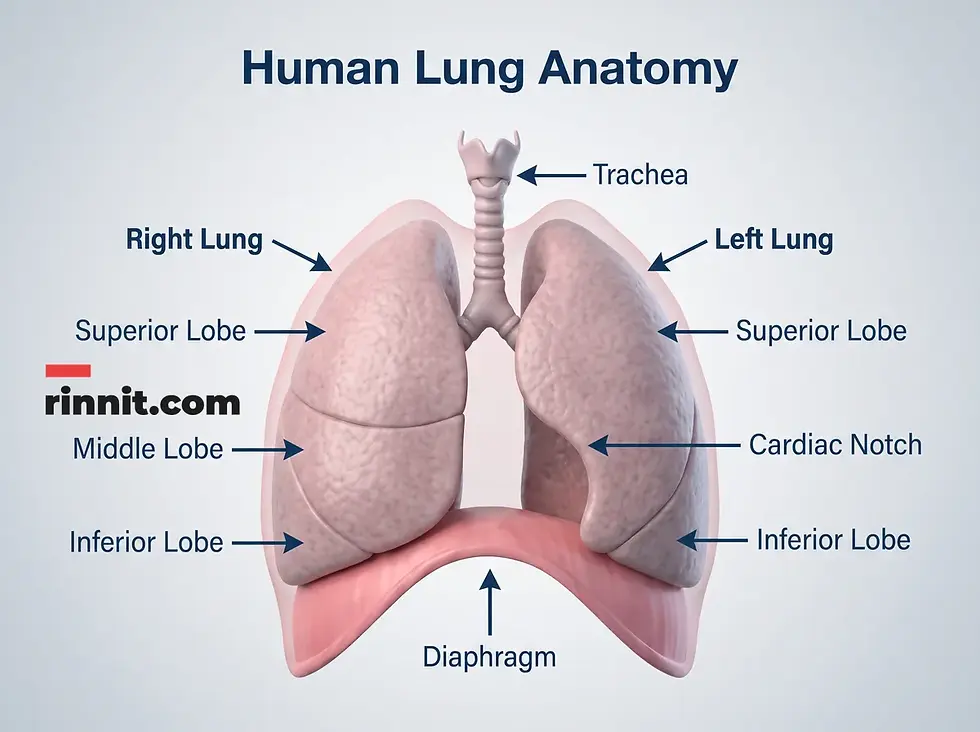
The lungs are situated in the chest (thorax), protected by the rib cage and resting atop the diaphragm. They are covered by thin tissue layers called pleura, which minimize friction as the organs expand and contract [1]. The lungs are not symmetrical; the right lung is typically shorter and wider, while the left lung features an indent known as the cardiac notch to accommodate the heart [1].
Lung Lobes and Sections
The Respiratory Pathway
Air enters through the nose or mouth and travels through a specific sequence of structures to reach the bloodstream [1]:
How do the human lungs work?
The primary role of the lungs is gas exchange. During inhalation, oxygen is pulled into the alveoli, which are surrounded by a dense network of blood vessels [1]. The blood picks up oxygen to deliver to tissues for energy production. Simultaneously, the blood releases carbon dioxide—a waste product of metabolism—into the lungs to be expelled during exhalation. This critical process occurs approximately 12 to 20 times every minute in a healthy adult [1].
What are common lung conditions?
Various diseases can impair the ability of the lungs to process air effectively. These conditions range from chronic inflammatory issues to acute infections and cancers.
Condition Type | Examples | Key Characteristics |
Chronic/Inflammatory | Asthma, COPD, Bronchitis [1] | Long-term inflammation or damage to airways. |
Infectious | Pneumonia, COVID-19, Tuberculosis [1] | Fluid buildup or inflammation caused by germs. |
Structural/Genetic | Cystic Fibrosis, Bronchiectasis [1] | Mucus buildup or permanent airway widening. |
Malignant | Lung Cancer, Mesothelioma [1] | Abnormal growths in lung tissue or linings. |

What are the signs and symptoms of lung problems?
Lung problems are often signaled by a persistent cough, shortness of breath during normal activities, chest pain or tightness and unexplained fatigue. It is important to monitor these signs and consult a healthcare provider if they persist. Call 911 for severe trouble breathing, chest pain, blue lips or coughing up blood.
Persistent or chronic cough.
Shortness of breath during normal activities.
Chest pain, tightness, or general discomfort [1].
Unexplained tiredness or fatigue.
How can you take care of your lungs?
Maintaining lung health is a lifelong process that involves both lifestyle choices and environmental awareness. Because lung issues can affect the entire body [1], proactive care is essential.
Prevention and Maintenance Tips
Avoid Smoking: Refraining from smoking or vaping is the single most important step for lung health.
Environmental Safety: Use respirator masks when working with dust, fumes, or hazardous materials [1].
Physical Activity: Regular exercise strengthens both the heart and the muscles responsible for breathing [1].
Infection Control: Practice frequent handwashing and stay up-to-date with recommended respiratory vaccines [1].

Conclusion
The lungs are sophisticated organs that provide the oxygen necessary for every cell in the human body. By understanding their complex anatomy and the vital role they play in gas exchange, individuals can better appreciate the importance of respiratory health. Protecting the lungs from environmental damage and maintaining an active lifestyle are fundamental strategies for ensuring long-term systemic well-being.
Next step: If you are experiencing persistent shortness of breath or a chronic cough, schedule an appointment with a healthcare professional to evaluate your respiratory health and ensure your lungs are functioning at their best.
Frequently Asked Questions
What is the main function of the lungs?
The primary function is to bring oxygen into the blood and remove carbon dioxide from the body.
How many lobes do the lungs have?
The right lung has three lobes, while the left lung has two.
What are alveoli?
Alveoli are tiny air sacs at the end of the respiratory tree where the actual exchange of gases takes place.
Why is the left lung smaller than the right?
The left lung has a cardiac notch to make space for the heart.
How often does a person breathe?
A typical adult breathes between 12 and 20 times per minute.
What is the diaphragm's role in breathing?
The diaphragm is a muscle that contracts and relaxes to pull air into and push air out of the lungs.
What is the difference between asthma and COPD?
Both involve airway issues, but asthma is often triggered by environmental factors, while COPD involves long-term damage that worsens over time.
Can the lungs repair themselves?
While some recovery is possible, many chronic conditions like COPD or pulmonary fibrosis involve permanent scarring.
How big are the lungs?
A normal adult lung is about 9 inches long, expanding to about 10.5 inches when fully inflated.
What are the pleura?
The pleura are thin layers of tissue that cover the lungs to reduce friction during the breathing process.
Related Reading
What Is Chronic Obstructive Pulmonary Disease (COPD)? Symptoms, Causes, Stages, and Treatment explains COPD symptoms, causes and ways to slow it down.
Asthma: Symptoms, Causes, Triggers, Diagnosis & Treatment — Complete Guide covers asthma triggers, diagnosis and day-to-day treatment.
Pneumonia: Complete Guide to Symptoms, Causes, and Treatment explains pneumonia symptoms, causes and when to seek care.
Pulmonary Function Tests (PFTs): Types, Preparation and What Your Results Mean describes the breathing tests used to measure how well lungs work.
References
Cleveland Clinic. Lungs. Cleveland Clinic. Last updated March 6, 2026. https://my.clevelandclinic.org/health/body/8960-lungs
Farrar JL, Childs L, Ouattara M, et al. Systematic review and meta-analysis of the efficacy and effectiveness of pneumococcal vaccines in adults. Pathogens. 2023;12(5):732. PMID 37242402. https://doi.org/10.3390/pathogens12050732
Shabil M, Gaidhane S, Ballal S, et al. Mortality reduction with 23-valent pneumococcal polysaccharide vaccine: a systematic review and meta-analysis. Pneumonia. 2024;16(1):30. PMID 39719643. https://doi.org/10.1186/s41479-024-00149-5
Jenkins AR, Burtin C, Camp PG, et al. Do pulmonary rehabilitation programmes improve outcomes in patients with COPD posthospital discharge for exacerbation: a systematic review and meta-analysis. Thorax. 2024;79(5):438-447. PMID 38350731. https://doi.org/10.1136/thorax-2023-220333
Medical disclaimer
The information provided in this article is for educational purposes only and should not be used as a substitute for professional medical advice, diagnosis, or treatment. Always seek the advice of your physician or other qualified health provider with any questions you may have regarding a medical condition.



Comments