Megaloblastic Anemia: Understanding Vitamin-Deficiency Blood Disorders

Updated: 3 days ago
Medically reviewed by Dr. Baraa Alnahhal, MD · Last reviewed: October 2026
Megaloblastic anemia is a type of vitamin deficiency anemia in which the bone marrow makes abnormally large red blood cells because the body doesn't get enough vitamin B12 and/or vitamin B9 (folate). Healthcare providers treat it with vitamin supplements, and most people recover [1].
Quick Answer: What is megaloblastic anemia?
Megaloblastic anemia is a form of anemia in which the bone marrow produces abnormally large, immature red blood cells, so fewer healthy cells carry oxygen. It is caused by too little vitamin B12 and/or folate. Common symptoms include fatigue, weakness, pale skin and shortness of breath. Treatment uses vitamin supplements or injections, and most people recover. [1]
What the research says
Oral and sublingual vitamin B12 raised B12 levels about as much as injections. In a systematic review and meta-analysis of 16 studies with 6,098 participants, B12 supplementation increased serum cobalamin by 402.6 pg/mL (95% CI 293.6 to 511.5) and lowered homocysteine by 4.83 umol/L (95% CI -6.55 to -3.11), with no significant differences between oral, sublingual, and intramuscular routes. Heterogeneity was high, and the authors called for more trials. Your provider decides which route suits you, and people who can't absorb B12 may need injections (Mazur et al., Front Pharmacol, 2025 [2]).
Blood findings are distinctive, and replacement often brings rapid recovery. A 2026 review describes macrocytosis with oval macrocytes and hypersegmented neutrophils on the blood smear and large megaloblasts in the bone marrow. Severe presentations, such as pancytopenia, occur in approximately 10% of cases, and early recognition matters because B12 replacement leads to rapid and often complete blood recovery. It is a narrative review, so it reports no pooled analysis (Parakh & Dewan, Front Nutr, 2026 [3]).
Nerve symptoms can appear before the blood changes. A 2026 review of inherited cobalamin disorders in children, a less common cause than diet or absorption problems, found that neurological manifestations can be diverse and severe and often precede the blood changes, and it stresses prompt treatment to prevent irreversible neurological damage (Saini et al., Front Nutr, 2026 [4]).
What Is Megaloblastic Anemia?
Megaloblastic anemia is a form of macrocytic anemia, a blood disorder that causes your bone marrow to make abnormally large red blood cells. It is also a type of vitamin deficiency anemia. Your body needs healthy red blood cells to carry oxygen from your lungs to your tissues and back again, and vitamin B12 and vitamin B9 help form them [1].
Without enough of these vitamins, your body produces abnormal cells called megaloblasts. They don't divide and reproduce like healthy cells, so there are fewer red blood cells in your bone marrow. The abnormal cells are so large they often can't leave the bone marrow, and even if they reach the bloodstream, they die earlier than healthy red blood cells. Together, these factors reduce the number of red blood cells and cause anemia [1].
Megaloblastic anemia isn't rare, although providers don't have enough information to say exactly how many people have it. Left untreated, vitamin B12 deficiency can cause neurological issues, including memory loss, problems with balance, and paresthesia, a sense of tingling or prickling in your arms and legs [1].
What are the symptoms and nerve effects of megaloblastic anemia?
Megaloblastic anemia symptoms are similar to those of other types of anemia, and vitamin B12 deficiency sometimes also affects the nerves [1]:
Symptom category | Common warning signs | What it means |
|---|---|---|
General anemia | Fatigue, weakness, and pale skin (pallor) | Fewer healthy red blood cells are carrying oxygen |
Breathing and balance | Shortness of breath and feeling light-headed or woozy | The body is struggling to get enough oxygen |
Neurological | Tingling sensations, loss of sensation, or muscle weakness | Can occur with vitamin B12 deficiency |

Fatigue, pallor, shortness of breath, and tingling are key warning signs.
Which vitamin deficiencies commonly cause megaloblastic anemia?
Megaloblastic anemia happens when you don't have enough vitamin B12 or vitamin B9 for your bone marrow to develop enough healthy red blood cells [1].
What Causes Vitamin B12 Deficiency?
Some people don't eat enough vitamin B12-rich foods like meat, fish, eggs, and dairy products. Others have conditions or medical treatments that affect how well they absorb B12 [1]:
Pernicious anemia: an autoimmune disorder that keeps your body from absorbing vitamin B12.
Gastrectomy: surgery that removes part of your stomach, which may affect B12 absorption.
Zollinger-Ellison syndrome: a rare condition that keeps your body from absorbing B12.
Blind loop syndrome: food stops moving through your intestines, causing bacteria overgrowth that uses up B12.
Fish tapeworm infestation: from eating undercooked infected fish. Tapeworms feed on vitamin B12.
Pancreatic insufficiency: your pancreas can't make enough digestive enzymes, so you may not get enough B12 or B9.
What Causes Vitamin B9 (Folate) Deficiency?
People may develop folate deficiency if their diet doesn't include green vegetables, fruits, meat and liver, or foods enriched with folic acid. For more, see our guide to folate deficiency anemia. Other causes include [1]:
Digestive system diseases: your body doesn't absorb folic acid well with diseases such as Crohn's disease or celiac disease.
Excessive alcohol use: people who drink large amounts of alcohol sometimes substitute it for food and don't get enough folate.
Overcooking fruits and vegetables: heat can destroy naturally occurring folate.
Hemolytic anemia: red blood cells break down faster than the bone marrow can replace them.
Certain medications: some antiseizure drugs and ulcerative colitis drugs interfere with folate absorption.
Dialysis: people receiving dialysis for kidney failure sometimes have poor appetites, which affects how much B12 they get from food.

Understanding why a deficiency developed is key to choosing the right treatment.
How is megaloblastic anemia diagnosed and treated?
Healthcare providers diagnose megaloblastic anemia with a physical exam and questions about your symptoms, and they treat it with vitamin supplements. They may also do these blood tests [1]:
Complete blood count (CBC): evaluates your red blood cell count and function.
Peripheral blood smear: providers look at your blood cells under a microscope.
Reticulocyte count: measures immature red blood cells to find out if your bone marrow is producing enough healthy red blood cells.
Effective Management and Recovery
Providers treat megaloblastic anemia with vitamin supplements [1]:
Treatment area | Common intervention | Details |
|---|---|---|
Vitamin B12 | Injections or supplements | You may receive B12 injections for several weeks as your levels return to normal. If your body can't absorb B12, you may need injections every few months for the rest of your life, and people with pernicious anemia may need B12 supplements for life |
Vitamin B9 (folate) | Folic acid tablets | Your provider may check that your B12 levels are normal, because folate supplements can improve symptoms and hide an underlying B12 deficiency that could lead to neurological problems |
Diet | Foods rich in B12 and B9 | Supports your supplements |
Monitoring | Periodic blood tests | For example, a few weeks after starting treatment, to confirm your vitamin levels are rising |
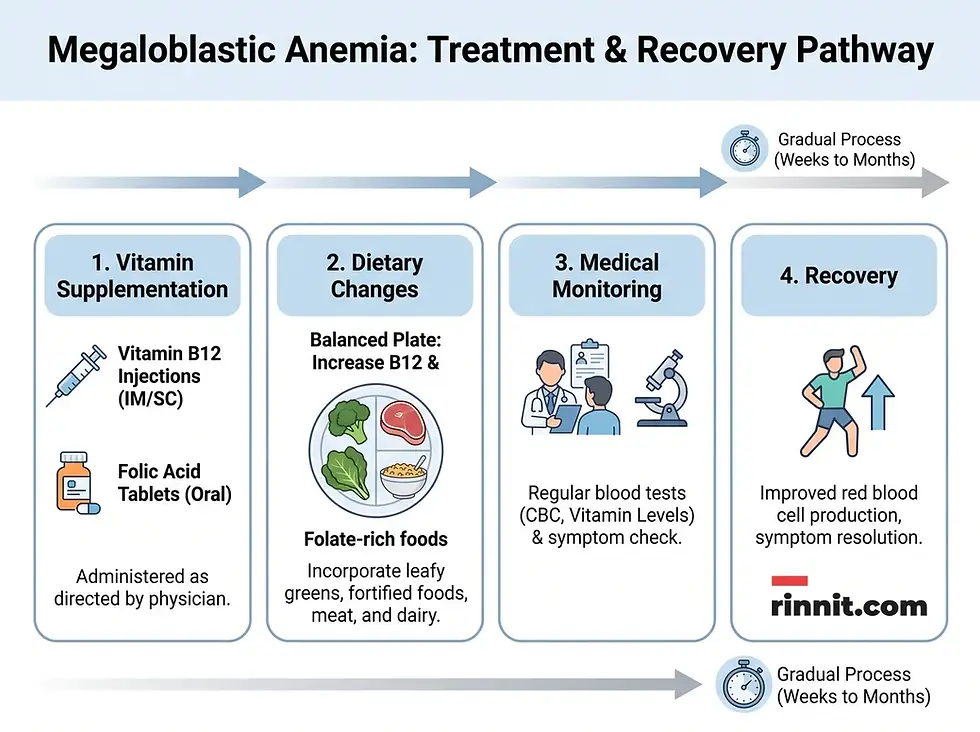
Supplements, diet, and monitoring are the cornerstones of recovery.
Most people recover from megaloblastic anemia after receiving vitamin supplements. If you have a condition that keeps your body from absorbing these vitamins, work with your provider to manage it [1]. If you have a different pattern of small red blood cells, see our guide to microcytic anemia.
How can you prevent and live with megaloblastic anemia?
You can lower your risk by eating a balanced diet that emphasizes foods with vitamin B12 and B9, drinking alcohol in moderation, and managing any condition that keeps you from absorbing these vitamins [1].
Vitamin B12 foods: red meat, fish, poultry, eggs, milk, and other dairy products, plus fortified foods such as certain breakfast cereals, nutritional yeast, plant milk, and certain bread. Check the label to confirm B12 has been added.
Vitamin B9 foods: dark green leafy vegetables, peas, beans and legumes, citrus fruits, liver, seafood, meat and poultry, eggs and dairy, and fortified breads, flour, pasta, rice, and cereal.
To take care of yourself, take the vitamin supplements your provider prescribed, build healthy eating habits that give you enough B12 and B9, and follow up with your provider if your anemia symptoms come back [1].
What is the bottom line on megaloblastic anemia?
Megaloblastic anemia is a treatable condition that shows how much nutrition matters for blood health. Finding the cause of the vitamin B12 or folate deficiency lets your provider choose the right supplements, and most people recover, with periodic blood tests to confirm their vitamin levels [1].
Your next step: if you have ongoing fatigue, pale skin, shortness of breath, or tingling in your hands or feet, ask your healthcare provider about a complete blood count and your vitamin B12 and folate levels [1].
Frequently Asked Questions
What is the difference between megaloblastic anemia and other anemia?
Megaloblastic anemia is a form of macrocytic anemia, in which the bone marrow makes abnormally large red blood cells. It happens when you don't get enough vitamin B12 and/or vitamin B9 (folate), while other types of anemia have other causes.
Can diet alone fix megaloblastic anemia?
Providers treat megaloblastic anemia with vitamin supplements. You can support the supplements by eating a vitamin-rich diet.
Why is vitamin B12 so important for the nerves?
Vitamin B12 deficiency sometimes affects your nerves, causing tingling, loss of sensation, or muscle weakness. Left untreated, it can cause neurological issues, including memory loss, problems with balance, and a sense of tingling or prickling in your arms and legs.
Will I need vitamin B12 injections for life?
It depends on the cause. If your body can't absorb vitamin B12, you may need B12 injections every few months for the rest of your life, and people with pernicious anemia may need B12 supplements for life.
How long does it take to recover after starting supplements?
Most people recover after receiving vitamin supplements. Your provider will monitor your vitamin levels periodically, for example with blood tests a few weeks after you start treatment.
Can alcohol cause this type of anemia?
Excessive alcohol use can lead to folate deficiency, because people who drink large amounts of alcohol sometimes substitute it for food and don't get enough folate.
What foods are highest in vitamin B12?
Red meat, fish, poultry, eggs, milk, and other dairy products all contain vitamin B12. Fortified foods, such as certain breakfast cereals, nutritional yeast, and plant milk, can also contain it, so check the label.
Why does overcooking vegetables affect folate levels?
When you overcook fruits and vegetables, the heat can destroy their naturally occurring folate.
What is a peripheral blood smear?
A peripheral blood smear is a test in which a healthcare provider examines your blood cells under a microscope instead of relying only on a machine.
Can folic acid hide a vitamin B12 deficiency?
Sometimes vitamin B9 supplements improve megaloblastic anemia symptoms and hide an underlying vitamin B12 deficiency that could lead to neurological problems, which is why providers may check your B12 levels.
Related Reading
Learn more in our guide to MCH Blood Test: Normal Range, Low and High MCH Explained.
Learn more in our guide to RDW Blood Test: What It Measures, Normal Range and High RDW Results.
Learn more in our guide to MCV Blood Test: Normal Range and What Low or High MCV Means.
Learn more in our guide to Reticulocyte Count: Normal Range, Low and High Results Explained.
Homocysteine Test: Normal Levels, Causes of High Homocysteine and What It Means for Your Heart explains the blood test linked to B vitamins and heart and stroke risk.
Methylmalonic Acid (MMA) Test: Normal Range, High MMA and Vitamin B12 explains the test that shows whether your body is truly short of vitamin B12.
References
Cleveland Clinic. Megaloblastic anemia. Cleveland Clinic. May 27, 2022. https://my.clevelandclinic.org/health/diseases/23160-megaloblastic-anemia
Mazur M, Ndokaj A, Salerno C, et al. Efficacy of sublingual and oral vitamin B12 versus intramuscular administration: insights from a systematic review and meta-analysis. Front Pharmacol. 2025;16:1602976. PMID 41487531. https://doi.org/10.3389/fphar.2025.1602976
Parakh N, Dewan P. Revisiting the hematological manifestations of vitamin B12 deficiency. Front Nutr. 2026;13:1898533. PMID 42657046. https://doi.org/10.3389/fnut.2026.1898533
Saini AG, Gunasekaran PK, Prasad AN. Inherited disorders of cobalamin metabolism in childhood: biochemical and clinical perspectives. Front Nutr. 2026;13:1808765. PMID 42158251. https://doi.org/10.3389/fnut.2026.1808765
Medical disclaimer
This article is for informational purposes only and is not a substitute for professional medical advice, diagnosis, or treatment. The clinical information in this guide reflects source material last reviewed in May 2022.



Comments