Low-FODMAP Diet: What It Is, Phases, Foods and How to Follow It

Updated: 2 days ago
Medically reviewed by Dr. Baraa Alnahhal, MD · Last reviewed: October 2026
Quick Answer: What is a low-FODMAP diet?
A low-FODMAP diet is a short-term, structured eating plan that reduces certain fermentable carbohydrates to see whether digestive symptoms improve. If they do, foods are added back one at a time to identify triggers, with the goal of a varied diet avoiding only problem foods. It is often used for IBS or SIBO, ideally with a dietitian's guidance.
What the research says
Across trials, a low-FODMAP diet improves IBS symptoms, although the certainty of the evidence is low. An umbrella review of 11 meta-analyses and 24 randomized trials (1,646 participants) found a higher chance of clinical improvement on the IBS Symptom Severity Score (relative risk 1.42, 95% CI 1.02–1.97), better quality of life, and modest improvements in stool consistency and frequency (Khalighi Sikaroudi et al., Food & Function, 2024; DOI). [2]
The diet appears to lower Bifidobacteria but does not clearly change overall gut-microbiome diversity. In a meta-analysis of nine randomized trials (403 people with IBS), a low-FODMAP diet consistently led to a lower abundance of Bifidobacteria, with no clear effect on microbiome diversity or on total fecal short-chain fatty acids (standardized mean difference −0.25, 95% CI −0.63 to 0.13) (So et al., American Journal of Clinical Nutrition, 2022; DOI). [3]
In inflammatory bowel disease it may ease digestive symptoms but does not treat the inflammation. Five randomized trials (224 participants) found no effect on disease activity (Crohn’s disease: standardized mean difference −0.33, 95% CI −0.77 to 0.11; ulcerative colitis: −0.31, −0.78 to 0.15) or on fecal calprotectin (−0.20, −0.49 to 0.09), although quality-of-life scores were higher (0.43, 0.05–0.81) (Ville et al., Journal of Human Nutrition and Dietetics, 2025; DOI). [4]
Key Takeaways
Feature | Details |
What it is | A short-term, structured eating plan that temporarily reduces certain fermentable carbohydrates to see whether digestive symptoms improve. [1] |
Often used for | Irritable bowel syndrome and small intestinal bacterial overgrowth; also as a short-term elimination approach for digestive symptoms. [1] |
The three phases | Elimination, reintroduction and personalized maintenance. [1] |
Elimination length | At least two weeks and no more than six weeks. [1] |
Reintroduction and maintenance | Average about eight weeks combined, but timing varies by person. [1] |
Who should guide it | A registered dietitian or gastrointestinal specialist. [1] |
Key limitation | It does not work for everyone; up to 25% of people with IBS may not benefit. [1] |
What does FODMAP mean?
FODMAP is an acronym for a group of fermentable short-chain carbohydrates. The letters stand for fermentable oligosaccharides, disaccharides, monosaccharides and polyols. [1]
Each category includes different sugars or fibers. Some people tolerate all of them. Others may experience symptoms from one category, a few foods or larger portions rather than from every FODMAP food. [1]
FODMAP group | Description | Examples |
Oligosaccharides | Soluble plant fibers that feed beneficial gut bacteria. | Onions, garlic, beans, lentils and many wheat products. [1] |
Disaccharides | Includes lactose, the fermentable sugar in dairy and breast milk. | Dairy foods containing lactose. [1] |
Monosaccharides | Includes fructose, but the amount and proportion matter. | Some fruits, but not every fruit. [1] |
Polyols | Sugar alcohols used in some artificial sweeteners and found naturally in certain fruits. | Certain fruits and sugar-alcohol sweeteners. [1] |
Why can FODMAPs cause digestive symptoms?
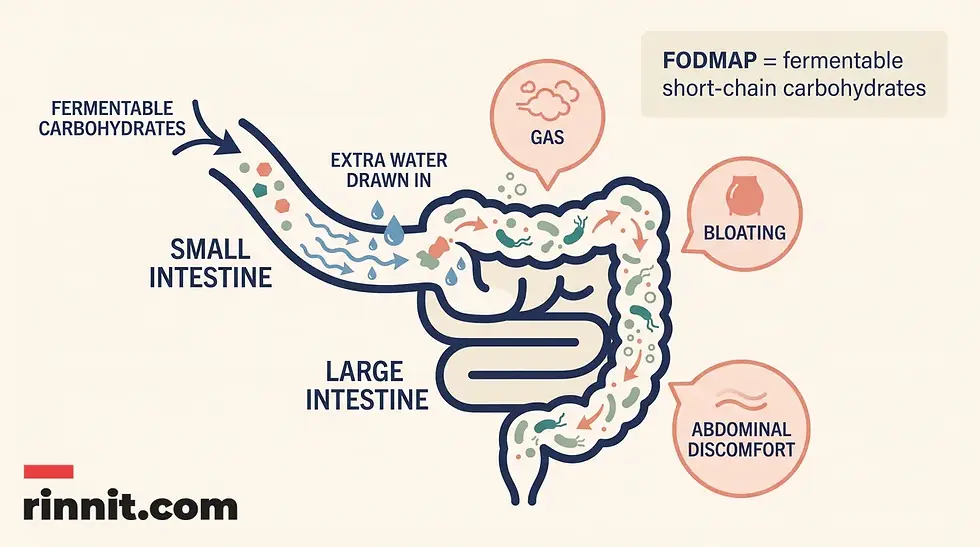
FODMAP molecules may not be broken down and absorbed in the small intestine. The small intestine can draw in extra water to move them along. When the carbohydrates reach the large intestine, gut bacteria ferment them and produce gases and fatty acids. [1]
For people with sensitive guts, these effects may contribute to chronic gas, bloating, abdominal pain and distension. Extra water may contribute to diarrhea, while too little water may contribute to constipation. [1]
FODMAPs are not bad for everyone. Dietary fiber and feeding gut bacteria are part of normal digestive health. The diet is intended for people whose symptoms and health history make a structured trial reasonable, not as a universal definition of healthy eating. [1]
Who might benefit from a low-FODMAP diet?
The diet is often prescribed for a limited period for people diagnosed with IBS or SIBO. Studies show that a majority of people with these conditions may benefit from the diet, although a low-FODMAP diet does not work for everyone. [1]
It may also be considered as a short-term elimination diet for someone with digestive problems who wants to investigate possible food triggers. A professional can help determine whether other tests or approaches should come first. [1]
Research is more limited for conditions other than IBS, but the diet may help manage symptoms in some cases of SIBO, inflammatory bowel disease and functional dyspepsia. This article does not diagnose any of those conditions. [1]
What are the three phases of a low-FODMAP diet?
The low-FODMAP diet has three phases: elimination, reintroduction and maintenance. Each phase has a different purpose. [1]
Phase 1: Temporary elimination
During elimination, high-FODMAP foods are avoided for a limited period. A range of fruits, vegetables, dairy products and grains may be higher in FODMAPs, while many foods in each category remain available. [1]
Healthcare professionals recommend at least two weeks and no more than six weeks for this phase. It can take time for symptoms to subside. The strict elimination phase is not intended to continue permanently, even if symptoms improve. [1]
Phase 2: Systematic reintroduction
After two to four weeks, people who are improving may begin reintroducing foods. A high-FODMAP food from each category is tested one at a time, over several days and in increasing quantities, to find an individual tolerance threshold. [1]
Between tests, the person returns to the elimination diet for several days to reduce crossover effects. This phase helps distinguish foods that truly cause symptoms from foods that can be tolerated. [1]
Phase 3: Personalized maintenance
Maintenance keeps foods that are tolerated and limits only the foods or groups that cause symptoms. The goal is to widen dietary options as much as possible and create a sustainable, nutritious pattern. [1]
Many people find that only one or two FODMAP groups cause problems. The final diet should not be more restrictive than necessary. [1]

Figure 2. The process moves from a temporary elimination phase to systematic reintroduction and individualized maintenance.
How long should each phase last?
The elimination phase should generally last at least two weeks and no more than six weeks. Reintroduction and maintenance together average about eight weeks, although timing varies. [1]
A person who does not improve during elimination may not need to continue to reintroduction. Continuing a restrictive diet without benefit may make the process harder without answering the original question. [1]
Phase | Timing or purpose |
Elimination | At least two weeks and no more than six weeks; temporarily reduce high-FODMAP foods. [1] |
Reintroduction | Often begins after two to four weeks if symptoms improve; test one category and food at a time over several days. [1] |
Maintenance | Keep tolerated foods and limit only foods that cause symptoms; create a sustainable, varied diet. [1] |
What can you eat on a low-FODMAP diet?
FODMAP content can vary by food, ripeness, quantity and preparation. Some foods may be tolerated in smaller portions but cause symptoms in larger portions. A dietitian can provide individualized food and portion guidance. [1]
The examples below are not a complete food list. Plain-cooked meats, tofu and eggs are lower-FODMAP protein sources, while most legumes and processed meats are higher-FODMAP examples. [1]
For fruit, apples, watermelon and stone fruits are higher-FODMAP examples, while grapes, strawberries and pineapples are lower-FODMAP examples. A ripe banana may be higher in fructose; some people may tolerate up to one-third of a ripe banana or a whole banana when it is not quite ripe. [1]
Food category | Higher-FODMAP examples | Lower-FODMAP or portion-dependent examples |
Protein | Most legumes and processed meats. [1] | Plain-cooked meats, tofu and eggs. [1] |
Fruit | Apples, watermelon and stone fruits. [1] | Grapes, strawberries and pineapples. [1] |
Banana | A ripe banana is higher in fructose. [1] | Some people may tolerate up to one-third of a ripe banana or a whole banana when not quite ripe. [1] |
Grains and plant foods | Many wheat products and some vegetables such as onions and garlic. [1] | Food choice depends on the item, portion and individual tolerance. Professional guidance can help. [1] |
Dairy | Lactose-containing dairy foods. [1] | The appropriate choice depends on lactose content and individual tolerance. [1] |
This table is not a universal safe-food list. The same food may be tolerated by one person and not another, and portion size can change the response. [1]
Which foods should you avoid?
No single list of foods must be avoided on a low-FODMAP diet, because the foods that matter are personal and found through a structured process. The answer is personal and should be discovered through the structured process. The goal is not to label nutritious foods as “bad,” but to identify whether FODMAPs relate to symptoms and which groups matter for you. [1]
Many foods classed as FODMAPs are normally healthy vegetables, fruits and whole grains. Avoiding all of them for too long can unnecessarily reduce variety. Professional guidance can help prevent the diet from becoming more restrictive than needed. [1]
If you suspect a food intolerance rather than a FODMAP-related problem, a healthcare professional can help you decide which approach to try first.
How should you prepare before starting a low-FODMAP diet?
Begin with a consultation with a reliable healthcare professional. A registered dietitian or gastrointestinal specialist can review your symptoms, discuss alternative ideas, provide shopping and menu guidance, explain portions and monitor problems that arise. [1]
Plan the trial before starting. Reserve time when it will not conflict with important obligations. Prepare menu plans, clear high-FODMAP foods from the fridge and pantry if that is part of your plan and keep ingredients for simple meals that you can prepare and enjoy. [1]
The process depends on consistency. If foods are added or removed unpredictably, it becomes harder to tell which foods are associated with symptoms. [1]
What if the diet does not work?
The low-FODMAP diet is an experiment, and it may not help. If symptoms do not improve during elimination, there may be no reason to continue to reintroduction. A healthcare professional can monitor nutrition, deficiencies and weight loss and help decide when to stop or try something else. [1]
The diet has a high predicted success rate for people with IBS, but up to 25% may not benefit. Research is more limited for other conditions. If the diet does not help, other elimination diets, tests and therapies may be considered with professional guidance. [1]
What nutrition and safety issues come with a low-FODMAP diet?
The low-FODMAP diet is strict in the short term, but it is not intended as a permanent lifestyle diet in its elimination form. The long-term goal is a moderate, varied eating pattern that includes as many tolerated foods as possible. [1]
Because the diet involves many foods, portions and categories, working with a registered dietitian or gastrointestinal specialist can make it safer and easier to follow. Professional monitoring is especially important if weight loss, suspected nutrient deficiency or difficulty maintaining an adequate diet develops. [1]
Do not treat symptom improvement as proof of a diagnosis, and do not use this article to decide that a food is permanently unsafe for you. Reintroduction is part of the process when appropriate. [1]

Figure 3. Food choices and portions are individualized; professional support helps protect nutrition while foods are reintroduced.
What questions should you ask before starting a low-FODMAP diet?
Question | Why it matters |
Is a low-FODMAP trial appropriate for my symptoms? | Other evaluations or approaches may be useful first. [1] |
Which phase should I start with? | The diet is staged and the strict phase is temporary. [1] |
Which portions should I use? | Tolerance can depend on quantity. [1] |
How will we monitor nutrition and weight? | Restriction can create nutritional concerns or weight loss. [1] |
When should I stop elimination? | Healthcare professionals recommend no more than six weeks for elimination. [1] |
How should I reintroduce foods? | Systematic testing helps distinguish true triggers from tolerated foods. [1] |
What symptoms should prompt a call? | Worsening symptoms, nutritional problems and weight loss need professional attention. [1] |
Conclusion
The low-FODMAP diet is a temporary, structured way to investigate whether certain fermentable carbohydrates contribute to digestive symptoms. It has three phases: elimination, reintroduction and individualized maintenance. The aim is to identify personal triggers while returning to the widest, most varied diet you can tolerate. [1]
Before starting, speak with a registered dietitian, gastrointestinal specialist or another qualified healthcare professional. Ask how long elimination should last, how portions should be handled, how nutrition will be monitored and how foods should be reintroduced. If you experience weight loss, suspected nutritional deficiency, difficulty eating enough or worsening symptoms, ask for professional help rather than making the diet more restrictive on your own. [1]
Frequently Asked Questions
Is the low-FODMAP diet permanent?
No. The strict elimination phase is temporary. After a period of elimination, tolerated foods should be systematically reintroduced when appropriate, followed by a personalized maintenance diet. [1]
Is the low-FODMAP diet only for IBS?
No. It is often used for IBS and SIBO and may be considered as a short-term elimination diet for digestive problems. Research is more limited in some other conditions, including inflammatory bowel disease and functional dyspepsia. [1]
Are FODMAPs unhealthy?
Not for everyone. Many FODMAP foods contain fiber and other nutrients and support normal gut bacteria. The diet is meant to identify personal triggers, not to define FODMAP foods as universally unhealthy. [1]
How soon might symptoms change?
The elimination phase can take time, and healthcare professionals recommend at least two weeks and no more than six weeks. Some people may not improve at all. A healthcare professional can help interpret the response and decide whether to stop or continue. [1]
Can I eat fruit on a low-FODMAP diet?
Yes, but choices and portions matter. Grapes, strawberries and pineapples are lower-FODMAP examples, while apples, watermelon and stone fruits are higher-FODMAP examples. Banana ripeness and portion can also affect tolerance. [1]
Can I eat meat on a low-FODMAP diet?
Plain-cooked meats are lower-FODMAP protein sources, while processed meats are higher-FODMAP examples. Preparation, added ingredients and portion size should be discussed with a dietitian. [1]
Why do portions matter?
Some foods may cause symptoms only in larger amounts. The low-FODMAP process is individualized, and a dietitian can help identify portion sizes and tolerance thresholds. [1]
Do I need a dietitian?
Professional guidance is strongly useful because the diet has multiple phases, food categories and portion rules. A registered dietitian or gastrointestinal specialist can provide menu guidance, troubleshoot problems and monitor nutrition, deficiencies and weight loss. [1]
What if elimination makes me feel worse?
Talk with a healthcare professional. People with SIBO may feel worse before they feel better, and the diet may not work for everyone. Professional monitoring can help determine whether to stop or try another approach. [1]
How do I know which food is causing symptoms?
If symptoms improve during elimination, reintroduce one high-FODMAP food from each category at a time, using increasing quantities over several days. Return to the elimination pattern between tests as advised so that crossover effects are reduced. [1]
Can the low-FODMAP diet cure IBS?
This article does not make cure claims. The diet is a way to manage symptoms and identify food triggers; response varies, and other treatments or evaluations may be needed. [1]
When should I ask for professional help?
Seek guidance before starting if you have a diagnosed gastrointestinal disease or are unsure what is causing symptoms. Ask for help if the diet causes weight loss, suspected nutritional deficiency, difficulty eating enough or worsening symptoms. [1]
Related Reading
Specific Carbohydrate Diet (SCD): Foods, Benefits and Risks explains the Specific Carbohydrate Diet.
Elemental Diet: What It Is, Uses and How It Works explains the elemental diet.
Irritable Bowel Syndrome: Symptoms, Causes, and Treatment — the condition the low-FODMAP diet is most often used for.
Small Intestinal Bacterial Overgrowth (SIBO) Guide: Symptoms, Causes, Diagnosis, and Treatment — another condition where a short-term low-FODMAP diet may be used.
Food Intolerance: Symptoms, Causes, and Dietary Management — how food triggers are identified and managed.
Lactose Intolerance: Symptoms, Causes, Diagnosis, and Treatment Guide — the best-known FODMAP-related intolerance.
Constipation: Symptoms, Causes, Diagnosis and Treatment — What You Need to Know — a common digestive symptom linked to FODMAP sensitivity.
Diarrhea: Causes, Symptoms, Treatments & When to See a Doctor — Complete Guide — another common digestive symptom linked to FODMAP sensitivity.
Functional Dyspepsia: Why You Feel Full and Upset Stomach Pain Even When Tests Come Back Normal — a related functional digestive condition.
References
Cleveland Clinic. Low-FODMAP Diet: What It Is, Uses & How To Follow. Cleveland Clinic Health Library. Last updated February 24, 2022. Accessed October 18, 2026. https://my.clevelandclinic.org/health/treatments/22466-low-fodmap-diet
Khalighi Sikaroudi M, Soltani S, Ghoreishy SM, et al. Effects of a low FODMAP diet on the symptom management of patients with irritable bowel syndrome: a systematic umbrella review with the meta-analysis of clinical trials. Food Funct. 2024;15(10):5195-5208. PMID: 38711328. https://doi.org/10.1039/d3fo03717g
So D, Loughman A, Staudacher HM. Effects of a low FODMAP diet on the colonic microbiome in irritable bowel syndrome: a systematic review with meta-analysis. Am J Clin Nutr. 2022;116(4):943-952. PMID: 35728042. https://doi.org/10.1093/ajcn/nqac176
Ville A, McRae R, Nomchong J, et al. Effects of a low FODMAP diet in inflammatory bowel disease and patient experiences: a mixed methods systematic literature review and meta-analysis. J Hum Nutr Diet. 2025;38(4):e70106. PMID: 40765115. https://doi.org/10.1111/jhn.70106
Disclaimer
The information provided in this article is for educational purposes only and is not intended as medical advice. Always seek the advice of a qualified healthcare provider with any questions you may have regarding a medical condition. Never disregard professional medical advice or delay in seeking it because of something you have read in this article.



Comments