Food Intolerance: Symptoms, Causes, and Dietary Management

Updated: 3 days ago
Medically reviewed by Dr. Baraa Alnahhal, MD · Last reviewed: October 2026
Source currency note: This guide reflects medical information reviewed in May 2026. Always confirm current guidance with your healthcare professional.
Quick Answer
Food intolerance is a common digestive issue in which the body repeatedly reacts to a food or ingredient because it struggles to break it down. Unlike food allergy, it does not involve the immune system and is not usually life-threatening. Lactose intolerance is the most common type. It is managed by finding and limiting trigger foods, often with a dietitian. [4]
What the research says
Food intolerance is a digestive reaction, and it differs from food allergy in symptoms, complications, and treatment. A 2025 narrative review describes food intolerance as a non-immunological reaction in which the body cannot properly digest certain foods or components, leading to gastrointestinal discomfort, and reports big differences between allergy and intolerance in symptoms, complications, and treatments (Hage et al., Nutrients, 2025).
A low FODMAP diet improved symptoms in people with irritable bowel syndrome (IBS), but reintroduction was rarely studied. A network meta-analysis of 13 randomized trials (944 patients) found that a low FODMAP diet ranked first for improving overall IBS symptoms versus a habitual diet (relative risk of symptoms not improving 0.67; 95% CI 0.48 to 0.91) and was better than standard dietary advice for bloating (relative risk 0.72; 95% CI 0.55 to 0.94). Most trials did not study FODMAP reintroduction and personalization, which is why working with a dietitian matters (Black et al., Gut, 2022).
The hydrogen breath test is the most common way lactose intolerance is diagnosed, but data on young children are limited. A systematic review of 20 studies in children aged 1 to 5 years reported primary lactose intolerance in 0% to 17.9% and secondary lactose intolerance in 0% to 19%. The authors noted that methods varied widely and called for higher-quality studies on true prevalence (Harvey et al., Asia Pacific Journal of Clinical Nutrition, 2018).
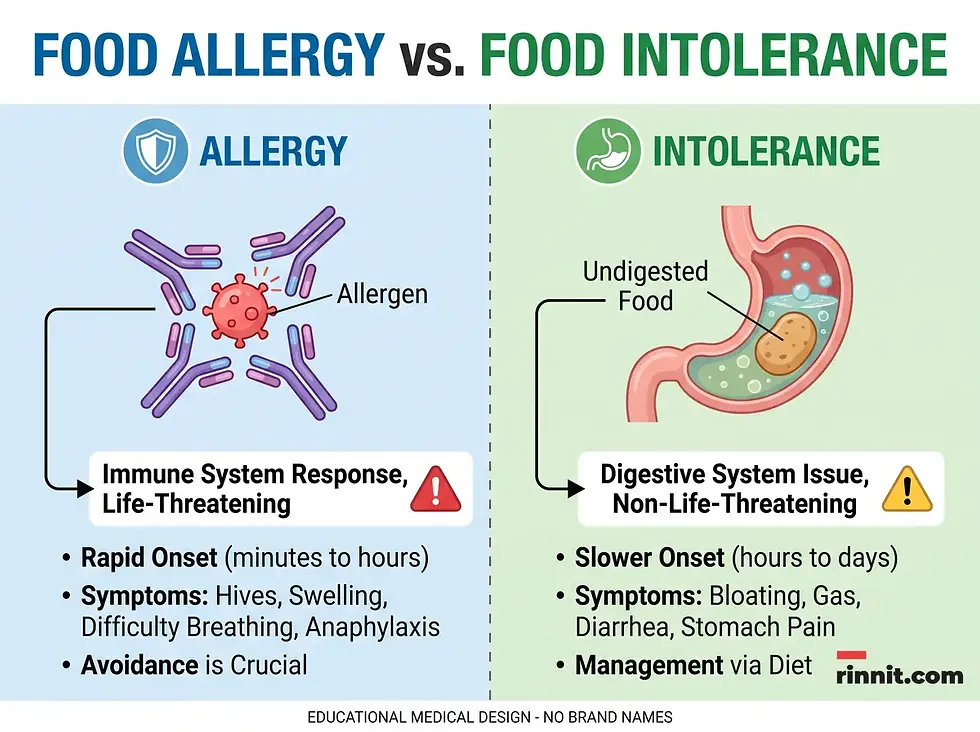
What Is Food Intolerance?
Food intolerance is a condition in which the digestive system struggles to process certain foods, which leads to repeated physical reactions. It is very common and can develop at any stage of life. The symptoms can affect quality of life and long-term nutrition, but food intolerance is not usually life-threatening. That is what separates it from a food allergy, which is an immune system response that can cause anaphylaxis.
Food intolerance is typically a long-term condition, but it is manageable. Treatment focuses on identifying your trigger foods and limiting them while making sure you still get the nutrients you need. A healthcare provider or dietitian can help you find the right balance.
Feature | Food intolerance | Food allergy |
System affected | Digestive system | Immune system |
Reaction speed | Gradual, often hours later | Usually within minutes |
Severity | Uncomfortable, not life-threatening | Can be life-threatening |
Amount of food | Often related to how much you eat | Even trace amounts can trigger a reaction |
Common Types of Food Intolerance
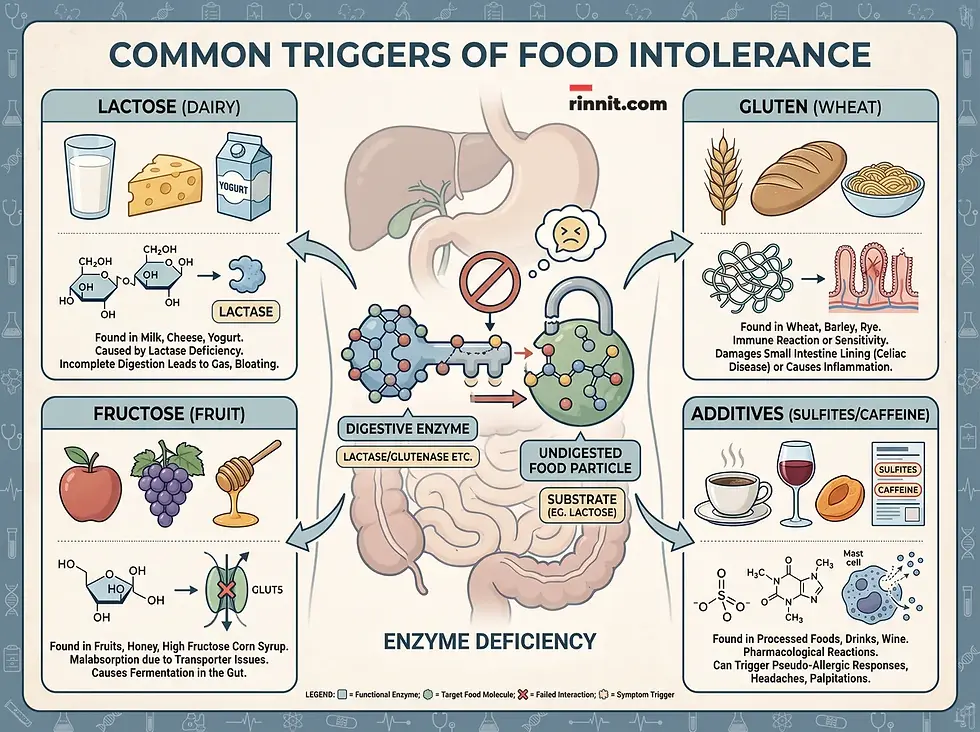
Intolerances can be triggered by many natural sugars, proteins, and chemical additives. Knowing your specific trigger is the first step toward effective management.
Enzyme-related intolerances
Lactose intolerance: the most common type. It happens when the body doesn't make enough lactase, the enzyme that breaks down lactose, the sugar in dairy.
Fructose intolerance: the small intestine may not be able to absorb fructose, a natural sugar found in fruit, honey, and some sweeteners.
Histamine intolerance: histamine builds up when the body doesn't make enough diamine oxidase to break it down. Histamine is found in foods such as aged cheese, chocolate, and some fruits like bananas.
Protein and carbohydrate sensitivities
Gluten intolerance: a sensitivity to gluten, a protein in wheat, rye, and barley. It is not the same as celiac disease, which is an autoimmune disease.
FODMAP intolerance: FODMAPs are a group of carbohydrates found in foods such as beans, onions, garlic, some fruits, and dairy that can be hard to digest.
Additives and chemicals
Some people react to substances in foods or added to them, such as:
Caffeine: found in coffee, tea, and energy drinks.
Sulfites: used as preservatives in wine and dried fruit.
Artificial sweeteners and preservatives: common in processed and “sugar-free” foods.
Symptoms and Warning Signs
Symptoms mostly affect the digestive tract and often depend on how much of the trigger food you eat. They usually come on slowly and may not appear for several hours after eating.
Digestive symptoms
Belly pain: abdominal pain, cramping, and bloating.
Bowel changes: gas and diarrhea.
General discomfort: nausea and heartburn.
Symptoms outside the gut
Some people also get headaches or migraines, which may not immediately suggest a digestive cause.
Possible complications
Missing nutrients: cutting out dairy can lead to low calcium and vitamin D, and avoiding grains that contain gluten may reduce fiber and B vitamins.
Ongoing digestive symptoms: if you don't find your trigger foods, symptoms can continue and affect daily life.
Unintended weight loss: strict eating plans can lead to weight changes, especially if they don't provide enough calories.
Causes and Risk Factors
Food intolerances develop for a variety of reasons. They happen when the body's digestive chemistry can't handle a particular food or ingredient.
Main causes
Enzyme deficiencies: the body doesn't make enough of a specific enzyme, such as lactase or diamine oxidase.
Sensitivity to food chemicals: natural substances such as caffeine or histamine can cause reactions.
Reactions to additives: sulfites, artificial sweeteners, and preservatives can trigger symptoms.
Digestive conditions: conditions that damage the digestive system, such as inflammatory bowel disease, can make you more sensitive to certain foods.
Risk factors
Age: enzyme levels naturally go down over time, so some intolerances become more common as you get older.
Changes in gut bacteria: an imbalance in the gut microbiome can affect how well you digest carbohydrates and other nutrients.
Medications or illness: certain infections, antibiotics, or treatments can affect the digestive tract and trigger short- or long-term intolerance.
Eating patterns: eating many hard-to-digest foods may increase symptoms.
Diagnosis and Management
Diagnosing food intolerance takes a step-by-step approach. There isn't one simple test, and there are no standard skin or blood tests, so tracking your symptoms and working with a provider are key.
How food intolerance is diagnosed
Food diary: tracking what you eat and any symptoms to find patterns and possible trigger foods.
Elimination diet: removing suspected foods for a few weeks, then slowly adding them back. If symptoms go away and return when a food is reintroduced, it may point to an intolerance.
Hydrogen breath test: used to diagnose certain intolerances, like lactose or fructose intolerance. You drink a liquid that contains the suspected trigger and breathe into a device over a few hours to measure gas levels.
Medical check-up: your provider may rule out other conditions with similar symptoms, including food allergy and celiac disease.
Treatment and management
Changes to what you eat: remove, avoid, or limit trigger foods, ideally with a dietitian who can build a balanced plan.
Enzyme supplements: lactase pills or drops can help you digest dairy products if you have lactose intolerance. Lactose-free milk and other products are also available.
Over-the-counter medicines: antacids, anti-gas, or anti-diarrheal products can ease occasional symptoms.
Nutrient replacement: eat as wide a variety of foods as possible, and replace what you avoid with nutritionally similar options, such as fortified plant milks for calcium.
Tracking and adjusting: keep a food diary and adjust what you eat as you learn your sensitivities.
You can usually manage food intolerance with these steps. Unlike food allergies, you rarely need prescription medicines.

When to See a Healthcare Provider
Contact your provider if you notice severe or ongoing symptoms, because they could mean a more serious condition:
Extreme belly pain
Persistent diarrhea
Unexplained weight loss
Unexplained anemia or iron deficiency
Conclusion
Food intolerances can cause ongoing digestive problems, and they are usually long-term. Most people can manage their symptoms by avoiding or limiting trigger foods, and with some awareness and careful planning you can keep good nutrition and stay healthy and active.
Next step: Start a food diary this week and note what you eat, when symptoms appear, and how severe they are. Bring it to your provider or dietitian to plan an elimination diet safely.
Frequently Asked Questions
Is food intolerance the same as a food allergy?
No. A food allergy involves the immune system and can be life-threatening. A food intolerance is a digestive issue that is uncomfortable but not life-threatening.
Can food intolerance develop later in life?
Yes. It can start at any point in life, and some intolerances become more common with age because enzyme levels naturally decline over time.
What is the most common food intolerance?
Lactose intolerance is the most common type. It happens when the body doesn't make enough lactase, the enzyme that breaks down the sugar in dairy.
Can I still eat small amounts of a trigger food?
Often, yes. Because food intolerance is related to how much you eat, many people can tolerate small amounts of a trigger food as long as they stay below the level that causes symptoms.
How long does it take for symptoms to appear?
Symptoms usually come on slowly and may develop hours after eating the trigger food, unlike food allergy reactions, which tend to start much sooner.
Does gluten intolerance mean I have celiac disease?
No. Gluten intolerance (gluten sensitivity) causes digestive symptoms but is not the same as celiac disease, which is an autoimmune disease. A provider can test for celiac disease to rule it out.
Are there tests for all food intolerances?
No. There isn't one simple test, and there are no standard skin or blood tests. Some, like lactose and fructose intolerance, can be checked with a hydrogen breath test, while many are identified with a food diary and an elimination diet.
Can gut health affect food sensitivity?
Yes. An imbalance in gut bacteria can affect how well you digest carbohydrates and other nutrients, and conditions that damage the digestive system, such as inflammatory bowel disease, can make you more sensitive to certain foods.
What should I do if I think I have a food intolerance?
Start a food diary to track what you eat and your symptoms, and talk with a healthcare provider or dietitian before you begin an elimination diet so you keep eating a balanced diet.
Can food intolerance cause weight loss?
Food intolerance can. Strict eating plans that cut out many foods without replacing their calories and nutrients can lead to unintended weight loss, and unexplained weight loss is a reason to see your provider.
References
Hage G, Sacre Y, Haddad J, et al. Food hypersensitivity: distinguishing allergy from intolerance, main characteristics, and symptoms: a narrative review. Nutrients. 2025;17(8):1359. PMID 40284223. https://doi.org/10.3390/nu17081359
Black CJ, Staudacher HM, Ford AC. Efficacy of a low FODMAP diet in irritable bowel syndrome: systematic review and network meta-analysis. Gut. 2022;71(6):1117-1126. PMID 34376515. https://doi.org/10.1136/gutjnl-2021-325214
Harvey L, Ludwig T, Hou AQ, et al. Prevalence, cause and diagnosis of lactose intolerance in children aged 1-5 years: a systematic review of 1995-2015 literature. Asia Pacific Journal of Clinical Nutrition. 2018;27(1):29-46. PMID 29222879. https://doi.org/10.6133/apjcn.022017.05
Cleveland Clinic. Food intolerance. Cleveland Clinic. May 11, 2026. https://my.clevelandclinic.org/health/diseases/21688-food-intolerance
Medical disclaimer
This article was prepared for general information only and is not a substitute for professional medical advice.



Comments