Hyponatremia: Complete Guide to Low Blood Sodium, Symptoms, Causes, and Treatment

Updated: 3 days ago
Medically reviewed by Dr. Baraa Alnahhal, MD · Last reviewed: October 2026
Hyponatremia happens when the level of sodium in the blood is lower than the typical range. Something dilutes the sodium in your body, the body's water levels rise, and cells begin to swell, which can cause problems from mild to life-threatening [1]. Treatment is aimed at the underlying cause, and serious cases need careful, monitored correction in the hospital [2].
Quick Answer: What is hyponatremia?
Hyponatremia is low sodium in the blood, below 135 mmol/L, compared with a healthy range of 135 to 145 mmol/L. Symptoms include nausea, headache, confusion, cramps, seizures and coma. Causes include diuretics, organ problems and drinking too much water. Seizures or loss of consciousness need emergency care, and sodium must be corrected slowly under monitoring. [1] [2]
What the research says
On-site sodium testing guided treatment at the Boston Marathon. Over 2001–2008, 1,319 collapsed runners had blood sodium tested in the finish-line medical tent. Abnormal sodium was found in 429 (32.5%): 366 (27.7%) had high sodium and 63 (4.8%) had low sodium. Runners with low sodium who had seizures or coma received intravenous hypertonic (3%) saline, and 16 who could drink a concentrated oral salt solution recovered within 30 minutes (Siegel et al., American Journal of Clinical Pathology, 2009 [3]).
Salt supplements did not prevent exercise-associated hyponatremia; overdrinking mattered. In an 80 km ultramarathon stage with post-race sodium results from 174 runners, 11 (6.3%) developed hyponatremia and 30 (17.2%) developed high sodium. Neither the rate nor the total amount of sodium supplements was linked to abnormal sodium. Runners with hyponatremia were more often overhydrated (67%, versus 11% of runners with high sodium), and hot race climates were an independent risk factor (Lipman et al., Clinical Journal of Sport Medicine, 2021 [4]).
What Is Hyponatremia?
Hyponatremia is a condition that happens when the level of sodium in the blood is lower than the typical range. Sodium is an electrolyte, and it helps regulate the amount of water that is in and around your cells [1].
In hyponatremia, one or more factors cause the sodium in the body to be diluted. These factors can range from an underlying medical condition to drinking too much water. When this happens, the body's water levels rise, and cells begin to swell. This swelling can cause many health problems, from mild to life-threatening [1].
A healthy blood sodium level is between 135 and 145 millimoles per liter (mmol/L). Hyponatremia occurs when the sodium in your blood falls below 135 mEq/L [1].
What sodium does in your body
Sodium plays a key role in your body. It helps maintain normal blood pressure, supports the work of your nerves and muscles, and regulates your body's fluid balance [1]. That is why a low level can cause symptoms that affect so many parts of the body, from the brain to the muscles.

Healthy blood sodium (135–145 mmol/L) versus hyponatremia (below 135), where diluted sodium makes cells swell.
Symptoms of Hyponatremia
Hyponatremia signs and symptoms may include [1]:
Nausea and vomiting: upset stomach with vomiting.
Headache: head pain, which can get progressively worse.
Confusion: trouble thinking clearly; may include agitation or depressed mood.
Low energy: loss of energy, drowsiness, and fatigue.
Restlessness and irritability.
Muscle problems: weakness, spasms, or cramps.
Seizures: abnormal electrical activity in the brain.
Coma: loss of consciousness.
Because these symptoms also occur in many other conditions, they can be easy to miss. That is one reason people at higher risk should know the warning signs and alert their healthcare professional early.

Warning signs of hyponatremia, and the signs that mean emergency care.
When to see a doctor
Seek emergency care for anyone who develops serious signs and symptoms of hyponatremia, such as nausea and vomiting, confusion, seizures, or lost consciousness [1].
Call your healthcare professional if you know you are at risk of hyponatremia and are experiencing nausea, headaches, cramping, or weakness. Depending on the extent and duration of these symptoms, your healthcare professional may recommend seeking immediate medical care [1].
Causes of Hyponatremia
Hyponatremia occurs when something dilutes the sodium in your body. Many possible conditions and lifestyle factors can lead to it [1]:
Certain medicines: some medicines can interfere with the hormonal and kidney processes that keep sodium concentrations within the healthy range. Water pills called diuretics, antidepressants, and pain medicines can all affect sodium levels.
Heart, kidney, and liver problems: congestive heart failure and certain diseases affecting the kidneys or liver can cause fluids to collect in your body, which dilutes the sodium. See our guides to heart failure and chronic kidney disease.
Syndrome of inappropriate anti-diuretic hormone (SIADH): high levels of anti-diuretic hormone (ADH, also called vasopressin) cause your body to retain water instead of excreting it in your urine.
Vomiting, diarrhea, and dehydration: chronic, severe vomiting or diarrhea and other causes of dehydration cause your body to lose electrolytes such as sodium, and also increase ADH levels.
Drinking too much water: excessive water can overwhelm the kidneys' ability to excrete water. Because you lose sodium through sweat, drinking too much water during endurance activities such as marathons and triathlons can also dilute the sodium in your blood.
Hormonal changes: adrenal gland insufficiency, known as Addison's disease, affects your adrenal glands' ability to produce hormones that help maintain your body's balance of sodium, potassium, and water. Low levels of thyroid hormone also can cause a low blood sodium level. See our Addison's disease guide.
The recreational drug ecstasy: this amphetamine increases the risk of severe and even fatal cases of hyponatremia.
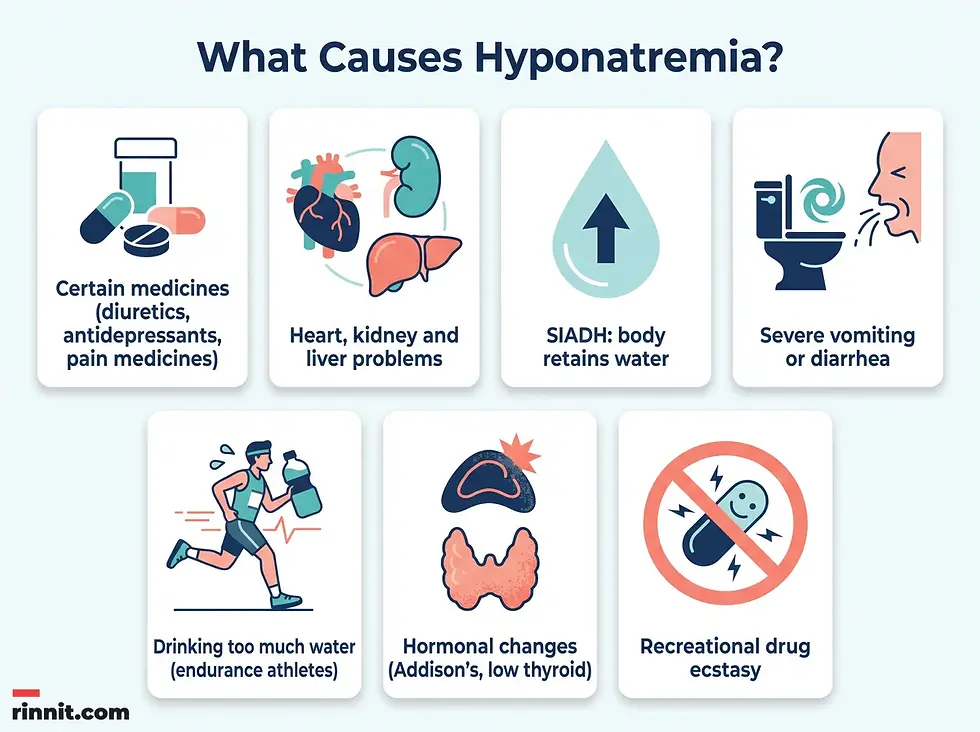
The seven main causes of hyponatremia.
Risk Factors
The following factors may increase your risk of hyponatremia [1]:
Age: older adults may have more contributing factors, including age-related changes, taking certain medicines, and a greater likelihood of developing a chronic disease that alters the body's sodium balance.
Certain drugs: medications that increase risk include thiazide diuretics as well as some antidepressants and pain medicines. The recreational drug ecstasy has been linked to fatal cases.
Conditions that decrease your body's water excretion: kidney disease, heart disease, and SIADH, among others.
Intensive physical activities: people who drink too much water while taking part in marathons, ultramarathons, triathlons, and other long-distance, high-intensity activities are at increased risk.
Complications
The speed at which sodium drops matters greatly in hyponatremia [1]:
Chronic hyponatremia: sodium levels drop gradually over 48 hours or longer, and symptoms and complications are typically more moderate.
Acute hyponatremia: sodium levels drop rapidly. This results in potentially dangerous effects, such as rapid brain swelling, which can result in a coma and death.
People who are premenopausal appear to be at the greatest risk of hyponatremia-related brain damage. This may be related to the effect of sex hormones on the body's ability to balance sodium levels [1].
How Is Hyponatremia Prevented?
The following measures may help you prevent hyponatremia [1]:
Treat associated conditions. Getting treatment for conditions that contribute to hyponatremia, such as adrenal gland insufficiency, can help prevent low blood sodium.
Educate yourself. If you have a medical condition that increases your risk or you take diuretic medicines, be aware of the symptoms of low blood sodium. Always talk with your healthcare professional about the risks of a new medication.
Take precautions during high-intensity activities. Athletes should drink only as much fluid as they lose due to sweating during a race. Thirst is generally a good guide to how much water or other fluids you need.
Consider sports beverages during demanding activities. Ask your healthcare professional about replacing water with sports beverages that contain electrolytes when taking part in endurance events such as marathons or triathlons.
Drink water in moderation. Drinking water is vital for your health, so make sure you drink enough fluids — but don't overdo it. Thirst and the color of your urine are often the best indications of how much water you need. If you're not thirsty and your urine is pale yellow, you are likely getting enough water.
How Is Hyponatremia Diagnosed?
Low sodium levels in the blood can be caused by many factors. Your healthcare professional will start by asking about your medical history and doing a physical examination, which may include questions about the medicines you take. However, because the symptoms of hyponatremia occur in many conditions, it's impossible to diagnose the condition based on a physical exam alone [2].
Medical history: questions about your health background, including the medicines you take.
Physical examination: an in-person assessment of your current condition.
Blood tests: confirm whether blood sodium is below the healthy range.
Urine tests: help the team identify the underlying cause.
Treatment Options
Hyponatremia treatment is aimed at addressing the underlying cause, if possible [2]:
Moderate, chronic hyponatremia (from diet, diuretics, or drinking too much water): your healthcare professional may recommend temporarily cutting back on fluids and may suggest adjusting your diuretic use to increase the level of sodium in your blood.
Serious, acute hyponatremia: more aggressive treatment is needed. Options include intravenous fluids, typically an IV sodium solution to slowly raise the sodium levels in your blood. This requires a stay in the hospital for frequent monitoring of sodium levels.
Managing symptoms: you may also take medicines to manage the signs and symptoms of hyponatremia, such as headaches, nausea, and seizures.
A key safety point: correction of blood sodium must happen slowly. Too rapid a correction is dangerous, which is why intravenous treatment requires a hospital stay with frequent monitoring of sodium levels [2].
Preparing for Your Appointment
Seek emergency care for anyone who develops serious symptoms of hyponatremia, such as nausea and vomiting, confusion, seizures, or lost consciousness. Call your healthcare professional if you know you are at risk and are experiencing nausea, headaches, cramping, or weakness.
What you can do
List symptoms you or your loved one has been experiencing and for how long.
Write down key medical information, including other medical problems and the names of all medications, vitamins, supplements, or other natural remedies you are taking.
Bring a companion. A family member or friend can help remember the information and provide support if you need immediate medical care.
Write down questions to ask your healthcare professional.
Questions to ask your healthcare professional
What's the most likely cause of my symptoms?
What causes hyponatremia?
How serious is the condition?
What treatment do you recommend?
How soon do you expect my symptoms will begin to improve?
Am I at risk of any long-term problems?
How can I prevent a recurrence of this condition?
Do I need to make any changes to how much fluid I usually drink?
What your doctor may ask you
What are your symptoms and when did they start?
Have you started taking any new medicines?
Have your symptoms been getting better or worse since they first developed?
Have you had mental changes, such as feeling confused, agitated, or depressed?
Have you had nausea, vomiting, or diarrhea?
Have you felt faint, had seizures, or lost consciousness?
Have you had a headache? If yes, has it gotten progressively worse?
Have you had weakness, fatigue, or lethargy?
Do you use recreational drugs? If yes, which drugs?
Bottom Line
Hyponatremia is a condition in which blood sodium falls below the healthy range of 135 to 145 mmol/L, diluting sodium levels and causing cells to swell. Its symptoms — nausea, headache, confusion, fatigue, and muscle cramps — overlap with many other conditions, but the cause can be serious. Medicines such as diuretics, heart and kidney problems, hormonal conditions, fluid loss from vomiting or diarrhea, and even drinking too much water can all lead to low blood sodium. Acute cases that develop rapidly can cause dangerous brain swelling, while chronic cases tend to produce milder effects. Treatment targets the underlying cause, and serious cases require carefully monitored intravenous sodium correction in the hospital.
Heavy sweating in hot weather can also upset your body's fluid balance. To recognize the early warning signs of overheating, read our guide to heat exhaustion.
Your next step: if you are at risk of hyponatremia and notice nausea, headaches, cramping, weakness, or confusion, contact your healthcare professional promptly. If you or someone else develops vomiting with confusion, seizures, or loses consciousness, seek emergency care immediately. Talk to your healthcare team about your medicines and fluid intake — early attention can prevent a mild electrolyte imbalance from becoming a medical emergency.
Frequently Asked Questions
What is hyponatremia?
Hyponatremia is a condition in which the sodium level in the blood is lower than the typical range. A healthy blood sodium level is between 135 and 145 mmol/L, and hyponatremia occurs when it falls below 135 mEq/L. Sodium is an electrolyte that regulates water in and around your cells.
What are the main symptoms of hyponatremia?
Signs and symptoms may include nausea and vomiting, headache, confusion, loss of energy, drowsiness and fatigue, restlessness and irritability, muscle weakness, spasms or cramps, seizures, and coma.
What causes hyponatremia?
Causes include certain medicines (diuretics, antidepressants, pain medicines), heart, kidney and liver problems, SIADH, chronic severe vomiting or diarrhea, drinking too much water, hormonal changes such as Addison's disease or low thyroid hormone, and the recreational drug ecstasy.
Can drinking too much water cause hyponatremia?
Yes. Excessive water can overwhelm the kidneys' ability to excrete water, diluting blood sodium. Endurance athletes who drink too much water during marathons and triathlons while losing sodium through sweat are at particular risk.
What is the difference between acute and chronic hyponatremia?
In chronic hyponatremia, sodium drops gradually over 48 hours or longer, with more moderate symptoms and complications. In acute hyponatremia, sodium drops rapidly, causing potentially dangerous effects such as rapid brain swelling that can lead to coma and death.
How is hyponatremia diagnosed?
A healthcare professional takes a medical history, performs a physical examination, and asks about medicines. Because symptoms occur in many conditions, a physical exam alone cannot diagnose it; blood tests and urine tests confirm low blood sodium.
How is hyponatremia treated?
Treatment aims at the underlying cause. Moderate chronic cases may be managed by temporarily cutting back on fluids and adjusting diuretic use. Serious acute cases may require an IV sodium solution given slowly in the hospital, plus medicines for headaches, nausea and seizures.
Why must blood sodium be corrected slowly?
Too rapid a correction of blood sodium is dangerous. Intravenous sodium treatment requires a hospital stay with frequent monitoring of sodium levels to keep the correction gradual and safe.
Who is at greatest risk of hyponatremia?
Older adults, people taking thiazide diuretics or certain antidepressants and pain medicines, people with conditions that reduce water excretion such as kidney disease, heart disease or SIADH, and endurance athletes who drink too much water. Premenopausal people appear at the greatest risk of hyponatremia-related brain damage.
Can hyponatremia be prevented?
Yes, in part. Measures include treating associated conditions such as adrenal gland insufficiency, knowing the symptoms if you are at risk, drinking only as much fluid as you lose to sweating during races, considering electrolyte-containing sports beverages for endurance events, and drinking water in moderation using thirst and pale yellow urine as guides.
Related Reading
Electrolyte Panel: What It Tests, Normal Ranges and What Results Mean explains the blood test that measures sodium, potassium, chloride and bicarbonate.
Electrolytes and Electrolyte Panel: Test, Normal Ranges and Imbalances: An electrolyte panel is the blood test that measures sodium, potassium, chloride and bicarbonate and is usually how low sodium is first found.
Learn more in our guide to Comprehensive Metabolic Panel (CMP): What It Tests, How to Prepare and What Results Mean.
Basic Metabolic Panel (BMP): What It Tests, Normal Ranges and What Results Mean explains the blood test that checks kidney function, blood sugar and electrolytes.
References
Mayo Clinic Staff. Hyponatremia - Symptoms and causes. Mayo Clinic. July 18, 2025. https://www.mayoclinic.org/diseases-conditions/hyponatremia/symptoms-causes/syc-20373711
Mayo Clinic Staff. Hyponatremia - Diagnosis and treatment. Mayo Clinic. July 18, 2025. https://www.mayoclinic.org/diseases-conditions/hyponatremia/diagnosis-treatment/drc-20373715
Siegel AJ, d'Hemecourt P, Adner MM, et al. Exertional dysnatremia in collapsed marathon runners: a critical role for point-of-care testing to guide appropriate therapy. American Journal of Clinical Pathology. 2009;132(3):336-340. PMID 19687309. https://doi.org/10.1309/AJCP30OGLSLWLEIY
Lipman GS, Burns P, Phillips C, et al. Effect of sodium supplements and climate on dysnatremia during ultramarathon running. Clinical Journal of Sport Medicine. 2021;31(6):e327-e334. PMID 32097177. https://doi.org/10.1097/JSM.0000000000000832
Medical disclaimer
This article is for informational purposes only and is not a substitute for professional medical advice, diagnosis, or treatment. The clinical information in this guide reflects source material last reviewed in July 2025.



Comments