Antibiotics: Types, Uses, Side Effects and Resistance

Updated: 2 days ago
Written and medically reviewed by Dr. Baraa Alnahhal, MD · Last reviewed: November 2026 · How we review
Quick Answer
Antibiotics are medicines that fight bacterial infections by killing bacteria or stopping them from multiplying. They treat infections such as strep throat, urinary tract infections and bacterial pneumonia. They don't work on viruses, so they won't help a cold or the flu. Take them exactly as prescribed. Using antibiotics when they aren't needed fuels antibiotic resistance.
What the research says
Antibiotics leave resistant bacteria behind: in 5 studies with 14,348 people, those given an antibiotic for a urinary infection were 2.5 times more likely to carry resistant bacteria within 2 months, and the effect lasted up to 12 months (Costelloe C et al., BMJ, 2010) [2]
Waiting can safely cut antibiotic use: in 11 trials of 3,555 people with respiratory infections, a "delayed" prescription to fill only if symptoms didn't improve cut antibiotic use from 93% to 31%, with similar satisfaction and no more complications (Spurling GK et al., Cochrane Database Syst Rev, 2017) [3]
Key takeaways
Antibiotics treat infections caused by bacteria, not viruses.
They won't help colds, the flu or most sore throats.
Take them exactly as prescribed and finish the course.
Common side effects are diarrhea, nausea and rash.
Overuse leads to antibiotic resistance.
What are antibiotics?
Antibiotics are natural or man-made substances that stop bacteria from growing. Some kill bacteria by breaking down their cell walls or DNA; others block the proteins bacteria need to multiply. Broad-spectrum antibiotics work against many kinds of bacteria and are useful when the cause isn't clear, but overusing them speeds up resistance. Sources: [1]
What antibiotics treat
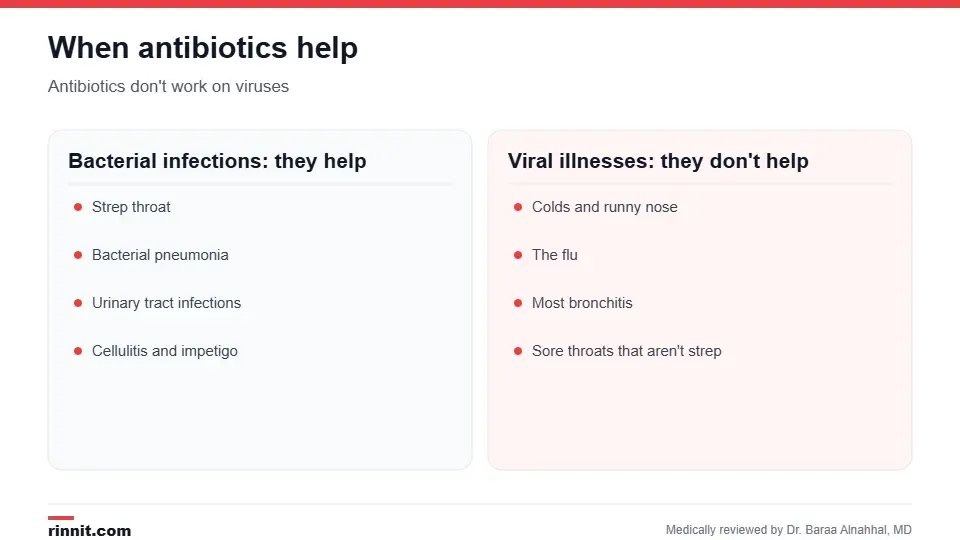
Antibiotics don't work on viruses such as colds and the flu.
Skin infections, such as cellulitis, impetigo, infected bites and staph infections.
Throat and lung infections, such as strep throat, bacterial pneumonia and whooping cough.
Urinary tract infections, bacterial vaginosis and some STIs.
Eye infections, such as bacterial pink eye.
Lyme disease, endocarditis and sepsis.
Prevention before some surgeries or dental work, or after a bite or wound. Sources: [1]
Antibiotics help | Antibiotics don't help |
Strep throat | Colds and runny nose |
Bacterial pneumonia | The flu |
Urinary tract infections | Most bronchitis |
Cellulitis | Sore throats that aren't strep |
Lyme disease | Viral sinus infections |
Some bacterial sinus and ear infections get better without antibiotics. Sources: [1, 3]
Types of antibiotics
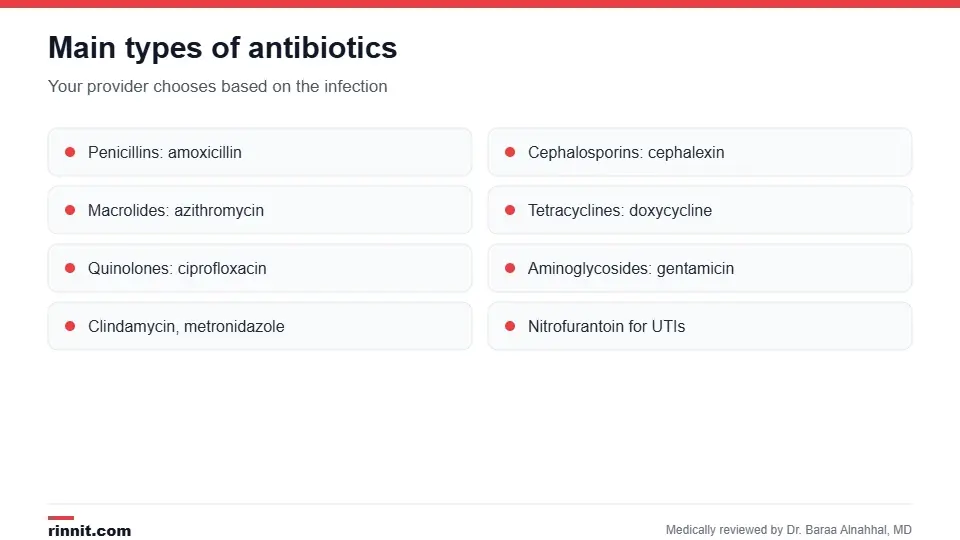
Your provider chooses based on the infection and your health.
Group | Examples |
Penicillin, amoxicillin, ampicillin | |
Cephalosporins | Cephalexin, cefazolin, cefdinir |
Azithromycin, erythromycin, clarithromycin | |
Tetracyclines | Doxycycline, minocycline, tetracycline (not safe in pregnancy) |
Quinolones | Ciprofloxacin, levofloxacin |
Aminoglycosides | Gentamicin, tobramycin |
Others | Clindamycin, metronidazole, nitrofurantoin, sulfamethoxazole-trimethoprim |
Antibiotics come as pills, capsules and liquids; creams and ointments; eye and ear drops; and injections or IV for serious infections. Penicillins are the most prescribed, followed by cephalosporins and macrolides. Sources: [1]
How to take antibiotics
Take them exactly as prescribed: the right dose, how often and with or without food.
Finish the full course, even if you feel better.
Don't save leftovers, share them or use them for another illness.
Ask your pharmacist how to dispose of unused pills.
Ask your provider about probiotics, which may help prevent diarrhea. Sources: [1]
Side effects and risks
Type | Examples |
Common, mild | Diarrhea, nausea, vomiting, dizziness, rash, yeast infections |
Serious, less common | C. diff infection (severe diarrhea), allergic reaction or anaphylaxis |
Some antibiotics interact with warfarin, beta-blockers, antacids or NSAIDs, and some react with alcohol. Most don't make hormonal birth control less effective, with a few exceptions. If you've had a reaction before, tell your provider about a possible penicillin allergy. Sources: [1]
Antibiotic resistance
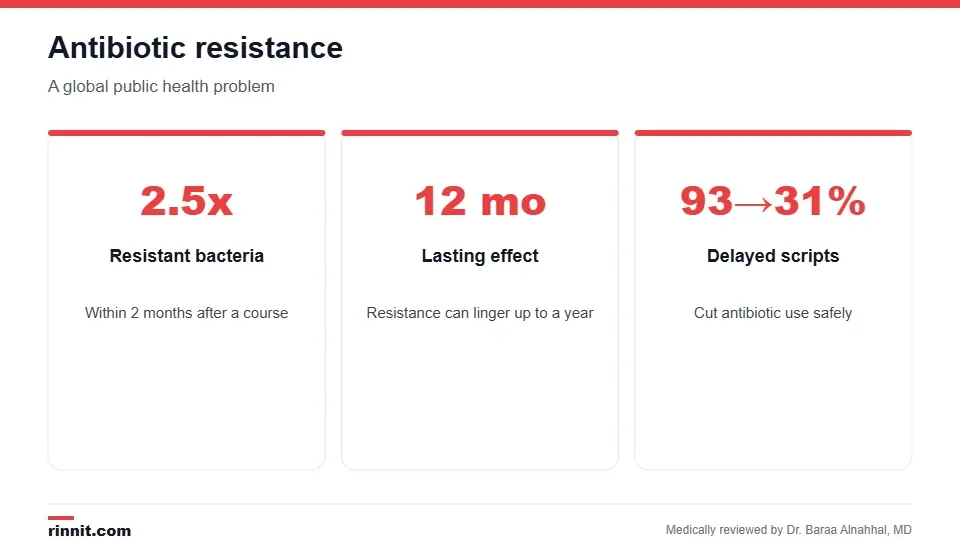
Antibiotic resistance is a global public health problem.
Every time you take an antibiotic, some bacteria can adapt and stop responding to it. These resistant bacteria are harder to treat and can spread. Using antibiotics only when they're needed helps keep them working. Sources: [1, 2, 3]
When to call your provider
Diarrhea that lasts, gets worse or starts after you finish, which could be C. diff.
A mild rash.
Call 911 for signs of anaphylaxis: sudden severe itching, swelling of the face or throat, or trouble breathing or swallowing. Sources: [1]
Conclusion
Antibiotics save lives when they're used for bacterial infections. Taking them only when needed, and exactly as prescribed, protects you and helps keep antibiotics effective for everyone.
Keep learning: read about antibiotic-associated diarrhea and topical antibiotics.
Frequently asked questions
What are antibiotics?
Medicines that kill bacteria or stop them from growing.
Do antibiotics work on viruses?
No. They don't help colds, the flu or most sore throats.
What are the main types of antibiotics?
Penicillins, cephalosporins, macrolides, tetracyclines and quinolones.
Should I finish all my antibiotics?
Yes. Take the full course exactly as prescribed.
How soon will I feel better?
Often within a few days.
What are common side effects?
Diarrhea, nausea, vomiting, rash and yeast infections.
Can I drink alcohol on antibiotics?
Some antibiotics react with alcohol; ask your pharmacist.
Do antibiotics affect birth control?
Most don't, but a few do; ask your provider.
What is antibiotic resistance?
When bacteria adapt and antibiotics no longer work against them.
Can probiotics help?
They may help prevent antibiotic diarrhea; ask your provider first.
Related Reading
Tetracyclines: Uses, Side Effects and Safety explains tetracycline antibiotics such as doxycycline.
Probiotics: Benefits, Types, Foods and Side Effects explains what probiotics do and when they help.
Antibiotic-Associated Diarrhea: Symptoms, Causes, Treatment & Complete Guide a common side effect of antibiotics.
Penicillin: Antibiotic Classes, Uses, and Patient Safety the most prescribed antibiotic group.
Macrolides: Antibiotic List, Uses, Side Effects & Safety antibiotics such as azithromycin.
Topical Antibiotics: What They Treat, How to Use Them, and When to Get Help antibiotic creams and ointments.
Prevention is Protection: A Guide to Prophylactic Antibiotics antibiotics used to prevent infection.
References
Cleveland Clinic. Antibiotics: What To Know. Cleveland Clinic. Last updated May 24, 2023. https://my.clevelandclinic.org/health/treatments/16386-antibiotics
Costelloe C, Metcalfe C, Lovering A, et al. Effect of antibiotic prescribing in primary care on antimicrobial resistance in individual patients: systematic review and meta-analysis. BMJ. 2010;340:c2096. PMID 20483949. https://doi.org/10.1136/bmj.c2096
Spurling GK, Del Mar CB, Dooley L, et al. Delayed antibiotic prescriptions for respiratory infections. Cochrane Database Syst Rev. 2017;9(9):CD004417. PMID 28881007. https://doi.org/10.1002/14651858.CD004417.pub5
Medical disclaimer
This article is for general education only and does not replace advice from a qualified healthcare professional. Talk to your doctor about your own diagnosis and treatment, and seek emergency care right away for severe or sudden symptoms.



Comments