Urinary Tract Infection (UTI): Symptoms, Causes, Treatment, and Prevention

Updated: 2 days ago
Medically reviewed by Dr. Baraa Alnahhal, MD · Last reviewed: September 2026
Editor's note: This guide is for general education only. It is not a substitute for professional medical advice, diagnosis, or treatment. A urinary tract infection needs evaluation by a healthcare professional — please consult your doctor for care decisions.
TL;DR
A urinary tract infection (UTI) is an infection anywhere in the urinary system — most often the bladder. It causes burning with urination, urgency, frequency, and sometimes pink or red urine. Most UTIs clear quickly with antibiotics, and drinking more water, managing constipation, and avoiding irritating products can lower the chance of another one. See a doctor promptly: untreated UTIs can spread to the kidneys and, rarely, cause sepsis.
Quick Answer
A urinary tract infection (UTI) is an infection in the kidneys, ureters, bladder, or urethra — most often the bladder. It causes burning with urination, a strong persistent urge to urinate, frequent small voids, pelvic pain, and sometimes red or cola-colored urine. UTIs are diagnosed with a urine test and treated with antibiotics, which usually start working within a few days. Most UTIs clear completely, but untreated infections can reach the kidneys. About 50–80% of women have at least one UTI in their lifetime [1][2].
What Is a Urinary Tract Infection?
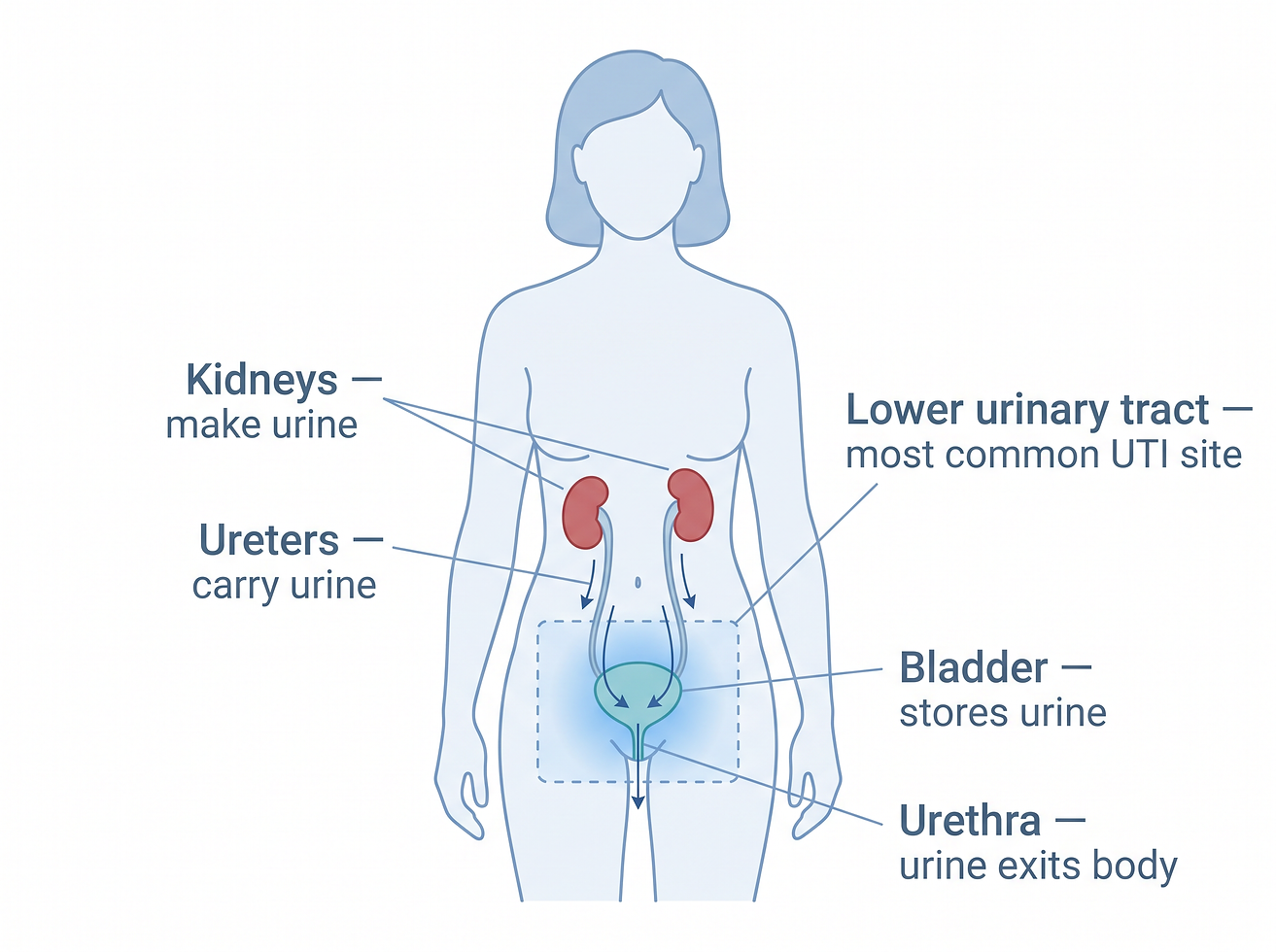
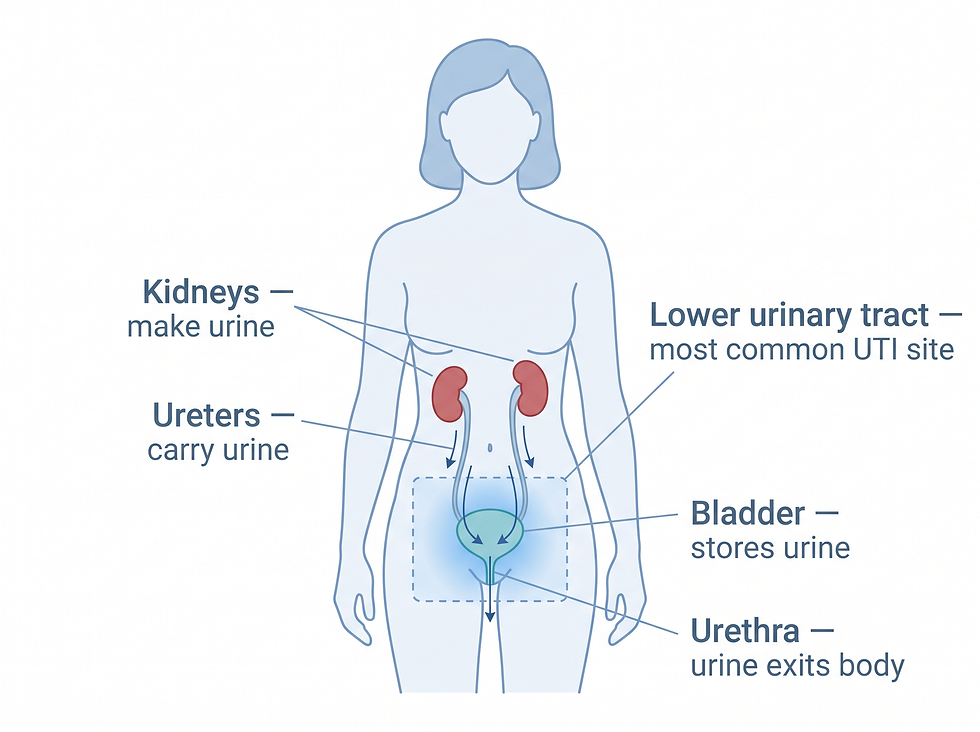
A urinary tract infection (UTI) is an infection in any part of the urinary system — the kidneys, ureters, bladder, or urethra. The urinary system removes waste from the body through urine. The kidneys filter waste and fluid from the blood and make urine. Urine then travels through narrow tubes called the ureters into the bladder, which stores it until it is time to urinate. Urine leaves the body through a small tube called the urethra [1].
Most infections involve the lower urinary tract — the bladder and the urethra. An infection of the bladder is often called cystitis; an infection of the urethra is called urethritis [1].
Women have a higher risk of UTIs than men. An infection of the bladder can be painful and annoying. But if the infection spreads to the kidneys, the condition can be serious [1].
UTIs are among the most common infections seen in healthcare. An estimated 50–80% of women will experience at least one UTI in their lifetime, and 30–40% will experience recurrent infections [2]. In the United States, UTIs account for roughly 10 million physician-office visits each year, making them the most common infection seen in office settings [3].
How Common Are UTIs, and Who Gets Them?
UTIs affect people of all ages, but they are far more common in women and become more frequent in older adults. The table below summarizes the best available numbers [2][3][4][5]:
Population | How often UTIs occur |
|---|---|
Women (lifetime) | 50–80% have at least one UTI |
Women (recurrence) | 30–40% have repeated infections |
Women vs. men | Women get UTIs up to 30 times more often |
12-month incidence | 19.8% of women vs. 6.4% of men |
After a first UTI | Up to 4 in 10 women have another within six months |
U.S. office visits | ~10 million visits per year for UTIs |
What Does a UTI Feel Like?
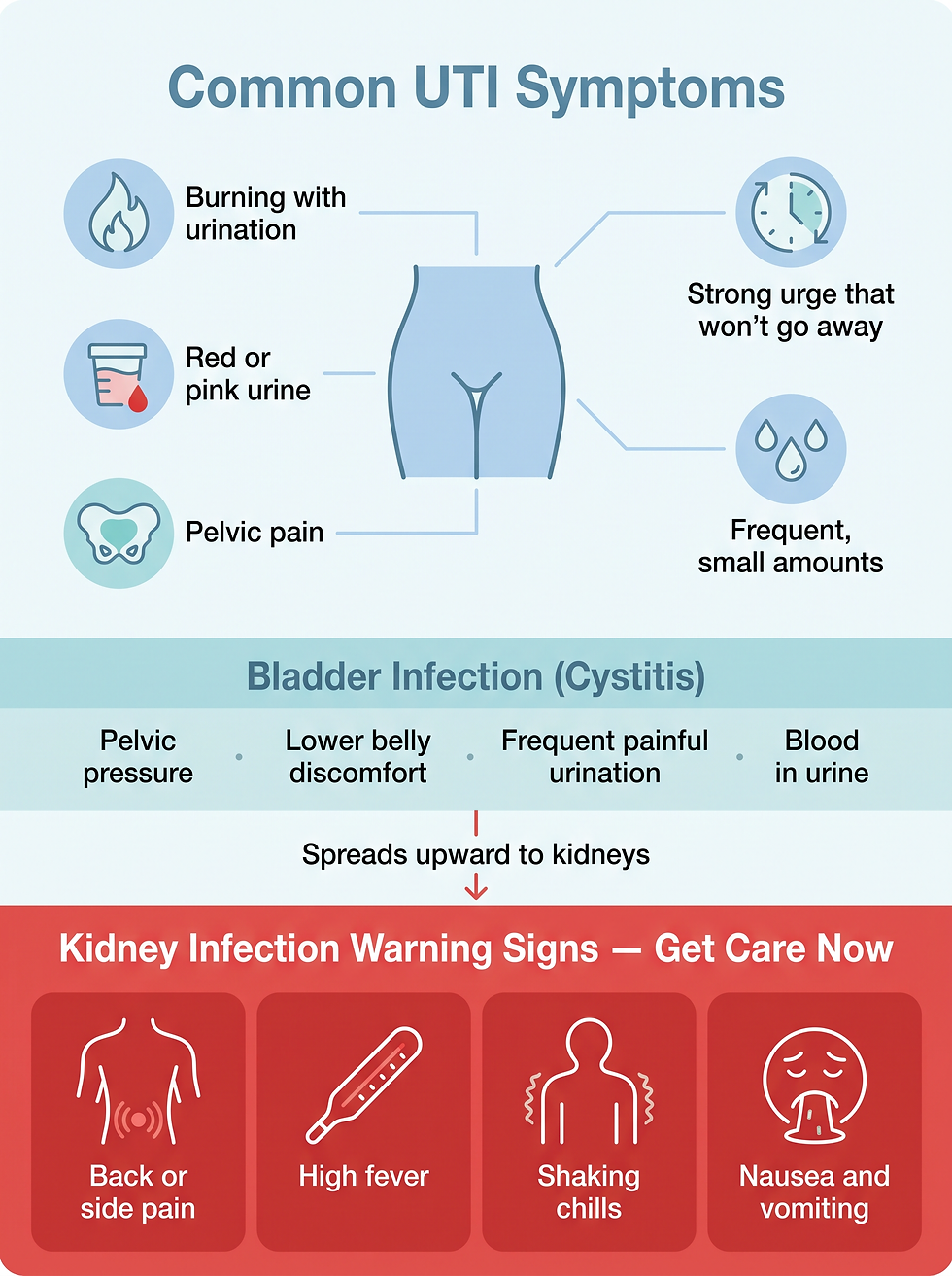
The most recognizable signs are changes in urination. Common symptoms of a urinary tract infection include a burning feeling when urinating, a strong urge to urinate that doesn't go away, urinating often while passing only small amounts, and pelvic pain — usually in the center of the pelvis around the pubic bone [1].
Sometimes the urine itself looks different. Urine that appears red, bright pink, or cola-colored can be a sign of blood in the urine [1].
In older adults, UTIs may be missed or mistaken for other conditions, because classic symptoms can be quieter or overlap with other health problems [1].
How Do Symptoms Change by Location?
Signs and symptoms of a UTI depend on which part of the urinary tract is infected. Knowing the difference matters, because a kidney infection is more serious than a bladder infection [1]:
Part of the urinary tract | Signs and symptoms |
|---|---|
Kidneys | Back or side pain; high fever; shaking and chills; nausea; vomiting |
Bladder | Pelvic pressure; lower belly discomfort; frequent, painful urination; blood in urine |
Urethra | Burning with urination; discharge |
Fever, chills, and back or side pain suggest the infection may have reached the kidneys — this needs prompt medical care, not home remedies [1].
When Should You See a Doctor?
Contact a doctor or other healthcare professional if you have symptoms of a UTI. Most UTIs are treated in primary care, but people with frequent UTIs or chronic kidney infections may see a urologist, urogynecologist, or nephrologist [1][6].
Seek care sooner if you notice:
Fever, chills, shaking, or back/side pain (possible kidney infection)
Blood in your urine
Nausea and vomiting alongside urinary symptoms
Symptoms that don't improve within a day or two, or that return soon after treatment
UTI symptoms during pregnancy
Kidney infections that go untreated can cause permanent damage or spread into the bloodstream (sepsis), which is life-threatening [1].
What Causes a UTI?
UTIs occur when bacteria enter the urinary tract through the urethra and begin to spread in the bladder. The urinary system is designed to keep bacteria out, but sometimes the defenses fail. When that happens, bacteria may take hold and grow into a full-blown infection [1].
The most common UTIs affect the bladder and urethra [1]:
Type of infection | Typical cause |
|---|---|
Bladder infection (cystitis) | E. coli bacteria, which normally live in the gastrointestinal (GI) tract; other bacteria can also cause it |
Urethra infection (urethritis) | GI bacteria spreading from the bowel; can also be caused by sexually transmitted infections such as herpes, gonorrhea, chlamydia, and mycoplasma |
Some people have recurrent infections — defined as two or more UTIs within six months, or three or more within a year. Recurrent infections are more common in women [1].
Who Is at Higher Risk?
UTIs are common in women, and many women have more than one UTI during their lifetimes [1]. The risk factors below come from current urology guidance and primary care references [1][7]:
Risk factor | Why it raises risk |
|---|---|
Female anatomy | Women have a shorter urethra, so bacteria travel a shorter distance to reach the bladder |
Perimenopause and menopause | Lower estrogen changes vaginal bacteria, raising UTI risk |
Certain birth control | Diaphragms and spermicidal agents are linked to higher risk |
Low fluid intake | Less fluid means less flushing of bacteria from the bladder and urethra |
Constipation | Preventing constipation can help prevent UTIs |
Incomplete bladder emptying | Bacteria persist and grow in urine left behind |
Urinary tract conditions present at birth | Vesicoureteral reflux lets urine back up toward the kidneys, carrying germs |
Blockages | Kidney stones or an enlarged prostate can trap urine in the bladder |
Suppressed immune system | Immunosuppressant medicines, diabetes, and other diseases weaken germ defenses |
Catheter use | Tubes that drain the bladder raise infection risk |
Recent urinary procedure | Urinary surgery or instrument-based exams raise risk |
Can a UTI Cause Serious Problems?
When treated promptly, urinary tract infections rarely lead to complications. But left untreated, UTIs can cause serious health issues [1]:
Complication | What happens |
|---|---|
Lasting kidney damage | Untreated UTIs can spread to the kidneys and damage them; the damage doesn't go away |
Low birthweight or early delivery | UTIs during pregnancy can affect the baby's weight and may cause early birth |
Urethral narrowing (men) | Repeated infections can scar the urethra, making it harder to pass urine |
Sepsis | A life-threatening complication; risk is higher if the infection reaches the kidneys |
How Is a UTI Diagnosed?
Diagnosis starts with a conversation about symptoms and usually a urine test. Tests and procedures used to diagnose urinary tract infections include [6]:
Test | What it shows |
|---|---|
Urine sample (urinalysis) | White blood cells, red blood cells, or bacteria; collected midstream after wiping with an antiseptic pad to avoid contamination |
Urine culture | Grows the bacteria to identify the exact cause and the most effective antibiotic |
Imaging (ultrasound, CT, MRI) | Used for recurrent UTIs to find structural problems in the urinary tract |
Cystoscopy | A thin tube with a lens views the urethra and bladder; used for recurrent UTIs and can treat problems such as bladder stones |
For most people with a first, uncomplicated UTI, a urine sample and sometimes a culture are all that is needed [6].
How Is a UTI Treated?
Antibiotics are the first treatment for an active urinary tract infection. Your overall health and the type of bacteria in your urine guide which medicine is used and how long you take it [6].
Antibiotics for Simple UTIs
For simple UTIs, commonly used antibiotics include trimethoprim-sulfamethoxazole, fosfomycin, nitrofurantoin, cephalexin, and ceftriaxone [6].
Fluoroquinolones (such as ciprofloxacin and levofloxacin) are generally not used for most simple UTIs because their risks tend to outweigh the benefits. For complicated UTIs or kidney infections, a fluoroquinolone might be used if no other treatment options remain [6].
Treatment detail | What to expect |
|---|---|
When symptoms improve | Often within a few days of starting antibiotics, though inflammation can take longer to settle |
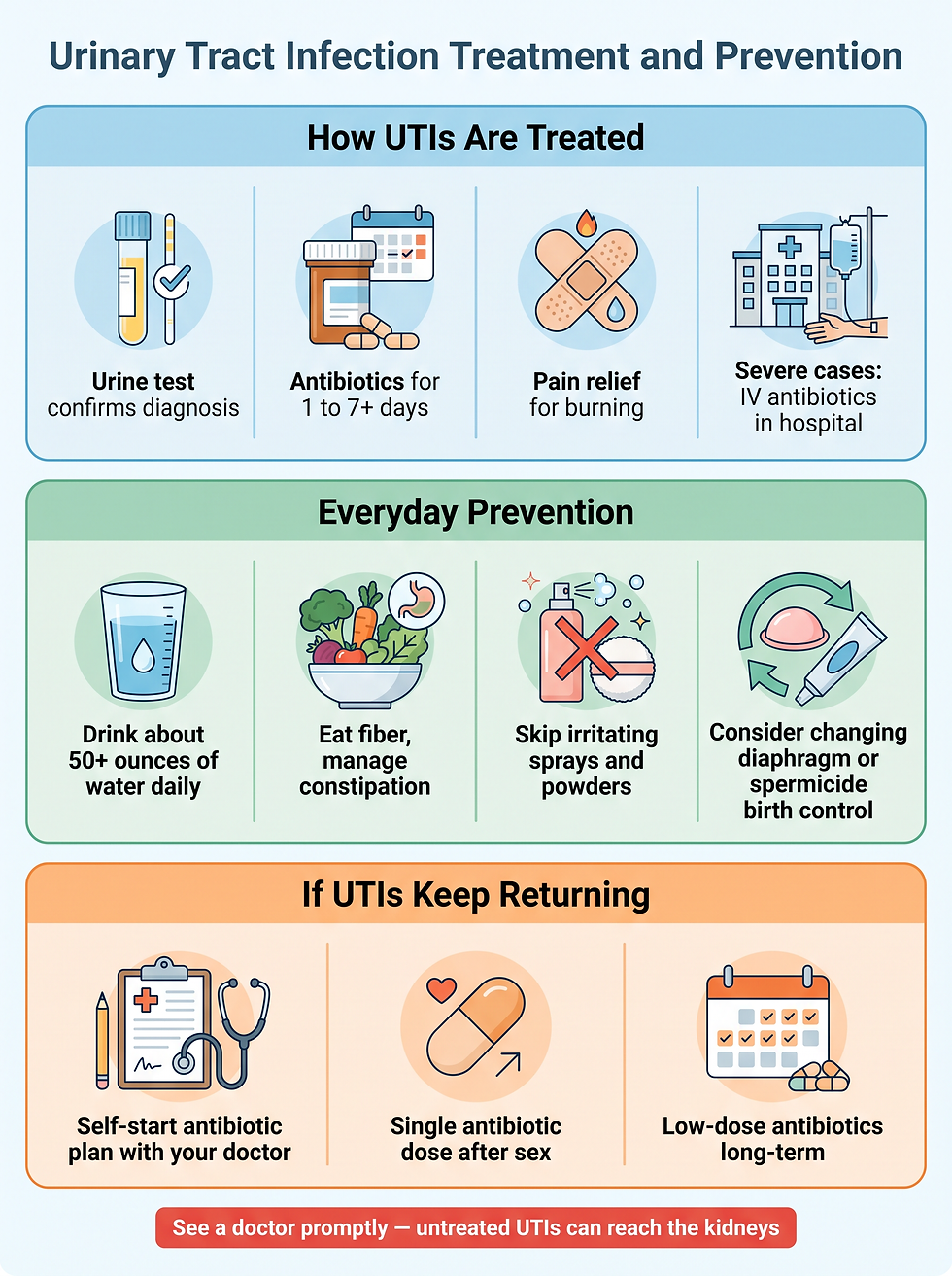
How long treatment lasts | Often a week or more, depending on the infection and medicine; sometimes only 1–3 days for a simple UTI in an otherwise healthy person |
Finishing the course | Take all the medicine exactly as instructed, even if you feel better |
Pain relief | A medicine to lessen burning with urination may be prescribed; pain usually fades soon after antibiotics start |
Severe infections | May need IV antibiotics given in a hospital |
Preventing UTIs From Coming Back
After treatment, several everyday steps can lower the risk of future infections [6]:
Prevention step | Details |
|---|---|
Drink more water | Aim for 1.5 liters (about 50 ounces) or more daily, unless your care team advises otherwise; diluting urine flushes bacteria away |
Vaginal estrogen therapy | For perimenopausal or menopausal women without contraindications, a topical vaginal estrogen product can reduce repeat UTIs |
Manage constipation | Fiber-rich foods and regular physical activity keep stool moving |
Cranberry products | Evidence is still unclear; for most people cranberry juice is safe, but check calories and sugar, and avoid it if you take warfarin |
Avoid irritating products | Deodorant sprays, douches, and powders in the genital area can irritate the urethra |
Rethink birth control | Diaphragms, unlubricated condoms, and spermicide-treated condoms can add to bacterial growth |
When UTIs Keep Returning
Sometimes UTIs keep coming back even with careful non-antibiotic prevention. In that case, a healthcare professional may suggest targeted antibiotic strategies [6]:
Strategy | How it works |
|---|---|
Self-start therapy | You diagnose and treat yourself when symptoms occur, staying in regular contact with your care team |
Single post-sex dose | One antibiotic dose after sex if UTIs follow sexual activity |
Long-term low-dose antibiotics | A small antibiotic dose for six months or longer |
Antibiotics have downsides — skin rash, upset stomach, or loose stools — and overuse can drive antibiotic resistance, when bacteria become stronger than the drugs designed to kill them. That is why non-antibiotic prevention matters [6].
What Helps at Home While Treatment Takes Effect?
Urinary tract infections can be painful, but a few simple measures can ease discomfort until the antibiotics work [6]:
Drink plenty of water to dilute urine and flush out bacteria.
Avoid bladder irritants such as coffee, alcohol, and citrus or caffeinated soft drinks until the infection clears.
Use a heating pad — warm, not hot — on your belly to lessen bladder pressure and discomfort.
Home comfort measures support antibiotics; they do not replace them. There is no reliable evidence that a UTI can be cured without antibiotics once it has taken hold.
Conclusion and Next Steps
A urinary tract infection is one of the most common infections in adults, especially women, and it is very treatable. The pattern to know is simple: burning, urgency, frequency, and pelvic pain point to a bladder infection; fever, chills, and back or side pain point to the kidneys and need same-day care. A urine test confirms the diagnosis, antibiotics usually clear the infection, and drinking more water is the single most useful habit for prevention.
Your next steps: if you have UTI symptoms, contact a healthcare professional today rather than waiting it out. Drink water in the meantime, and mention any fever, back pain, or pregnancy to your care team. After recovery, build the prevention habits above — especially daily fluids and constipation management — and ask your doctor about recurrent-infection strategies if UTIs come back.
Frequently Asked Questions
What are the first signs of a UTI? The earliest signs are usually a burning feeling when urinating, a strong urge to urinate that doesn't go away, and urinating often in small amounts. Urine may look red, bright pink, or cola-colored, and pelvic pain around the pubic bone is common [1].
Can a UTI go away on its own? Antibiotics are the standard treatment, and symptoms usually begin clearing within a few days of starting them. Some mild bladder infections improve without treatment, but leaving a UTI untreated risks kidney infection, lasting kidney damage, and sepsis — which is why prompt treatment is recommended [1][6].
How long does a UTI take to clear? With antibiotics, symptoms often begin improving within a few days, though full inflammation may take longer to settle. Treatment courses range from 1–3 days for simple infections to a week or more, depending on the antibiotic and the infection [6].
Do UTIs only happen in women? No, but women get UTIs far more often — up to 30 times more than men — largely because women have a shorter urethra. About 12-month incidence data show roughly 19.8% of women versus 6.4% of men affected each year [4].
Why do I keep getting UTIs? Recurrent UTIs — two or more in six months, or three or more in a year — are more common in women and can relate to anatomy, menopause-related hormone changes, birth control methods, constipation, incomplete bladder emptying, or urinary tract structure. A urine culture and, if needed, imaging or cystoscopy can find the cause [1][6].
Does cranberry juice prevent UTIs? Research is still studying whether cranberry juice and cranberry products help prevent UTIs, and for now the results are unclear. For most people cranberry juice is safe, but watch the sugar and calories, and avoid it if you take blood thinners such as warfarin [6].
Can a UTI affect pregnancy? Yes. UTIs during pregnancy can lead to a low-birthweight baby and may cause early delivery. Pregnant people with UTI symptoms should contact their healthcare team promptly [1].
When should I go to urgent care or the ER for a UTI? Go promptly if you have a high fever, shaking chills, back or side pain, nausea and vomiting with urinary symptoms, or visible blood in your urine — these suggest the infection may be reaching the kidneys. Anyone who is pregnant, has diabetes, or has a weakened immune system should seek care even earlier [1].
References
1. Mayo Clinic — Urinary tract infection (UTI): Symptoms and causes (updated Sept. 26, 2025)
2. CDC — Clinical Overview of Urinary Tract Infections (updated July 16, 2026)
5. Office on Women's Health — Urinary tract infections (updated May 4, 2026)
6. Mayo Clinic — Urinary tract infection (UTI): Diagnosis and treatment (updated Sept. 26, 2025)
Comments